Blood Pressure Dosing Timing Calculator
Personalized Recommendation Tool
Find out if bedtime dosing might reduce your side effects based on your symptoms and medication type.
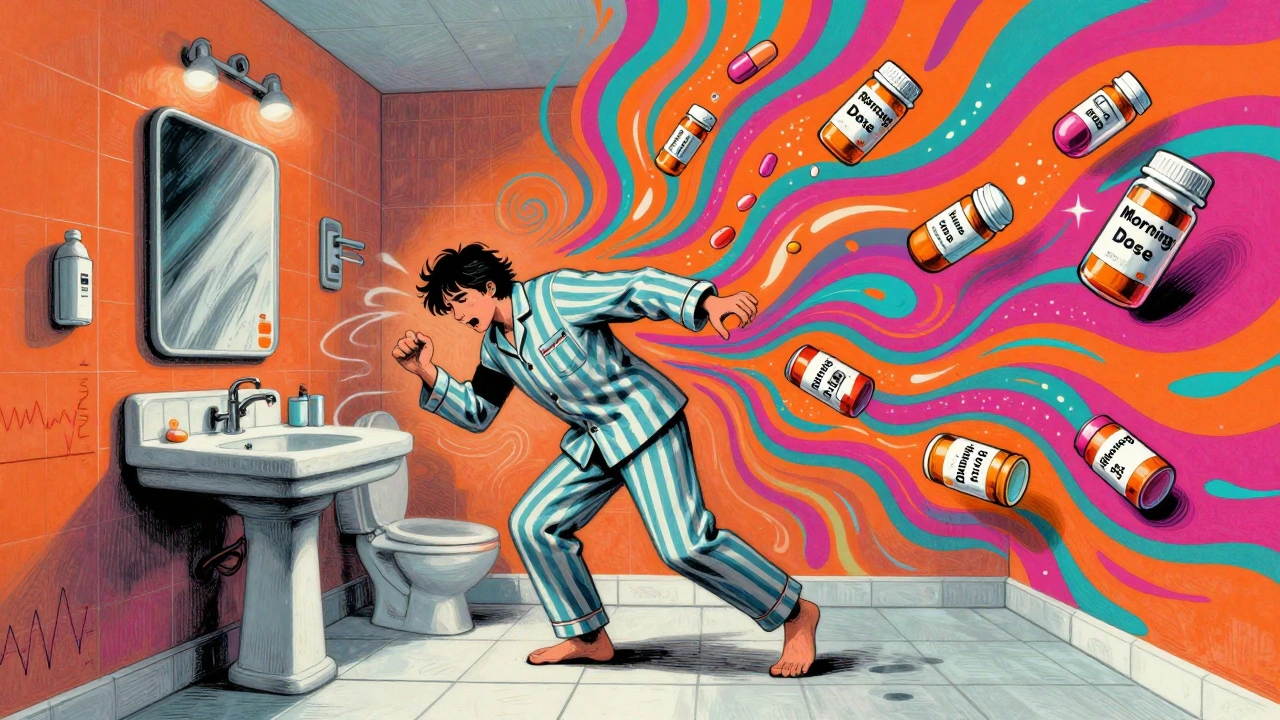
Many people taking blood pressure medication wake up feeling dizzy, tired, or lightheaded - not because their condition is worsening, but because of when they take their pills. If you’ve ever skipped a dose because you felt too woozy to get out of bed, you’re not alone. About 62% of patients reporting side effects say dizziness is their biggest problem, and nearly 80% of those feel it within 2 to 4 hours after taking their morning dose. The real question isn’t whether the medicine works - it’s whether the timing is working for you.
Why Timing Matters More Than You Think
Your blood pressure doesn’t stay flat all day. It naturally drops while you sleep, then rises sharply in the early morning. That’s why heart attacks and strokes are most common between 6 a.m. and noon. Most traditional advice tells you to take your blood pressure meds in the morning - right after breakfast - because that’s when pressure spikes. But here’s the catch: if your pill hits its peak right when you’re getting up, you’re more likely to feel dizzy as you stand, walk to the bathroom, or get in the car. Studies like the TIME trial and the BedMed trials looked at over 4,000 patients and found no major difference in heart attacks or strokes between morning and bedtime dosing. But when researchers dug into side effects, a different picture emerged. The morning-dosing group reported more dizziness and lightheadedness. The bedtime group didn’t have more falls or fractures, and in some cases, they had fewer.What Side Effects Actually Change With Timing?
Not all side effects shift the same way. Here’s what the data shows:- Dizziness and lightheadedness: More common after morning doses. One study found 24.7% of morning takers reported it versus 22.8% of bedtime takers - a small difference, but meaningful if you’re the one falling or missing work.
- Excessive urination: About 40% of people on morning doses need to go to the bathroom during the day. Switching to bedtime can cut that to 36.4%. For many, that’s worth it - but not if you start waking up three times a night.
- Leg swelling (edema): Common with calcium channel blockers like amlodipine. Some patients report worse swelling at night with bedtime dosing, forcing them to switch back.
- Cognitive fog: No significant difference found in trials. Worries that lowering blood pressure too much at night harms the brain didn’t pan out.
One Reddit user, HypertensionWarrior87, switched lisinopril to bedtime and said it ended the morning dizziness that made him miss work twice last month. Another, SeniorHealth45, tried the same with amlodipine - but ended up with swollen legs so bad he had to go back to mornings. That’s the key: it’s personal.
When Bedtime Dosing Actually Helps
Bedtime dosing isn’t a magic fix - but it can be a game-changer for specific people:- You get dizzy or faint within 3 hours of taking your pill in the morning.
- You’re constantly rushing to the bathroom during work or meetings.
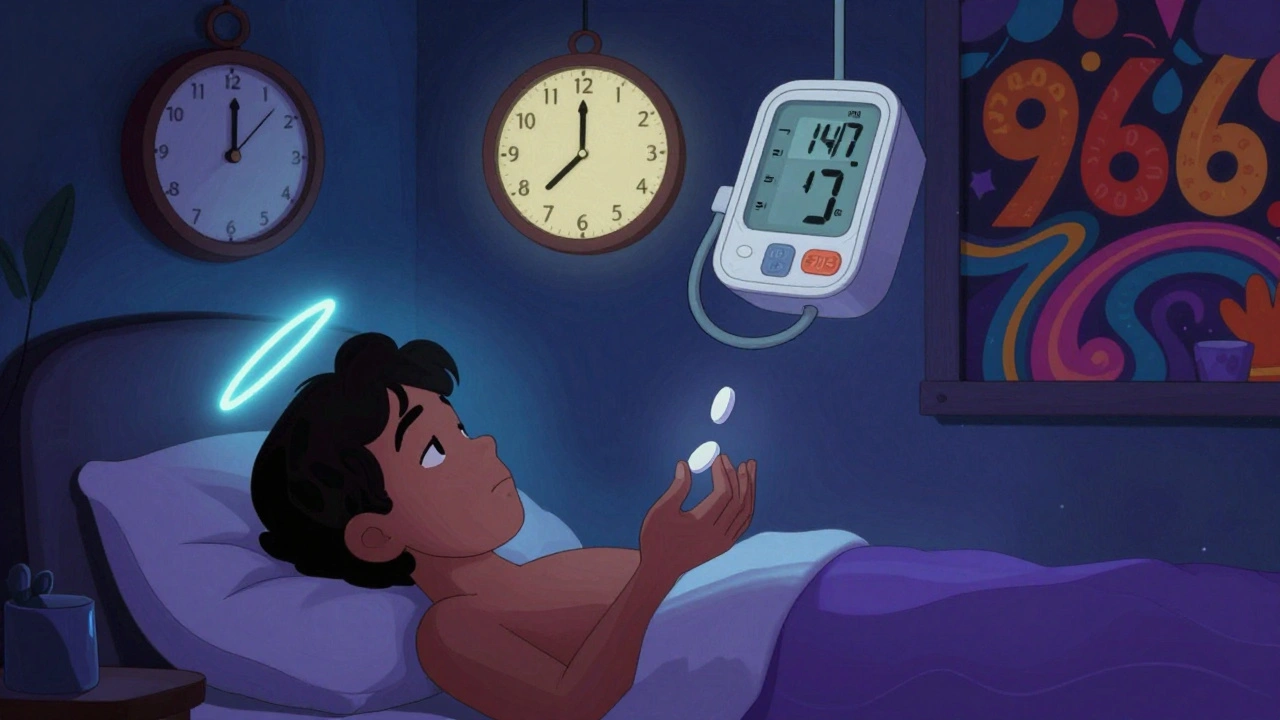
- You’ve been told you have nocturnal hypertension - meaning your blood pressure stays high at night. In that case, taking an ACE inhibitor or ARB at bedtime can help smooth out the 24-hour curve, reducing the morning spike - and the dizziness that comes with it.
Guidelines from the Cleveland Clinic and the British Heart Foundation now say: if you’re new to blood pressure meds and feel dizzy, take your first dose at bedtime. Wait a few days. If the dizziness fades, you can try switching to morning - but only if you’re not having side effects. If it’s still gone, stick with bedtime.
When Morning Dosing Might Still Be Better
Not everyone benefits from nighttime pills. Here’s when mornings win:- You have trouble sleeping or wake up often. Adding a pill to your nighttime routine might make that worse.
- You’re on a diuretic (water pill) and already wake up to pee. Moving it to night could turn your sleep into a bathroom marathon.
- You take other meds at night that interact or cause drowsiness. Mixing them with blood pressure pills could increase fall risk.
- You forget meds easily. If you’re more likely to remember your pill with breakfast than with brushing your teeth, stick with morning.
The European Society of Cardiology’s 2024 stance says it best: take your medicine when you’re least likely to forget. Adherence beats timing - every time. But if you’re skipping doses because you feel awful, then timing becomes critical.
What Doctors Are Saying Now
In 2022, only 28% of U.S. doctors discussed dosing timing with new patients. By mid-2024, that jumped to 43%. Of those, 67% said they now sometimes or often recommend bedtime dosing specifically to reduce daytime side effects. Electronic health records from 28 million patients show a 15% rise in bedtime dosing since 2022 - especially among people aged 45 to 64 who report dizziness. That’s not because of a new guideline. It’s because patients started asking. And doctors started listening.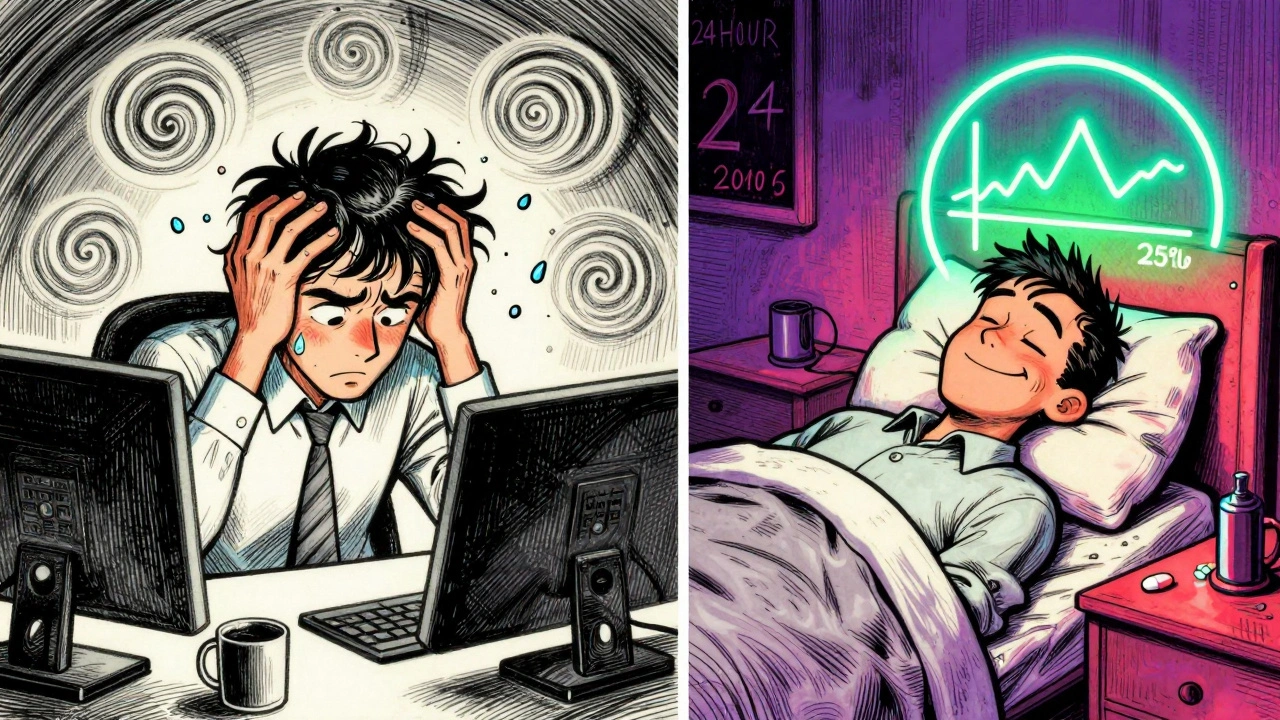
What You Can Do Today
You don’t need a clinical trial to find what works for you. Here’s how to test it safely:- Track your side effects for one week. Write down when you feel dizzy, tired, or need to urinate - and when you took your pill.
- Don’t change your dose or stop meds without talking to your doctor.
- Ask: “Can I try taking my main blood pressure pill at bedtime for two weeks?”
- Keep tracking. If dizziness fades and you’re sleeping okay, you’ve found your answer.
- If you’re waking up too often to pee or feel more tired in the morning, switch back.
There’s no universal right time. The right time is the one that lets you live your day without feeling like you’re walking through molasses.
What’s Coming Next
The TIMED-OUT trial, recruiting 5,000 patients across 12 countries, is set to finish in December 2025. It’s the first large study designed specifically to answer: does bedtime dosing reduce daytime symptoms? The European Medicines Agency is also pushing drug makers to include side effect data by time of day in future labels. For now, the science says: if your side effects are messing with your life, talk to your doctor about timing. It’s not about chasing a perfect number on the blood pressure monitor. It’s about getting through your day without feeling like you’re fighting your own medicine.Is it safe to take blood pressure medicine at night?
Yes, for most people, taking blood pressure medication at night is safe. Major trials like BedMed and OMAN found no increase in dangerous nighttime low blood pressure, falls, or cognitive issues. The main concern used to be that lowering pressure too much while sleeping might harm the brain or heart - but studies show that’s not the case. The real risk is forgetting to take it, so only switch if you’re consistent with your nighttime routine.
Will bedtime dosing lower my blood pressure more?
It can - but not always. Some studies, like those by Dr. Hermida, showed better overnight control and even fewer heart events with bedtime dosing. But larger trials like TIME and BedMed found no major difference in overall blood pressure control or heart attack risk. The benefit isn’t necessarily lower numbers - it’s smoother, more stable pressure over 24 hours, which can reduce the sharp morning spike that triggers dizziness.
I take a water pill. Should I still try bedtime dosing?
It depends. Diuretics like hydrochlorothiazide or furosemide increase urine production. If you take them at night, you might wake up 2-3 times to pee, which can hurt your sleep. If you’re already waking up often, stick with morning. But if you’re mostly bothered by daytime bathroom trips and your sleep is fine, bedtime dosing might help. Try it for a week and track your nighttime awakenings.
Can I switch my medication timing on my own?
No. Never change your medication timing without talking to your doctor. Some drugs work differently depending on when you take them, and others can interact with other meds you’re using. Your doctor can help you test a switch safely - especially if you’re on multiple medications or have other health conditions like kidney disease or diabetes.
What if I feel worse after switching to bedtime dosing?
If you feel more tired, dizzy in the morning, or start waking up too often to urinate, go back to your morning schedule. Not everyone responds the same way. Some people get leg swelling or disrupted sleep with nighttime pills. That doesn’t mean the medicine doesn’t work - it just means the timing isn’t right for you. Your body’s rhythm is unique. The goal is to find the schedule that keeps your pressure under control without ruining your day - or your night.
James Kerr
December 2, 2025 AT 19:57Just switched my amlodipine to bedtime and holy heck, no more morning zombie mode. Been doing it for two weeks and actually got out of bed without holding onto the wall. 🙌
Ignacio Pacheco
December 3, 2025 AT 22:12So let me get this straight - we’re now treating hypertension like it’s a Spotify playlist? ‘Morning vibes’ vs ‘Night chill’? Next they’ll tell us to take beta-blockers with jazz.
parth pandya
December 4, 2025 AT 21:11i tryed bed time dosing but i woke up 4 time to pee and now i hate my life. back to morning. also i forget my pill at night so i skip it. 😭
Jim Schultz
December 5, 2025 AT 08:36Of course the TIME trial showed ‘no difference’ - it was funded by Big Pharma who make morning-dose pills. The BedMed trial? That was peer-reviewed by actual scientists who don’t get paid by AstraZeneca. Also, your ‘dizziness’ is just your body screaming that you’re 60 and still think caffeine is a food group.
Albert Essel
December 6, 2025 AT 07:31There’s a fascinating nuance here: circadian pharmacokinetics. The liver’s metabolic activity dips at night, which may delay peak concentration of certain antihypertensives - meaning bedtime dosing could align the drug’s peak with the natural BP surge at 6 a.m., not the post-waking activity surge. That’s not anecdotal - it’s chronopharmacology.
Kara Bysterbusch
December 7, 2025 AT 09:29As a geriatric nurse who’s seen countless patients navigate this exact dilemma, I can attest: the psychological relief of avoiding morning dizziness often outweighs statistical insignificance. One 78-year-old woman told me, ‘I didn’t care if my BP was 10 points lower - I cared that I could walk to the kitchen without holding the counter.’ That’s not a trial endpoint - that’s dignity.
Moreover, the cultural bias toward morning dosing is rooted in 1970s clinical convenience, not physiology. We’ve long assumed ‘morning’ means ‘correct’ - but we’ve never asked patients what ‘correct’ feels like.
And yes, diuretics are tricky - but if you’re waking up three times a night anyway, maybe it’s not the pill. Maybe it’s the 12-ounce glass of water you chug at 8 p.m. while watching Netflix. Hydration timing matters too.
Doctors need to stop prescribing timing the way they prescribe pills - as one-size-fits-all. This isn’t medicine. It’s personal choreography.
My patients who switched to bedtime? They sleep better. They work better. They stop skipping doses. That’s not a side effect - that’s a win.
Vincent Soldja
December 7, 2025 AT 17:54Just take it when you remember
Myson Jones
December 8, 2025 AT 07:50Hey everyone - I get that timing matters. But let’s not turn this into a battle between ‘morning warriors’ and ‘night owls.’ The real win is finding what works for YOUR body - not what sounds cool on Reddit. If you’re not dizzy and you’re consistent? Stick with it. No need to fix what ain’t broke.
Also - shoutout to the doc who actually asked you how you feel instead of just scribbling ‘BP 140/90’ and calling it a day. Those people are gold.
Charles Moore
December 10, 2025 AT 04:48My dad switched to bedtime dosing with lisinopril and it was a miracle - no more falling over in the shower. But he’s also a morning person who goes to bed at 9 p.m. So for him, it made sense. My sister took hers at night and started hallucinating because of the interaction with her sleep aid. So… context matters. Always talk to your pharmacist.
Chloe Madison
December 11, 2025 AT 23:11YOU CAN DO THIS. If you’re tired of feeling like a zombie before coffee, this isn’t just a tweak - it’s a lifestyle upgrade. Track your days. Talk to your doctor. Try it for two weeks like a science experiment on yourself. You’re not broken - your timing is just out of sync. Reset it. Own your rhythm. You’ve got this.
Gavin Boyne
December 12, 2025 AT 15:30So we’ve spent 50 years telling people to take meds at breakfast because… doctors were too busy to think? Meanwhile, the body’s been screaming in circadian code and we’ve been treating it like a broken toaster. We don’t need more trials. We need more humility. The body knows when to rise. We just need to stop forcing our pills to wake up with us.
Also - if your doctor hasn’t mentioned this, ask them if they’ve ever taken a blood pressure pill at night. If they say ‘no,’ you’ve just found your new doctor.
Kidar Saleh
December 12, 2025 AT 22:06When I first heard of bedtime dosing, I thought it was a gimmick - until my GP, a quiet Welshman with a beard like a confused badger, said, ‘Charles, your BP spikes like a startled kangaroo at dawn. What if the medicine met it halfway?’ I switched. Two weeks later, I walked into the pub without holding the doorframe. That’s not science. That’s poetry.