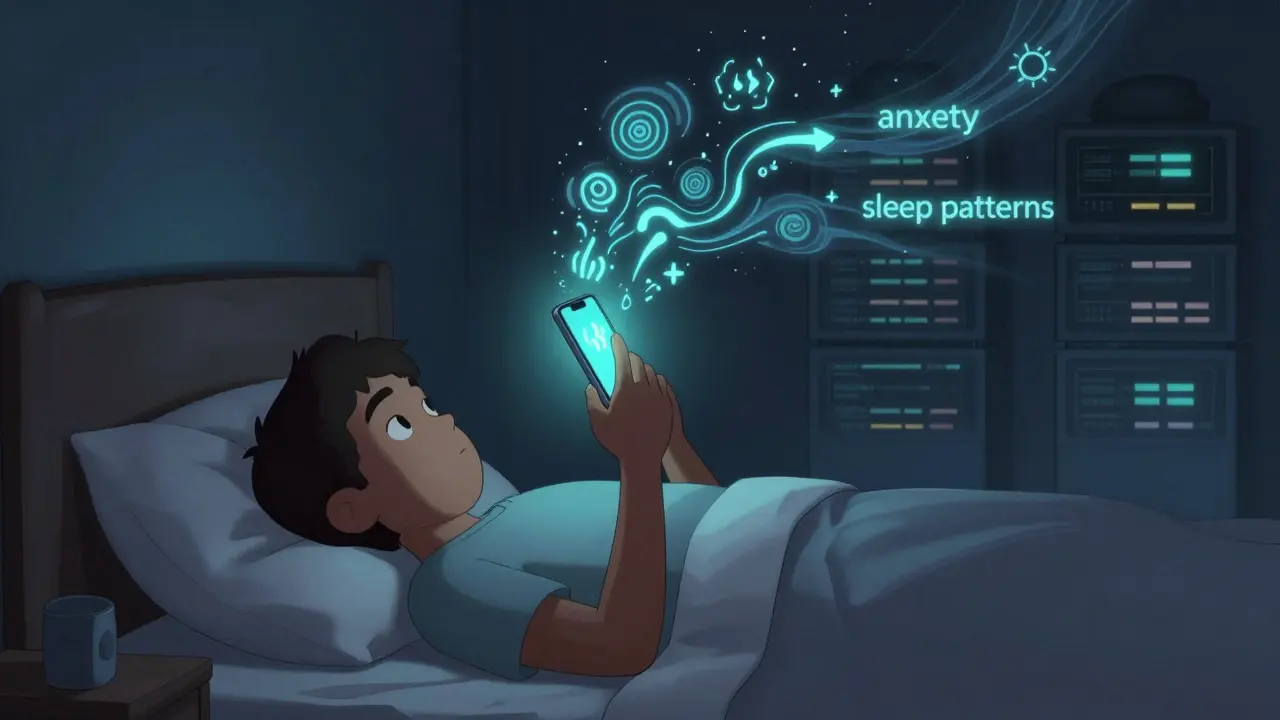
More people than ever are turning to their phones for mental health support. Whether it’s a guided meditation at 2 a.m., a chat with an AI therapist, or a weekly video call with a licensed counselor, digital tools are reshaping how we handle anxiety, depression, and stress. But behind the convenience lies a complicated reality: not all apps work, many don’t protect your data, and some might even make things worse. If you’re considering using a mental health app or teletherapy service, here’s what you actually need to know.
How Digital Mental Health Tools Work Today
Today’s mental health apps aren’t just simple mood trackers. Leading platforms like Calm and a mindfulness app with over 100 million downloads that uses personalized audio sessions based on user behavior and Headspace and a guided meditation app with 65 million users that integrates with Apple Health and Fitbit for stress tracking now use AI to adjust content in real time. If you skip sessions, the app notices. If you log high stress levels after work, it might suggest a breathing exercise before bed. Some apps, like Wysa and an AI chatbot that simulates cognitive behavioral therapy (CBT) and has undergone 14 clinical trials and Youper and a mental health chatbot with 7 peer-reviewed studies showing effectiveness in reducing anxiety symptoms, don’t just respond-they learn. They analyze your tone, frequency of use, and even the words you type to tailor responses.
Teletherapy platforms like BetterHelp and a service connecting users with licensed therapists via text, video, or phone, with pricing ranging from $60 to $90 per week and Talkspace and a similar platform offering unlimited messaging and live sessions, with subscription tiers that unlock full access let you talk to real therapists without leaving home. These services match you based on your needs-depression, trauma, relationship issues-and many offer 24/7 messaging, which can be a lifeline during crises.
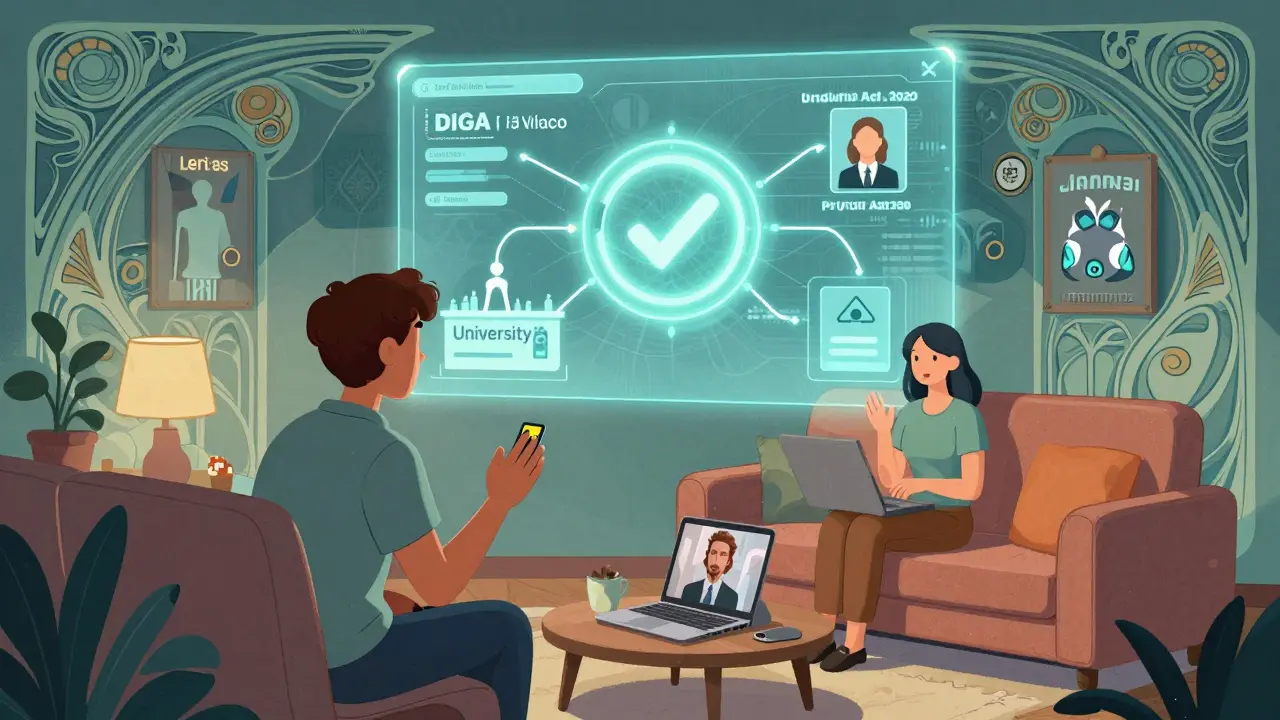
But here’s the catch: not all of this is backed by science. A 2025 review of 578 mental health apps found that most lack clinically proven techniques. Just because an app says it’s "science-based" doesn’t mean it is. Only a small fraction have been tested in peer-reviewed studies. In Germany, this problem was solved with the DiGA system-digital health apps that must pass strict clinical trials before being prescribed and covered by public insurance. As of March 2024, 42% of all approved DiGA apps targeted mental health, with nearly a quarter focused on depression. That’s the gold standard. Most apps elsewhere don’t come close.
Privacy Risks You Can’t Ignore
When you use a mental health app, you’re sharing your deepest thoughts, moods, sleep patterns, and sometimes even audio recordings of therapy sessions. Who owns that data? Who can see it? And what happens if it’s leaked?
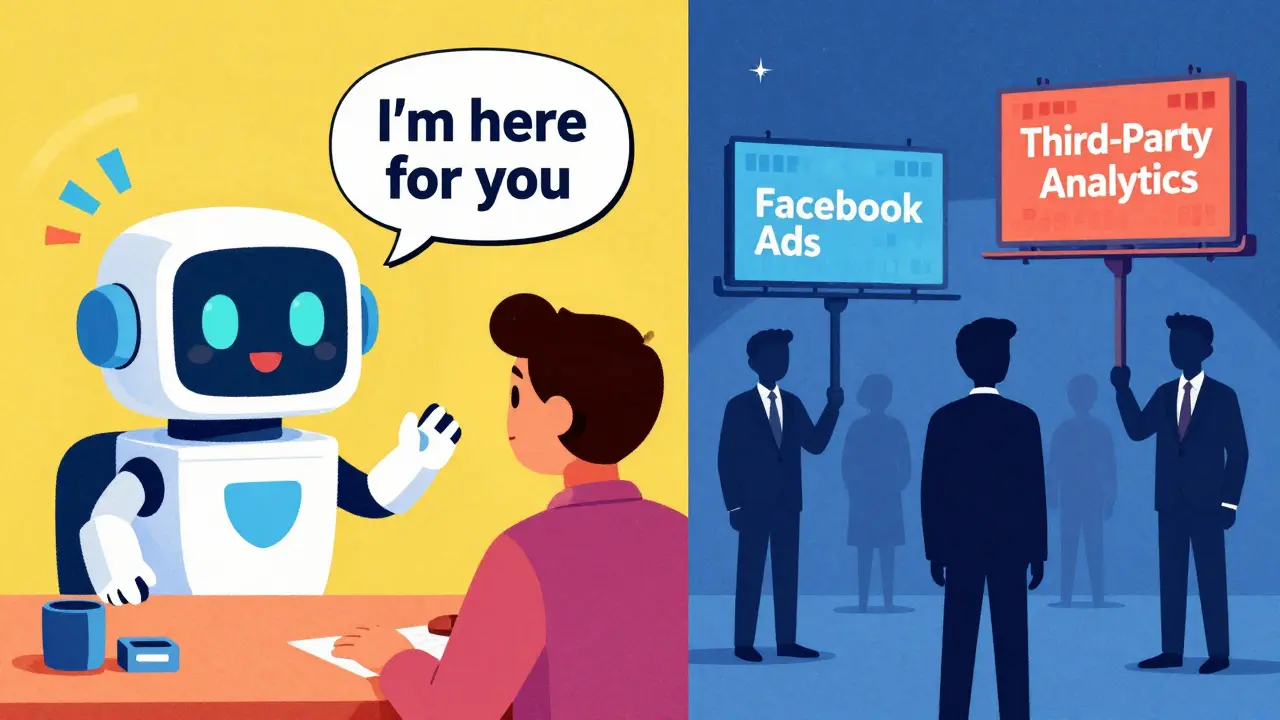
A 2025 study found that 87% of mental health apps have serious privacy vulnerabilities. Some sell your data to advertisers. Others share it with third-party analytics companies that track your behavior across apps. A few even store your data in unencrypted formats, making it easy for hackers to access. One app, for example, was found to be sending users’ journal entries to Facebook’s ad network. Imagine your private thoughts showing up as targeted ads.
Even apps that claim to be "private" often have loopholes. If you use a free version, your data is usually the product-you’re not the customer, the advertiser is. Premium subscriptions don’t always fix this. Many still share anonymized data for "research"-but "anonymized" doesn’t always mean untraceable. With enough data points, experts can re-identify individuals even from stripped-down records.
And what about teletherapy? Video sessions are encrypted, yes-but what about the chat logs? The notes your therapist takes? Who has access to those files? Some platforms store data on servers in countries with weak privacy laws. If you’re in New Zealand, your data might be stored in the U.S. or India, where legal protections are weaker. Always check where your data is stored and what rights you have under local laws like New Zealand’s Privacy Act 2020.
The Real Problem: User Retention and False Hope
Most people download mental health apps with high hopes. A 2024 study found 92% of users tried at least one app during a stressful period. But within three months, nearly 70% stopped using them. Why?
It’s not just about features-it’s about design. Many apps overwhelm you with options. Too many meditations, too many mood logs, too many reminders. You start feeling guilty for not using them enough. One Reddit user wrote: "Downloaded five apps during lockdown. Stuck with Calm for three months. Then stopped. The free version became useless. I paid for premium, but it didn’t feel like it was helping anymore. It just felt like another chore."
Even worse, some apps create dependency. If you’re relying on an AI chatbot to talk through panic attacks, you might delay seeing a real therapist. Dr. Imogen Bell from Brown University warns that digital tools can "foster dependence that replaces, rather than supports, professional care." That’s dangerous. Apps aren’t replacements for diagnosis, medication, or human connection. They’re supplements.
And let’s talk about ratings. A 4.5-star app on the App Store doesn’t mean it works. A 2025 survey found that user ratings and download numbers are terrible predictors of clinical effectiveness. An app with 10 million downloads might be easy to use but offer no real therapy. Another with 50,000 downloads might be built by a university research team and proven to reduce anxiety by 30% in controlled trials. You can’t tell the difference just by looking at the store page.
What Actually Works-And How to Choose
If you’re serious about using digital tools for mental health, here’s how to cut through the noise:
- Look for clinical validation. Does the app cite peer-reviewed studies? Is it mentioned in medical journals? Check if it’s been tested in real trials-not just "in our lab."
- Check who built it. Apps developed by universities, hospitals, or government health agencies are more likely to be trustworthy. For example, apps from the University of Oxford or the U.S. Department of Veterans Affairs have higher credibility.
- Read the privacy policy. Look for these red flags: "We share your data with partners," "Your data may be used for research," or "We use third-party analytics." If you can’t find a clear privacy policy, walk away.
- Start with free trials. Don’t pay upfront. Most reputable apps offer at least a 7-day free trial. Use it to test usability, not just content.
- Combine it with human support. The most effective approach? Hybrid models. Apps that link you to real therapists for scheduled sessions have 43% higher completion rates than apps that are fully self-guided.
For anxiety or depression, apps like Wysa and a clinically validated AI chatbot with 14 studies showing effectiveness in reducing anxiety symptoms are solid choices. For mindfulness, Calm and a widely used app with 100 million downloads and personalized audio programs still leads the pack. For therapy, BetterHelp and a platform with licensed therapists, matching systems, and flexible scheduling is widely used-but be ready for the cost.
The Future: Integration, Regulation, and Real Change
The future of digital mental health isn’t just about better apps-it’s about better systems. By 2027, experts predict 65% of apps will have direct pathways to licensed therapists, meaning if you’re struggling, the app can alert a professional before you hit crisis mode. Some health systems are already testing this. In Australia, the government is piloting a program where GPs can prescribe digital mental health tools as part of Medicare. In Germany, DiGA apps are covered by insurance. That’s the model we need: not just apps sold to consumers, but tools integrated into real healthcare.
But for that to happen, regulation has to catch up. Right now, anyone can build an app and call it "therapy." In the U.S., there’s almost no oversight. In New Zealand, there’s no formal approval system for mental health apps. That means you’re on your own. Until governments step in with clear standards, users must be their own watchdogs.
The market is growing fast-projected to hit $17.5 billion by 2030. But only 15-20% of today’s apps will survive. The rest will vanish, leaving users with abandoned tools and no answers. The ones that remain will be those that prove they work, protect your data, and connect you to real care-not just convenience.
Are mental health apps really effective?
Some are, but most aren’t. Apps with clinical validation-backed by peer-reviewed studies-are more likely to help. For example, Wysa and Youper have published multiple studies showing reductions in anxiety and depression symptoms. But apps that rely only on mindfulness or mood tracking without therapeutic techniques often don’t deliver lasting results. Always check if the app cites research, not just marketing claims.
Can mental health apps replace therapy?
No. Apps are best used as supplements, not replacements. AI chatbots can offer immediate support during a panic attack or help you practice coping skills, but they can’t diagnose, prescribe medication, or provide the depth of care a licensed therapist can. Relying solely on an app can delay getting real help when you need it. If you’re struggling with depression, trauma, or severe anxiety, always seek professional care.
Which mental health apps are the most private?
Apps developed by academic institutions or government health bodies tend to have stronger privacy practices. Examples include the U.S. Department of Veterans Affairs’ PTSD Coach app and the University of Oxford’s SilverCloud program. These typically don’t sell data, use end-to-end encryption, and are transparent about where data is stored. Avoid apps that don’t clearly state their privacy policy or that use third-party trackers like Facebook or Google Analytics.
Why do most people stop using mental health apps?
The main reasons are app fatigue, unmet expectations, and poor design. Many apps bombard users with notifications, require too much input, or don’t adapt to their needs. Others become useless once the free trial ends. Users also report feeling guilty for not using them enough. Studies show that only 29.4% of young people complete digital mental health programs. The key is choosing apps that are simple, personalized, and don’t feel like a chore.
Is teletherapy as effective as in-person therapy?
Yes, for most people. Multiple studies, including those from the American Psychological Association, show that teletherapy is just as effective as in-person sessions for treating anxiety, depression, and PTSD. The key is finding a licensed therapist who specializes in your issue and building a consistent routine. Video sessions offer privacy and convenience, but they work best when combined with regular scheduling and clear communication.
Gloria Ricky
February 14, 2026 AT 01:08Stacie Willhite
February 14, 2026 AT 01:55Jason Pascoe
February 15, 2026 AT 12:21Sonja Stoces
February 16, 2026 AT 12:21Annie Joyce
February 17, 2026 AT 04:40Rob Turner
February 19, 2026 AT 02:16Luke Trouten
February 19, 2026 AT 09:04Gabriella Adams
February 21, 2026 AT 00:14Rachidi Toupé GAGNON
February 21, 2026 AT 05:10Jim Johnson
February 22, 2026 AT 05:11Vamsi Krishna
February 23, 2026 AT 12:02Sophia Nelson
February 25, 2026 AT 10:39Skilken Awe
February 26, 2026 AT 18:07steve sunio
February 28, 2026 AT 15:31Neha Motiwala
March 1, 2026 AT 11:30