Generic drugs save Americans over $300 billion a year. They’re just as safe and effective as brand-name drugs-when they’re marketed truthfully. But too often, ads for generics cross the line. Some imply they’re inferior. Others falsely claim they’re identical to brand-name drugs without FDA approval for that specific use. These aren’t just shady marketing tactics-they’re illegal. And the consequences can be deadly.
What Counts as False Advertising in Generic Drugs?
False advertising in generics happens when a company misleads patients or doctors about what the drug can do. It’s not just about lying. It’s about creating false impressions. For example, an ad that says a generic version of a blood thinner is "less reliable" than the brand name, without clinical proof, violates federal law. So does an ad that uses the same color, shape, or logo as the brand-name drug to confuse consumers.
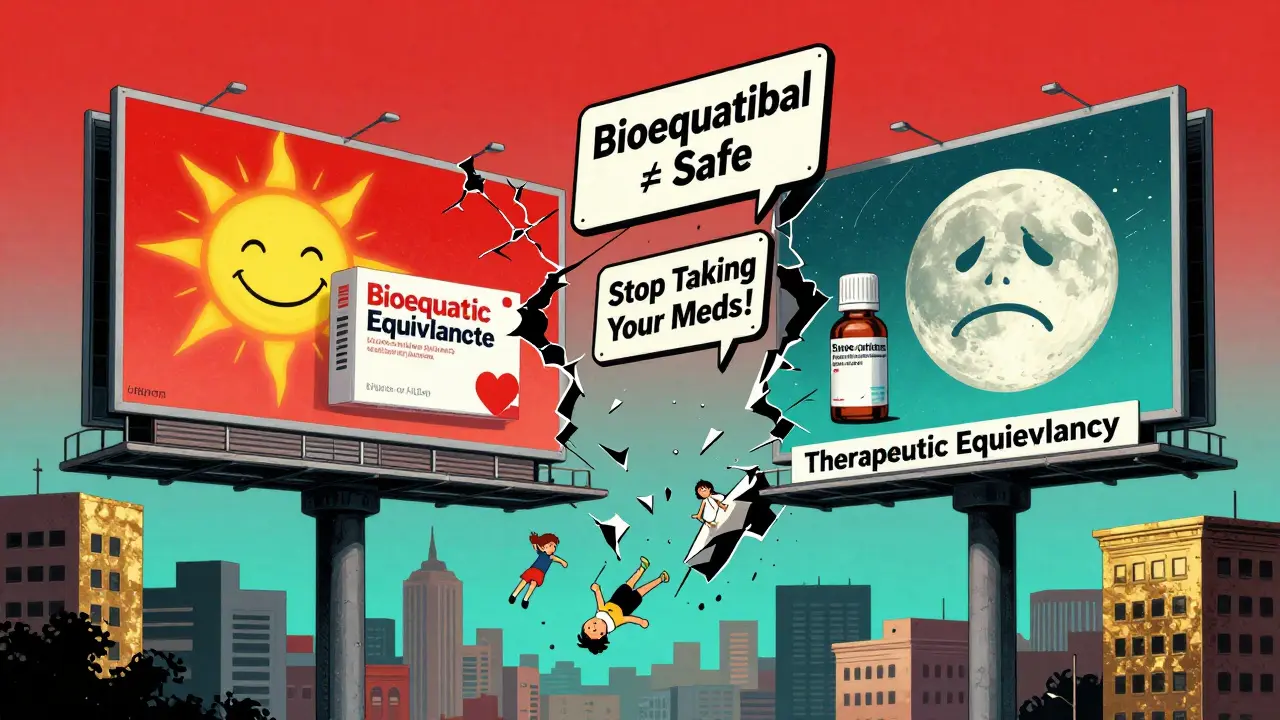
The FDA requires all generic drugs to prove they’re bioequivalent-meaning they deliver the same amount of active ingredient into the bloodstream at the same rate as the brand-name version. That’s usually within 80% to 125% of the original. But ads can’t say "identical" unless that’s been officially confirmed by the FDA for therapeutic equivalence. Many generics are bioequivalent but not therapeutically equivalent for drugs with a narrow therapeutic index, like levothyroxine or warfarin. Ads that blur that line put patients at risk.
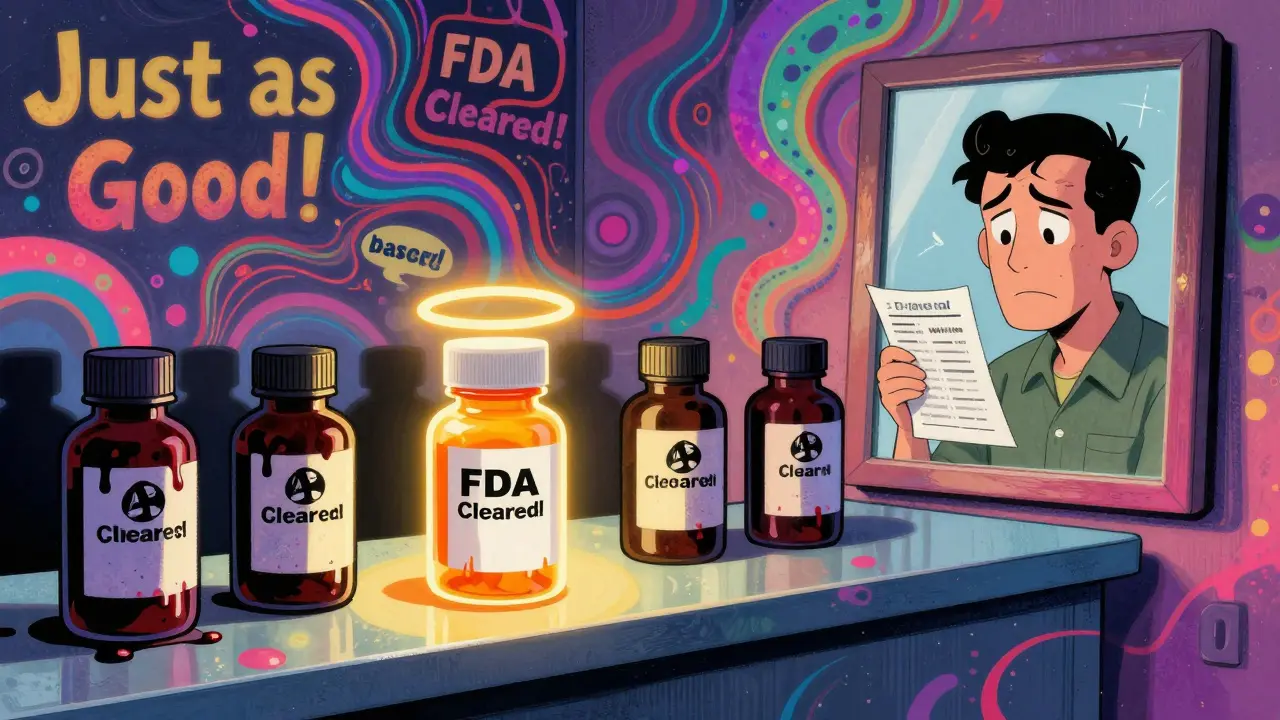
Another common violation: using the phrase "FDA Approved" for a drug that’s only been cleared for sale, not formally approved under the ANDA pathway. That’s a legal trap. In 2024, the FDA issued a warning letter to a small generic maker for this exact mistake. The company had to pull 12,000 ads and pay $75,000 in fines.
Legal Risks: It’s Not Just the FDA
Most people think the FDA is the only agency watching. They’re wrong. The Lanham Act lets competitors sue each other for false advertising-even if no consumer was harmed. In 2023, a major generic manufacturer was hit with a $180 million lawsuit after claiming its version of a cholesterol drug was "just as good" as the brand, even though the FDA had never declared therapeutic equivalence. The court ruled the claim created consumer confusion and unfairly damaged the brand’s market share.
State laws add another layer. New York’s General Business Law § 349 lets consumers sue for deceptive practices and collect up to $1,000 per violation, plus triple damages. California’s Unfair Competition Law is even stricter-it requires advertisers to prove every claim with scientific evidence before running the ad. Florida bans ads from using government logos or terms like "health alert" unless they’re issued by the FDA itself.
And now, the federal government is cracking down. In September 2025, President Biden issued a memorandum directing the Department of Health and Human Services to target ads that "advantage expensive drugs over cheaper generics." The FDA responded by sending out 100 cease-and-desist letters and over 3,000 warning letters in just six weeks. Most targeted misleading comparisons between brand-name and generic drugs.
How Ads Mislead Patients (And Why It’s Dangerous)
Patients don’t read fine print. They see a flashy ad for a brand-name drug that says, "The #1 prescribed heart medication," followed by a tiny disclaimer: "Generics available." That’s not neutral-it’s designed to make generics seem like second-rate options. A 2024 FDA survey found that 41% of patients were confused about whether generics worked as well, after seeing such ads.
Even worse are ads that play on fear. One viral campaign claimed that "generic levothyroxine has been linked to thyroid crises," citing a non-existent FDA alert. In reality, the FDA has confirmed bioequivalence for all approved generic versions of this drug. But the ad caused thousands of patients to stop taking their meds. The FDA tracked 1,247 adverse events linked to patients discontinuing generics because of misleading ads. Over 30% of those patients suffered serious health setbacks-ranging from heart attacks to hospitalizations.
Another tactic: implying cost savings without proof. A generic company ran an ad saying, "Save up to 80% on your prescription!" But they didn’t show what the original price was, or whether that savings applied to all insurance plans. The FTC stepped in, calling it "deceptive pricing." The company had to rewrite every ad and pay a $250,000 fine.
What’s Allowed? The Rules for Legal Generic Ads
There’s nothing wrong with promoting generics. In fact, the FDA encourages it. But the rules are clear:
- You must state clearly: "This is a generic drug" or "Generic version of [Brand Name]."
- You must name the reference listed drug (the brand-name version).
- You cannot claim superiority unless you have head-to-head clinical trials proving it.
- You must disclose all major side effects and contraindications-not just mention them in a footnote.
- Any cost claims must be verifiable and include context (e.g., "Saves $45 per month compared to brand-name, based on average cash price").
Visuals matter too. The FDA’s 2024 "clear, conspicuous, and neutral" rule requires risk information to appear in at least 14-point font with 50% contrast against the background. That means no hiding warnings in tiny text at the bottom of a YouTube ad. No fading out the side effects while the music swells.
And here’s the biggest change: the FDA is eliminating the "adequate provision" loophole. For years, TV and radio ads could say, "See full risks at [website]." Now, all broadcast and digital ads must include complete risk information within the ad itself. No more burying the bad news.
Who’s Enforcing This-and How?
The FDA handles labeling and direct claims about drug safety and effectiveness. The FTC goes after deceptive pricing, unsubstantiated claims, and misleading comparisons. State attorneys general pursue consumer fraud cases. And competitors? They’re watching each other closely.
Major generic manufacturers now spend $2 million a year on compliance teams. These teams include regulatory affairs experts, legal counsel, medical writers, and pharmacists-all reviewing every ad before it runs. One company, Pfizer, invested $45 million in an AI-driven ad review system that flags risky language in real time. Smaller companies? Many still rely on one overworked compliance officer. That’s why only 47% of small generic makers are fully compliant, compared to 83% of the top 25.
Penalties are rising. A single violation can cost $10,000 under New York law. Repeat offenders face treble damages under the Lanham Act. In 2012, GlaxoSmithKline paid $3 billion for misleading claims about one drug. The message is clear: the cost of breaking the rules now far exceeds the cost of following them.
What Happens If You’re a Patient?
If you’ve been told your generic drug is unsafe, or that the brand is "better," you’re being misled. The FDA has approved thousands of generic versions of essential medications-insulin, blood pressure pills, antidepressants, seizure drugs. They work. They’re tested. They’re monitored.
Don’t stop taking your meds because of an ad. Talk to your pharmacist or doctor. Ask: "Is this generic approved for my condition?" and "Has the FDA confirmed it’s equivalent?" If they’re unsure, check the FDA’s Orange Book online. It lists all approved generics and their therapeutic equivalence ratings.
And if you see a suspicious ad, report it. The FDA has a portal for reporting misleading pharmaceutical ads. You don’t need to be a doctor. You just need to be a patient who cares about truth.
The Bigger Picture: Why This Matters
The U.S. generic drug market is worth $140 billion. It fills 90% of all prescriptions. If false advertising drives patients away from generics, it doesn’t just hurt companies-it hurts the whole system. Higher drug costs. More insurance premiums. More people skipping meds because they can’t afford them.
Companies that play fair win. They build trust. They save lives. Those that cut corners? They get sued. They get shut down. And their customers pay the price.
The rules aren’t perfect. Enforcement is uneven. But the direction is clear: transparency is mandatory. Deception is no longer tolerated. And patients deserve to know the truth-without having to dig through fine print or fearmongering ads.
Can a generic drug be advertised as "the same" as the brand-name version?
Only if the FDA has officially determined therapeutic equivalence. Bioequivalence (same absorption rate) doesn’t automatically mean therapeutic equivalence (same clinical effect). For drugs like levothyroxine or warfarin, even small differences matter. Ads must specify "FDA-approved as therapeutically equivalent"-or avoid the comparison entirely.
What’s the difference between "FDA Approved" and "FDA Cleared" for generics?
"FDA Approved" means the drug went through the Abbreviated New Drug Application (ANDA) process and met all safety and efficacy standards. "FDA Cleared" is a misstatement. Generics aren’t "cleared"-they’re approved. Using "cleared" implies a lower standard, which is false and can trigger legal action under the Lanham Act.
Can generic drug ads mention cost savings?
Yes, but only if they’re accurate and specific. Saying "Save up to 80%" without context is illegal. Ads must state the source of the savings (e.g., "Based on average cash price at U.S. pharmacies") and avoid implying universal savings. The FTC requires all pricing claims to be substantiated with current, verifiable data.
Why are some generic drugs more expensive than others?
Price differences come from manufacturing costs, supply chain issues, and market competition-not quality. Two generics of the same drug may cost different amounts because one company produces it more efficiently or has a better distribution deal. The FDA doesn’t regulate price, only safety and equivalence. A higher price doesn’t mean better quality.
What should I do if I see a misleading generic drug ad?
Report it to the FDA’s MedWatch program online or by phone. You can also file a complaint with your state attorney general’s office. If you’re a competitor, you may have grounds for a Lanham Act lawsuit. Don’t ignore it-misleading ads cost lives.
Are there any legal exceptions for small generic manufacturers?
No. The law applies equally to all manufacturers, regardless of size. Small companies often lack compliance teams, which makes them more vulnerable to violations. But the FDA doesn’t offer leniency. In fact, 2025 enforcement data shows small manufacturers are 3 times more likely to receive warning letters than large ones.
If you’re a manufacturer, invest in compliance before you’re forced to. If you’re a patient, don’t let ads make you afraid of a medicine that could save your life. Truth matters. And in healthcare, it’s not just ethical-it’s the law.
Frank SSS
December 31, 2025 AT 06:36Man, I saw an ad for a generic blood pressure med last week that looked exactly like the brand-name one-same color, same logo, even the same font. I almost bought it thinking it was the real thing. Then I read the tiny print and realized it was a generic. Scary how easy it is to get tricked. This post? Needed.
Joy Nickles
December 31, 2025 AT 07:52OMG I CANT BELIEVE THIS IS STILL HAPPENING!!! Like, I took a generic for my thyroid and my doctor said it was "just as good" but then I read online that some generics have like 20% variation??? I nearly had a heart attack!!! WHY DOESN’T THE FDA JUST FIX THIS???
Marilyn Ferrera
January 2, 2026 AT 05:03Therapeutic equivalence ≠ bioequivalence. That’s the core issue. The FDA’s Orange Book exists for a reason-check it before switching meds. Most patients don’t. That’s the real failure-not the ads, but the lack of patient education.
Lawver Stanton
January 3, 2026 AT 01:59Look, I get it-generics save money. But let’s be real: if you’re on warfarin or levothyroxine, you’re playing Russian roulette with your life every time you refill. I’ve had three different generics for my thyroid in the last two years. Each one made me feel like crap for two weeks. The FDA says they’re "equivalent"-but my body doesn’t agree. And no, I’m not going back to the brand name because I can’t afford it. So who’s responsible here? The company? The pharmacist? The doctor who didn’t warn me? Nobody. That’s the problem.
And don’t even get me started on those YouTube ads. "Save 80%!"-yeah, right. My copay went up because my insurance switched me to a new generic that’s not covered the same way. They don’t tell you that. They just show a smiling grandma holding a pill bottle like it’s a magic wand.
I’ve filed three complaints with the FTC. Got a form letter back each time. Meanwhile, my neighbor’s kid had a seizure because his parents switched him to a cheap generic for his epilepsy meds after seeing an ad that said "just as effective." He’s fine now, but he’s on a feeding tube. That’s not a coincidence.
And don’t tell me "small companies are more likely to violate"-that’s just corporate-speak to make big pharma look better. The biggest violators? The ones with the fancy compliance teams. They know the loopholes. They hire lawyers to write ads that technically don’t lie-but still lie. It’s not illegal if you don’t say the word "identical." But everyone knows what you mean.
The FDA’s new rules? Too little, too late. They’re still letting companies use "FDA Approved" like it’s a badge of honor. It’s not. It’s just the minimum. The real standard should be: "Can I trust this with my life?" And the answer for most generics? Not always.
I’m not anti-generic. I’m pro-truth. And right now, truth is buried under a mountain of marketing fluff and regulatory hand-waving.
Urvi Patel
January 4, 2026 AT 21:07USA always overreacting why you even care about ads so much in India we just take what pharmacy give us and survive its called life not marketing drama
anggit marga
January 5, 2026 AT 13:48Why is everyone acting like America is the only country with fake meds? In Nigeria we have fake drugs everywhere and people still take them because they have no choice and you all are crying about ads?? This is rich
Emma Hooper
January 7, 2026 AT 00:24Let me just say this-some of these generic ads are straight-up psychological warfare. They don’t just mislead, they weaponize your fear of cost. "You’re paying too much!"-but they never show you the real price of the brand. It’s manipulation disguised as savings. And guess what? The people who fall for it? They’re the ones who end up in the ER because they stopped their meds. That’s not a typo. That’s a tragedy.
I used to work in pharma marketing. I’ve seen the focus groups. They test how fast you look away from the side effects. They test if the word "generic" makes you feel cheap. And they win every time.
Brady K.
January 7, 2026 AT 22:21Let’s cut through the BS. The FDA doesn’t regulate ads-they regulate paperwork. The real enforcers? Competitors. Big generic companies sue each other like it’s a blood sport. Why? Because if your rival’s ad makes their drug look like a miracle, you lose market share. So they weaponize the Lanham Act. It’s not about patient safety-it’s about corporate turf wars dressed up in legal jargon.
And don’t get me started on the "FDA Approved" confusion. That’s not a mistake. That’s a feature. The industry *wants* you to think approval = safety = identical. It’s not. It’s a regulatory checkbox. The real difference? Manufacturing consistency. And that’s not tracked publicly. So when your generic makes you nauseous, it’s not the drug-it’s the filler. And no one’s required to tell you that.
The real solution? Ban all direct-to-consumer ads for generics. Let doctors and pharmacists decide. Because patients? We’re not dumb-we’re just exhausted. And when you’re exhausted, you click the ad that says "save 80%" without reading a word.
Martin Viau
January 9, 2026 AT 14:06As a Canadian pharmacist who’s seen this play out across borders-this isn’t unique to the U.S. We have the same issues. But here’s the twist: in Canada, we don’t allow direct-to-consumer ads for prescription drugs at all. No TV. No YouTube. No banners. Just the facts, delivered by your pharmacist. And guess what? Patient trust in generics is 92%. Why? Because we removed the marketing noise. Maybe the U.S. needs to stop treating meds like soda and start treating them like life support.
Chandreson Chandreas
January 10, 2026 AT 05:46Bro, I switched to a generic for my antidepressant last year and I felt like a zombie for 3 weeks. My doctor said "it’s the same" but my brain knew better 😔. Now I just stick with the brand. I’d rather pay more than feel like I’m underwater all day. 🙏
Retha Dungga
January 11, 2026 AT 07:44People think the FDA is some all knowing god but it's just a bureaucracy that moves slow and lets companies play the system. The real hero here is the pharmacist who knows which generics are actually reliable. But you gotta ask. And most people don't. They just trust the ad. Sad
Kayla Kliphardt
January 11, 2026 AT 22:58Do you know which generic brands are actually reliable? I’ve been using the same one for my blood pressure for three years and never had an issue. But I only use the ones my pharmacist recommends. I don’t trust ads. I trust the person who fills my prescription.
Darren Pearson
January 13, 2026 AT 16:52The notion that patients are passive victims of advertising is a convenient myth. The reality is that the healthcare system has failed to provide accessible, personalized education. Patients are not irrational-they are under-informed. The solution is not more regulation-it is better communication. Pharmacists should be required to provide a one-page, plain-language summary of therapeutic equivalence at every fill. That’s actionable. That’s scalable. That’s ethical.
Harriet Hollingsworth
January 13, 2026 AT 22:15It’s disgusting. People are dying because of ads. And the companies? They just pay a fine and move on. It’s a cost of doing business. If you broke the law and caused a death in any other industry, you’d go to jail. But in pharma? You get a press release and a new marketing team. This isn’t just unethical-it’s criminal.