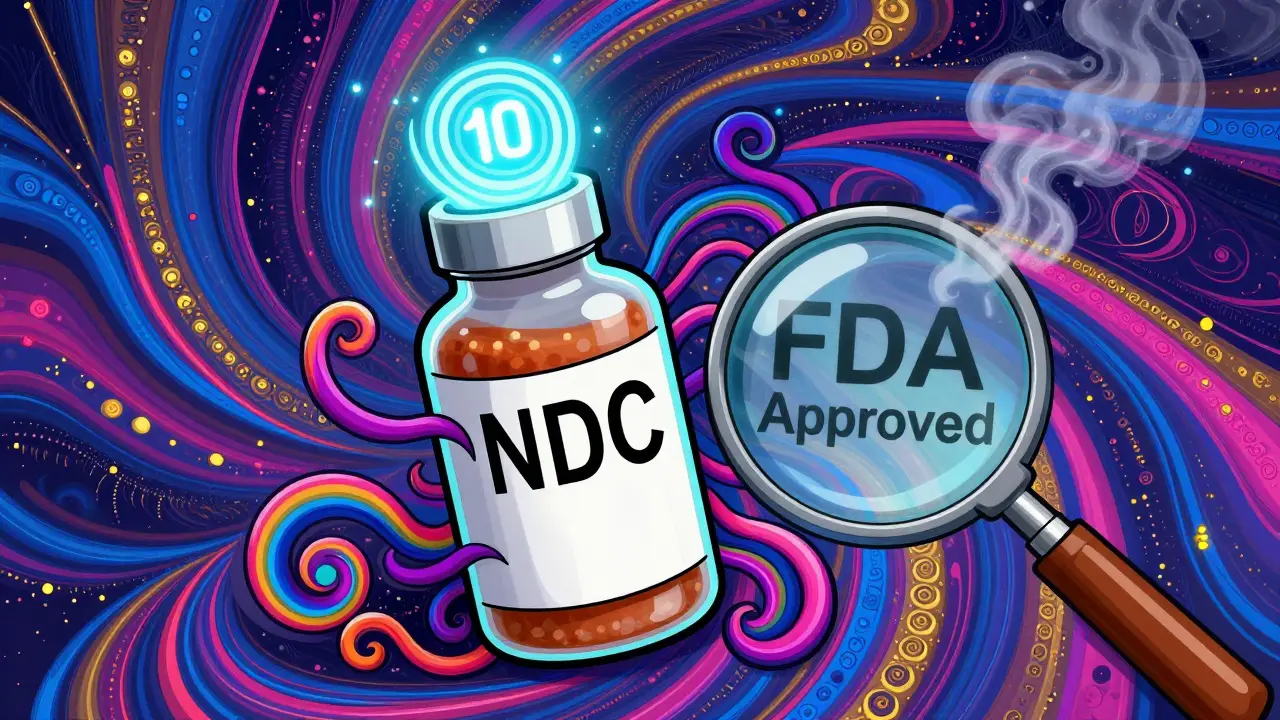
Every year, millions of people in the U.S. take prescription drugs without ever checking if they’re real. That’s a dangerous habit. Counterfeit medications aren’t just fake-they can be laced with rat poison, chalk, or nothing at all. And while most drugs come from legitimate sources, the FDA estimates that counterfeit drugs cost the global pharmaceutical industry over $200 billion annually. The good news? You don’t need to be a pharmacist to spot them. The FDA has built public databases that let anyone check if a drug is approved, properly labeled, and legally sold in the U.S.
What the FDA Databases Actually Do
The FDA doesn’t just approve drugs. It tracks them from the factory to your pharmacy. Three main databases work together to make this possible: the NDC Directory, the Drug Establishments Current Registration Site, and the Orange Book. These aren’t hidden systems. They’re free, public, and updated daily.The NDC Directory is your first stop. Every approved drug in the U.S. gets a National Drug Code-a 10- or 11-digit number that breaks down into three parts: the labeler (who makes it), the product (what it is), and the package (how it’s sold). If a drug doesn’t have a valid NDC in this database, it’s not legally approved. That includes many online pills sold as "generic" versions of popular drugs. If you see a pill with no NDC on the box, walk away.
The Drug Establishments Current Registration Site tells you who’s allowed to make or distribute drugs. Every company that handles prescription meds must register with the FDA and renew every year. If a pharmacy or distributor isn’t listed here, they’re operating illegally. You can search by company name or location. No listing? That’s a red flag.
The Orange Book lists drugs approved as therapeutically equivalent. That means if your doctor prescribes a brand-name drug, you can safely switch to a generic listed here. But if a generic isn’t in the Orange Book, it might not work the same-or worse, it might be fake.
How to Use the NDC Directory to Check a Drug
Let’s say you bought a bottle of metformin online. The label says it’s made by "Global Pharma LLC." You’re not sure. Here’s how to check:- Find the NDC on the package. It’s usually printed near the barcode. Example: 0002-0402-01
- Go to the FDA’s NDC Directory at fda.gov/drugs/drug-approvals-and-databases/national-drug-code-directory
- Enter the full NDC number into the search box.
- Check the results: Is the labeler name the same? Is the drug approved for the same use? Is the packaging size correct?
If the search returns nothing, the drug isn’t FDA-approved. If the labeler name doesn’t match, it’s likely counterfeit. If the dosage is wrong or the form (tablet vs. capsule) doesn’t match, it’s a red flag.
Pro tip: Don’t rely on the label alone. Fake packages look real. The NDC is the only guaranteed identifier. Even if the bottle says "FDA-approved," if it’s not in the database, it’s a lie.
Spotting Fake Drugs: Real-World Red Flags
Counterfeiters don’t just copy the pill. They copy the whole box. But they miss details. Here’s what to look for:- Spelling errors on the label
- Unusual pill color, size, or imprint
- Missing or blurry barcodes
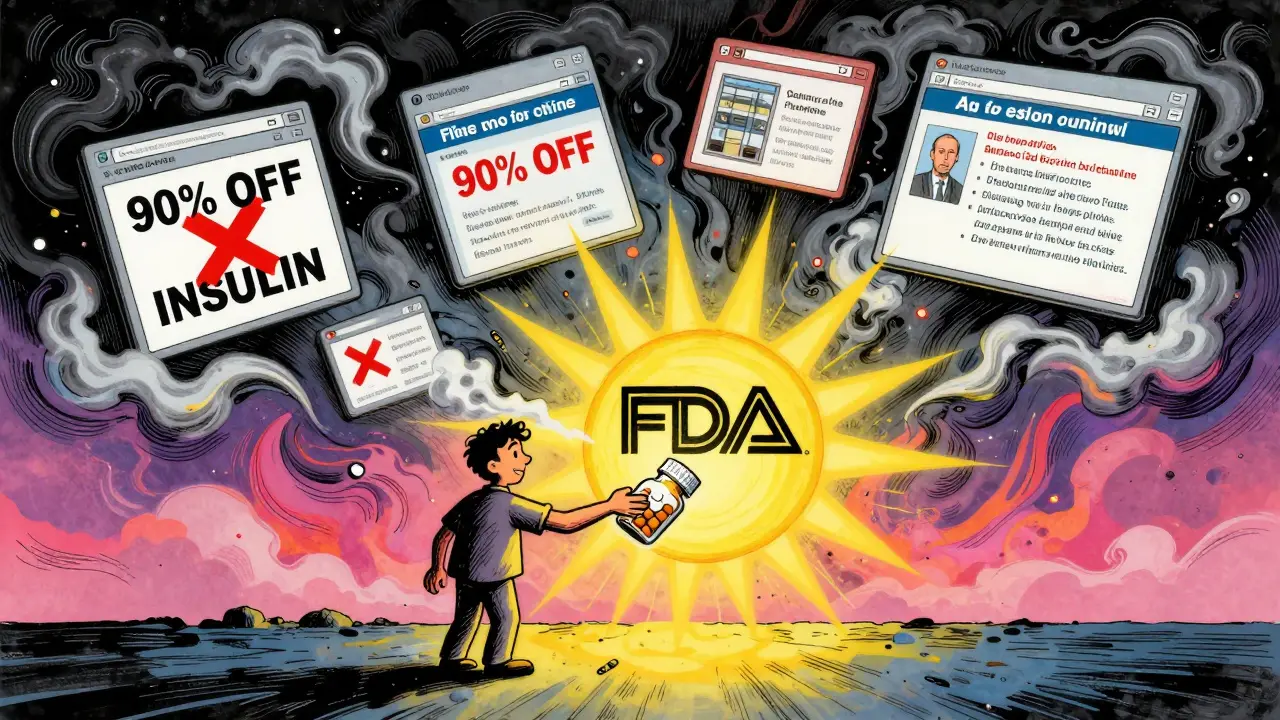
- Price that’s too good to be true (e.g., 90% off brand-name insulin)
- Online sellers without a physical address or phone number
- Pharmacies that don’t require a prescription
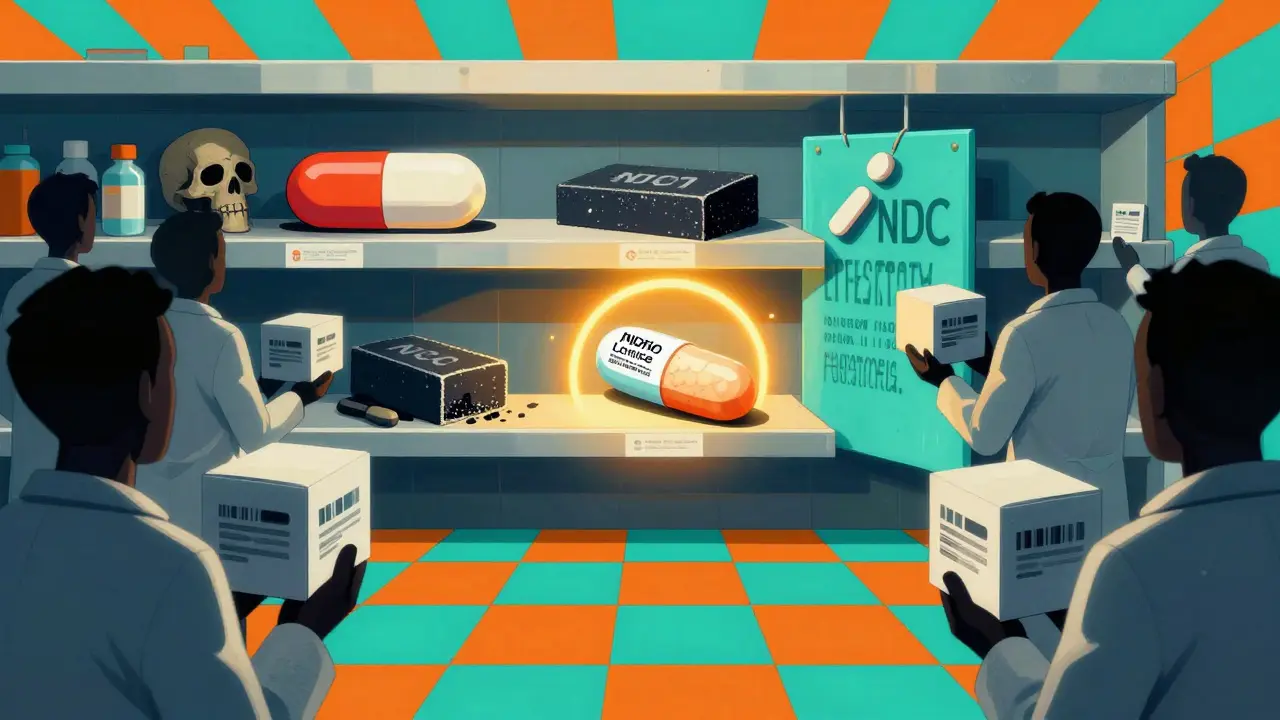
In 2022, the FDA seized over 10 million counterfeit pills-many of them fake versions of opioids, diabetes meds, and heart drugs. One batch of fake metformin contained boric acid. Another had no active ingredient at all. Patients didn’t know until they had a medical emergency.
The most dangerous counterfeits are those that look perfect. That’s why checking the NDC is non-negotiable. A 2021 FDA study found that 87% of counterfeit drugs passed visual inspection by pharmacists. Only the database caught them.
What the DSCSA Changes Mean for You
Starting November 27, 2023, the Drug Supply Chain Security Act (DSCSA) made a big shift. Before, companies only had to verify drugs at the batch level. Now, every single package must have a unique identifier-like a serial number on a phone.This means pharmacies and distributors must scan each pill bottle before selling it. If the code doesn’t match the manufacturer’s system, the drug is quarantined. This system is still rolling out, but it’s already cutting counterfeit incidents by 78% in companies that use it fully.
For you, the consumer, this means fewer fake drugs will reach shelves. But it doesn’t mean you can relax. The system only works if everyone plays by the rules. Foreign suppliers? Only 35% comply. Online pharmacies? Many still operate outside the system.
Why You Can’t Rely on Google or Amazon
You might think, "I’ll just Google the drug name and see what comes up." Don’t. Amazon, eBay, and social media sellers often list fake drugs with fake FDA claims. The FDA doesn’t regulate online pharmacies unless they’re registered with them. And most aren’t.There are only 3,000 verified online pharmacies in the U.S. Out of over 35,000 websites selling drugs, 96% are illegal. The FDA’s website has a list of verified pharmacies you can trust. If a site isn’t on that list, assume it’s unsafe.
What to Do If You Find a Fake Drug
If you suspect a drug is counterfeit:- Stop taking it.
- Keep the packaging and any receipts.
- Report it to the FDA’s MedWatch program at fda.gov/medwatch.
- Call your pharmacist or doctor.
The FDA gets over 1,000 reports of suspected counterfeit drugs every year. Most come from patients. Your report helps them shut down dangerous operations.
Who’s Responsible for This System?
The FDA doesn’t do this alone. Manufacturers, distributors, and pharmacies all have legal obligations under DSCSA. They must:- Register with the FDA annually
- Submit accurate drug listings in electronic format
- Verify every drug they handle
- Keep records for six years
Companies that fail face fines, shutdowns, or criminal charges. In 2022, the FDA issued 68 warning letters for DSCSA violations. That’s not a slap on the wrist-it’s a legal threat.
But the system isn’t perfect. A 2022 survey found that 38% of verification failures happened because different companies used different NDC formats. One company might list a drug as 0002-0402-01, another as 00002-0402-01. The FDA is fixing this by moving to a 12-digit NDC format by 2026.
Bottom Line: Don’t Guess. Check.
You don’t need to understand all the tech behind FDA databases. You just need to know this: if you’re taking a prescription drug, check its NDC. It takes 30 seconds. It could save your life.Counterfeit drugs aren’t a distant threat. They’re in your medicine cabinet right now-if you haven’t checked. The FDA built these tools so you don’t have to trust a label, a website, or a salesperson. You can trust data. Use it.
How do I find the NDC on my medication?
The NDC is usually printed on the drug packaging near the barcode. It’s a 10- or 11-digit number in three segments, like 0002-0402-01. If you can’t find it on the box, check the bottle label or ask your pharmacist. If the drug came from an online pharmacy and has no NDC, don’t take it.
Are all generic drugs safe?
Only generics listed in the FDA’s Orange Book are guaranteed to work the same as the brand-name drug. Many online sellers offer unapproved generics that look real but contain no active ingredient-or worse. Always verify the NDC and check the Orange Book before taking any generic.
Can I trust online pharmacies?
Only if they’re on the FDA’s list of verified online pharmacies. Over 96% of websites selling drugs online are illegal. Look for the VIPPS seal (Verified Internet Pharmacy Practice Sites) and make sure the pharmacy requires a prescription. If it doesn’t, walk away.
What’s the difference between the NDC Directory and the Orange Book?
The NDC Directory tells you if a drug is approved and who makes it. The Orange Book tells you if a generic version is therapeutically equivalent to the brand-name drug. You need both to be sure you’re getting a safe, effective medication.
What happens if I report a fake drug to the FDA?
Your report helps the FDA track counterfeit supply chains and shut down illegal operations. The agency investigates every report and often works with customs and law enforcement to stop shipments. You might not hear back, but your report saves lives.
Is the FDA’s system foolproof?
No system is perfect. Some counterfeit drugs slip through, especially from unregulated foreign suppliers. But the FDA’s databases and DSCSA rules have cut counterfeit incidents dramatically since 2013. Your job is to use the tools they’ve given you. Check the NDC. Report suspicious drugs. Don’t assume.
Palesa Makuru
January 3, 2026 AT 17:59Wow, I’m shocked anyone still buys meds online without checking the NDC. I mean, come on. You wouldn’t trust a stranger with your credit card, but you’ll swallow some mystery pill from a website that looks like it was coded in 2003? 🤦♀️ I’ve seen people order insulin from ‘PharmaBazaar’ and then act surprised when they get hypoglycemic. It’s not just dangerous-it’s embarrassing for the species.
Hank Pannell
January 5, 2026 AT 00:10What’s fascinating isn’t just the existence of the NDC database-it’s the epistemological rupture it forces upon consumer trust. We’ve been conditioned to believe that regulatory legitimacy is a static property of objects, when in reality, it’s a dynamic, digitally-verifiable state. The Orange Book isn’t just a registry-it’s a distributed ledger of therapeutic equivalence, a kind of pharmacological blockchain. The DSCSA’s serialization mandates are the first real step toward a zero-trust supply chain in medicine. We’re not just verifying pills-we’re reconstructing the ontology of pharmaceutical safety.
veronica guillen giles
January 5, 2026 AT 13:58Oh honey. You mean you didn’t already know this? I taught my 72-year-old mom how to check NDCs last year. She’s now the most suspicious person at her senior center. Walked out of a pharmacy last month because the label had a comma in the wrong place. ‘Honey,’ she said, ‘if they can’t spell ‘tablet’ right, how’s the metformin gonna work?’ I’m not proud. I’m just… prepared.
Ian Ring
January 7, 2026 AT 12:28Excellent breakdown. Truly. I’ve been checking my prescriptions since 2018 after a bad experience with a ‘generic’ Adderall that tasted like chalk and gave me migraines. The NDC search saved me. I now screenshot the results and save them in a folder called ‘Not-Dead-Yet’. 😅 The DSCSA rollout? Still patchy. My local CVS scans, but my mail-order? Still no barcode validation. Frustrating. But better than nothing.
erica yabut
January 9, 2026 AT 10:22Let’s be real: if you’re taking anything that didn’t come from a CVS, Walgreens, or a hospital pharmacy, you’re basically playing Russian roulette with your liver. And don’t even get me started on the ‘natural supplements’ sold by Instagram influencers who think ‘organic’ means ‘I found this in a cave in Peru.’ The FDA databases aren’t a luxury-they’re a moral imperative. If you’re too lazy to check an NDC, you don’t deserve to live. 😘
Tru Vista
January 10, 2026 AT 17:00Orange Book = only legit generics. NDC = only legit pills. DSCSA = future. Done. Why is this even a post? Everyone knows this. Also, ‘labeler’ is spelled wrong in the article. 😴
Vincent Sunio
January 11, 2026 AT 12:20While the intent of this piece is commendable, the prose is riddled with redundant phrasing and an unseemly reliance on emotional appeals. The assertion that counterfeit drugs are ‘laced with rat poison’ is hyperbolic and unscientific. The FDA’s own data indicates that the majority of adulterants are inert substances-chalk, talc, cellulose-not biohazards. Furthermore, the claim that 96% of online pharmacies are illegal is misleading; it conflates unverified with unlawful. Precision matters. Especially in medicine.
Angela Goree
January 12, 2026 AT 04:07U.S. citizens are the only ones who get to use these databases. What about the rest of the world? I buy my insulin from Canada. Should I just die because I can’t afford U.S. prices? This isn’t safety-it’s protectionism dressed up as public health. And you wonder why people risk it.
Tiffany Channell
January 12, 2026 AT 20:46Let’s not romanticize the FDA. They approved opioids for decades. They ignored contaminated heparin in 2008. They let fake metformin slip through in 2020. This isn’t a safety net-it’s a PR campaign. The real solution? Universal healthcare with centralized dispensing. Not some website you check after you’ve already swallowed the pill. You’re not a detective. You’re a patient. And you’re being exploited.
Haley Parizo
January 14, 2026 AT 06:01What’s missing here is the global context. The FDA’s databases are a luxury of the Global North. In Nigeria, India, or Bolivia, people use these same drugs-but they don’t have access to NDCs. They rely on community pharmacists, word of mouth, and luck. This post reads like an American privilege manifesto. The real injustice isn’t that people don’t check NDCs-it’s that they have to choose between starvation and a fake pill. Maybe we should fix the system instead of blaming the patient.