
When you're diagnosed with heart failure, the list of medications can feel overwhelming. But here’s the truth: the right combination of four key drug classes - ACE inhibitors, ARNI, beta blockers, and diuretics - doesn’t just manage symptoms. It saves lives. For people with heart failure with reduced ejection fraction (HFrEF), these drugs are the backbone of modern treatment. And the science behind them has changed dramatically in the last decade.
How ACE Inhibitors Work - and Why They’re Still Used
ACE inhibitors were the first big breakthrough in heart failure treatment. Back in the 1980s, doctors noticed that patients taking captopril or enalapril didn’t just feel better - they lived longer. These drugs block an enzyme that turns angiotensin I into angiotensin II, a hormone that tightens blood vessels and makes the heart work harder. By stopping this, ACE inhibitors lower blood pressure, reduce strain on the heart, and slow damage to heart muscle.
Studies like the CONSENSUS trial showed enalapril cut death rates by 27% in severe heart failure. Today, common ACE inhibitors include lisinopril, enalapril, and ramipril. Most start at low doses - like 2.5 mg of lisinopril daily - and slowly increase over weeks to reach target doses of 20-40 mg. That slow ramp-up isn’t just caution; it’s necessary. Too fast, and your blood pressure can drop too low, making you dizzy or faint.
But there’s a catch. About 1 in 5 people develop a dry, persistent cough. It’s not dangerous, but it’s annoying enough that many stop taking the drug. Others face high potassium levels (hyperkalemia), which can be dangerous if not monitored. That’s why blood tests are required every 1-2 weeks after starting or changing the dose.
ARNI: The New Gold Standard Replacing ACEIs
In 2015, everything shifted. The FDA approved sacubitril/valsartan - better known by its brand name, Entresto. This isn’t just another ACE inhibitor. It’s a hybrid: it blocks angiotensin receptors like an ARB, but also blocks neprilysin, an enzyme that breaks down helpful hormones called natriuretic peptides. Those peptides help your body get rid of salt and water, relax blood vessels, and reduce heart strain.
The PARADIGM-HF trial compared Entresto to enalapril in nearly 8,400 patients across 47 countries. The results were clear: Entresto reduced the risk of death from heart failure or hospitalization by 20%. That’s not a small improvement - it’s one of the biggest leaps in heart failure care in decades.
Because of this, the 2022 heart failure guidelines now say: if you’re eligible, start with ARNI, not an ACE inhibitor. You don’t need to wait. But there’s a strict rule: you must wait at least 36 hours after your last ACE inhibitor dose before starting Entresto. Why? Because combining them too soon raises the risk of angioedema - a rare but serious swelling of the face, tongue, or throat.
Side effects? Dizziness and low blood pressure are common at first. But most people adjust. Real-world data from PatientsLikeMe shows 82% of users stick with ARNI because they notice better energy and less shortness of breath. The big downside? Cost. Without insurance, Entresto runs about $550 a month. That’s why adoption is still lower in community clinics than in big hospitals.
Beta Blockers: Slowing the Heart to Save It
It sounds backwards - why would you slow down a heart that’s already struggling? But in heart failure, the body’s stress response keeps pumping adrenaline, which overworks the heart and damages it over time. Beta blockers like carvedilol, metoprolol succinate, and bisoprolol block those signals.
They don’t work right away. In fact, they can make you feel worse at first. That’s why doctors start low - maybe 3.125 mg of carvedilol twice a day - and wait 2-4 weeks before doubling the dose. You need to be stable, with no signs of fluid buildup or low blood pressure.
The payoff? The CIBIS-II trial showed bisoprolol cut death rates by 34%. The COPERNICUS trial found carvedilol reduced mortality by 35% in severe cases. These aren’t just numbers - they’re real people living longer. One Reddit user, u/CHFSurvivor, shared that after 18 months on carvedilol, their ejection fraction jumped from 25% to 45%.
Side effects? Fatigue, dizziness, and low heart rate. Some people feel too tired to walk the dog. But most find that after 2-3 months, their energy improves. That’s because the heart is finally getting a chance to rest and recover. Don’t quit if you feel sluggish at first. Talk to your doctor - it might just be the dose.
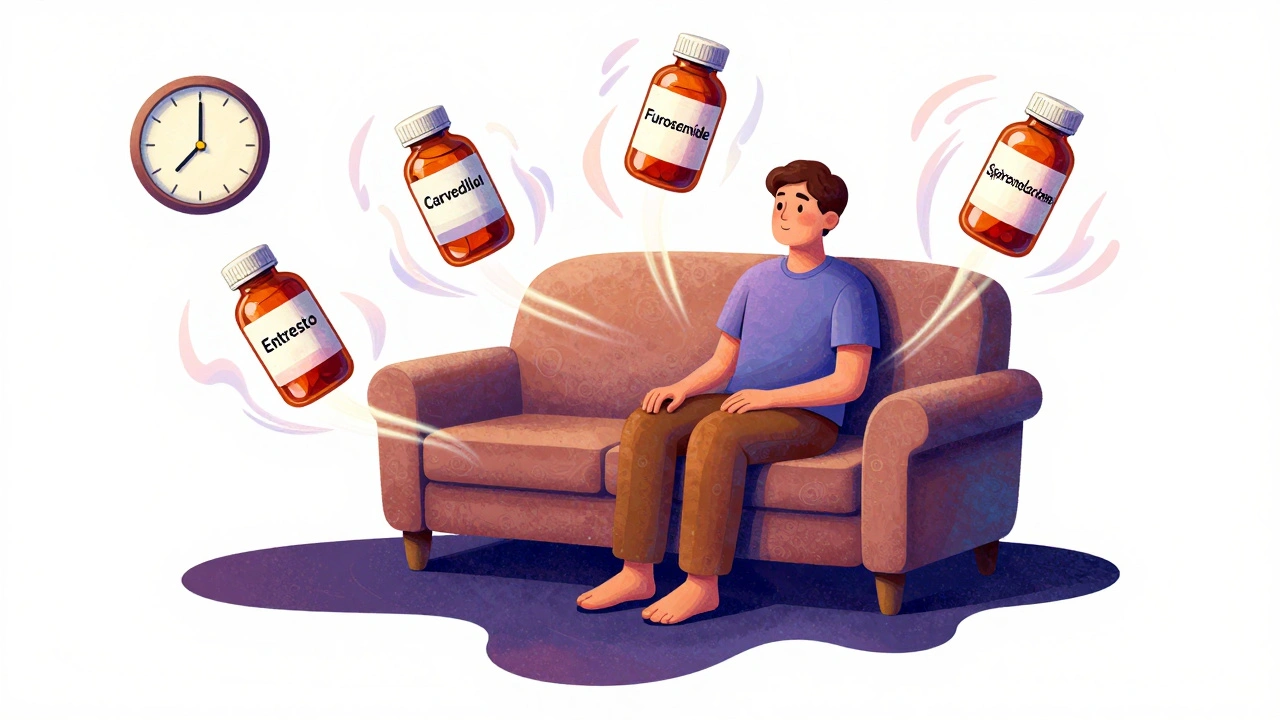
Diuretics: Getting Rid of the Extra Fluid
Diuretics don’t extend life. But they make life bearable. If you’re swollen in your legs, struggling to breathe when lying down, or waking up at night gasping for air - diuretics fix that. They help your kidneys flush out extra salt and water.
Loop diuretics like furosemide, torsemide, and bumetanide are the go-to. Furosemide is the most common - often started at 20-40 mg daily. But torsemide might be better. The EVEREST trial showed it led to 18% fewer hospitalizations than furosemide. Why? It’s longer-lasting and more predictable.
Thiazides like hydrochlorothiazide are used for milder cases. And spironolactone? It’s special. It’s both a diuretic and a mineralocorticoid receptor antagonist (MRA). It blocks aldosterone, a hormone that causes fluid retention and scarring in the heart. The RALES trial proved it cuts death risk by 30% in severe heart failure.
The downside? Frequent urination. Some people avoid taking them after 4 p.m. so they don’t wake up all night. Others get leg cramps from low potassium or magnesium. That’s why many doctors add supplements or switch to potassium-sparing diuretics like spironolactone.
Putting It All Together: The Quadruple Therapy Standard
Today, the goal isn’t just to use one or two drugs. It’s to use all four - plus two more that weren’t even on the radar a decade ago. The current standard is called quadruple therapy: ARNI (or ACEI/ARB), beta blocker, MRA (like spironolactone), and an SGLT2 inhibitor (like dapagliflozin). Diuretics are added as needed.
Together, these drugs cut death and hospitalizations by up to 21%. But here’s the problem: only 35% of eligible patients get all four within a year of diagnosis. Why? Too many doctors still start with ACEIs out of habit. Too many patients can’t afford ARNI. Too many clinics don’t have heart failure specialists to guide titration.
Successful treatment needs patience. Dosing takes months. Blood tests are non-negotiable. You need to track your weight daily - a 2-pound gain in a day means fluid is building up. And you need to talk to your care team when side effects hit.

What If You Can’t Tolerate These Drugs?
Not everyone can take all four. Some have kidney problems. Others have low blood pressure. Some just can’t handle the cough from ACEIs.
If you can’t take an ACE inhibitor, ARBs like valsartan or losartan are the backup. They work similarly but don’t cause cough. If ARNI isn’t an option due to cost or access, ARBs are still better than nothing.
If beta blockers make you too tired, your doctor might try a different one. Carvedilol sometimes causes less fatigue than metoprolol. If diuretics leave you weak, check your potassium and magnesium. Supplements often help.
And if you’re still struggling? New drugs are coming. Vericiguat, approved in 2021, helps the heart respond better to stress. SGLT2 inhibitors - originally for diabetes - now work for all types of heart failure, even when the heart’s pumping strength is normal.
Real Talk: What Patients Actually Experience
Online forums like Reddit and PatientsLikeMe are full of honest stories. One person wrote: "Furosemide gave me cramps until I started taking magnesium." Another: "Switching from lisinopril to Entresto cut my shortness of breath in half - but now I’m peeing every hour." A third: "I was told I’d die within two years. Now, five years later, I’m hiking on weekends. Carvedilol did that."
Cost is a huge barrier. Generic lisinopril costs $4 a month. Metoprolol is $6. Entresto? $550. Medicare covers most of it, but you need prior authorization - and even then, some pharmacies don’t stock it.
Still, the message is clear: if you have heart failure with reduced pumping power, these medications aren’t optional. They’re life-changing. The key is working with your doctor to find the right mix - slowly, safely, and with regular check-ins.
Can I take ACE inhibitors and ARNI together?
No. Taking ACE inhibitors and ARNI together increases the risk of angioedema - a dangerous swelling of the face, lips, or throat. You must wait at least 36 hours after your last ACE inhibitor dose before starting ARNI. This rule is strict and backed by clinical trials.
Why do I feel worse when I start beta blockers?
It’s common. Beta blockers slow your heart and reduce its workload, which can temporarily make you feel more tired or short of breath. This usually improves within weeks as your heart adapts. Never stop them abruptly - always work with your doctor to adjust the dose slowly.
Do diuretics help you live longer?
Not directly. Diuretics relieve symptoms like swelling and breathlessness, but they don’t reduce death risk like ACEIs, ARNIs, or beta blockers do. Still, they’re essential for quality of life. If you’re not managing fluid, you’ll keep ending up in the hospital.
Is ARNI better than ACE inhibitors?
Yes, for most people with HFrEF. The PARADIGM-HF trial showed ARNI reduced death and hospitalization by 20% compared to enalapril. Guidelines now recommend ARNI as first-line therapy unless you can’t tolerate it or it’s not available. ACE inhibitors are now a backup option.
How long does it take for these medications to work?
Symptoms like swelling and breathlessness from diuretics can improve in days. Beta blockers and ARNIs take weeks to months to show full benefit. You might not feel better right away, but your heart is healing. Stick with the plan - and keep your follow-up appointments.
Can I stop these meds if I feel better?
No. Heart failure is a chronic condition. These drugs don’t cure it - they control it. Stopping them, even if you feel fine, can cause your condition to worsen quickly. Always talk to your doctor before making any changes.
What to Do Next
If you’re on one or two of these medications, ask your doctor: "Am I on the full recommended therapy?" If you’re not taking an ARNI or an SGLT2 inhibitor, find out why. Cost? Side effects? Kidney issues? There’s almost always a way forward.
Track your weight daily. Keep a log of symptoms. Bring your medication list to every appointment. And don’t be afraid to ask for help - whether it’s a pharmacy discount program, a heart failure nurse, or a support group.
Heart failure isn’t a death sentence anymore. With the right meds, monitored carefully and taken consistently, people are living longer, better lives than ever before. The science is clear. Now it’s about making sure you get the care you deserve.
Sam Mathew Cheriyan
December 8, 2025 AT 02:43Nancy Carlsen
December 9, 2025 AT 14:37Helen Maples
December 11, 2025 AT 04:31Kyle Oksten
December 13, 2025 AT 02:07Ernie Blevins
December 14, 2025 AT 00:05David Brooks
December 15, 2025 AT 11:32Nicholas Heer
December 17, 2025 AT 09:38Ryan Sullivan
December 17, 2025 AT 23:54Wesley Phillips
December 19, 2025 AT 23:18Olivia Hand
December 21, 2025 AT 05:46Ted Rosenwasser
December 23, 2025 AT 00:50Ashley Farmer
December 24, 2025 AT 07:26