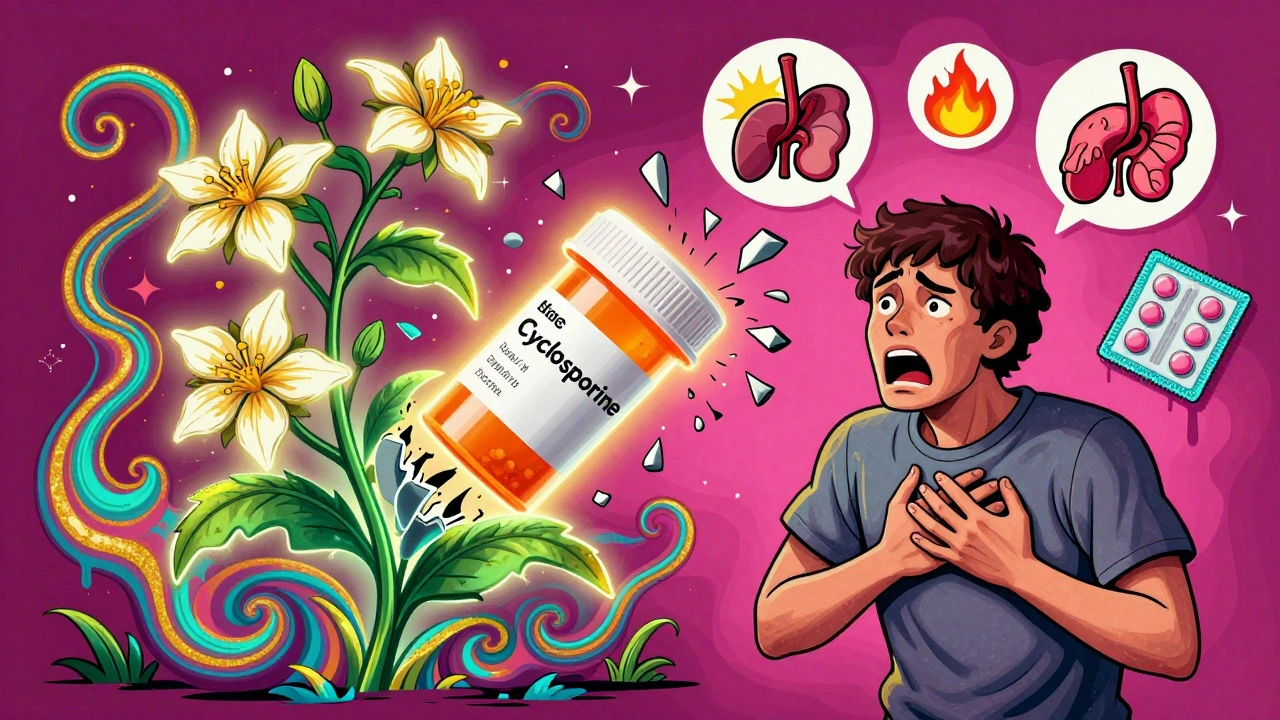
Many people think herbal supplements are safe because they’re natural. But that’s not true. Some of the most common herbal products you can buy at the grocery store or online can seriously mess with your prescription meds-sometimes with life-threatening results. You might be taking ginkgo for memory, garlic for immunity, or St. John’s Wort for low mood, and not realize you’re putting yourself at risk for a stroke, organ rejection, or a dangerous drop in blood pressure.
St. John’s Wort: The Silent Medication Killer
St. John’s Wort is one of the most dangerous herbal supplements when mixed with prescription drugs. It doesn’t just slightly reduce effectiveness-it can make your medication useless. For people taking cyclosporine after a transplant, combining it with St. John’s Wort can slash drug levels by 50-60% in just two weeks. That means your body might reject the new organ.
It’s even worse with antidepressants. If you’re on an SSRI like sertraline or fluoxetine, adding St. John’s Wort can trigger serotonin syndrome. Symptoms include high fever, muscle rigidity, confusion, and rapid heart rate. There are documented cases of people ending up in the ICU because they thought ‘natural’ meant safe.
This herb also interferes with birth control pills. A 2022 analysis of user reports on Drugs.com found that 78% of people who took St. John’s Wort while on oral contraceptives experienced contraceptive failure. Nearly half of those cases led to unintended pregnancy. And it doesn’t stop there-St. John’s Wort reduces levels of HIV drugs, blood thinners, and even chemotherapy agents by up to 80%.
Ginkgo Biloba: The Hidden Bleeding Risk
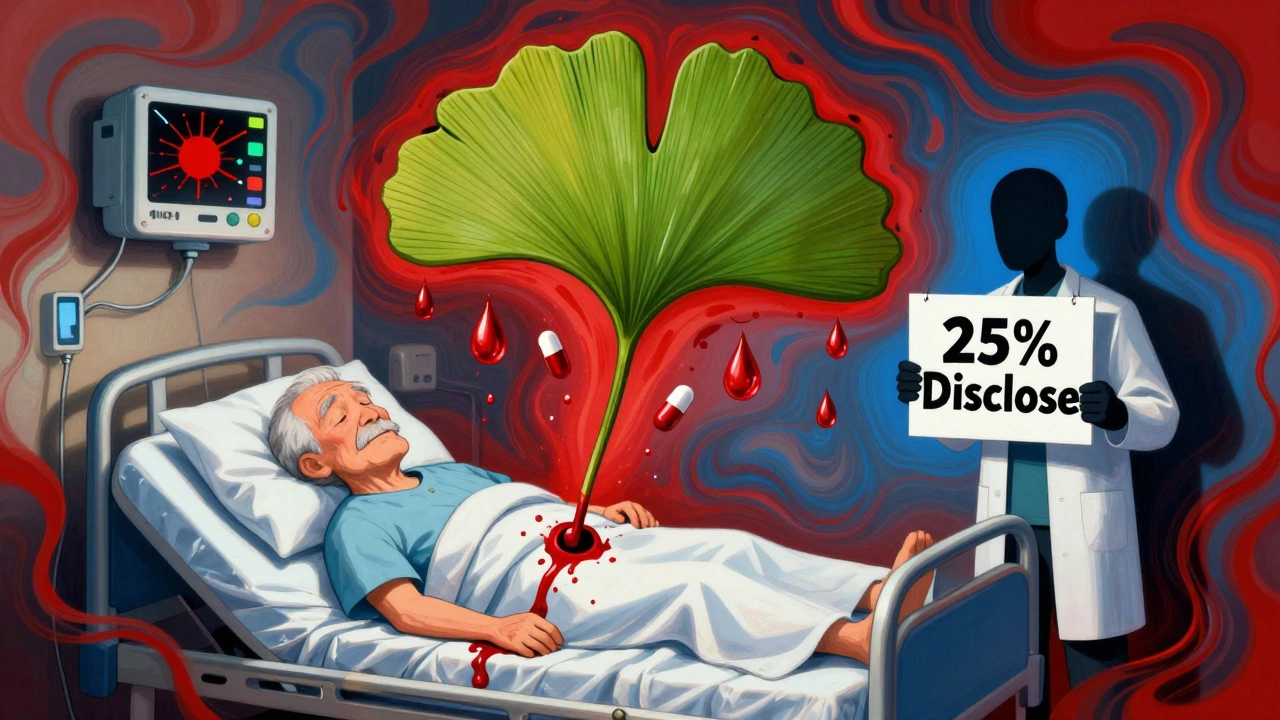
Ginkgo biloba is popular among older adults for brain health. But if you’re on warfarin, apixaban, or aspirin, you’re playing Russian roulette. Between 2010 and 2020, the Mayo Clinic documented 23 cases of major bleeding linked to ginkgo and blood thinners, including three deaths.
One Reddit user, u/HeartPatient99, shared their story: they took ginkgo for focus and apixaban for atrial fibrillation. Their INR spiked to 8.2-normal is 2-3. They ended up in the hospital with severe rectal bleeding. Their doctor said this happens more often than people realize.
Why does this happen? Ginkgo thins the blood by affecting platelet function. When combined with anticoagulants, the effect isn’t just added-it’s multiplied. Studies show the risk of bleeding increases by 300% compared to taking warfarin alone. And here’s the kicker: most people don’t tell their doctors they’re taking ginkgo. In fact, only 25% of supplement users disclose this to their healthcare provider.
Garlic: More Than Just a Flavor
Garlic supplements are sold as immune boosters, heart protectors, and even cholesterol reducers. But if you’re on saquinavir (an HIV medication), garlic can cut its blood levels by 51%. That’s enough to let the virus bounce back.
Garlic also interacts with warfarin. While some studies say the risk is low, others show clear spikes in INR levels. A 2020 meta-analysis found inconsistent results-but that’s the problem. You can’t predict who will react badly. And since garlic is in 61% of ‘immune support’ supplements, you might be consuming it without even knowing.
Doctors recommend stopping garlic supplements at least one week before any surgery. Why? Because even if your INR looks fine, garlic can still increase bleeding during the procedure. And if you’re on blood pressure meds, garlic can push your pressure too low, causing dizziness or fainting.
Goldenseal: The Enzyme Blocker
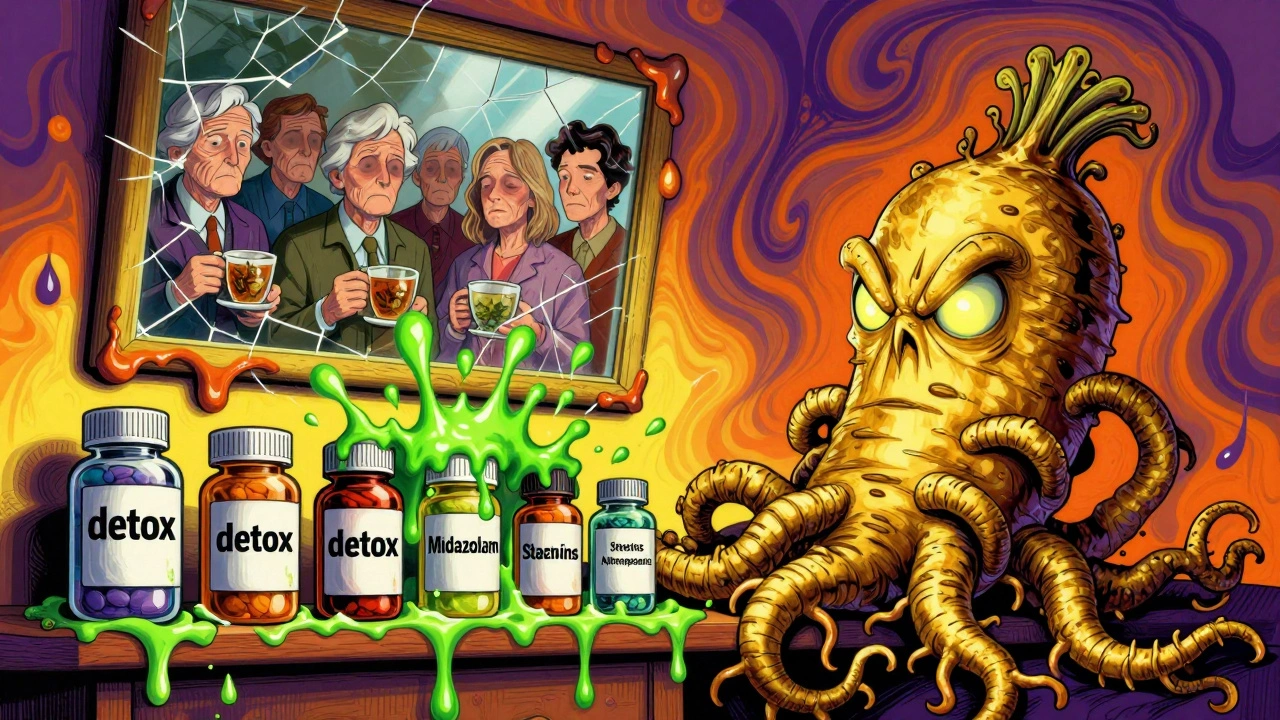
Goldenseal is often marketed as a cold remedy or digestive aid. But it’s a powerful inhibitor of CYP3A4, a liver enzyme responsible for breaking down more than half of all prescription drugs. When this enzyme is blocked, drugs build up in your system and can reach toxic levels.
A 2018 University of Toronto study showed that goldenseal reduced the clearance of midazolam-a sedative-by 40%. That means if you take it before surgery, you could stay sedated far longer than expected. It also affects statins, anti-anxiety meds, and even some cancer drugs.
Goldenseal is in nearly every ‘detox’ or ‘liver cleanse’ product on the market. People think they’re cleansing their body-but they’re actually poisoning their ability to process medications. And because it’s sold as a supplement, there’s no warning label. No FDA review. No requirement to test for interactions.
Coenzyme Q10 and Ginseng: The Quiet Saboteurs
Coenzyme Q10 (CoQ10) is often taken with statins to prevent muscle pain. But it can also weaken warfarin’s effect. Mayo Clinic’s 2022 analysis found CoQ10 reduces warfarin’s anticoagulant power by 25-30%. That means your INR could drop below 2.0 without you noticing-increasing your risk of a clot or stroke.
Ginseng is trickier. Some studies say it lowers blood sugar. Others say it raises blood pressure. But the real danger is with monoamine oxidase inhibitors (MAOIs), a class of antidepressants. Combining ginseng with MAOIs can cause serotonin syndrome-just like St. John’s Wort. And if you’re on calcium channel blockers for high blood pressure, ginseng might drop your pressure too far, leading to fainting or falls.
What About Cranberry and Milk Thistle?
Cranberry juice is often called a ‘safe’ supplement. But the truth is messy. Some studies show it raises INR in people on warfarin. Others show no effect. A 2020 JAMA study found INR increases ranging from 0.3 to 1.8 units-enough to be dangerous for some, harmless for others. There’s no way to know who’s at risk.
Milk thistle is widely used for liver health. It’s generally considered low-risk. But it can interfere with the metabolism of certain cancer drugs and antipsychotics. Saw palmetto, often used for prostate health, doesn’t show strong interactions-but it’s not risk-free. If you’re on blood pressure meds, it could add to their effect.
Who’s at the Highest Risk?
Older adults are the most vulnerable. Nearly 70% of people over 65 take at least one supplement. And 25% of them are also on prescription drugs. The median age of those hospitalized for herb-drug interactions is 75. Many are taking warfarin, statins, or heart meds-precisely the drugs most likely to interact.
People with chronic conditions are also at risk: transplant recipients, cancer patients, those with HIV, and people with depression. If you’re on more than three medications, your chances of a dangerous interaction go up dramatically.
What You Should Do
Here’s the hard truth: if you’re taking any prescription drug, you need to assume every herbal supplement is a potential threat until proven otherwise.
- Disclose everything. Tell your doctor and pharmacist every supplement you take-even if you think it’s harmless. Write it down. Bring the bottle.
- Check before you buy. Use the NCCIH Herb-Drug Interaction Checker. It’s free, updated quarterly, and classifies risks as life-threatening, significant, or moderate.
- Watch for warning signs. If you start feeling dizzy, confused, bleeding unusually, or have a sudden change in mood or energy, stop the supplement and call your doctor.
- Don’t trust labels. ‘All-natural’ doesn’t mean safe. Many supplements contain hidden ingredients, including actual prescription drugs. The FDA has issued warnings to over 17 companies in the last two years for this exact reason.
Why This Keeps Happening
The Dietary Supplement Health and Education Act (DSHEA) of 1994 made it legal to sell supplements without proving they’re safe or effective. The FDA can’t step in until someone gets hurt. That means thousands of products hit the market every year with no testing for drug interactions.
Only 15% of documented herb-drug interactions have strong clinical evidence. The rest are based on case reports or lab studies. That’s why doctors can’t always give you clear answers. But that doesn’t mean the risk isn’t real.
And the market is growing. The global herbal supplement industry hit $62.8 billion in 2023. Emergency room visits tied to supplements jumped to 82,000 per year. Most of those cases involve older adults mixing herbs with heart, blood pressure, or psychiatric meds.
There’s a reason Epic Systems-the biggest electronic health record provider-is planning to integrate NCCIH interaction data into its system by Q3 2025. Doctors are finally realizing this isn’t a fringe issue. It’s a public health crisis.
You don’t need to stop all supplements. But you need to treat them like medicine-because they act like it. And if you’re on a prescription drug, your next step isn’t to Google ‘safe herbs.’ It’s to talk to your pharmacist. They’re trained to catch these interactions. Most people don’t even think to ask.
Dematteo Lasonya
December 5, 2025 AT 20:51John Filby
December 6, 2025 AT 15:23Chase Brittingham
December 8, 2025 AT 10:53Rebecca Braatz
December 10, 2025 AT 05:12Ben Choy
December 10, 2025 AT 06:26Alex Piddington
December 11, 2025 AT 12:56Bill Wolfe
December 12, 2025 AT 11:35Jake Deeds
December 13, 2025 AT 20:25Scott van Haastrecht
December 14, 2025 AT 15:41Elizabeth Crutchfield
December 15, 2025 AT 03:41Ollie Newland
December 16, 2025 AT 08:42Jenny Rogers
December 16, 2025 AT 10:04George Graham
December 16, 2025 AT 11:46