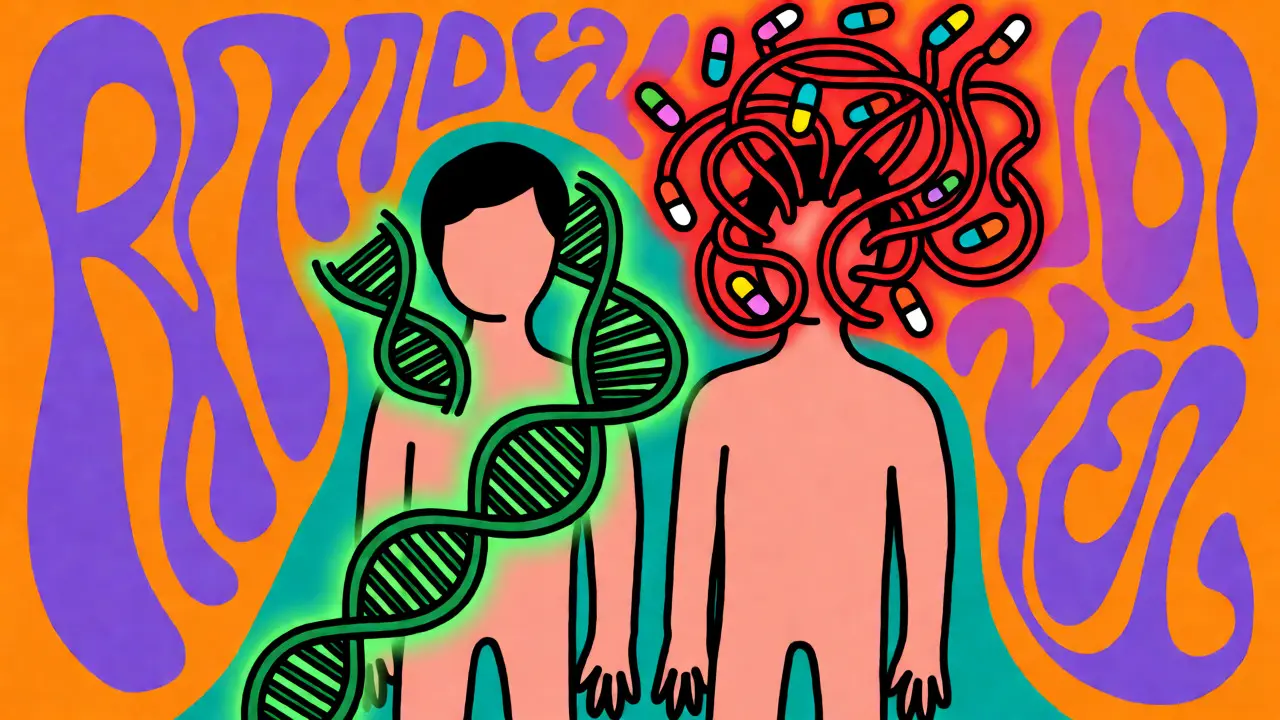
You take a standard dose of medication. Your neighbor takes the exact same pill for the same condition. You feel fine; they end up in the emergency room with severe side effects. Why? It’s not just about weight or age. It’s often about your DNA. Pharmacogenomics (PGx) is the science of how your genetic makeup changes the way your body processes drugs. It’s not just a buzzword from sci-fi movies anymore; it’s a critical factor in predicting whether two medications will play nicely together or cause a dangerous clash.
If you’re juggling multiple prescriptions, understanding this field could literally save your life. Traditional drug interaction checkers are useful, but they treat everyone like a generic test tube. They don’t know that your liver enzymes might work slower than average because of a specific gene variant. This article breaks down exactly how genetics shifts the risk landscape for drug interactions and what you can do about it.
The Hidden Danger: When Genes Meet Drugs
Most people think of drug interactions as one pill blocking another from working. While that happens, the bigger issue often lies in metabolism. Your liver uses a family of enzymes called Cytochrome P450 (CYP) to break down most medications. Here’s the kicker: the genes that code for these enzymes vary wildly between people.
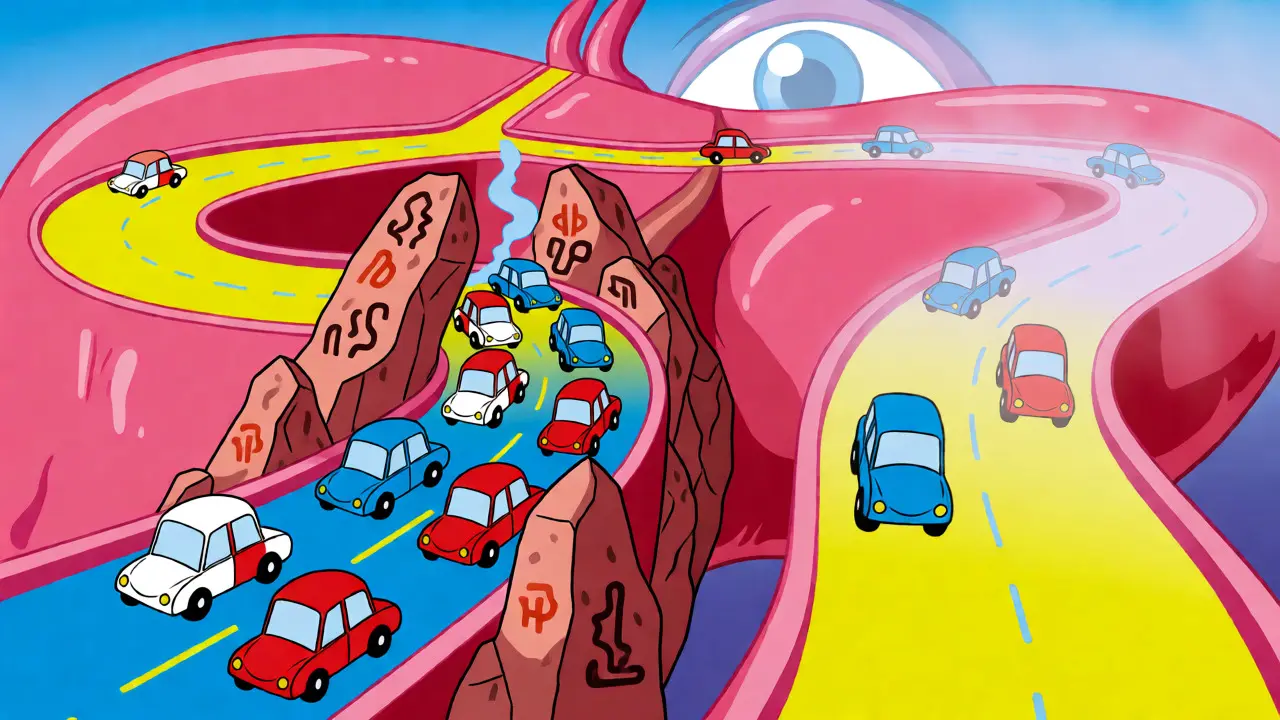
Imagine your CYP enzyme is a highway. In some people, the highway has three lanes open (normal metabolizer). In others, genetic mutations close two lanes (poor metabolizer), causing traffic jams where drug levels spike dangerously high. Or maybe the highway expands to five lanes (ultrarapid metabolizer), flushing the drug out before it has time to work. Now, introduce a second drug that blocks those lanes further. If you’re already a poor metabolizer, that second drug can push you into toxicity territory much faster than someone with normal genetics.
This phenomenon is known as a Drug-Drug-Gene Interaction (DDGI). It’s a three-way collision: Drug A affects the enzyme, Drug B relies on that enzyme, and your genes determine how well that enzyme works. According to recent data, adverse drug reactions cost the U.S. healthcare system roughly $30 billion annually. A significant chunk of that waste comes from ignoring these genetic variables.
How Pharmacogenomics Changes the Math
Standard databases list tens of thousands of potential drug-drug interactions. But they miss the nuance of who is taking them. When researchers at the American Journal of Managed Care analyzed community pharmacy data, they found that adding genetic information increased the estimated probability of clinically relevant interactions by over 90%. That’s not a small tweak; it’s a fundamental shift in risk assessment.
Consider the enzyme CYP2D6. It handles about 25% of all commonly prescribed drugs, including antidepressants, painkillers, and heart medications. If you carry certain variants of the CYP2D6 gene, you might be a "poor metabolizer." If you then take a strong CYP2D6 inhibitor-like fluoxetine for depression-you effectively shut down your ability to process other drugs that rely on that pathway. The result? Toxic buildup of unrelated medications you didn’t even suspect were connected.
| Metabolizer Status | Genetic Profile | Risk with Standard Dose | Interaction Vulnerability |
|---|---|---|---|
| Poor Metabolizer | Two non-functional alleles | High risk of toxicity | Very High - inhibitors have no room to act |
| Intermediate | One reduced/non-functional allele | Moderate risk | High - sensitive to strong inhibitors |
| Normal Metabolizer | Two functional alleles | Low risk | Moderate - standard interaction rules apply |
| Ultrarapid | Duplicate functional alleles | Risk of treatment failure | Low for toxicity, High for efficacy loss |
Real-World Examples You Should Know
Let’s look at warfarin, a common blood thinner. Its dosing is notoriously tricky. Two genes heavily influence how you respond: CYP2C9 (which breaks down the drug) and VKORC1 (which determines your sensitivity to it). If you have variants in both, standard dosing guidelines fail you. Studies show that using PGx-guided dosing for warfarin reduces major bleeding events by 31% compared to standard protocols. That’s a massive safety improvement for a drug where mistakes are fatal.
Another classic case involves clopidogrel, used after heart stents. It’s a prodrug, meaning it needs to be activated by your liver to work. If you’re a CYP2C19 poor metabolizer, your body can’t activate it properly. You might think you’re protected against clots, but you’re actually running unprotected. Adding a proton pump inhibitor like omeprazole-which also inhibits CYP2C19-can worsen this effect. Without genetic testing, doctors might prescribe a combination that looks safe on paper but leaves you vulnerable to a heart attack.
Then there’s the antidepressant class. SSRIs like paroxetine are potent inhibitors of CYP2D6. If you’re taking tamoxifen for breast cancer prevention, which requires CYP2D6 to become active, paroxetine can block its effectiveness entirely. For a patient with normal genetics, this is bad. For a patient who is already an intermediate metabolizer, it’s potentially catastrophic.
Why Traditional Checkers Fall Short
You might wonder, "Don't my pharmacist's software catch this?" Often, no. Most electronic health records flag drug-drug interactions based on population averages. They assume you metabolize drugs at a median rate. But biology isn’t average. A 2022 study highlighted that when genetic polymorphisms were considered, the probability of identifying a major impact interaction jumped by 30.4%.
Traditional tools ignore "phenoconversion." This is when a drug temporarily changes your metabolic phenotype. For example, if you are genetically a normal metabolizer but take a drug that inhibits your enzyme, you functionally become a poor metabolizer while on that therapy. Standard checkers see "Normal + Inhibitor" and might give a mild warning. A PGx-aware system sees "Functional Poor Metabolizer" and flags a severe risk. This distinction is crucial for polypharmacy patients-those taking five or more meds, which affects about 13% of adults in the U.S.

Implementing PGx: What It Means for You
So, should you rush out and get a genetic test? Not necessarily. But if you are starting a new medication, especially for mental health, pain management, or cardiovascular issues, asking about pharmacogenomics is smart.
- Preemptive Testing: Some hospitals now sequence key genes once and store the results. This allows doctors to check your profile instantly whenever you start a new drug. Mayo Clinic reports that 89% of patients had at least one actionable variant, meaning most people benefit from knowing their status.
- Targeted Testing: If you’ve had bad reactions to previous meds, a targeted panel focusing on CYP2D6, CYP2C19, and TPMT (for thiopurines) can provide immediate answers.
- Cost and Coverage: Tests range from $250 to $400. Insurance coverage is improving but still spotty. However, avoiding one hospitalization for an adverse reaction pays for years of testing.
Be aware of the limitations. Science moves fast, but guidelines lag. Only about 22% of FDA-labeled pharmacogenomic associations have clear clinical implementation guidelines yet. Also, most current data comes from populations of European ancestry. If you have African, Asian, or Indigenous heritage, keep in mind that reference databases are catching up, but gaps remain. Always discuss your specific background with your provider.
The Future Is Personalized
We are moving away from "one size fits all" prescribing. The integration of AI with pharmacogenomics is accelerating this. New models can predict optimal doses for complex scenarios involving multiple interacting drugs and genetic variants with greater accuracy than human clinicians alone. As testing becomes cheaper and more widespread, expect drug labels to routinely include genetic warnings, much like they do for pregnancy or kidney function today.
Understanding how pharmacogenomics influences drug interaction risk empowers you to ask better questions. It turns passive medication consumption into active health management. Next time you pick up a prescription, ask your pharmacist: "Does my genetic profile affect how this interacts with my other meds?" You might just uncover a hidden risk before it becomes a crisis.
What is the difference between pharmacogenetics and pharmacogenomics?
Pharmacogenetics traditionally refers to the study of single-gene variations affecting drug response. Pharmacogenomics is broader, looking at the entire genome and how multiple genes interact to influence medication outcomes. In modern clinical practice, the terms are often used interchangeably, but pharmacogenomics implies a comprehensive, multi-gene approach.
Do I need genetic testing before every new medication?
No. Preemptive testing (testing once for many genes) is becoming common. Once you have your profile, doctors can check it against any new drug. Targeted testing is only needed if you haven't been tested before and are starting a drug with known high-risk genetic links, such as warfarin, clopidogrel, or certain antidepressants.
Can lifestyle factors change how my genes affect drug metabolism?
Yes. Smoking can induce CYP1A2 activity, speeding up the metabolism of drugs like caffeine and clozapine. Liver disease, age, and diet also play roles. Pharmacogenomics provides the baseline potential, but environmental factors determine the actual outcome. This is why clinical judgment remains essential alongside genetic data.
Are direct-to-consumer tests like 23andMe accurate enough for medical decisions?
They offer a glimpse but are limited. They typically cover a subset of variants and may lack the depth required for complex dosing calculations. For serious medical decisions, clinical-grade testing ordered by a healthcare provider is recommended because it includes confirmatory methods and covers a wider range of relevant genes.
What is phenoconversion?
Phenoconversion occurs when a drug or disease state temporarily alters your metabolic capacity, making you behave like a different metabolizer type than your genes suggest. For example, a genetically normal metabolizer taking a strong enzyme inhibitor may function as a poor metabolizer until the inhibitor is stopped. This complicates drug interaction predictions.
Rebecca Makayla Crane
September 5, 2026 AT 02:25Finally someone explains this without making it sound like rocket science 🧬✨. I have been taking SSRIs and blood thinners for years and my doctor just guessed the dose! The phenoconversion part blew my mind 🤯. We are literally walking around with hidden metabolic roadblocks in our livers and nobody tells us until we crash. It is frustrating that insurance still treats genetic testing like a luxury item when it prevents ER visits 💸. I am booking a preemptive panel next week because I refuse to be a test tube anymore 🙅♀️.
Rob Alderman
September 6, 2026 AT 11:30The reliance on population averages in current EHR systems is an insult to clinical precision. Most practitioners lack the genomic literacy to interpret these nuances effectively, leading to suboptimal prescribing patterns. Until electronic health records integrate real-time pharmacogenomic decision support, this remains largely academic for the average patient.
Jim Bisesi
September 7, 2026 AT 23:12yep basically your liver sucks or rocks depending on luck
still waiting for my free test
Mary Tait
September 8, 2026 AT 05:36This article highlights a systemic failure in American healthcare infrastructure. While the science is robust, the implementation is lagging due to bureaucratic inertia and profit-driven pharmaceutical practices. We need aggressive national standards for PGx integration, not just optional add-ons for those who can afford them. The United States should lead this charge rather than relying on fragmented private initiatives.
Kimberley Odish
September 8, 2026 AT 21:12Your enthusiasm for 'personalized medicine' ignores the glaring ethical voids in data ownership. Who holds the rights to your CYP variants? Pharmaceutical corporations will monetize this data long before you see better outcomes. This is not empowerment; it is surveillance capitalism disguised as healthcare innovation. You are handing over your biological blueprint to entities that prioritize shareholder value over patient safety.
Adam Viruet
September 10, 2026 AT 12:34Wait... hold on... isn't this just blaming the patient's genes for bad medical practice??? Because honestly... if my doctor messed up my warfarin dose... it wasn't my DNA's fault... it was their incompetence!!! And don't get me started on the cost... $400?!?! For what?! To tell me I'm normal?! That's a ripoff!!! 😡😡😡
Shu Chowdhury
September 12, 2026 AT 10:06i appreciate the balanced view here especially about the limitations of current databases being biased toward european ancestry its important to remember that context matters when interpreting these results for diverse populations
Jenn Bell
September 12, 2026 AT 10:08I think there is so much hope in this field. Even though coverage is spotty now, the trend is definitely moving toward accessibility. Knowing your profile helps you advocate for yourself, which feels empowering. Every small step toward personalized care is a win for patients everywhere.
Eric Schultze
September 13, 2026 AT 13:08The government has known about these genetic risks for decades yet fails to mandate testing. Why do they allow pharmaceutical companies to sell drugs with such wide variance in efficacy without warning labels specific to genotype? It seems suspicious that this information is kept from the general public while insiders adjust dosages privately. We must demand transparency in how these algorithms influence prescription trends.
Louis Tarro
September 14, 2026 AT 04:29Dear friends,
It is truly heartwarming to see such detailed discussion on how our unique biological tapestries influence medication efficacy. I wholeheartedly agree that understanding one's genetic landscape allows for a more compassionate and tailored approach to healing. When we acknowledge that a standard dose is not a universal key, we open doors to safer therapies for all individuals.
Let us continue to support each other in navigating these complex medical journeys with patience and empathy. Your shared experiences enrich this community immensely.
Amy B
September 15, 2026 AT 10:46Omg yes the highway analogy made it click for me!! 🚗💨 I always thought drug interactions were just about pills fighting each other but realizing it’s about enzyme lanes being blocked or widened changes everything. It makes me want to dig into my own family history because if my mom had weird reactions maybe I do too? Knowledge is power right?
Evelyn Reed
September 17, 2026 AT 07:41the jargon is heavy but necessary here since cyp450 pathways are complex enough without oversimplifying further however i worry about the digital divide where only tech-savvy users access these insights leaving marginalized groups behind in pgx adoption
Jeremy Westcott
September 18, 2026 AT 09:54Dont trust the FDA labels they are written by lobbyists. They know exactly which gene variants cause side effects but keep it vague to avoid lawsuits. Its all about controlling the narrative and keeping the pill mills churning regardless of whether it actually works for your specific biochemistry.