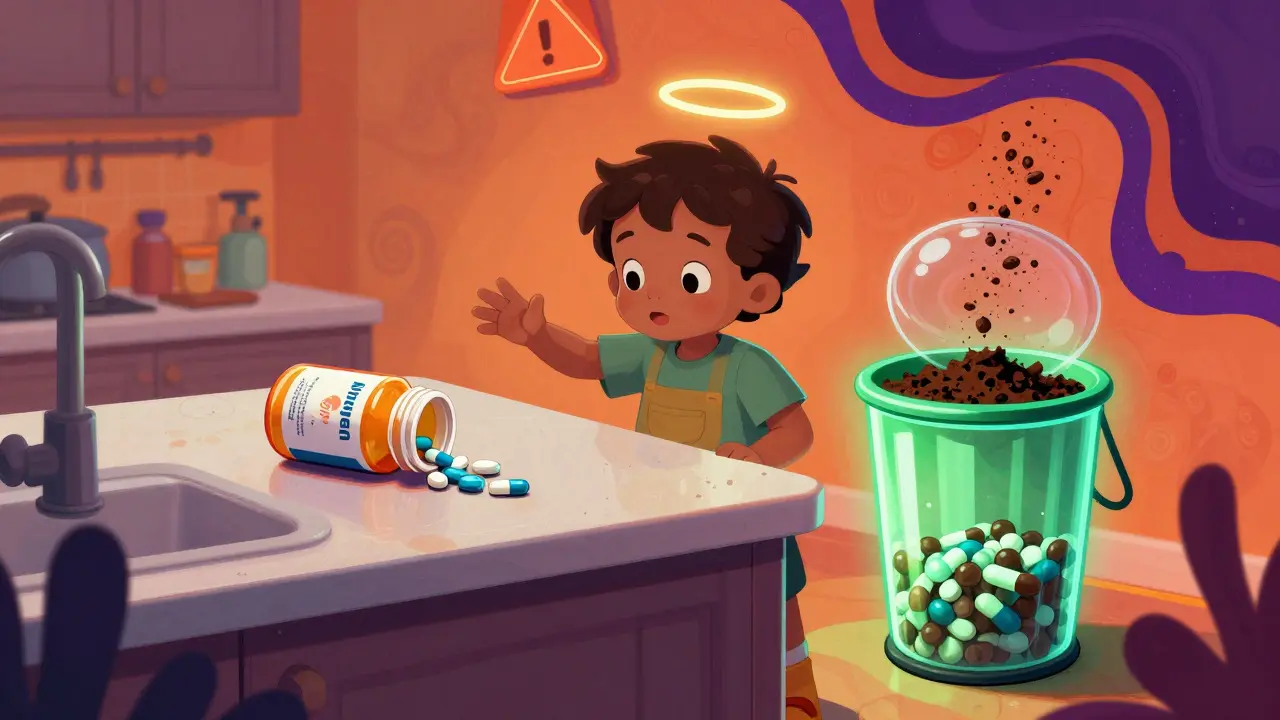
Keeping unused or expired medications in your medicine cabinet isn’t just messy-it’s dangerous. Every year, thousands of children accidentally swallow pills they find at home. Others misuse them intentionally. And when you toss pills in the trash without taking proper steps, they can leak into soil and water, harming wildlife and contaminating drinking supplies. The good news? You can safely dispose of most medications in your household trash if you follow a few simple, proven steps.
Why You Can’t Just Throw Pills in the Trash
It might seem harmless to toss an old bottle of painkillers or leftover antibiotics into the trash. But that’s exactly what makes it risky. Prescription bottles are easy to open, and the labels still show your name, address, and dosage. Someone-maybe a curious child, a pet, or even a stranger rummaging through your bin-could find them. The FDA estimates that around 45,000 emergency room visits each year are caused by accidental medicine ingestion in kids under six. And prescription drug misuse contributes to over 70,000 deaths annually in the U.S. Even if no one finds them, the pills can still leak out. Studies show that pharmaceuticals from landfills can end up in groundwater, rivers, and lakes. The EPA found traces of medications in 80% of U.S. waterways. That’s why simply dumping pills in the trash without protection is not safe.What You Should Do First: Check the Flush List
Before you even think about the trash, check if your medication is on the FDA’s Flush List. This is a small group of drugs-only 15 as of November 2023-that are so dangerous if misused that flushing them down the toilet is the safest option. These include powerful opioids like oxycodone, fentanyl patches, and certain sedatives. If your medication is on this list, flush it immediately. You can find the full list on the FDA’s website under “Disposal of Unused Medicines.” But here’s the catch: most medications are NOT on this list. If your pills aren’t listed, you should NOT flush them. Flushing non-listed drugs increases environmental contamination without adding safety benefits. For those, the FDA and EPA agree: household trash disposal, done right, is the best alternative.Step-by-Step: How to Dispose of Medications in Household Trash
Follow these five steps exactly. Skipping even one reduces safety.- Remove pills from original containers. Take all tablets, capsules, liquids, and patches out of their bottles or boxes. Don’t crush them. The FDA specifically warns against crushing pills because it can release dangerous dust into the air. Keep patches intact-just peel them off their backing.
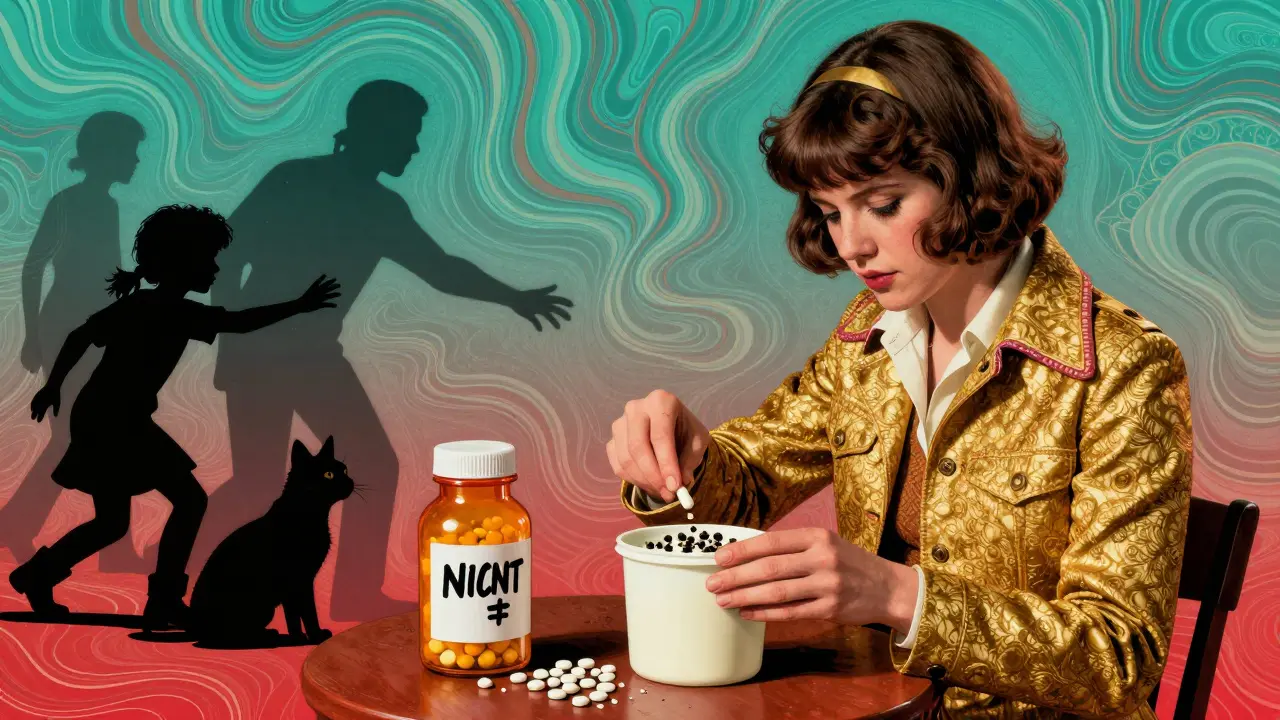
- Mix with an unappealing substance. Use something gross enough to deter anyone from digging through it. Used coffee grounds, kitty litter, or dirt work perfectly. Mix the pills with at least a 1:1 ratio-meaning if you have a tablespoon of pills, add a tablespoon of coffee grounds. This makes the mixture look and smell unappetizing. You don’t need special products; common household items are just as effective.
- Seal it in a container. Pour the mixture into a sealable plastic bag, an empty margarine tub, or a small plastic container with a tight lid. Make sure it’s leak-proof. This prevents spills and keeps pets or pests from getting into it.
- Hide your personal info. Take the empty pill bottles and cover every bit of personal information with a permanent marker. Write over your name, address, prescription number, and pharmacy details. If you’re not sure, use duct tape to cover the label or scratch it off with a knife. HIPAA rules require you to protect your private health info-even after disposal.
- Put it in the trash. Place the sealed container in your regular household trash, not the recycling bin. Prescription bottles are usually made of #5 plastic, which most curbside programs don’t accept anyway. In fact, 87% of U.S. municipalities can’t recycle them. So trash is your only real option.
What Not to Do
There are common mistakes people make that defeat the whole purpose:- Don’t flush non-listed drugs. Unless it’s on the FDA’s Flush List, don’t send anything down the drain. It’s worse for the environment than trash disposal.
- Don’t leave pills in the original bottle. Even if you throw away the bottle, someone can still open it. Always remove pills first.
- Don’t use too little mixing material. If you just sprinkle a few coffee grounds on top, it’s still easy to fish out pills. Mix thoroughly.
- Don’t skip hiding your info. A 2021 FDA survey found that 37% of improper disposal cases involved unobscured labels. That’s a privacy risk and a theft risk.
What About Take-Back Programs?
The safest way to dispose of meds is through a drug take-back program. These are offered at pharmacies, hospitals, police stations, and during national collection events. The DEA runs over 14,600 collection sites across the country. Walgreens, CVS, and many local pharmacies have drop boxes in-store. These programs destroy 99.8% of diverted drugs, according to DEA data. But here’s the reality: not everyone has easy access. Rural areas often have one collection site per county-or none at all. If you’re in a remote area, or if a take-back event isn’t happening soon, household disposal is your responsible backup. The EPA confirms that when done correctly, this method reduces environmental contamination by 75% compared to tossing pills in the trash without mixing or sealing.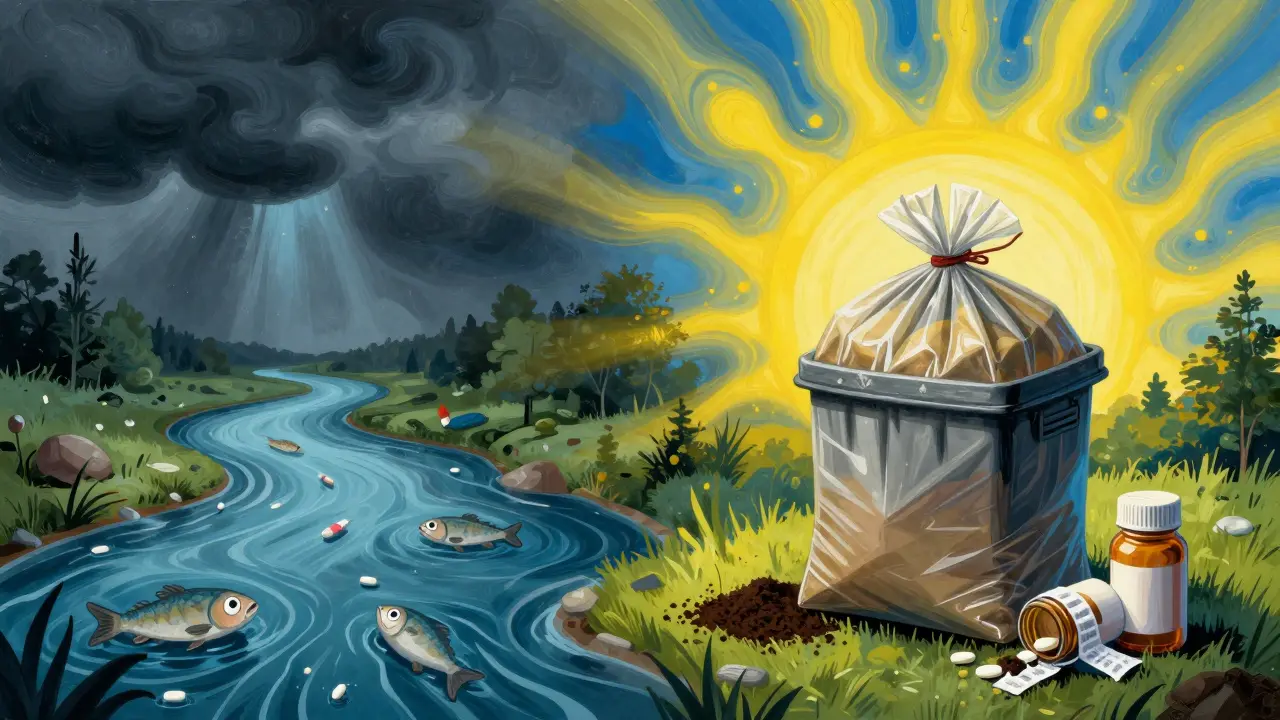
Gabrielle Conroy
February 23, 2026 AT 16:17Natanya Green
February 25, 2026 AT 06:41Steven Pam
February 27, 2026 AT 04:40Timothy Haroutunian
February 28, 2026 AT 21:04Erin Pinheiro
March 2, 2026 AT 12:22Michael FItzpatrick
March 4, 2026 AT 04:25Brandice Valentino
March 4, 2026 AT 06:26Lillian Knezek
March 5, 2026 AT 16:42Maranda Najar
March 6, 2026 AT 18:51Sanjaykumar Rabari
March 7, 2026 AT 13:01Dominic Punch
March 7, 2026 AT 21:22