
Imagine a parent giving their child a liquid thyroid medication that was carefully made just for them. It tastes good, it’s the right dose, and it works perfectly. Now imagine the opposite: a small mistake in how that medicine was measured leads to a dangerous overdose or an ineffective treatment. This is the reality of pharmaceutical compounding, which is the preparation of customized medications tailored to individual patient needs when commercially available products cannot meet specific requirements. While compounding saves lives by providing options for patients with allergies, swallowing difficulties, or unique dosage needs, it carries a hidden risk: human error.
The stakes are high. Between 2018 and 2022, the FDA reported 27 fentanyl overdose incidents linked directly to mislabeled compounded medications. In 2012, a contaminated steroid injection from a single facility caused over 60 deaths. These aren’t just statistics; they are warnings. If you rely on compounded meds-or if you are a pharmacist making them-you need to know exactly how to stop these mistakes before they happen.
Understanding the Risk Landscape
To prevent errors, we first have to understand where they come from. Compounding isn't like buying a pill off the shelf. When you buy a standard drug, it has gone through rigorous clinical trials with thousands of participants. According to the FDA (2023), compounded medications are not clinically tested for safety and efficacy in the same way. They are made in smaller batches, often by hand, which introduces variability.
There are two main types of facilities that make these drugs, and the risk level differs significantly between them:
- 503A Pharmacies: These are traditional compounding pharmacies regulated primarily by state boards. A 2021 study by the National Association of Boards of Pharmacy found that while essential, these facilities can have higher error rates due to less stringent federal oversight. Error rates in non-accredited 503A facilities can range up to 25%.
- 503B Outsourcing Facilities: These operate under federal FDA oversight and must follow Current Good Manufacturing Practices (CGMPs). The same study showed these facilities had a 22% lower error rate than 503A pharmacies because of stricter quality controls.
The core problem? Lack of standardization. Without strict protocols, a "small" mistake in calculation or labeling can become a life-threatening event. That’s why prevention starts with understanding that compounding is a high-risk activity requiring military-grade precision.
The Human Factor: Verification and Training
Technology helps, but people are still at the heart of compounding. Dr. Henry Cohen, past president of the International Academy of Compounding Pharmacists (IACP), states that the single most effective error prevention strategy is rigorous staff training with mandatory competency assessments conducted quarterly.
Here is how top-tier pharmacies handle the human element:
- Dual-Check System: Never trust one set of eyes. The American Society of Health-System Pharmacists (ASHP) recommends that a second qualified professional independently confirms all dosage calculations. This isn't about looking over someone's shoulder; it’s about doing the math separately and comparing results.
- Quarterly Competency Tests: Skills fade without practice. Staff should be tested every three months on aseptic technique, chemical compatibility, and complex calculations. Error rates for certified pharmacists should stay below 1%.
- Ingredient Verification: Before any mixing begins, verify the identity, purity, and potency of each ingredient. Methods like Fourier-transform infrared spectroscopy (FTIR) or high-performance liquid chromatography (HPLC) ensure you are using what you think you are using.
A real-world example: A geriatric patient once suffered serotonin syndrome because a compounded tramadol solution was mislabeled. The label said "concentration per container" instead of "per mL." A simple double-check of the label format against the prescription would have caught this. Instead, the patient spent three days in the ICU.
Environmental Controls: The Invisible Shield
You can be the best calculator in the world, but if your environment is dirty, your medication is unsafe. The United States Pharmacopeia (USP) sets the gold standard here with General Chapters <795>, <797>, and <800>. Adherence to these standards reduces compounding errors by at least 60% compared to facilities without standardized protocols, according to Dr. Linda Tyler, USP Compounding Expert Committee Chair.
| Type of Compounding | USP Chapter | Air Quality Requirement | Key Control Measure |
|---|---|---|---|
| Non-Sterile | USP <795> | ISO Class 8 or better | Dedicated clean area, no food/drink allowed |
| Sterile | USP <797> | ISO Class 5 (Laminar Airflow Hood) | Media fill testing twice annually for staff |
| Hazardous Drugs | USP <800> | Closed System Transfer Devices | Containment primary engineering controls |
Note the recent changes: As of December 1, 2023, USP <797> requires mandatory media fill testing for all sterile compounding personnel twice a year. This test checks if your technique introduces bacteria into a sterile field. If you fail, you retrain. No exceptions.

Labeling: The Last Line of Defense
If the medicine is made correctly but labeled incorrectly, the patient suffers. Labeling inconsistencies are cited as the top safety concern by 67% of pharmacists in the 2023 National Community Pharmacists Association survey.
The FDA’s 2023 draft guidance mandates standardized concentration labeling. Here is what that means in practice:
- Use Standard Units: Always use "mg/mL" or "mcg/kg" rather than vague terms like "strength" or "dose."
- Clarify Administration: Specify exactly how much to take. "Take 1 mL" is clearer than "Take one teaspoon," which varies by cup size.
- Beyond-Use Dates (BUDs): Clearly state when the medicine expires. Non-sterile preparations typically last 30-180 days, while sterile ones range from 3 hours to 45 days. Using expired compounded meds can lead to degradation and toxicity.
The 27 fentanyl overdoses mentioned earlier happened because patients and doctors misinterpreted concentration units. Standardizing labels to clear, unambiguous formats eliminates this guesswork.
Technology as a Safety Net
Humans get tired. Software doesn’t. Integrating technology into the compounding workflow is no longer optional for serious operations. Specialized software like Compounding.io and PharmScript incorporates built-in calculation checks and automated formula verification.
A 2022 study in the Journal of the American Pharmacists Association found that electronic batch records reduced human error by approximately 40%. More advanced systems, like AI-powered verification tools such as CompoundingGuard AI, reduced calculation errors by 87% in pilot studies.
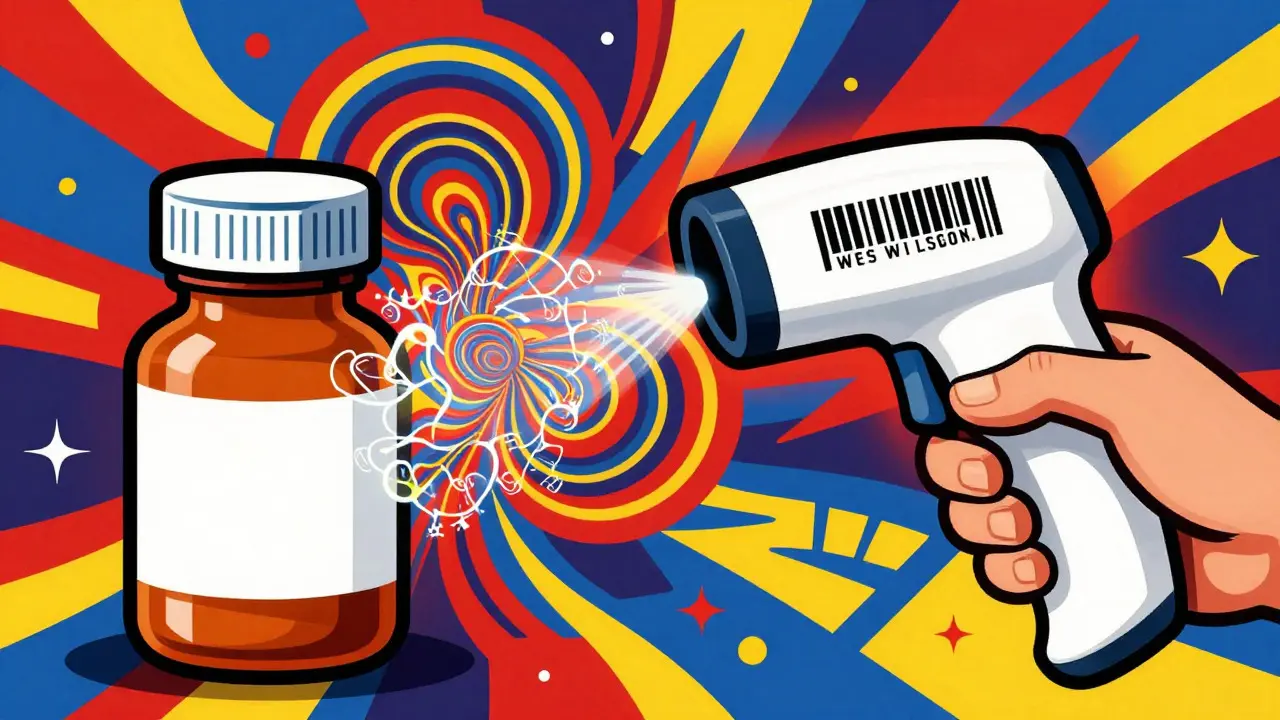
Barcode verification is another game-changer. A case study from the University of Tennessee Health Science Center showed that integrating barcode scanning for all ingredients reduced identification errors by 92% within six months. Scanning ensures that the physical bottle matches the digital record before it ever touches the scale.
Accreditation: Proof of Quality
How do you know if a compounding pharmacy is safe? Look for accreditation. The Pharmacy Compounding Accreditation Board (PCAB) is the gold standard. PCAB mandates that member pharmacies maintain documentation of at least 95% accuracy in dose verification tests.
While the process takes 12-18 months and costs $15,000-$25,000, it signals to patients and prescribers that the facility undergoes rigorous third-party inspections. As of 2023, only 18% of compounding pharmacies are PCAB accredited, up from 8% in 2018. Choosing an accredited provider significantly lowers your risk exposure.
Practical Checklist for Patients and Providers
Whether you are prescribing, compounding, or taking customized medication, use this checklist to ensure safety:
- Verify Credentials: Is the pharmacy licensed in your state? Are they PCAB accredited?
- Check the Label: Does it clearly state the concentration (e.g., mg/mL)? Is the beyond-use date visible?
- Ask About Testing: Does the pharmacy perform stability testing to determine accurate expiration dates?
- Review Calculations: For providers, always double-check the math independently before dispensing.
- Monitor for Reactions: Report any adverse effects immediately to the pharmacy and the FDA via MedWatch.
Compounding is a vital part of modern healthcare, offering hope to millions who cannot take commercial drugs. But that hope depends on precision. By following USP standards, leveraging technology, and demanding transparency, we can keep customized medications safe and effective.
What is the biggest cause of compounding errors?
The biggest causes are calculation mistakes and labeling inconsistencies. Studies show that 3-15% of compounded preparations can have significant deviations from intended strength if proper dual-verification protocols are not followed. Misinterpretation of concentration units on labels has also led to severe overdose incidents.
Are 503B outsourcing facilities safer than 503A pharmacies?
Yes, generally. 503B facilities are federally regulated by the FDA and must follow Current Good Manufacturing Practices (CGMPs). A 2021 study found that 503B facilities had a 22% lower error rate than 503A pharmacies due to more rigorous quality control and inspection requirements.
How long do compounded medications last?
It depends on the type. Non-sterile compounded preparations typically have beyond-use dates (BUDs) of 30-180 days. Sterile preparations range from 3 hours to 45 days, depending on the preparation method and storage conditions. Always check the label for the specific BUD.
What is PCAB accreditation?
PCAB stands for the Pharmacy Compounding Accreditation Board. It is a third-party organization that accredits compounding pharmacies based on rigorous standards, including environmental controls, quality assurance, and staff competency. PCAB-accredited pharmacies must demonstrate at least 95% accuracy in dose verification tests.
Can technology prevent compounding errors?
Yes. Specialized compounding software and AI verification systems can reduce calculation errors by up to 87%. Barcode scanning for ingredients has been shown to reduce identification errors by 92%. These tools act as critical safety nets against human fatigue and oversight.