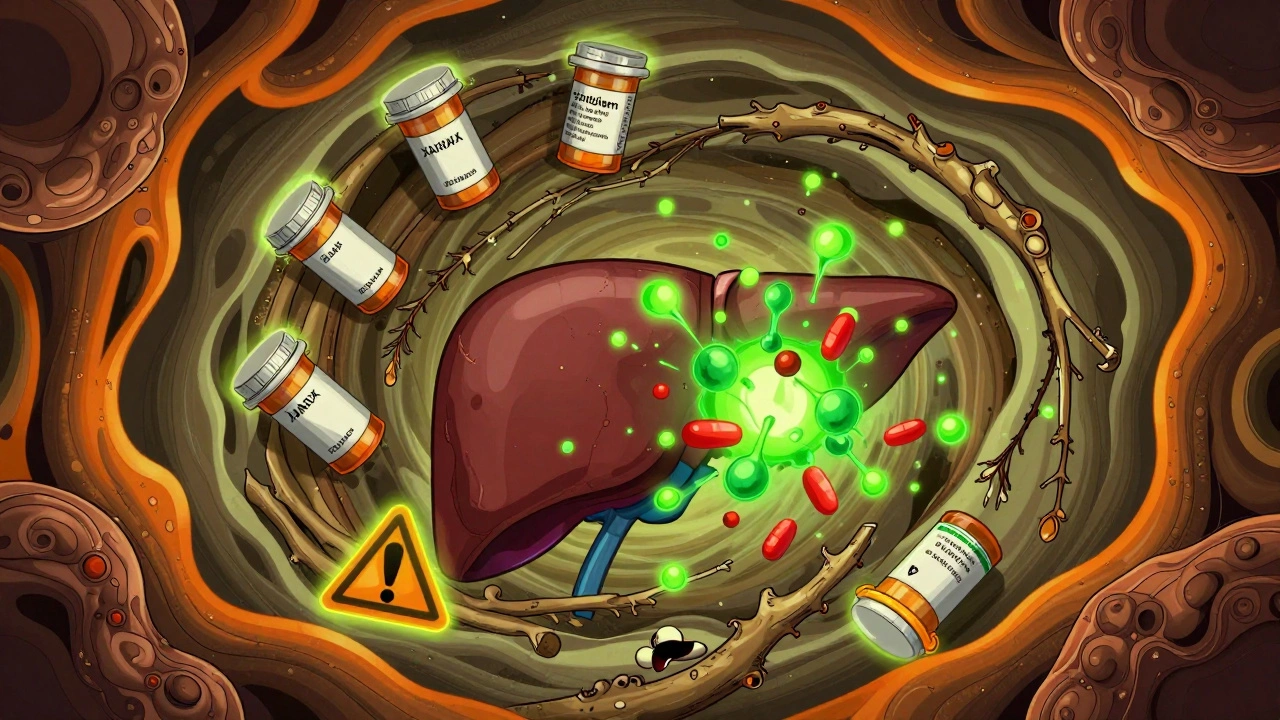
Many people turn to kava as a natural way to calm down, ease anxiety, or get a good night’s sleep. But if you’re also taking prescription sedatives-like Xanax, Valium, lorazepam, or even sleep aids like zolpidem-you could be putting your liver and safety at serious risk. This isn’t just a theoretical concern. Real people have ended up in the hospital, some needing liver transplants, after mixing kava with their meds. And most of them had no idea it was dangerous.
What Exactly Is Kava?
Kava (Piper methysticum) is a plant native to the Pacific Islands. For centuries, people there have made a drink from its roots, used in ceremonies and daily life to promote relaxation. In Western countries, it’s sold as capsules, teas, or liquid extracts, mostly marketed for anxiety and stress relief. The active compounds, called kavalactones, work on the brain’s GABA receptors-similar to how benzodiazepines do-but they also affect other brain pathways, including sodium and calcium channels. That’s why it can make you feel calm, relaxed, even a little numb.
Traditional water-based kava drinks contain about 150-250 mg of kavalactones per serving. But commercial supplements? Those can pack up to 300 mg per dose-and often use alcohol or acetone to extract the compounds, which changes how your body processes them. This matters because the way kava is made directly affects how risky it is.
Why Your Liver Might Be in Danger
The FDA issued a warning about kava back in 2002, after reports of severe liver damage started popping up across the U.S., Europe, and Australia. Since then, over 25 international cases have been documented, including cases where patients needed liver transplants. The exact reason why kava harms the liver isn’t fully understood, but researchers believe it interferes with enzymes your liver uses to break down drugs-especially CYP2D6, CYP2C9, and CYP3A4.
Here’s the scary part: if you’re already taking a medication that relies on those same enzymes, kava can slow down how fast your body clears it. That means the drug builds up in your system, increasing the chance of side effects-and liver damage. Studies show kava can raise midazolam (a sedative) levels in the blood by 27%. That’s not a small bump. That’s enough to push someone into overdose territory.
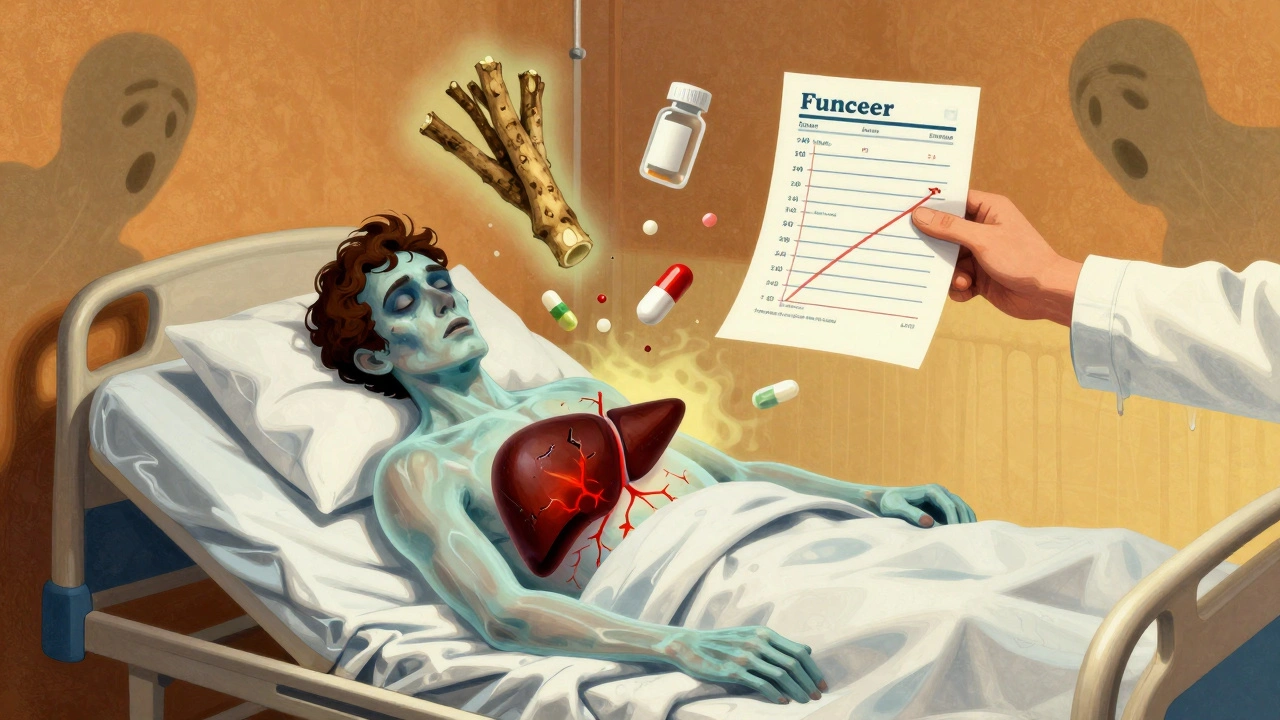
And it’s not just about the dose. People with existing liver problems-like fatty liver disease, hepatitis, or even long-term alcohol use-should avoid kava entirely. The CDC says the risk isn’t worth it. Even if your liver seems fine now, kava can silently damage it over time. Symptoms like fatigue, nausea, dark urine, or yellowing skin often show up months after you start taking it. By then, it’s often too late.
Combining Kava With Sedatives Is a Recipe for Trouble
If you’re on any kind of sedative-whether it’s for anxiety, insomnia, muscle spasms, or even seizures-kava is not safe to mix with it. The effects don’t just add up; they multiply.
- Alprazolam (Xanax) + kava: One Sacramento County patient developed jaundice and liver enzymes over 2,800 U/L (normal is under 40) after 90 days of combining 300 mg kava with 2 mg of Xanax daily.
- Diazepam (Valium) + kava: Another patient, taking 250 mg kava with 10 mg Valium, ended up in the hospital with a dangerously high INR (4.2)-meaning their blood couldn’t clot properly.
- Lorazepam (Ativan) + kava: Reddit users report being unable to stand, slurring speech, or passing out for hours after combining even small amounts.
These aren’t rare accidents. The FDA’s adverse event database shows 37 reports of excessive sedation from kava since 2019, with 12 requiring emergency care. And that’s just what got reported. Most people don’t tell their doctors they’re taking kava. Sacramento County found only 22% of patients with liver issues even mentioned it when asked.
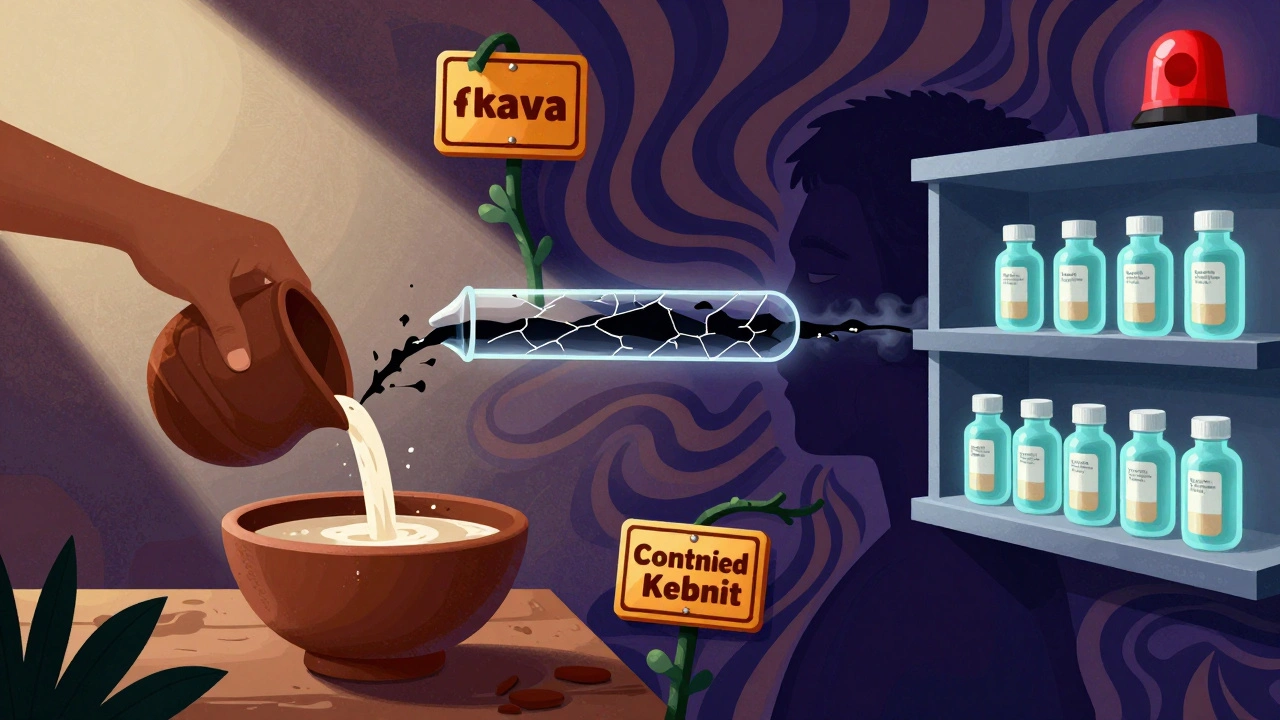
Why Some People Say Kava Is Safe
You’ll hear people say, “I’ve taken kava for years and I’m fine.” And yes, many do. Reddit’s r/Herbology had 427 users report on kava use-63% said they had no liver problems. But here’s the catch: those reports are self-reported. No lab tests. No monitoring. And most of them weren’t taking sedatives.
There’s also a difference between traditional kava and commercial extracts. Pacific Island cultures use only water-extracted root, avoiding the leaves and stems, which contain toxins. Commercial products? Many use solvents, stems, or even non-noble kava strains-ones known to be more toxic. The WHO found traditional water-based kava has a liver injury rate of 0.8 per 100,000 servings. Commercial extracts? 7.3 per 100,000. That’s nearly 10 times higher.
Some experts, like Dr. J. Christopher Gorski, argue that past liver cases might have been caused by other factors-contaminants, pre-existing conditions, or other drugs. But even if kava isn’t the sole cause, it’s clearly a major contributor in many cases. The European Food Safety Authority and Australia’s Therapeutic Goods Administration agree: the risk isn’t zero, and it’s too unpredictable to justify use, especially with other meds.
What Should You Do If You’re Taking Kava and Sedatives?
If you’re on any sedative medication and taking kava, stop immediately. Don’t wait for symptoms. Don’t assume “it’s natural, so it’s safe.” The truth is, natural doesn’t mean harmless. Many of the most dangerous drugs in history came from plants-digitalis from foxglove, morphine from poppies.
Here’s what to do next:
- Stop kava right away. Even if you feel fine, your liver might already be stressed.
- Talk to your doctor or pharmacist. Tell them exactly what you’ve been taking-including brand names, doses, and how long.
- Get a liver function test. Ask for ALT, AST, bilirubin, and INR. If ALT is more than three times the normal limit, your doctor will likely tell you to stop kava permanently.
- Don’t restart kava. Even if your liver tests come back normal, the risk of recurrence is real. Once your liver has been damaged by kava, it’s more vulnerable next time.
If you’re using kava for anxiety, talk to your doctor about safer alternatives. Buspirone, SSRIs, or even therapy have proven safety profiles. Kava doesn’t offer any unique benefit that can’t be achieved without the risk.
Who Should Never Take Kava?
There are clear groups who should avoid kava entirely:
- Anyone taking sedatives, antidepressants, antipsychotics, or sleep aids
- People with liver disease, fatty liver, or high alcohol intake
- Those with a history of alcohol or drug dependence
- Anyone under 18 or pregnant/breastfeeding
- People planning surgery (kava can interfere with anesthesia)
Even if you don’t fall into these categories, the FDA, WHO, and European health agencies all agree: kava’s risks outweigh its benefits-especially when safer options exist.
What’s Changing in 2025?
The landscape is shifting. California issued formal warnings in May 2024. New York is pushing for mandatory liver toxicity labels on all kava products. The FDA is now requiring enhanced liver monitoring for any new kava-based clinical trials. And Oregon State University is studying whether traditional “noble” kava strains are safer than the ones sold in stores.
Meanwhile, kava bars in the U.S. are growing-312 as of early 2024-offering traditional water-based drinks. These are less risky than pills, but still not risk-free if you’re on meds. And most don’t screen customers for medications.
By 2026, industry analysts predict U.S. kava supplement sales could drop 22% as more doctors warn patients. But the real change will come when people stop assuming “natural = safe.”
Bottom Line: Don’t Risk It
Kava isn’t a harmless herbal tea. It’s a potent substance with documented, serious risks-especially when mixed with sedatives. The liver doesn’t scream when it’s hurt. It whispers. Fatigue. Nausea. A dull ache. By the time it yells, it might be too late.
If you’re taking any prescription medication for anxiety, sleep, or pain-don’t add kava. Not even a little. Not even “just once.” The interaction isn’t worth the gamble. Your liver can’t afford it. And neither can you.
Can kava cause liver damage even if I don’t take any medications?
Yes. While the risk is higher when combined with sedatives, liver damage from kava alone has been documented in over a dozen cases worldwide, including cases requiring liver transplants. The damage can occur even at standard doses and may take months to show symptoms. The exact cause isn’t fully understood, but it’s linked to how kavalactones interact with liver enzymes and possibly to the type of extract used. Traditional water-based kava appears safer, but no form is proven completely risk-free.
How long does it take for kava to affect the liver?
Liver damage from kava can develop anywhere from a few weeks to several months after starting use. Most cases reported in medical studies show symptoms appearing between 1 and 4 months. This delay is part of why it’s so dangerous-people often don’t connect their symptoms to kava because they’ve been taking it for a while without issue. By the time jaundice or fatigue shows up, the liver may already be significantly injured.
Is kava safer if I use it occasionally instead of daily?
Occasional use lowers the risk-but doesn’t eliminate it. There are documented cases of liver injury after just a few doses. The problem isn’t just frequency; it’s the unpredictability of how your body reacts. Even one high-dose supplement can trigger enzyme interference or oxidative stress in the liver. If you’re on any medication, even rare use is dangerous. The safest approach is to avoid kava completely if you’re taking sedatives or have any liver concerns.
What are the signs of kava-induced liver damage?
Early signs include unexplained fatigue, loss of appetite, nausea, dark urine, and light-colored stools. As damage progresses, you may notice yellowing of the skin or eyes (jaundice), abdominal pain, or easy bruising. These symptoms often appear gradually and are easily mistaken for the flu or stress. If you’ve been using kava and experience any of these, stop immediately and get a liver function test. Don’t wait.
Can I switch from kava to another herbal supplement like valerian root?
Valerian root is generally considered safer than kava when it comes to liver risk and drug interactions. It has minimal documented effects on liver enzymes and is less likely to interfere with sedatives. However, it can still cause drowsiness, so use caution if you’re already taking sleep or anxiety meds. Always talk to your doctor before switching. There are also FDA-approved non-herbal options-like SSRIs or cognitive behavioral therapy-that have proven safety and effectiveness without the unpredictable risks of herbal supplements.
Gwyneth Agnes
December 5, 2025 AT 14:15Kava with sedatives? That’s not a choice, it’s a death wish.
Priya Ranjan
December 7, 2025 AT 10:06People still don’t get it. Natural doesn’t mean safe. Foxglove is natural too. So is arsenic. You think your ‘herbal calm’ is somehow exempt from biology? You’re not special. You’re just statistically likely to be the next liver transplant case. And no, your Reddit buddy who ‘takes it once a week’ isn’t proof-it’s confirmation bias with a turmeric latte.
The FDA warning was 2002. Over two decades. And still people treat kava like a TikTok trend. If your liver could talk, it’d beg you to stop. But it doesn’t talk until it’s too late. And then you’re on a waiting list while your family Google ‘kava liver failure’ at 3 a.m.
And don’t even get me started on those ‘noble kava’ sales pitches. The WHO says traditional preparation is *less risky*, not *safe*. There’s a difference. One is a relative term. The other is a lie you tell yourself so you can keep buying it.
Stop romanticizing cultural appropriation. Pacific Islanders used kava in ritual contexts, with strict protocols, under supervision. You? You’re popping pills while binge-watching Netflix and wondering why you’re so tired. It’s not the same. It’s not even close.
If you’re on Xanax, Valium, or even melatonin with a side of alcohol, you’re already playing Russian roulette. Adding kava? That’s not a second bullet. That’s the whole chamber.
I’ve seen the labs. AST over 2,800. Bilirubin through the roof. No alcohol. No hepatitis. Just kava. And now? No liver. Just a scar and a funeral.
It’s not fearmongering. It’s epidemiology. And you’re the data point they’ll study in 2030 when this becomes a public health crisis nobody saw coming.
Ashish Vazirani
December 9, 2025 AT 01:10Ohhh, so now Western medicine is the only truth? You think your ‘FDA warnings’ are sacred? We’ve been using kava for centuries in India-yes, India!-in Ayurvedic blends, and no one’s dropping dead! You’re just scared of anything that doesn’t come in a patentable pill! Your pharma overlords made billions off benzodiazepines, and now they’re scared of a root that doesn’t have a trademark! This is cultural genocide disguised as science!
And you want to ban kava? What’s next? Banning turmeric? Garlic? Ginger? Next thing you know, they’ll say ‘tea is dangerous because it has caffeine!’ You’re not protecting us-you’re protecting Big Pharma’s monopoly!
My uncle in Kerala took kava for anxiety for 12 years-no liver damage, no hospital visits, no ‘toxic extracts’-just pure root, ground by hand, brewed with water, and shared with family. That’s tradition. Not your lab-coat fear-mongering!
Stop colonizing wellness! Stop pretending your regulatory agencies know more than millennia of wisdom! Kava isn’t the problem. Your arrogance is!
Mansi Bansal
December 9, 2025 AT 21:11It is, with profound regret, necessary to elucidate that the conflation of botanical efficacy with pharmacological safety constitutes a fundamental epistemological error in contemporary wellness discourse. The pharmacokinetic interference of kavalactones with cytochrome P450 isoforms-specifically CYP2D6, CYP2C9, and CYP3A4-is not speculative; it is empirically documented in peer-reviewed hepatology literature spanning the last two decades. The notion that ‘natural’ equates to ‘benign’ is a dangerous fallacy, one that has precipitated iatrogenic morbidity across multiple jurisdictions. One must consider, in the context of polypharmacy, the additive sedative burden, which, when combined with pharmacodynamic synergy, may induce respiratory depression, hepatic necrosis, and, in extreme cases, acute liver failure requiring transplantation. The absence of symptoms does not equate to the absence of pathology. Asymptomatic transaminase elevation may precede clinical manifestation by months. To continue ingestion under such conditions is not merely imprudent-it is an act of self-negligence bordering on medical malpractice.
Kay Jolie
December 10, 2025 AT 04:58Okay but like-have you seen the *aesthetic* of kava bars? Like, dim lighting, bamboo stools, ambient didgeridoo music? It’s basically a spa meets cult retreat. And then you throw in a Xanax? Girl, that’s not self-care-that’s a slow-mo car crash in a Lululemon onesie.
I used to take it daily. Felt like a warm hug from a ghost. Then I realized my hands were shaking like I’d chugged three espressos. Turns out? My liver was staging a silent protest. Got my enzymes checked. AST was doing the Macarena. I quit. Now I do breathwork. It’s less glamorous. But my liver? It’s still alive. And honestly? That’s the ultimate flex.
pallavi khushwani
December 11, 2025 AT 05:52I used to take kava every night to sleep. I thought it was my little secret peace ritual. Then I started feeling off-like my body was heavy, but my mind was buzzing. I didn’t connect it until I read this. I stopped. Three weeks later, my energy came back. Not because I was ‘cured’-but because my body stopped fighting itself.
It’s weird, right? We think we’re being wise, choosing ‘natural’ over ‘chemical.’ But we’re just swapping one kind of control for another. The truth is, we’re all just trying to quiet the noise. Kava didn’t fix my anxiety-it just muted it. And now I’m learning to sit with it. Therapy helped more than any root ever could.
It’s not about fear. It’s about respect. Respect for your body. Respect for the science. And respect for the fact that healing isn’t a shortcut. It’s a slow walk. Even if the path is boring.
Billy Schimmel
December 12, 2025 AT 14:34So you’re telling me the same people who swear ‘natural = safe’ also think ‘organic kale’ won’t give them food poisoning? We’ve got a problem.
Shayne Smith
December 13, 2025 AT 15:07I took kava for a month. Felt chill. Then I got sick for two weeks. Couldn’t figure out why. Just thought I had a bug. Turned out my ALT was 400. I didn’t even know what ALT was. Now I do. And I never touch it again. Lesson learned the hard way.
Katie O'Connell
December 15, 2025 AT 00:42It is worth noting that the majority of documented hepatotoxic cases involve non-traditional, solvent-extracted kava products, often adulterated with stems or non-noble cultivars. The risk profile of water-extracted noble kava, consumed in culturally appropriate dosages, remains significantly lower than that of commercial supplements. While caution is warranted, the blanket condemnation of all kava use risks conflating product quality with inherent toxicity. A nuanced, evidence-based approach is preferable to moral panic.
Clare Fox
December 16, 2025 AT 04:01i used to think kava was my chill pill… turns out it was my silent killer. i didnt feel anything wrong… just tired. then one day my eyes turned yellow. like, seriously. i thought i was jaundiced from being up too late. turns out my liver was screaming. i didnt know you could die from a root. now i dont even look at the stuff. just… no.
brenda olvera
December 17, 2025 AT 05:18In Nigeria, we have a plant called kola nut that makes you feel awake. People say it’s dangerous too. But we’ve used it for centuries. Kava is the same. It’s not the plant-it’s how you take it. If you’re mixing it with pills, that’s your fault. Don’t blame the root.
My cousin in Lagos takes kava tea every Friday with her family. No liver damage. No hospital. Just peace. Maybe the problem isn’t kava. Maybe it’s the Western obsession with pills and quick fixes.
Myles White
December 17, 2025 AT 12:48I’ve been researching this for months. I used to take kava with my Ativan because I thought it helped me sleep better. I didn’t realize how much I was stacking the deck. The liver doesn’t have pain receptors until it’s almost gone. That’s the scary part. I stopped. Got tested. My AST was 85. Normal is under 40. I was in the danger zone. My doctor said if I’d kept going for another month, I might’ve been looking at a transplant list. I didn’t know. Nobody told me. And now I’m on a mission to tell everyone I know. If you’re on any sedative, even if it’s just ‘occasional,’ just stop. Please. I’m not trying to scare you. I’m trying to save you from the same mistake I made.
Brooke Evers
December 18, 2025 AT 19:43I know how hard it is to let go of something that helps you sleep. I was there. I used kava for anxiety after my divorce. It felt like the only thing that didn’t make me numb. But I didn’t tell my therapist. I didn’t tell my doctor. I was ashamed. Then I got sick. And I realized-I wasn’t healing. I was hiding. So I stopped. I started journaling. I went to CBT. I found a support group. It’s not glamorous. It’s not Instagram-worthy. But I’m alive. And I’m not afraid to say it: kava didn’t save me. My courage did. You can do this. You don’t need a root to be calm. You just need to be kind to yourself.
Chris Park
December 19, 2025 AT 08:48This is all a psyop. The FDA banned kava because it threatened Big Pharma’s profits. They’re scared people will stop taking antidepressants and start using a root that costs $5. The liver damage cases? Fabricated. The transplant stats? Inflated. The real cause? Glyphosate. Or 5G. Or the water supply. Kava is being framed as the villain so they can sell you more pills. Wake up. They don’t want you healthy. They want you dependent.