If you’ve been feeling drained, moody, or just not like yourself-especially if you’re over 40-it might not just be aging. It could be male hypogonadism, a condition where your body doesn’t make enough testosterone. This isn’t rare. Around 4 to 5 million men in the U.S. have it, and the numbers climb with age: half of men over 80 have testosterone levels below the normal range. But here’s the catch: most don’t know it. And even fewer get treated the right way.
What Exactly Is Male Hypogonadism?
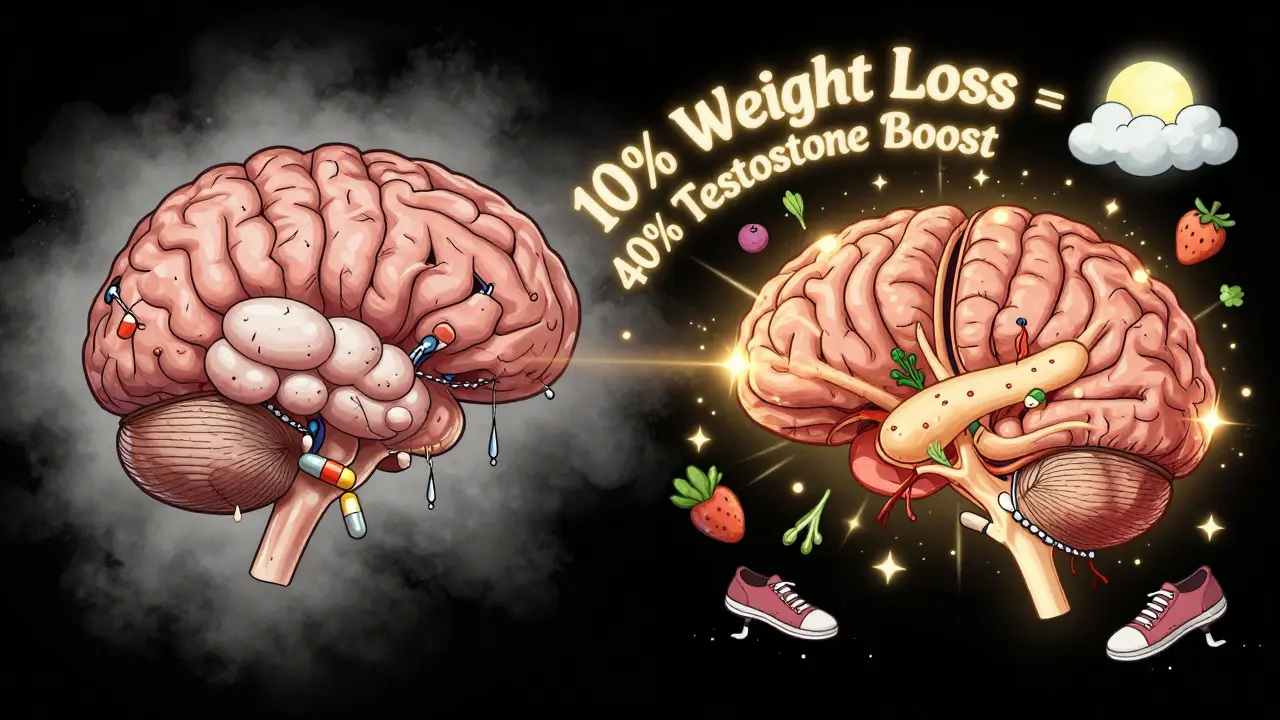
Male hypogonadism means your testes aren’t producing enough testosterone. It’s not one condition-it’s two. The first kind, called primary hypogonadism, comes from damaged or underperforming testes. Think genetic issues like Klinefelter syndrome, past mumps infections that hit the testicles, or too much iron in your blood from hemochromatosis. In these cases, your brain sends out more signals (LH and FSH hormones) trying to wake up the testes, but they just won’t respond. The second kind, secondary hypogonadism, is way more common-making up 85 to 90% of cases. Here, the problem isn’t your testes. It’s your brain. The hypothalamus or pituitary gland isn’t sending the right signals. Obesity is the biggest culprit. Men with a BMI over 30 often have 30 to 50% lower testosterone. Chronic opioid use, pituitary tumors, and even long-term stress can trigger this. The good news? Losing just 10% of your body weight can boost testosterone by 30 to 40% in many cases.What Are the Real Symptoms?
Symptoms don’t always show up as a sudden loss of muscle or libido. They creep in. You might notice you’re not getting morning erections like you used to. Or that you’re tired all the time, even after a full night’s sleep. You might feel irritable, forgetful, or just emotionally flat. These aren’t just "getting older" signs-they’re biological signals. Here’s what research shows are the most reliable indicators:- Decreased spontaneous erections (78% of men with low T report this)
- Reduced or absent nocturnal erections (82% of cases)
- Low sex drive (85% of patients)
- Testicles smaller than 15 mL (measured with a simple tool called an orchidometer)
- Loss of muscle mass (20-30% drop) and increased body fat (10-15% rise)
- Mild anemia (hemoglobin under 13.5 g/dL)
- Thinning bones-up to 33% of long-term untreated men develop osteoporosis
How Is It Diagnosed?
A proper diagnosis isn’t just about checking your testosterone level. It’s a puzzle. Doctors look at:- Total testosterone (below 300 ng/dL is low)
- Free testosterone (if total is borderline, this matters more-below 65 pg/mL is concerning)
- LH and FSH levels (high = primary; low/normal = secondary)
- Prolactin (elevated levels can mean a pituitary tumor)
- Hematocrit (to check for too many red blood cells)
- PSA (prostate health screening)
Testosterone Replacement Therapy: What Works?
If you’re symptomatic and your labs confirm low testosterone, testosterone replacement therapy (TRT) is the standard. But not all TRT is the same. Here’s how the main options stack up:| Method | Dosing | Pros | Cons |
|---|---|---|---|
| Topical Gel | 5-10 g daily | Steady levels, easy to use | Can transfer to partners/kids; skin irritation; needs 24-hour wait before swimming/showering |
| Injections (IM) | 200-400 mg every 2-4 weeks | Cheap ($30-50/month), effective | Peaks and troughs-mood swings, energy dips; requires injections |
| Buccal Tablets | 30 mg twice daily | No skin contact risk, steady absorption | Gum irritation; frequent dosing; not all insurance covers |
| Subcutaneous Pellets | 150-450 mg every 3-6 months | Stable levels, no daily effort | Surgical insertion ($500-1,000); risk of infection or extrusion |
| Oral Capsules (Jatenzo) | One capsule with high-fat meal | First oral option with good absorption; no transfer risk | Expensive; requires fatty meal; liver monitoring needed |
Who Should Avoid TRT?
TRT isn’t for everyone. The FDA and major medical groups agree: don’t start if you have:- Prostate cancer (current or untreated)
- Untreated severe heart failure
- Hematocrit over 50% (too many red blood cells)
- Severe sleep apnea
What About Lifestyle Changes?
Before jumping to TRT, especially if you’re overweight, try lifestyle fixes first. Losing 10% of your body weight can raise testosterone levels as much as a low-dose injection. Resistance training-lifting weights 2 to 3 times a week-boosts testosterone naturally. Sleep matters too. Men who get less than 5 hours a night have 15% lower testosterone than those who sleep 7 to 8. A 2022 UCSF survey found that 65% of men with obesity-related hypogonadism who lost weight were able to stop TRT within 18 months. That’s huge. For men with genetic causes like Klinefelter syndrome, TRT is lifelong. But for many, fixing diet, sleep, and activity levels is the real treatment.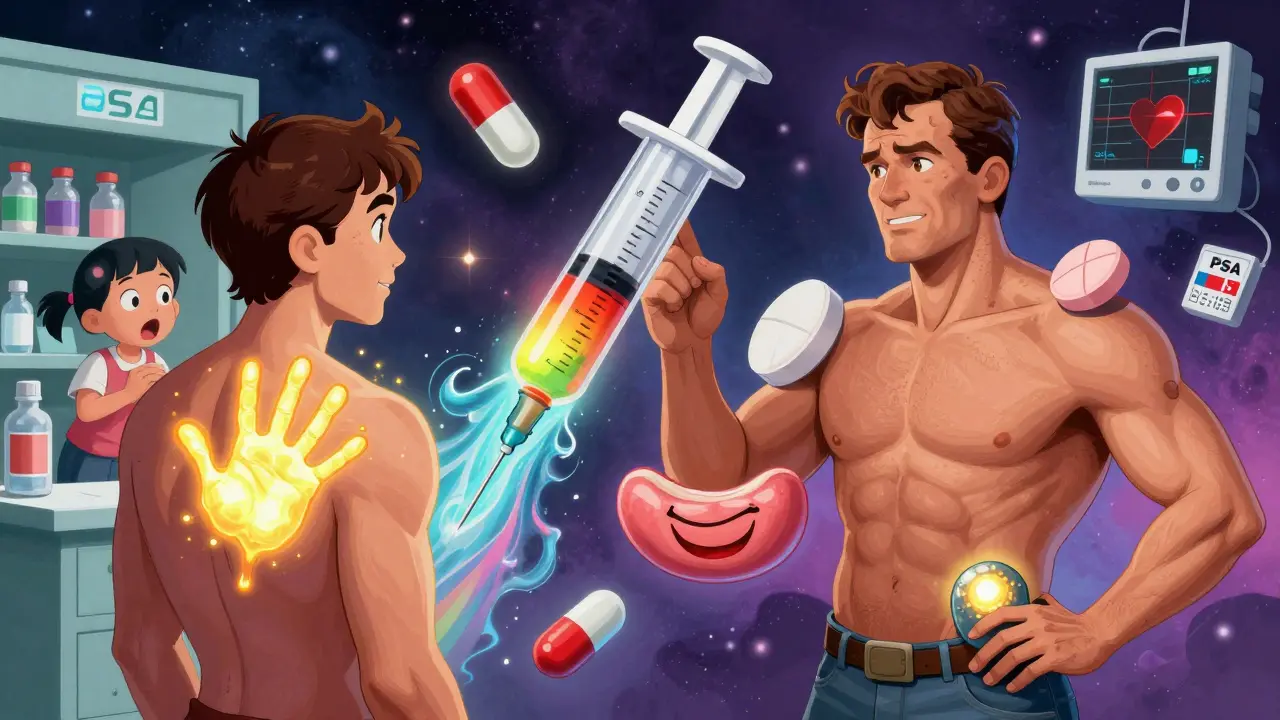
What Happens After You Start?
Most men notice changes within weeks:- Energy improves in 2 to 3 weeks
- Libido and morning erections return in 4 to 6 weeks
- Muscle strength and mass increase after 3 to 6 months (especially with training)
- Bone density improves after 6 to 12 months
Common Side Effects and How to Handle Them
Side effects are real-but manageable:- Acne (35% of users): Usually mild. Switching gels or lowering dose helps.
- Polycythemia (15%): High red blood cell count. Requires phlebotomy or dose adjustment.
- Testicular shrinkage (25%): Normal with TRT. Your body stops making its own testosterone. If fertility matters, talk to your doctor about hCG or clomiphene instead.
- Mood swings: Often tied to injection peaks and troughs. Switching to gels or pellets helps.
What’s Next for Treatment?
The field is changing fast. Oral testosterone (Jatenzo) is now FDA-approved, and new drugs called SARMs (selective androgen receptor modulators) are in late-stage trials. These aim to build muscle and improve energy without shutting down natural testosterone production-something current TRT does. The big unanswered question? Long-term heart safety. The TRAVERSE trial, tracking 5,000 men over five years, is due to finish in 2025. That study will give us the clearest picture yet on whether TRT increases or decreases heart risk. For now, the message is clear: if you have symptoms and confirmed low testosterone, TRT can change your life. But it’s not a magic pill. It’s a medical treatment that needs monitoring, lifestyle support, and realistic expectations.Can low testosterone cause depression?
Yes. Low testosterone is strongly linked to low mood, lack of motivation, and even clinical depression in men. Studies show that up to 40% of men with low T report depressive symptoms. TRT often improves mood, but if depression persists after testosterone levels normalize, a mental health evaluation is needed. Depression and low T can feed into each other-treating one often helps the other.
Does TRT make you grow more body hair?
Some men notice increased facial or body hair after starting TRT, especially if they had thinning hair due to low levels. But it won’t turn you into a werewolf. Growth is usually modest and follows your genetic pattern. If you’re genetically predisposed to a full beard, TRT may help you reach that potential. If you’re naturally light-haired, don’t expect dramatic changes.
Can I still have kids if I’m on testosterone replacement?
TRT shuts down your body’s natural sperm production. If you plan to have children, TRT isn’t the right choice. Instead, ask your doctor about hCG injections or clomiphene citrate-these stimulate your testes to make both testosterone and sperm. Many men successfully restore fertility with these treatments. If you’ve already started TRT and want kids, stop it and get tested. Fertility often returns within 3 to 6 months after stopping.
Is it safe to take testosterone if I have high blood pressure?
High blood pressure alone isn’t a reason to avoid TRT. In fact, some men see improved blood pressure after starting treatment, likely due to weight loss and better insulin sensitivity. But if your blood pressure is uncontrolled, you need to fix that first. TRT can slightly raise red blood cell count, which might increase blood thickness. That’s why hematocrit is monitored. If your BP is managed with medication and your heart is healthy, TRT is generally safe.
How long do I need to stay on testosterone therapy?
For men with permanent causes-like Klinefelter syndrome, surgical removal of testes, or radiation damage-TRT is lifelong. For those with obesity, sleep apnea, or stress-related low T, it’s possible to stop after lifestyle changes improve levels. Many men who lose weight and start lifting weights can discontinue TRT after 12 to 18 months. But if you stop and symptoms return, you’ll likely need to restart. There’s no shame in needing long-term treatment-it’s like taking thyroid medicine for hypothyroidism.
James Hilton
December 28, 2025 AT 12:04So let me get this straight-I’m supposed to believe that my midlife slump is just low T and not the fact that I’m drowning in Zoom calls and toddler tantrums? Thanks for the medical jargon, but I’ll stick to coffee and crying in the shower.
Mimi Bos
December 28, 2025 AT 18:47i read this whole thing and now im scared i have low t?? like i dont even know what my testes are doing anymore lol. also why is everything so expensive??
Payton Daily
December 30, 2025 AT 16:49Let me tell you something, folks-this isn’t about hormones. This is about the collapse of the modern male soul. We’ve been fed lies by Big Pharma and the gym bro cult. Testosterone isn’t a pill-it’s a return to the wild, to the fire, to the ancient rhythm of the earth. You think your body’s broken? Nah. Your spirit’s been sold to a corporate algorithm that wants you docile, sedated, and scrolling. Wake up. Go lift something heavy. Shout into the canyon. Let your testosterone roar like it was meant to.
Sydney Lee
December 30, 2025 AT 19:56It’s staggering how casually people treat testosterone replacement like a vitamin. This isn’t some trendy supplement you pop with your protein shake. You’re altering your endocrine system-a finely tuned orchestra of hormones-and yet half the commenters here treat it like a Netflix subscription. If you’re not under the supervision of a board-certified endocrinologist who uses mass spectrometry and tracks SHBG levels, you’re not treating hypogonadism-you’re playing Russian roulette with your liver, your prostate, and your sanity.
oluwarotimi w alaka
December 31, 2025 AT 13:46USA always got the answer, but who really controls the test? Pharma? CIA? They put low T in the system so men stay weak, buy meds, and don’t rebel. In Nigeria, we just work hard, eat plantain, and pray-no pills needed. You think your body’s broken? Nah, your mind’s been colonized.
Hakim Bachiri
January 1, 2026 AT 08:05Okay, but let’s be real-why does every single treatment cost more than my rent? Gels? $300? Injections? $50? And then you gotta go get blood drawn every three months like you’re in a dystopian cult? Who’s really profiting here? It’s not the doctors-it’s the guys selling the pumps, the pellets, the fancy lab reports. This isn’t medicine-it’s a luxury subscription for men who can’t afford to be men anymore.
ANA MARIE VALENZUELA
January 2, 2026 AT 23:28Let me just say-I’ve seen this play out with my husband. He started TRT, got his energy back, stopped snapping at the kids, actually looked me in the eye again. But then he started acting like a 22-year-old bro who just discovered protein powder. He bought a dumbbell set, started wearing tank tops in winter, and told me I "need to chill" when I asked about the mortgage. So yes, it works. But it doesn’t fix your marriage. Or your avoidance issues. Or the fact that you’re still scared of vulnerability. TRT doesn’t make you a better man-it just makes you a louder one.
Bradly Draper
January 4, 2026 AT 01:55I’ve been on gels for a year. I didn’t feel like myself for years-zombie mode, all the time. Now I actually wake up excited. Not because I’m jacked, but because I can play with my daughter without wanting to nap. If you’re tired and sad and think it’s just aging-get tested. It’s not weakness. It’s biology. And you deserve to feel alive again.
Gran Badshah
January 5, 2026 AT 15:05Back home in India, we don’t have all this fancy testing. My uncle, 72, still lifts his grandkids, walks 10 km daily, eats spicy food, and says he feels fine. He never checked his T. Maybe we’re overmedicalizing normal aging? I mean, what’s the point of feeling "energized" if you’re just gonna spend it staring at a screen?
Ellen-Cathryn Nash
January 5, 2026 AT 20:37I’m a woman, and I’ve watched my partner go through this. It’s heartbreaking to see a man you love turn into a ghost-quiet, distant, brittle. Then you watch him come back to life with TRT, and it’s like seeing a flower bloom after a drought. But here’s the thing: no one talks about how it changes the relationship. He’s more present, yes-but also more demanding. More entitled. More… male. And I’m not sure I’m ready for that version of him. Is this healing-or just a different kind of performance?
Samantha Hobbs
January 6, 2026 AT 03:30Just got my results back-total T at 287. Free T at 58. Doctor said "you’re borderline, but if you’re symptomatic, we can treat." I cried in the parking lot. Not because I’m broken-but because I finally have a name for the weight I’ve been carrying for five years. I’m starting gels next week. No more pretending I’m just "tired."