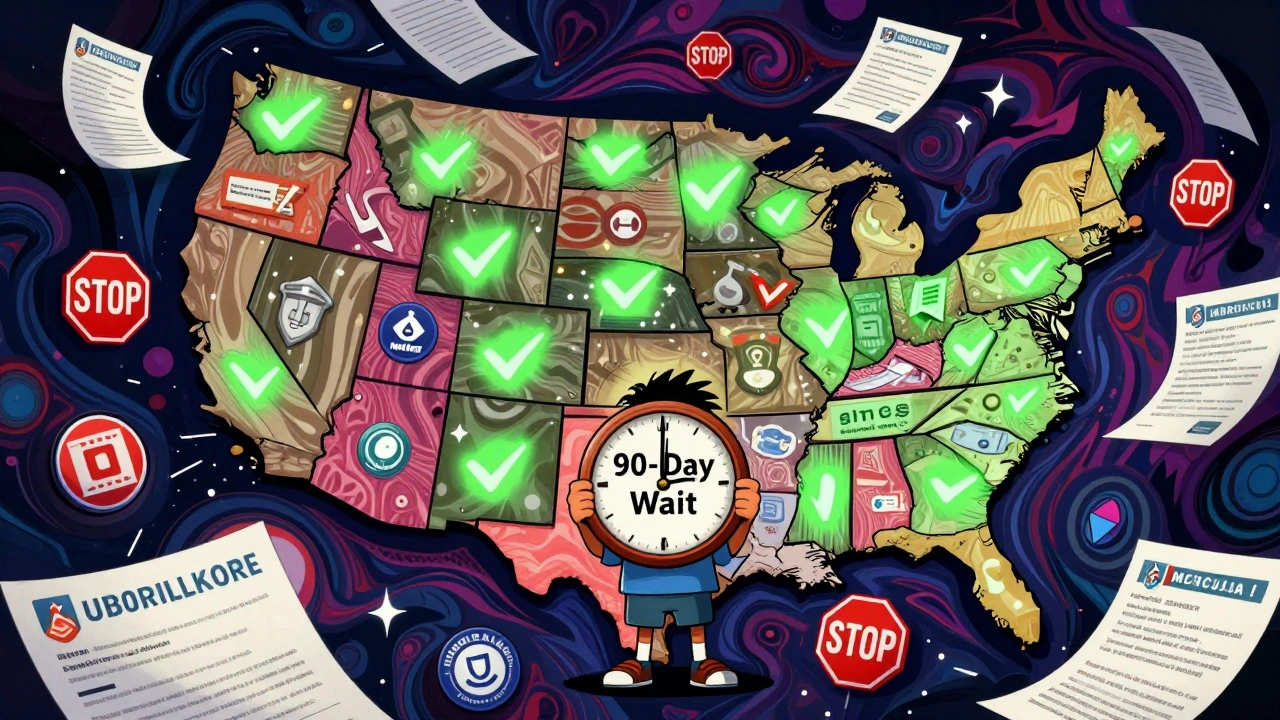
When a child qualifies for Medicaid or CHIP, the government doesn’t just automatically enroll them. There’s a hidden rule that can block coverage - even if the family qualifies - because of what kind of insurance they might have. This is called Medicaid substitution, and it’s one of the most confusing, inconsistently applied policies in public health insurance. Some states use it to stop families from dropping private insurance to get free public coverage. Others use it to protect kids who’ve lost their employer plan. The rules aren’t the same across the country. And the differences matter - a lot.
What Medicaid Substitution Actually Means
Medicaid substitution rules exist to stop public programs from replacing private insurance that’s already available and affordable. The idea is simple: if a child’s parent has a job that offers health coverage, Medicaid shouldn’t step in unless that private plan is too expensive or doesn’t cover the basics. This isn’t about punishing families. It’s about keeping taxpayer money focused on those who truly have no other option.
These rules come from federal law - Section 2102(b)(3)(C) of the Social Security Act - and were strengthened by the Affordable Care Act in 2010. The goal? Prevent "churning," where parents cancel their employer-sponsored insurance just to get free Medicaid or CHIP. Without these rules, states could be paying for coverage that employers are already offering, costing billions. The Congressional Budget Office estimates that without substitution rules, Medicaid and CHIP spending would jump by $2.1 billion a year.
But here’s the catch: these rules don’t always work the way they’re supposed to. In practice, they often delay care for kids whose parents lose jobs, switch to part-time work, or get coverage that’s technically available but unaffordable. A parent in Ohio told a Reddit thread: "We get families who lose employer coverage on Friday and need CHIP Monday, but the 90-day rule forces us to deny them for 12 weeks - they often end up uninsured during that time."
The Mandatory Rule: All States Must Do This
Every state, plus Washington, D.C., is required by federal law to have a substitution prevention system in place. That’s non-negotiable. The core requirement? States must make sure CHIP doesn’t replace private group health coverage that’s both available and affordable.
What counts as "affordable"? For 2024, the IRS says a plan is unaffordable if the employee’s share of premiums exceeds 9.12% of household income. If the cost is below that, and the plan covers essential services like doctor visits, prescriptions, and hospital care, then Medicaid or CHIP can’t step in - unless the family meets an exemption.
States must also have a process to verify whether private insurance exists. This isn’t easy. In a 2023 survey of 47 state Medicaid agencies, 68% said verifying private coverage was their biggest challenge. Some rely on paper forms. Others try to pull data from employer databases. The average time to verify? 14.2 days. That’s two weeks without coverage for a kid who just lost their parent’s job.
The Optional Rule: What States Can Choose to Do
While the basic substitution rule is mandatory, states have real flexibility in how they enforce it. The biggest choice? Whether to use a waiting period.
The federal government allows states to impose a waiting period of up to 90 days before a child can enroll in CHIP if they have access to private insurance. Thirty-four states use this option. That includes big ones like California, New York, and Texas. The logic? It gives families time to keep their employer plan, and it deters people from dropping coverage just to get free insurance.
But 16 states don’t use waiting periods at all. Instead, they monitor private insurance databases or use household surveys to track coverage. These states rely on real-time data - not delays - to decide who qualifies. A 2023 Urban Institute study found that states with integrated Medicaid-CHIP systems (where eligibility is checked in one place) had 22% fewer coverage gaps than states with separate systems.
Some states go even further. Fifteen states, including Florida, Illinois, and Pennsylvania, have added their own exemptions to the 90-day rule. For example, if a parent loses their job, gets laid off, or has their hours cut, their child can get CHIP immediately - no waiting. Minnesota’s "Bridge Program" uses automated data matching between private insurers and public programs. Result? Substitution-related coverage gaps dropped by 63%.
Why Some States Are Getting It Right
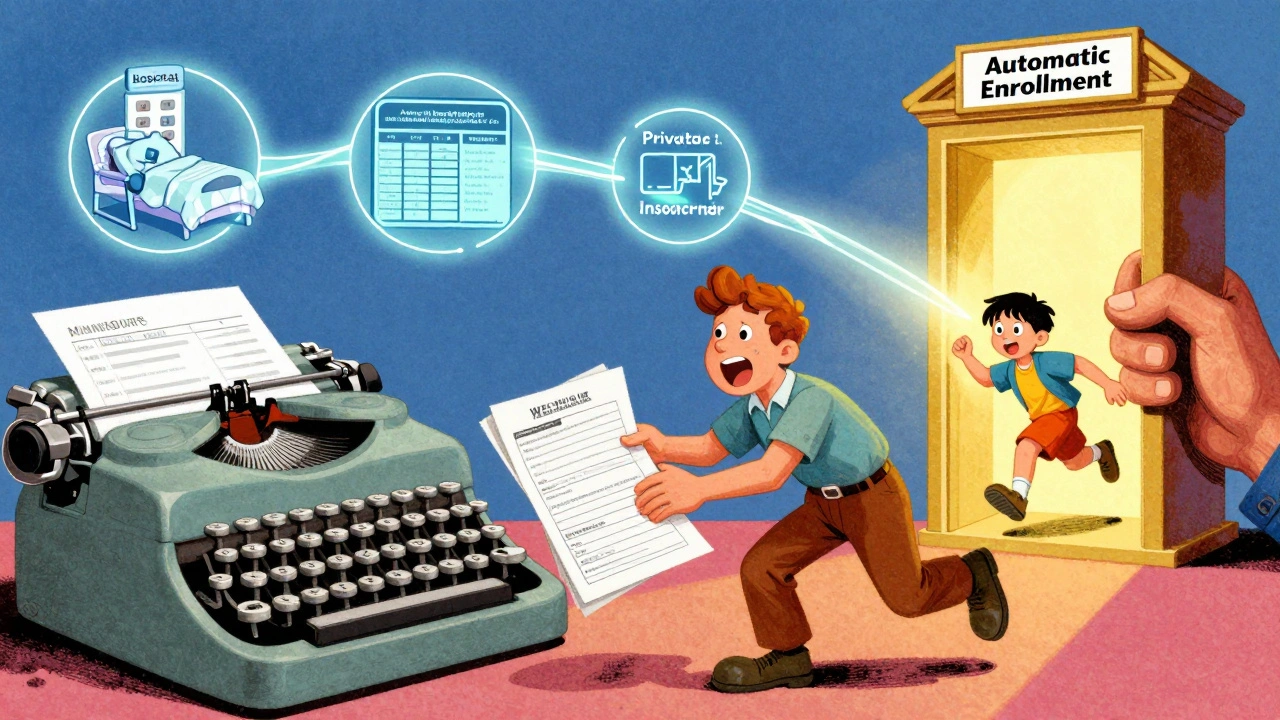
The states with the lowest rates of coverage gaps - Massachusetts, Minnesota, and Oregon - all share one thing: automation. They don’t ask families to mail in proof of insurance. They don’t make workers call employers. They connect systems.
Minnesota’s system pulls real-time data from private insurers. When a parent’s employer stops coverage, the state knows within hours - not weeks. The child is automatically enrolled in CHIP. No application. No paperwork. No gap.
Oregon uses a similar approach, linking Medicaid eligibility data with state unemployment and health exchange records. In 2022, their substitution-related coverage gaps were under 8%. The national average? 21%.
These states didn’t get there by being stricter. They got there by being smarter. They stopped treating substitution as a barrier and started treating it as a transition.
Where the Rules Are Failing Families
Not every state has the tech or the funding to automate. Many still rely on paper forms, phone calls, and manual checks. The result? Kids go without care.
One failure case: Louisiana. In 2021, the state tightened its substitution verification rules. Families had to prove they couldn’t afford private insurance - even if they’d just lost their job. Within months, the uninsured rate among low-income children jumped by 4.7 percentage points, according to the Urban Institute.
And it’s not just about bureaucracy. The 90-day waiting period was designed in the late 1990s, when jobs were more stable. Today, gig work, seasonal labor, and variable hours are common. A farmworker in Texas might lose coverage for two months during the off-season. A retail worker in New Jersey might switch jobs every six months. The waiting period doesn’t fit this reality.
Dr. Leighton Ku from George Washington University put it bluntly: "The 90-day waiting period is increasingly outdated in our dynamic insurance market."
The 2024 Rule Change - What’s New
In March 2024, the Centers for Medicare & Medicaid Services (CMS) released a major update to the Medicaid and CHIP eligibility rules. It went into effect April 29, 2024. The goal? Reduce gaps, not create them.
The new rule requires states to:
- Automatically transition kids from Medicaid to CHIP (or vice versa) when eligibility changes - no reapplication needed.
- Accept eligibility decisions from other programs, like the Health Insurance Marketplace.
- Start reporting substitution-related data quarterly, beginning January 1, 2025.
- Finish system upgrades for data sharing by October 1, 2025.
This is the biggest shift since 2010. It doesn’t remove substitution rules - it makes them work better. States that already use automation are ahead. Those still using paper are playing catch-up.
CMS Administrator Chiquita Brooks-LaSure said the update "addresses long-standing gaps in the substitution framework by requiring states to implement more seamless transitions while maintaining necessary safeguards."
What This Means for Families
If you’re a parent trying to get your child on Medicaid or CHIP, here’s what you need to know:
- If you have access to affordable private insurance, your child might be denied CHIP - even if you can’t afford the deductible or co-pays.
- Some states will make you wait 90 days. Others won’t. It depends on where you live.
- Job loss, reduced hours, or divorce may qualify you for an exemption - but only if your state offers one.
- Don’t assume you’re automatically eligible. You still need to apply - and you may need to prove your private coverage status.
Advocates at Families USA found that 42% of parents who went through a coverage transition blamed "bureaucratic delays" related to substitution rules. But 31% said the rules helped - because they kept employers from dropping coverage they were supposed to provide.
The truth? Substitution rules are a double-edged sword. They protect public funds. But they also leave kids vulnerable when the system moves too slowly.
What’s Next for Medicaid Substitution Rules
CMS plans to update its CHIP eligibility guidance again in 2025, based on data from the first year of the new rule. By 2027, industry analysts predict all states will use automated data matching to verify private coverage. That could cut manual verification by 65%.
But there’s a warning: the Urban Institute says if no further updates happen, substitution rules could become 25% less effective by 2030. Why? Because the insurance market keeps changing - and the rules haven’t kept up.
States with large agricultural, seasonal, or gig economies - like California, Florida, and Texas - are under the most pressure. These areas have high rates of job turnover. Waiting 90 days for coverage isn’t a policy - it’s a crisis.
The solution isn’t to scrap substitution rules. It’s to modernize them. Real-time data. Automatic transitions. Exemptions that match today’s economy. The tools exist. The question is: which states will use them?
Do all states have the same Medicaid substitution rules?
No. While all states must prevent CHIP from replacing affordable private insurance, they can choose how to do it. Thirty-four states use a 90-day waiting period. Sixteen don’t. Fifteen states have added extra exemptions for job loss or reduced hours. Some use automated data systems; others still rely on paper forms.
Can a child be denied Medicaid because of private insurance?
Not Medicaid - but CHIP, yes. Medicaid has no substitution rule. It’s designed for people with no other options. CHIP, however, is meant for kids whose families earn too much for Medicaid but can’t afford private insurance. If a child has access to affordable private coverage, CHIP can deny enrollment - even if the family can’t pay the co-pays.
What’s considered "affordable" private insurance under substitution rules?
For 2024, private insurance is considered affordable if the employee’s share of premiums is less than 9.12% of household income. This is based on IRS guidelines. If the cost is higher, or the plan doesn’t cover essential services, the child may qualify for CHIP or Medicaid regardless.
How long can a state make a family wait before enrolling in CHIP?
Federal law allows up to 90 days. Thirty-four states use this waiting period. But states can choose not to use it at all. Some also offer exemptions - like for job loss - that let kids enroll immediately, even if private coverage exists.
What’s the point of Medicaid substitution rules if they cause coverage gaps?
The original goal was to prevent public funds from replacing private insurance that employers should provide. Without these rules, states could spend billions covering kids whose parents could afford private plans. But critics say the rules are outdated. They punish families for job instability. The 2024 rule update tries to fix this by making transitions faster and automatic - not longer.
Can I appeal if my child is denied CHIP due to substitution rules?
Yes. Every state has a fair hearing process for eligibility denials. If you believe your private insurance isn’t affordable, or you’ve had a life change like job loss, you can request a review. Bring pay stubs, termination letters, or proof of premium costs. Some states have legal aid groups that help families with these appeals.
Which states have the best substitution systems?
Massachusetts, Minnesota, and Oregon have the lowest rates of coverage gaps - under 8%. They use real-time data sharing between private insurers and public programs. When a parent loses coverage, the system automatically enrolls the child in CHIP. No paperwork. No waiting. Other states are starting to copy these models, especially after the 2024 CMS rule update.
Aman deep
December 11, 2025 AT 23:53man i just learned this shit today and my head is spinning. my cousin in texas lost her job last month and her kid got denied chip for 90 days bc the dad had some crappy insurance from a temp job. they ended up paying $800 outta pocket for an ear infection. like… why make people suffer while the system checks boxes? 😔
Sylvia Frenzel
December 12, 2025 AT 22:00This is why America’s healthcare system is a joke. We spend more than any country on earth and still let kids go without care because of bureaucratic nonsense. The fact that this is even a debate is disgusting.
Paul Dixon
December 14, 2025 AT 07:39hey so i work in a pediatric clinic and this hits home. we had a mom come in last week crying because her kid couldn’t get meds for asthma until the 91st day. she’d been laid off, the insurance was technically there but the deductible was $5k. they didn’t qualify for chip. i swear half the time we’re playing triage with paperwork.
Jimmy Kärnfeldt
December 15, 2025 AT 11:21it’s funny how we say we care about kids but then build systems that punish instability. if you’re working two jobs, switching gigs, or your hours get cut - that’s not laziness, that’s modern life. the 90-day rule was made for 1998. we’re in 2024. we have real-time data. why are we still using fax machines?
matthew dendle
December 17, 2025 AT 04:23so lets just let everyone get free stuff bc its hard right? lol. if you got a job that offers insurance then you aint poor. stop gaming the system. the government shouldnt pay for something your employer already gives you. grow up
Monica Evan
December 17, 2025 AT 12:48my sister works for the state medicaid office in colorado and she told me they just rolled out automated data sync with private insurers last month. no more forms. no more waiting. if your parent’s insurance drops, the system auto-enrolls the kid. she said it’s cut their denial rate by 70%. we just need more states to catch up. it’s not magic, it’s tech.
Mia Kingsley
December 18, 2025 AT 09:52oh please the ‘90 day rule’ is just a myth. i work in insurance and i’ve seen families lie about losing coverage just to get free medicaid. they keep their job insurance and then apply for chip. the waiting period is the only thing keeping this whole thing from collapsing. you think the government wants to pay for your kid’s asthma inhaler? nah. they want you to pay for it yourself.
Katherine Liu-Bevan
December 20, 2025 AT 04:37the 2024 CMS update is a major step forward. requiring automatic transitions between Medicaid and CHIP eliminates the most common source of coverage gaps. states that delay implementation will see increased emergency room visits and higher long-term costs. the data is clear: automation reduces administrative burden and improves child health outcomes.
Lisa Stringfellow
December 22, 2025 AT 03:29you know what’s worse than the 90-day wait? the fact that no one talks about how this disproportionately affects single moms and low-income families of color. the system doesn’t just fail them - it gaslights them. "You have insurance!" But the deductible is $10k and the copay is $150 per visit. Oh, you can’t afford that? Then your kid just needs to wait. Great. Real great.
Kristi Pope
December 24, 2025 AT 00:53my aunt in minnesota got her kid enrolled in chip the same day her husband’s job ended. no forms. no calls. just a notification on her phone. she said it felt like the government actually cared for once. i wish every state did that. why is it so hard to be human about this?
Eddie Bennett
December 24, 2025 AT 04:53the real tragedy isn’t the rule - it’s that we still think this is a debate. we have the tech. we have the data. we have the evidence. we just don’t have the will. 16 states already do it right. why are the other 34 still dragging their feet? this isn’t politics. it’s child welfare.
Vivian Amadi
December 25, 2025 AT 11:53you people are delusional. if you can’t afford your kid’s healthcare then maybe you shouldn’t have had kids. this isn’t a right. it’s a privilege. stop expecting the government to fix your bad life choices.
Ariel Nichole
December 26, 2025 AT 16:31my cousin in ohio just got approved for chip after 3 months of fighting. she said the hardest part wasn’t the paperwork - it was the shame. like she was begging for help when she just needed a system that worked. we need to stop making families feel guilty for wanting their kids to live.
john damon
December 27, 2025 AT 06:29automated systems = 💯💯💯. minnesota is the GOAT. if you’re still using paper forms in 2024 you’re not a bureaucrat - you’re a museum exhibit. 🏛️😭
Taylor Dressler
December 29, 2025 AT 02:09the federal government’s 2024 update mandates that states integrate eligibility systems by October 2025. states that fail to comply risk losing federal funding. this isn’t optional anymore - it’s a compliance deadline. the real question is: which states are still pretending this isn’t happening?