
Medication Angioedema Risk & Symptom Checker
Select the class of medication you or a patient is currently taking.
Mechanism: -
Note: -
Click on any symptoms currently present. Red flags indicate potential airway compromise.
Select a medication and check symptoms above to generate an assessment.
EMERGENCY WARNING!
Airway compromise is possible. Seek immediate medical attention.
- If difficulty breathing or throat tightness is present, call emergency services.
- Do not wait for antihistamines if airway symptoms are progressing.
- Epinephrine may be required depending on the mechanism (histaminergic vs. bradykinin).
Imagine waking up to a swollen face that makes it hard to speak, or suddenly struggling to breathe because your throat is closing up. For many people, this isn't just an allergic reaction-it’s a serious side effect of a daily medication. Angioedema is deep tissue swelling that can happen in the face, tongue, lips, and most dangerously, the airway. While often mistaken for a standard allergy, drug-induced angioedema behaves differently and requires specific medical knowledge to treat safely.
If you or a loved one takes blood pressure meds, painkillers, or antibiotics, understanding this condition could save your life. The key isn’t just knowing that swelling happens, but recognizing *why* it happens and what actually works when the usual antihistamines fail. Here is what you need to know about medication-triggered swelling and how to protect your airway.
What Is Medication-Induced Angioedema?
Angioedema is a condition characterized by swelling in the deeper layers of skin and subcutaneous tissues, often affecting the face, tongue, larynx, and extremities. Unlike hives, which are itchy and stay on the surface, angioedema feels like a firm, tight pressure under the skin. When caused by drugs, it is classified into two main types based on the body's chemical response:
- Mast Cell-Mediated (Histaminergic): This is the classic "allergy" type. It involves histamine release and usually responds to antihistamines and epinephrine.
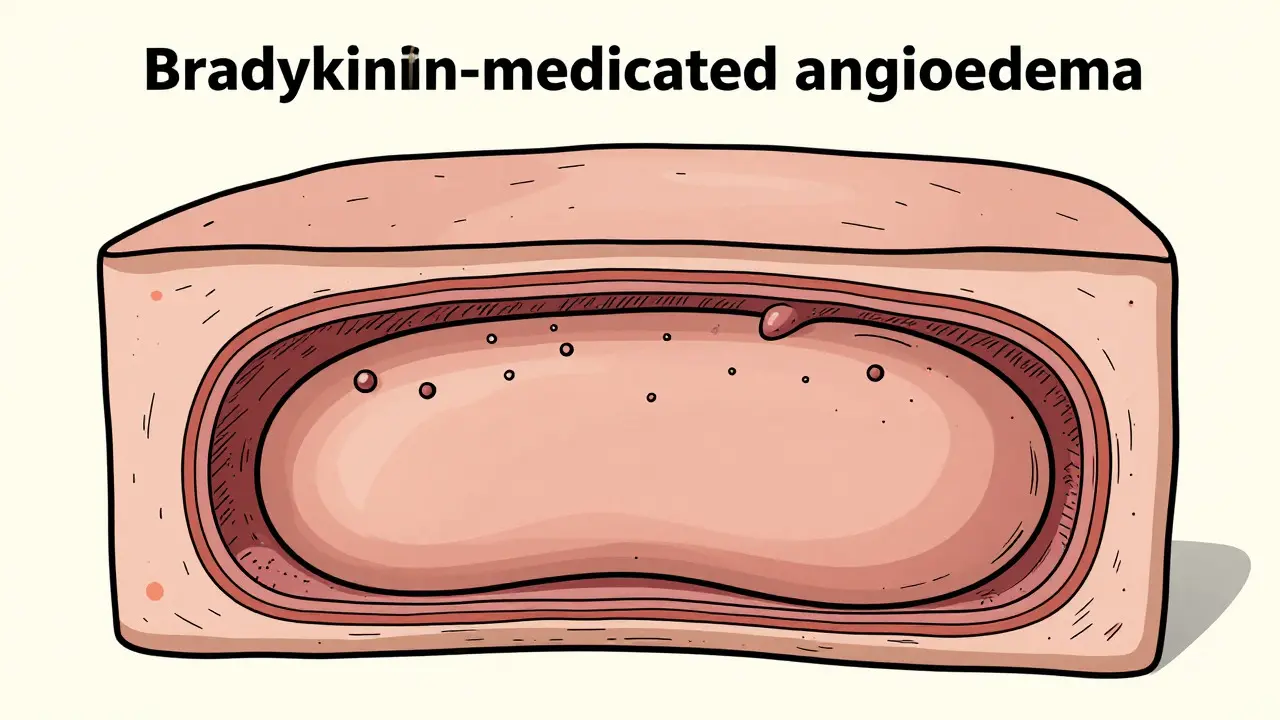
- Bradykinin-Mediated (Non-Histaminergic): This type is driven by a peptide called bradykinin. It does not respond well to standard allergy treatments and is commonly linked to blood pressure medications.
The distinction matters because treating bradykinin-mediated swelling with epinephrine might do little to no good, wasting critical time while the airway narrows.
Common Culprits: Which Drugs Cause Swelling?
Not all medications carry the same risk. Some are far more likely to trigger severe swelling than others. Understanding the high-risk groups helps in early detection.
| Drug Class | Specific Examples | Mechanism | Risk Profile |
|---|---|---|---|
| ACE Inhibitors | Lisinopril, Enalapril, Ramipril | Bradykinin accumulation | Highest risk; occurs in 0.1-0.7% of users |
| NSAIDs | Aspirin, Ibuprofen, Naproxen | Histamine/Leukotriene shift | Moderate risk; higher in asthmatics |
| Antibiotics | Penicillin, Amoxicillin | Mast cell degranulation | Variable; true allergy required |
| ARBs | Candesartan, Losartan | Bradykinin-related | Lower than ACEs, but cross-reactivity exists |
ACE Inhibitors are a class of medications used primarily to treat high blood pressure and heart failure, which block the enzyme that converts angiotensin I to angiotensin II. These drugs are the leading cause of drug-induced angioedema. What makes them tricky is their unpredictability. You can take lisinopril for ten years without issue, then develop severe tongue swelling in month eleven. There is no warning sign other than the swelling itself.

Recognizing the Warning Signs
Because angioedema can progress rapidly, recognizing early symptoms is crucial. The swelling is often asymmetric-meaning one side of the face or lip may be more affected than the other. It typically lasts 24 to 72 hours if untreated, but airway compromise can happen in minutes.
Watch for these red flags that indicate an emergency:
- Voice Changes: A muffled or "hot potato