Five Rights Medication Safety Calculator
Medication Safety Assessment
Calculate your medication administration error risk based on the Five Rights: right patient, right drug, right dose, right route, right time.
Estimated Error Probability
Every year, over 1.3 million people in the U.S. are injured because of medication errors. More than 7,000 die. These aren’t accidents caused by careless staff-they’re system failures. And they’re preventable.
Why Medication Safety Isn’t Just About Double-Checking
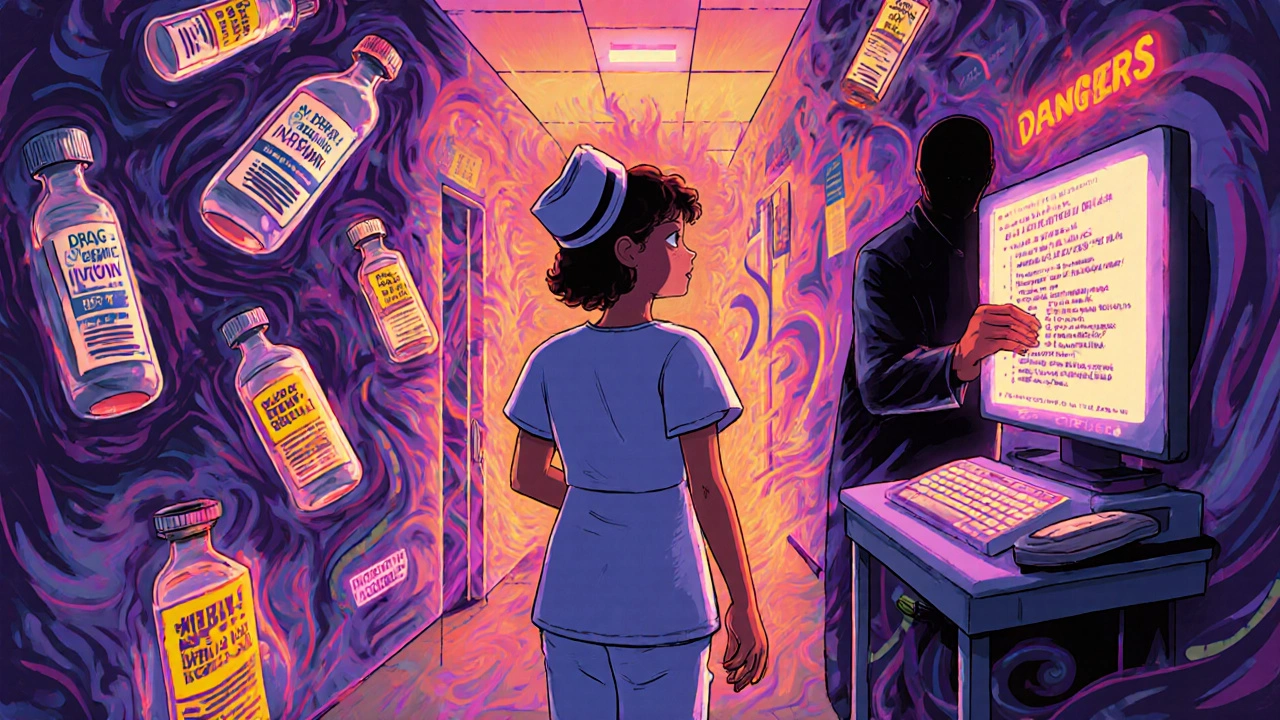
Medication safety isn’t about remembering to check the patient’s name before giving a pill. It’s about designing systems so that even when you’re tired, rushed, or distracted, the system stops you from making a fatal mistake. The World Health Organization calls it a global priority. Their Medication Without Harm initiative, launched in 2017, set a clear goal: cut severe, avoidable harm by 50% in five years. By 2025, that target is still in motion-because the problem hasn’t gone away. It’s just gotten more complex. High-alert medications like intravenous oxytocin, insulin, and morphine can kill in minutes if given wrong. One nurse at a New Zealand hospital told me: “I gave a patient 100 units of insulin by accident because the default on the EHR was set to 100, not 10.” That’s not human error. That’s a poorly designed interface.The Five Rights-And Why They’re Not Enough
You’ve heard them: right patient, right drug, right dose, right route, right time. Sounds simple. But in real life? It’s a minefield. A 2022 study from the Institute for Healthcare Improvement found that barcode-assisted medication administration (BCMA) reduces administration errors by 41.1%. That’s huge. But here’s the catch: nurses bypass BCMA in emergencies. One nurse on Reddit said, “I override 80% of drug interaction alerts because 95% are irrelevant.” That’s alert fatigue. And it’s dangerous. The problem isn’t the technology-it’s how it’s implemented. If your system throws 25 alerts per patient, you’re training staff to ignore it. The best hospitals limit alerts to only the most critical: high-risk drugs, duplicate therapies, or wrong-dose warnings for kidney patients.What the Best Hospitals Do Differently
Hospitals that slash medication errors don’t just buy fancy software. They change culture. Take Johns Hopkins. They embedded pharmacists directly into ICU teams. These pharmacists review every order before it’s given. Result? An 81% drop in medication errors over 18 months. The Veterans Health Administration rolled out Computerized Provider Order Entry (CPOE) with clinical decision support across 127 facilities. They cut serious errors by 55%. How? They didn’t just turn on alerts. They trained staff, redesigned workflows, and removed low-value warnings. And here’s what most hospitals miss: medication safety culture. The AHRQ Hospital Survey on Patient Safety Culture measures things like “teamwork across units” and “organizational learning.” Top performers score in the 75th percentile or higher. That means if someone makes a mistake, they’re not punished-they’re helped. Because the goal isn’t blame. It’s improvement.Training Isn’t a One-Time Event
You can’t train staff once and assume they’ll remember. Medication safety training needs to be ongoing, hands-on, and real. The Agency for Healthcare Research and Quality recommends 16-24 hours of initial training for new clinicians. Then, 8 hours every year. But not lectures. Simulations. Role-playing. Scenarios where a patient codes because someone gave the wrong dose of epinephrine. One hospital in Wellington started doing monthly 30-minute safety huddles. Nurses and pharmacists share near-misses. “I almost gave a double dose of heparin because the screen froze.” That kind of talk saves lives. And don’t forget high-alert meds. Every team needs to know which drugs are most dangerous in their unit. In obstetrics, it’s oxytocin. In oncology, it’s methotrexate. The ISMP requires a “hard stop” in EHRs for daily methotrexate orders-because giving it daily instead of weekly kills people.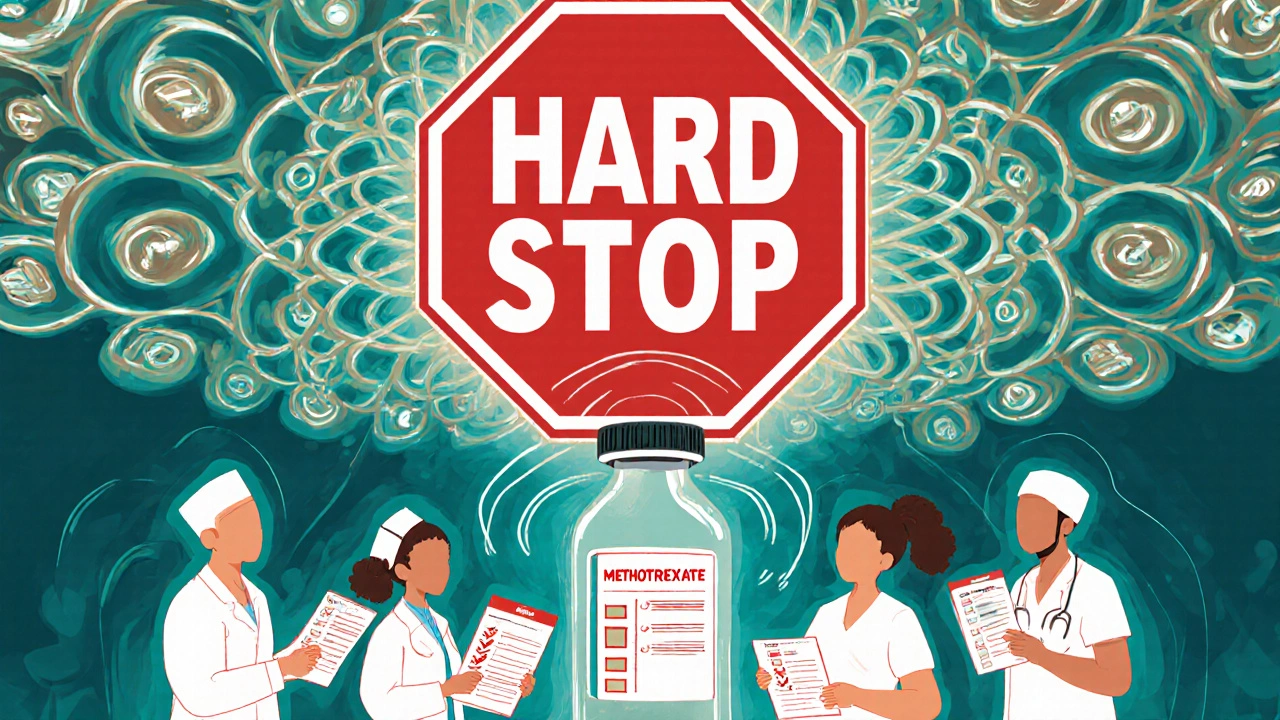
Technology Is a Tool, Not a Savior
EHRs were supposed to fix everything. Instead, they created new problems. Dr. David Bates at Brigham and Women’s Hospital found that 34% of digital medication errors come from default settings, dropdown menus, or copy-paste mistakes. One doctor prescribed a drug to the wrong patient because they copied an old order and forgot to change the name. And the cost? A full BCMA system for a 300-bed hospital runs $250,000 to $1.2 million. Add 15-20% annual maintenance. Many small clinics can’t afford it. But you don’t need the fanciest system to be safe. Simple fixes work: double-checking high-risk drugs with a second provider. Using standardized order sets. Keeping medication lists updated at every transition of care. Community pharmacies still have a 2.3% error rate-even with e-prescribing. Why? Workflow disruptions. A pharmacist told me, “We get 20 scripts in 10 minutes. We’re racing. No time to check.”The New Frontiers: AI and Telehealth
In 2024, the ISMP updated its best practices to include AI-assisted prescribing and telehealth medication safety. That’s new. Early AI tools can spot 89% of potential prescribing errors before they reach the patient. That’s better than standard clinical decision support, which catches only 67%. But here’s the warning: the FDA reported 214 adverse events linked to EHR usability in 2022-a 37% jump from 2021. AI doesn’t replace judgment. It supports it. If an AI flags a drug interaction, the provider still needs to decide: Is this relevant to this patient? Are they on 12 other meds? Do they have kidney disease? The tech doesn’t know. Telehealth adds another layer. How do you verify a patient’s identity over Zoom? How do you ensure they’re taking the right pill when you can’t see their medicine cabinet? New guidelines now require photo verification of medications during virtual visits and mandatory follow-up calls for high-risk prescriptions.What’s Holding You Back?
Resistance to change is real. One study found 42% of nurses initially resisted BCMA because they thought it slowed them down. But within six months, compliance hit 95%-once they saw fewer errors and less stress. Outdated policies are another problem. A 2021 survey found 31% of hospital medication safety policies hadn’t been updated in three or more years. That’s like using a 2010 GPS app in 2025. And funding? It’s tight. But the cost of inaction is higher. Medicare penalizes hospitals with poor safety scores with a 1% payment cut. The Joint Commission can revoke accreditation for repeated failures.
Where to Start Today
You don’t need a million-dollar system to make progress.- Start with your top 3 high-alert medications. Create a checklist for each.
- Hold a monthly safety huddle. Ask: “What almost went wrong this week?”
- Review your EHR’s default settings. Change any that could lead to overdose.
- Require a second check for insulin, heparin, and opioids-even if you’re in a hurry.
- Update your medication reconciliation process. Do it at every handoff: ER to floor, floor to home.
What’s Next in Medication Safety
By 2030, the National Academy of Medicine predicts medication safety will focus on two big areas: personalized medicine and social determinants of health. What does that mean? A diabetic patient who can’t afford insulin will have a different risk profile than one who can. A patient with no transportation can’t pick up their antibiotics. These aren’t just social issues-they’re medication safety issues. AI will get smarter. EHRs will get less noisy. But the human element will always matter. Training, culture, communication-those won’t be automated. Medication safety isn’t a project. It’s a habit. And the best healthcare providers don’t wait for a system to fix them. They fix the system themselves.What are the most common causes of medication errors in hospitals?
The most common causes include poor communication during handoffs, incorrect dosing due to confusing EHR defaults, failure to reconcile medications at transitions of care, and alert fatigue leading to ignored safety warnings. High-alert medications like insulin and heparin are involved in nearly 70% of serious errors. Staffing shortages and rushed workflows also play a major role.
How effective is barcode scanning in reducing medication errors?
Barcode-assisted medication administration (BCMA) reduces administration errors by 41.1%, according to the Institute for Healthcare Improvement. When used correctly, it ensures the right patient, drug, dose, route, and time-known as the five rights. However, effectiveness drops when staff bypass the system during emergencies or if scanning is inconsistent. Full compliance requires training, leadership support, and workflow redesign.
What is alert fatigue, and why is it dangerous?
Alert fatigue happens when clinicians are overwhelmed by too many warnings-often 20 or more per patient encounter. Studies show they override 49-96% of these alerts, especially when most are irrelevant. This desensitization means they may ignore critical warnings, like a life-threatening drug interaction. The solution isn’t fewer alerts-it’s smarter alerts. Only trigger warnings for high-risk, high-probability errors.
Do electronic prescribing systems really reduce errors?
Yes. Electronic prescribing reduces errors by 48% compared to handwritten orders. But they’re not foolproof. Community pharmacies still see a 2.3% error rate due to workflow disruptions, unclear digital handwriting, and miscommunication between prescribers and pharmacists. The biggest gains come when e-prescribing is integrated with clinical decision support and medication reconciliation tools.
How can small clinics improve medication safety without big budgets?
Small clinics can start with low-cost, high-impact steps: implement a two-person check for high-risk drugs, use standardized order sets, update medication lists at every visit, and hold monthly safety huddles to share near-misses. Free tools like the ISMP Targeted Medication Safety Best Practices checklist can guide improvements. Mobile apps like Lexicomp or Epocrates (used by 78% of U.S. physicians) provide point-of-care drug info at no cost.
What role does leadership play in medication safety?
Leadership sets the tone. If leaders punish errors instead of learning from them, staff hide mistakes. Top-performing institutions score high on safety culture surveys, especially in “organizational learning” and “nonpunitive response to error.” Leaders must allocate time and resources for training, review error reports personally, and ensure safety is part of performance evaluations-not just an add-on.
Are there any regulations requiring medication safety practices?
Yes. The Joint Commission requires accurate medication reconciliation across care settings under National Patient Safety Goal NPSG.01.01.01. Medicare penalizes hospitals in the worst-performing quartile for patient safety with a 1% payment reduction. The FDA also monitors EHR-related adverse events. Non-compliance can lead to loss of accreditation or funding.
stephen idiado
November 29, 2025 AT 14:11Alert fatigue is a myth. It's just lazy clinicians avoiding cognitive load. If your EHR can't prioritize, it's broken. Fix the algorithm, not the behavior.
Richard Thomas
November 29, 2025 AT 19:57The fundamental flaw in contemporary medication safety discourse lies in its reductive conflation of technological intervention with systemic improvement. The WHO's Medication Without Harm initiative, while rhetorically compelling, lacks empirical grounding in behavioral economics and human factors engineering. The 50% reduction target is statistically arbitrary and ignores the logarithmic diminishing returns of compliance-driven interventions.
Furthermore, the uncritical adoption of BCMA systems reflects a pathological technocratic bias - conflating process adherence with clinical safety. The 41.1% reduction cited is a function of observational bias and selection effects, not causal efficacy. Studies from the BMJ demonstrate that over-reliance on barcode systems correlates with increased cognitive disengagement during high-acuity events.
The real issue is not defaults or alerts, but the erosion of pharmacological literacy among frontline providers. No algorithm can compensate for a clinician who cannot interpret a creatinine clearance value. Training must prioritize foundational pharmacokinetics over simulation theater.
Moreover, the notion that 'culture' can be engineered through safety huddles is a managerial fantasy. Culture emerges from leadership accountability, not mandated rituals. Until hospitals stop rewarding compliance over competence, we are merely rearranging deck chairs on the Titanic.
Mary Kate Powers
November 30, 2025 AT 03:18I love how this post breaks it down without blame. I work in a small clinic and we started doing two-person checks for insulin - no fancy tech, just two sets of eyes. Our near-misses dropped by 60% in three months. It’s not about the budget, it’s about showing up for each other.
gerardo beaudoin
November 30, 2025 AT 03:35My unit just implemented monthly safety huddles last month. First time someone said, 'I almost gave a double dose of heparin because the screen froze' - I thought they were gonna get in trouble. Instead, the charge nurse just said, 'Thanks for speaking up. Let’s get IT to fix that.' That’s the culture shift right there. No yelling, no paperwork. Just fixing the problem.
Sohini Majumder
November 30, 2025 AT 04:37OMG I’m literally crying rn… like, how is this still a thing in 2025?? 😭 I work in a hospital where they still use paper med sheets in the ER and I swear I saw a nurse give a patient 10x the dose of morphine and no one noticed!! 😵💫 The system is literally broken and everyone just shrugs??
Also, why is no one talking about how EHRs are designed by people who’ve never held a stethoscope?? 🤦♀️
tushar makwana
November 30, 2025 AT 20:36From India, I see this same problem in our rural clinics. No barcode scanners, no AI, no pharmacists. But we have something better - trust. We double-check with the patient’s family. We write the name on the pill bottle in local language. We talk. Maybe the answer isn’t more tech, but more humanity.
Matthew Higgins
December 1, 2025 AT 07:33Bro. I’ve seen nurses override alerts so much they’ve started calling them 'the noise.' And honestly? I get it. I’ve had 17 pop-ups for a patient on 12 meds. Half were 'possible interaction with aspirin.' Like… we know. We’re not idiots. But the system treats us like we are.
Just make the alerts mean something. That’s all.
Sara Shumaker
December 2, 2025 AT 13:14What if we stopped thinking of medication safety as a checklist and started thinking of it as a ritual? Like a monk reciting a prayer before each act - not to avoid sin, but to remember the weight of the act. The EHR isn’t the problem. The loss of reverence for the power of a pill is.
We treat drugs like widgets. But insulin doesn’t care if your system is compliant. It only cares if your hands are steady and your mind is present.
Maybe the real training isn’t in sim labs - it’s in silence. Five seconds before you press ‘administer.’ Just breathe. Ask yourself: who is this person? And what if I’m wrong?
Scott Collard
December 2, 2025 AT 20:58You missed the real issue: liability. Hospitals avoid real safety changes because they fear lawsuits. If you fix the defaults, someone might sue because 'they didn’t get the alert.' So they keep the noise. It’s not incompetence. It’s legal cowardice.
Jennifer Wang
December 4, 2025 AT 16:15While the emphasis on culture and workflow redesign is commendable, the omission of pharmacogenomic integration in 2025 represents a critical oversight. Personalized dosing based on CYP450 polymorphisms, particularly for opioids and SSRIs, has been clinically validated since 2022. The failure to embed pharmacogenetic decision support into EHRs undermines the entire premise of precision safety. Without this, even perfect adherence to the Five Rights remains statistically inadequate for high-risk populations.
Furthermore, the assertion that 'simple fixes' suffice ignores the escalating complexity of polypharmacy in aging populations. The ISMP’s 2024 guidelines on AI-assisted prescribing must be mandatory, not optional. The 89% detection rate is not a luxury - it is a clinical imperative.
Leadership must be held accountable through auditable metrics: not just error rates, but the proportion of alerts overridden due to system design flaws versus clinical judgment. Until that data is transparently reported and incentivized, we are engaging in performative safety.
Andrew Keh
December 5, 2025 AT 14:13I’ve worked in three hospitals. The ones that actually improved safety didn’t spend millions. They just listened. They let nurses and pharmacists lead the changes. They didn’t punish mistakes - they asked, 'How can we make this better?' That’s all it took. Sometimes the best tech is a quiet conversation.