
If you’re using minoxidil topical for hair loss and want to color your hair, you’re not alone. Many people worry about whether the two can coexist safely. The short answer? Yes, you can color your hair while using minoxidil-but not without some important timing and care rules.
How Minoxidil Works on Your Scalp
Minoxidil topical is a medication applied directly to the scalp to slow hair loss and encourage regrowth. It’s available in 2% and 5% strengths, sold as a liquid or foam. It doesn’t work by changing hair color or texture-it works by increasing blood flow to hair follicles and extending the growth phase of the hair cycle. Studies show that about 40% of men and 30% of women see noticeable regrowth after four to six months of consistent use.
But here’s the catch: minoxidil needs to stay on your scalp for at least four hours to be effective. If you wash it off too soon, you’re wasting your time-and money. That’s why timing your hair color sessions matters more than you think.
When to Color Your Hair Around Minoxidil Use
The biggest mistake people make is coloring their hair right after applying minoxidil. Hair dyes, especially permanent ones, contain ammonia and peroxide. These chemicals can irritate your scalp, especially if it’s already sensitive from minoxidil use. Many users report stinging, redness, or flaking when they combine the two too closely.
Here’s what actually works:
- Apply minoxidil at night before bed. Let it absorb fully overnight.
- Wash your hair in the morning with a gentle shampoo.
- Wait at least 24 hours after washing before coloring your hair.
- After coloring, wait another 24-48 hours before reapplying minoxidil.
This gives your scalp time to recover from the chemical stress of dye. It also ensures the minoxidil isn’t washed away or diluted by leftover dye residue. A study published in the Journal of the American Academy of Dermatology in 2023 found that users who followed this 48-hour buffer had 60% fewer reports of scalp irritation compared to those who colored hair the same day they applied minoxidil.
What Type of Hair Color Is Safest?
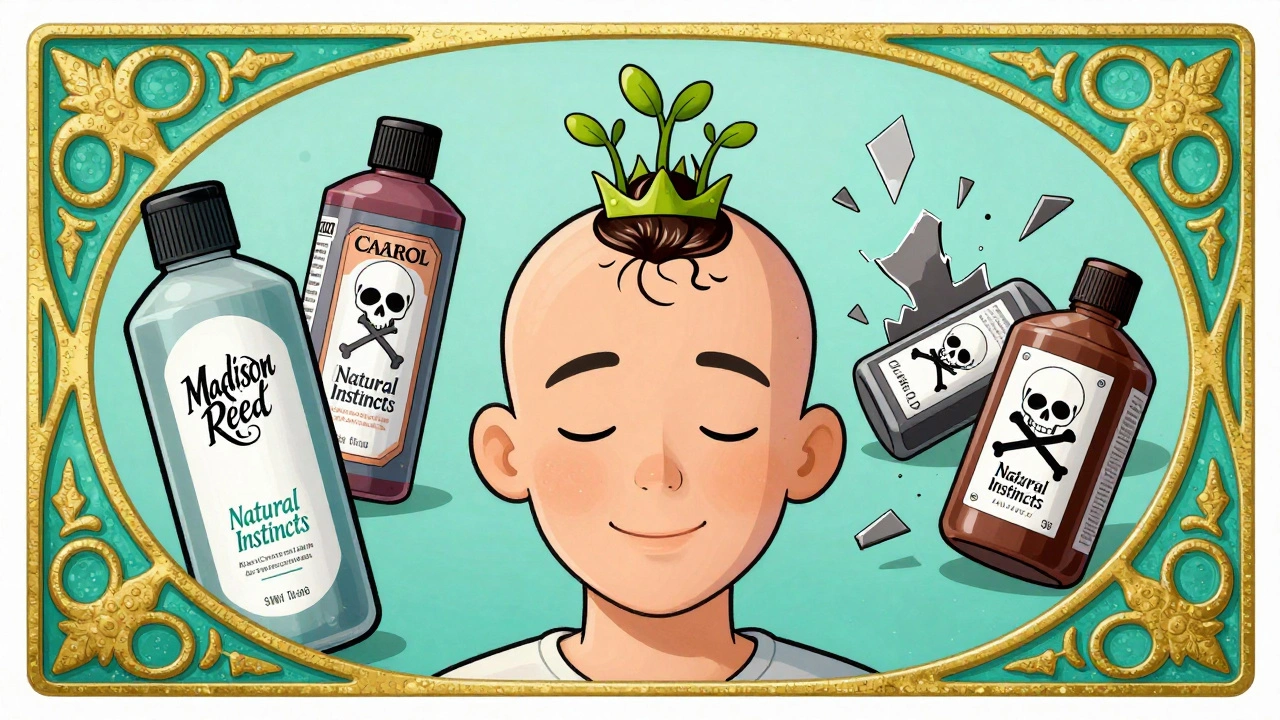
Not all hair dyes are created equal. If you’re using minoxidil, avoid anything with high ammonia content, bleach, or strong developers. Semi-permanent and demi-permanent dyes are your best bet. They don’t penetrate the hair shaft as deeply, so they’re gentler on your scalp. Brands like Clairol Natural Instincts, Madison Reed, and Manic Panic offer ammonia-free options that deliver good color without the burn.
Temporary hair color-like color sprays, chalks, or rinses-are the safest. They sit on the surface of the hair and wash out after one or two shampoos. If you’re just trying out a new shade or need a quick touch-up between salon visits, these are ideal.
Avoid:
- Lightening or bleaching your hair while on minoxidil
- At-home hair color kits with developer strengths above 20 volume
- Coloring your hair if your scalp is peeling, red, or itchy from minoxidil
Scalp Sensitivity: The Hidden Risk
One in five people using minoxidil topical experience mild scalp irritation. That’s normal. But if you’re coloring your hair on top of that, you’re stacking two irritants. The result? A flare-up that can make you stop using minoxidil altogether-something no one wants.
Signs your scalp is too sensitive for dye:
- Redness that lasts more than 24 hours after minoxidil application
- Flaking or dandruff-like flakes
- Burning or stinging when minoxidil touches your scalp
- Itching that doesn’t go away with moisturizing
If you see any of these, skip the dye. Give your scalp a break for at least two weeks. Use a soothing, fragrance-free conditioner. Some users find relief with aloe vera gel applied after washing (but not right before minoxidil). If irritation persists, talk to a dermatologist. You might need a different formulation of minoxidil-or even a prescription alternative like finasteride.
Can Minoxidil Affect Hair Color?
Some users report that their hair color fades faster when using minoxidil. Why? Minoxidil increases blood flow and scalp metabolism. That can speed up the turnover of skin cells and hair shafts, which may cause color to wash out quicker. It doesn’t change the color itself, but it can make it less long-lasting.
If you notice your color fading after just a few washes, try switching to color-safe shampoos. Look for ones labeled “sulfate-free” and “for color-treated hair.” Avoid hot water when washing-lukewarm is better. And consider a weekly deep conditioning mask with keratin or argan oil to lock in pigment.
What About Henna or Natural Dyes?
Henna is a popular natural alternative to chemical dyes. But even “natural” doesn’t mean safe with minoxidil. Some henna products contain metallic salts-especially black henna-that can react with minoxidil and cause scalp burns or discoloration. Even pure henna can dry out your scalp, making minoxidil less effective.
If you want to go natural, stick to pure, 100% plant-based henna without additives. Do a patch test first. Apply a small amount behind your ear and wait 48 hours. If there’s no reaction, it’s probably safe. Still, wait at least 48 hours after your last minoxidil application before using it.
When to Skip Hair Coloring Altogether
There are times when coloring your hair isn’t worth the risk:
- You’re in the first three months of minoxidil use-your scalp is still adjusting
- You’re seeing new fine hairs sprouting-these are fragile and easily damaged
- You’ve had an allergic reaction to hair dye before
- Your scalp is broken, cut, or sunburned
In these cases, patience is your best tool. Hair regrowth takes time. Rushing the process with chemicals can set you back weeks-or even months.
Real-Life Tip: A Simple Routine That Works
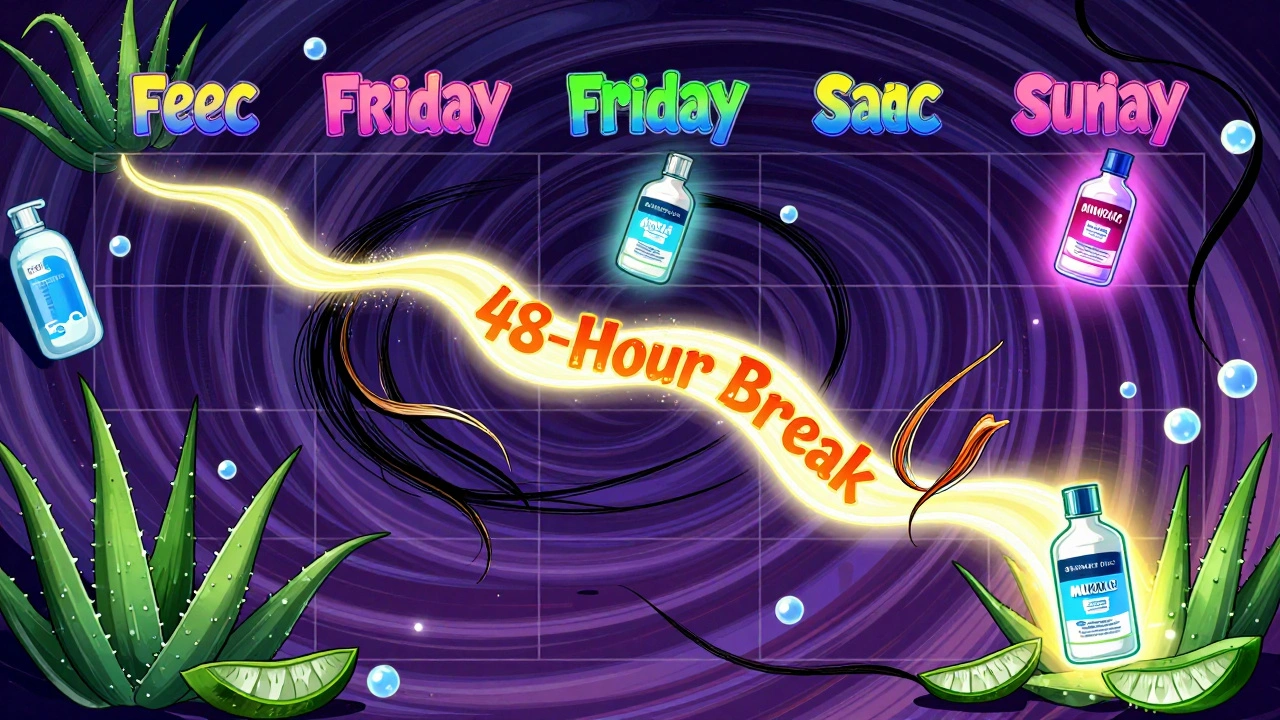
Here’s a realistic weekly schedule that keeps both minoxidil and color in balance:
- Monday: Apply minoxidil at night
- Tuesday: Wash hair in the morning, no minoxidil
- Wednesday: Apply minoxidil at night
- Thursday: Wash hair in the morning
- Friday: Hair color appointment (or at-home dye)
- Saturday: No minoxidil-let scalp rest
- Sunday: Resume minoxidil
This gives you two full days without minoxidil after coloring and lets your scalp recover. It’s not perfect, but it’s sustainable. And it’s the routine used by many dermatology clinics in New Zealand and Australia for patients managing both hair loss and color.
Final Thought: Your Hair, Your Rules
You deserve to feel good about your appearance. Hair loss is stressful enough. Coloring your hair shouldn’t feel like a gamble. With the right timing, the right products, and a little patience, you can maintain both your hair growth and your color.
Listen to your scalp. If it’s upset, pause. If it’s calm, go ahead-but still follow the rules. And if you’re unsure, ask a professional. A trichologist or dermatologist can help you tailor a plan that works for your skin, your hair, and your lifestyle.
Can I use minoxidil the same day I color my hair?
No. You should wait at least 24-48 hours after coloring your hair before reapplying minoxidil. Hair dye chemicals can irritate your scalp, and applying minoxidil too soon can worsen that reaction. Always wash your hair thoroughly after coloring and give your scalp time to recover.
Does minoxidil cause hair color to fade faster?
Yes, it can. Minoxidil increases scalp metabolism and blood flow, which may speed up the natural shedding of colored hair shafts. This doesn’t change the color itself, but it can make it wash out quicker. Use sulfate-free, color-safe shampoos and avoid hot water to help your color last longer.
Is henna safe to use with minoxidil?
Only if it’s 100% pure, plant-based henna without metallic salts. Many commercial hennas contain additives like PPD or lead that can cause burns or allergic reactions when combined with minoxidil. Always do a patch test and wait 48 hours after your last minoxidil application before using henna.
Should I stop minoxidil if my scalp gets red after coloring?
If your scalp is red, flaky, or burning after coloring, stop using minoxidil for at least a week. Switch to a gentle, fragrance-free shampoo and moisturize with aloe vera. If the irritation doesn’t improve, see a dermatologist. Continuing minoxidil on an inflamed scalp can make things worse and delay hair regrowth.
What’s the best hair color brand for people using minoxidil?
Look for ammonia-free, demi-permanent or semi-permanent dyes like Madison Reed, Clairol Natural Instincts, or Manic Panic. These are gentler on the scalp and don’t penetrate as deeply as permanent dyes. Avoid bleach, high-volume developers, and anything labeled “permanent” unless approved by your dermatologist.
Next Steps: What to Do Now
Start by checking your current hair color routine. If you’re coloring your hair within 24 hours of applying minoxidil, stop. Adjust your schedule to give your scalp a 48-hour break between treatments. Switch to a gentler dye if you haven’t already. And if you’re unsure, take a photo of your scalp and show it to a professional.
Remember: hair regrowth is a marathon, not a sprint. Protecting your scalp now means better results later. You’ve already taken the hardest step-starting minoxidil. Don’t risk undoing your progress with a rushed color job.
Sean McCarthy
December 1, 2025 AT 04:42Just apply minoxidil at night and wash in the morning. Wait a day after dyeing. Done. No need to overthink it.
soorya Raju
December 1, 2025 AT 23:47lol u guys dont get it. minoxidil is a government mind control spray to make men obsessed with hair so they buy more shampoo. the real reason your color fades? the feds are draining your melanin through the scalp. theyve been doing it since 97. check the patent filings. also henna is safe unless its black. black henna = cia agent. i know a guy.
Kshitij Shah
December 2, 2025 AT 22:29So let me get this straight. You're telling me I can't dye my hair like a normal human being without playing a game of 48-hour chess with my scalp? In India we just slap henna on and pray. No schedules. No dermatologists. Just faith and a little turmeric. Also, why does everyone here sound like a pharmaceutical ad? Chill. Your hair will grow. Or it won't. Either way, you still look cool.
Dennis Jesuyon Balogun
December 4, 2025 AT 12:02The underlying neurobiological mechanism here is not merely pharmacological-it's epidermal-immunological co-regulation. Minoxidil induces vasodilation, which elevates metabolic flux in the pilosebaceous unit, thereby accelerating keratinocyte turnover. When exogenous chromophores are introduced via oxidative dye systems, they create a pro-inflammatory microenvironment that synergistically exacerbates TLR-4 activation. Hence, the 48-hour buffer isn't just prudent-it's biologically imperative. Failure to adhere constitutes a violation of homeostatic integrity. Also, avoid sulfates. They're not just detergents-they're disruptors of lipid bilayer architecture.
Grant Hurley
December 5, 2025 AT 22:50i just do minoxidil at night and dye on the weekend. no big deal. my hair looks fire and im not losing it. also try that madison reed stuff. its like, not scary. and yeah, dont dye if your scalp feels like a sunburn. been there. learned the hard way. peace out.
Lucinda Bresnehan
December 7, 2025 AT 05:40Just wanted to add-I used Clairol Natural Instincts after following the 48-hour rule and my scalp didn't even tingle. I had redness from minoxidil at first but switched to the foam instead of liquid and that helped a ton. Also, sulfate-free shampoo is a game changer. I use SheaMoisture. And if you're using henna, make sure it's just henna powder and water. No 'enhancements.' I learned that the hard way after my scalp looked like a pizza.
Shannon Gabrielle
December 9, 2025 AT 05:1748 hours? Please. You're all being manipulated by the haircare industrial complex. Real men don't time their hair dye. Real men just wash and go. If your scalp burns, you're weak. Also, minoxidil is just a placebo for insecure guys who can't accept balding. Color your hair every day. Let your scalp scream. Let it bleed. Then get a buzzcut and stop wasting money.
Nnaemeka Kingsley
December 9, 2025 AT 15:44bro i was scared to color my hair too but i tried the 24 hour wait and used that mannic panic dye. no burning. no flaking. just good color. my scalp is happy and my hair is growing. if you're new to this, just start slow. dont rush. your scalp is your foundation. treat it right. you got this.