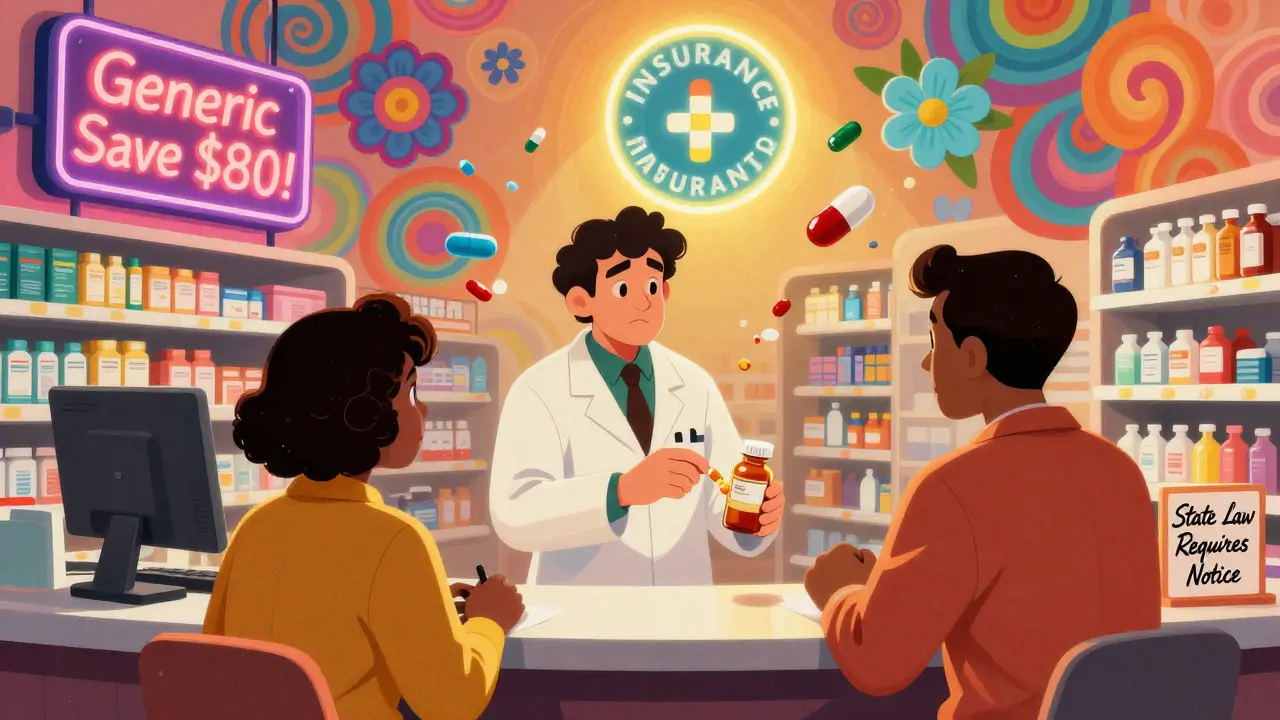
When you pick up a prescription at your local pharmacy, you might not think twice if the pill looks different than last time. But behind that simple swap is a complex system shaped by laws, money, and clinical care. The same isn’t true in a hospital. There, changing a medication isn’t just about cost-it’s about safety, protocols, and teamwork. Medication substitution looks completely different depending on whether you’re in a retail pharmacy or a hospital pharmacy. And understanding that difference matters-not just for pharmacists, but for patients too.
How Substitution Works in Retail Pharmacies
In retail pharmacies, substitution is mostly about switching a brand-name drug for a generic version. It’s legal in all 50 states, and pharmacists are allowed to make the swap unless the doctor says "do not substitute" or the patient refuses. This happens at the counter, right before you pay. No committee. No meeting. Just a pharmacist checking the prescription, the formulary, and the patient’s insurance. The numbers tell the story: 90.2% of eligible outpatient prescriptions in 2023 were filled with generics, according to IQVIA. That’s not just convenience-it’s a $317 billion savings industry every year. Insurance companies push for generics because they cost 80% less on average. Pharmacists know this. Many say their biggest driver for substitution isn’t patient preference-it’s what the insurer will cover. But it’s not automatic. Thirty-two states require pharmacists to tell you verbally when they swap a drug. Eighteen require written consent for the first substitution. And even then, patients get confused. One in seven patients in a 2023 Consumer Reports survey said they didn’t realize the new pill was the same medicine, just cheaper. Some even think the generic is weaker. That’s why retail pharmacists spend so much time explaining: "This is the same as your old pill. It just costs less."How Substitution Works in Hospital Pharmacies
Step into a hospital pharmacy, and everything changes. There’s no point-of-sale swap. No patient handing over a script. Instead, substitution happens behind the scenes-through a group called the Pharmacy and Therapeutics (P&T) committee. This team includes doctors, pharmacists, nurses, and sometimes administrators. They meet monthly to review which drugs should be on the hospital’s formulary. If a cheaper, equally effective drug exists, they approve a therapeutic interchange. This isn’t about saving money alone. It’s about clinical outcomes. For example, a hospital might switch from brand-name vancomycin to a generic version-or even swap it for linezolid in certain MRSA cases. That decision isn’t made by one pharmacist on the floor. It’s reviewed, tested, and documented across departments. And once approved, it becomes a hospital-wide rule. According to a 2022 ASHP survey, 89.7% of acute care hospitals have formal therapeutic interchange protocols covering 15 to 200 drug classes. These protocols don’t just apply to pills. They cover IV antibiotics, biologics, even complex compounded drugs. About 68% of hospital substitutions involve non-oral medications-something you almost never see in retail. And when a substitution happens, the system alerts the prescribing doctor within 24 hours. That’s a requirement under Joint Commission standards.Key Differences in Authority and Process
The biggest difference? Who decides. In retail, the pharmacist makes the call at the counter. They’re the final authority-within state law. In hospital settings, the pharmacist is just one voice on a team. The decision is collective. And it’s embedded in the electronic health record. When a doctor orders a drug, the system might auto-suggest a substitute based on the hospital’s formulary. The doctor can override it, but they see the clinical reasoning behind the suggestion. Documentation is another major divide. Retail pharmacies keep substitution records for two years-simple logs. Hospitals must integrate every substitution into the patient’s EHR with real-time alerts. If a patient gets switched from one beta-lactam antibiotic to another, that change shows up in their chart, flags for nurses, and even triggers automated monitoring for side effects like C. difficile. That’s not just record-keeping-it’s clinical safety.
What Drugs Can Be Substituted?
Retail substitution is mostly limited to oral solid doses-pills and capsules. About 97% of all retail substitutions fall into this category. Why? Because generics for liquids, creams, or injectables are harder to make, harder to prove equivalent, and harder for insurers to cover. Specialty drugs? Only 12.7% of them are eligible for substitution, according to Express Scripts. Hospitals aren’t so limited. They routinely substitute IV antibiotics, biologics, and even high-cost injectables. Why? Because the cost difference can be massive. A single dose of a brand-name biologic might cost $5,000. The biosimilar? $2,000. That’s a huge saving when you’re treating hundreds of patients. And since hospitals use 340B pricing programs, they get even deeper discounts on generics and biosimilars-making substitution not just smart, but financially essential. But hospitals have their own limits. Drugs used in clinical trials? Almost never substituted. Protocol-driven therapies for cancer, HIV, or autoimmune diseases? Often locked down. That’s because changing the drug-even for a bioequivalent one-could mess up treatment outcomes. Retail doesn’t deal with that level of complexity.Why Patients Experience Substitution Differently
Patients in retail pharmacies often see substitution as a cost-saving trick. Sometimes they’re grateful. In NCPA surveys, 78% of patients said they appreciated saving money. But others feel misled. One Reddit user wrote: "I asked my pharmacist why my lisinopril looked different. She said insurance made her switch. I felt like I had no say." In hospitals, patients rarely know substitution is happening. That’s not because it’s secret-it’s because it’s part of the treatment plan. A patient on IV antibiotics might get switched to a cheaper version without ever being told. But their doctor and nurse are fully aware. The change is tracked, monitored, and justified in their medical record. The real problem comes during transitions. When a patient leaves the hospital and goes home, their discharge meds might be different from what they were on in the hospital. If the retail pharmacist doesn’t know about the hospital’s substitution, they might refill the old brand. Or worse-they might swap the new generic for another generic, thinking it’s the same. That’s how 23.8% of medication errors during care transitions happen, according to ISMP. That’s a safety gap no one talks about enough.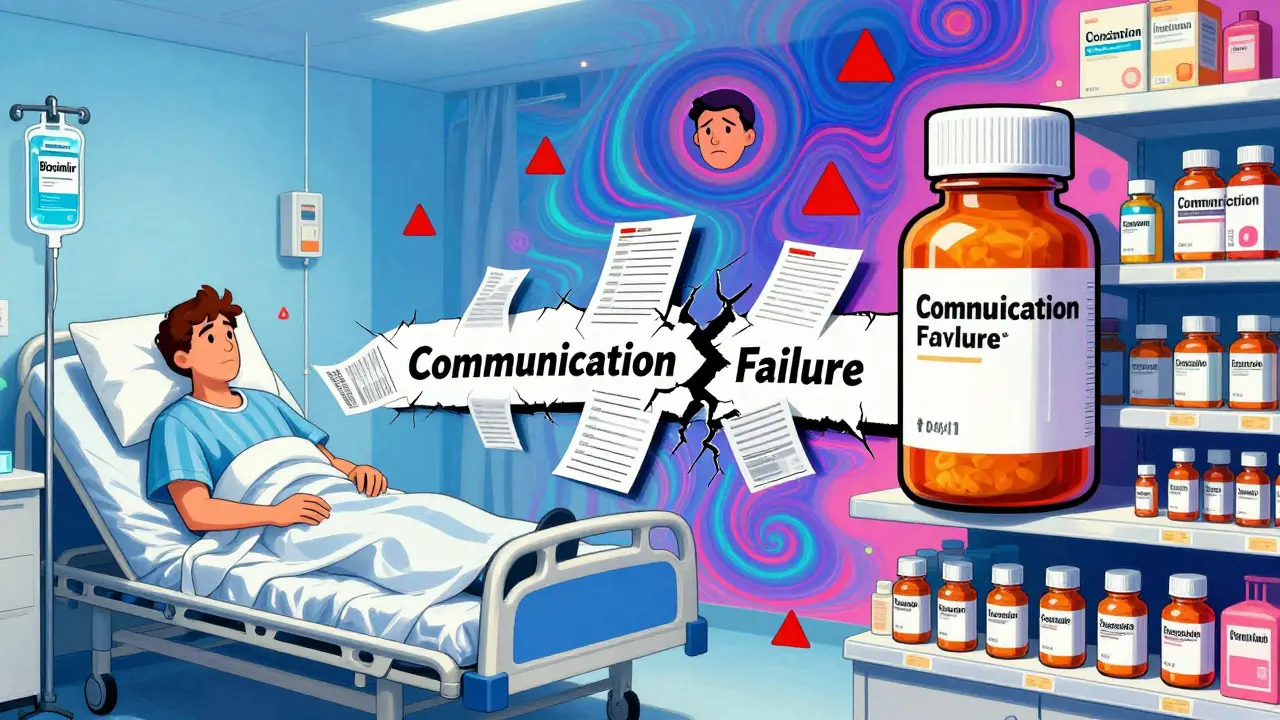
Skills and Training for Pharmacists
The skills needed in each setting are worlds apart. Retail pharmacists need to be expert communicators. They spend hours explaining why a generic is safe, helping patients navigate insurance denials, and dealing with frustrated customers who think the new pill won’t work. On average, they spend 8.2 hours a year on continuing education just to stay current on state substitution laws. Hospital pharmacists need clinical depth. They must understand drug interactions, pharmacokinetics, antimicrobial stewardship, and how to interpret clinical trials. They need to know why switching from cefazolin to ceftriaxone might be better for a surgical patient. Their training takes longer-6 to 12 months just to feel confident in substitution protocols. And they’re expected to teach doctors, not just follow them.Where the System Is Heading
The lines between retail and hospital substitution are starting to blur. In 2024, CMS rolled out new rules requiring standardized electronic documentation of substitutions across settings. Epic and Cerner are building tools to share substitution history between hospitals and pharmacies. By 2025, when a patient gets discharged, their retail pharmacy might automatically see what drugs were swapped in the hospital. Pilot programs show this works. A 2023 APhA study found that when hospitals and pharmacies coordinate substitution plans, patient readmissions drop by 18%. That’s huge. But the core difference remains. Retail substitution is a transaction. Hospital substitution is a clinical decision. One is driven by cost and convenience. The other by safety and science. Neither is better. Both are necessary. The future isn’t about making them the same. It’s about making them talk to each other.What Patients Should Know
If you get a new prescription at the pharmacy and the pill looks different, ask: "Is this a generic?" Then ask: "Is it the same as what my doctor ordered?" Don’t assume it’s safe just because it’s cheaper. If you’re being discharged from the hospital, ask your pharmacist or nurse: "Was my medication changed in the hospital? What should I take now?" Write it down. Bring the list to your next doctor visit. You don’t need to understand P&T committees or formularies. But you do need to know: a different-looking pill isn’t always a mistake. Sometimes, it’s the system working as it should.Can a retail pharmacist substitute any generic drug?
No. Retail pharmacists can only substitute drugs that are rated "AB" by the FDA, meaning they’re therapeutically equivalent. They also can’t substitute if the prescriber writes "Do Not Substitute" on the prescription, or if the patient refuses. State laws vary-some require notification, others require consent. Insurance formularies also limit what can be swapped.
Why don’t hospitals just use retail-style substitution?
Because hospital care is more complex. Patients often get IV drugs, biologics, or multiple medications that interact. Substitution isn’t just about cost-it’s about clinical safety. A single pharmacist can’t make those calls alone. Hospital substitution requires team review, documentation in the EHR, and physician notification. Retail substitution is fast and transactional. Hospital substitution is slow and clinical.
Are biosimilars substituted the same way in retail and hospital pharmacies?
No. Retail substitution of biosimilars is governed by state laws, and only 23 states allow it as of 2025. Many require additional notification or even prescriber approval. In hospitals, biosimilar substitution is handled through P&T committees and integrated into treatment protocols. Hospitals often have more flexibility because they manage patients long-term and can track outcomes. Retail pharmacists rarely have the clinical context to make that call alone.
What’s the biggest risk in medication substitution?
The biggest risk is miscommunication during care transitions. When a patient moves from hospital to home, their medication list often changes. If the retail pharmacist doesn’t know about the hospital’s substitution, they might refill the wrong drug-or swap it again. This causes 17.4% of medication discrepancies reported in 2022, according to ISMP. That’s why coordinated documentation between settings is now a top priority.
Do patients prefer generics in retail pharmacies?
Most do-when they understand it. In surveys, 78% of retail patients say they appreciate the cost savings. But 14% report confusion or distrust, thinking the generic is weaker. That’s why pharmacist counseling is critical. In hospitals, patients rarely have a choice, so preference isn’t measured the same way. Their focus is on getting better, not on pill color.
Radhika M
December 17, 2025 AT 03:15Simple truth: generics save lives by making meds affordable. No magic, just math. If you can’t afford your blood pressure pill, you won’t take it. And that’s when things go wrong.
Pawan Chaudhary
December 17, 2025 AT 08:44Love this breakdown! So many folks don’t realize hospitals are playing 4D chess while retail pharmacies are doing quick checkers. Kudos for highlighting how both systems have their place. Keep spreading this kind of clarity!
CAROL MUTISO
December 17, 2025 AT 19:59Let’s be real - retail substitution is capitalism in a white coat. Pharmacist whispers, ‘It’s the same!’ while the insurance company high-fives itself over $200 saved. Meanwhile, in the hospital, the P&T committee is debating whether switching from brand-name vancomycin to generic might reduce C. diff rates by 12%. One’s a transaction. The other’s a clinical ritual. And yet, we treat them like twins. We’re not just broken. We’re performative about it.
Patients don’t need more jargon. They need transparency. If your pill looks different, you deserve to know why - not just ‘insurance made me do it.’
And don’t get me started on biosimilars. We’re letting pharmacists swap insulin like it’s a discount coupon, but in the ICU, we’re still using the $5,000 vial because the algorithm hasn’t caught up to the science. We’re not innovating. We’re improvising with someone else’s life.
BETH VON KAUFFMANN
December 18, 2025 AT 15:3890.2% generic utilization? That’s not a win - it’s a symptom of a broken reimbursement model. You’re not saving money, you’re just shifting cost burden to patients who don’t understand bioequivalence. And let’s not pretend hospital P&T committees are some noble council of saints - they’re often influenced by formulary reps and vendor kickbacks disguised as ‘clinical evidence.’
The real issue? No one’s auditing whether these substitutions actually improve outcomes. We just assume because it’s cheaper, it’s better. That’s not science. That’s accounting.
And yes, I’ve seen patients get switched from one generic to another because the insurer changed their tier. Same drug. Different manufacturer. Different fillers. Different GI tolerance. No one tracks that. But hey - the spreadsheet balanced.
Erik J
December 19, 2025 AT 01:11Interesting how hospital substitutions are documented in EHRs but retail ones aren’t. Is there any data on how often retail substitutions lead to adverse events because the info doesn’t follow the patient? I’m curious if any studies have tracked that gap.
Donna Packard
December 19, 2025 AT 20:04Thank you for writing this. I work in a small town pharmacy and every day I explain to someone why their new pill isn’t a mistake. It’s exhausting, but worth it. The fact that hospitals have systems to track this while retail doesn’t? That’s the real problem.
Peter Ronai
December 21, 2025 AT 18:13Oh please. You think hospitals are this noble temple of clinical wisdom? Tell that to the 70% of P&T committees that pick drugs based on what the rep brought for lunch. And don’t even get me started on how they lock in expensive ‘preferred’ generics that are barely different from cheaper ones. It’s all theater. Retail pharmacists at least have to talk to real people. Hospitals? They swap drugs like it’s a board game and the patient’s just a pawn with a chart number.
And biosimilars? Please. Only 23 states allow substitution? That’s not caution - that’s fear. Fear of liability. Fear of being wrong. Meanwhile, patients in Europe get biosimilars without a second thought. We’re not safer. We’re just slower.
And the ‘clinical reasoning’ behind hospital swaps? Half the time it’s just ‘this one’s on contract.’ You’re not saving lives. You’re saving the hospital’s bottom line. Don’t dress it up like a moral victory.
Anna Giakoumakatou
December 23, 2025 AT 12:38Ah yes, the sacred dichotomy: retail = transactional, hospital = clinical. How quaint. As if the hospital isn’t a for-profit corporation with a stethoscope. The ‘P&T committee’ is just a focus group with white coats. They pick drugs based on rebates, not outcomes. And patients? They’re just data points with insurance IDs.
The real tragedy? We’ve turned medication safety into a bureaucratic ballet - where the only thing that matters is whether the right box was checked on the form. Not whether the patient actually got better.
And now we’re going to ‘integrate’ retail and hospital systems? Brilliant. Let’s make the same flawed logic scalable. Because nothing says progress like automating ignorance.
Philippa Skiadopoulou
December 24, 2025 AT 02:08The core issue is continuity of care. When a patient moves from hospital to community pharmacy, the substitution history must follow. Without that, we risk harm. Standardized EHR interoperability isn’t optional - it’s ethical. We already have the technology. What we lack is the will.