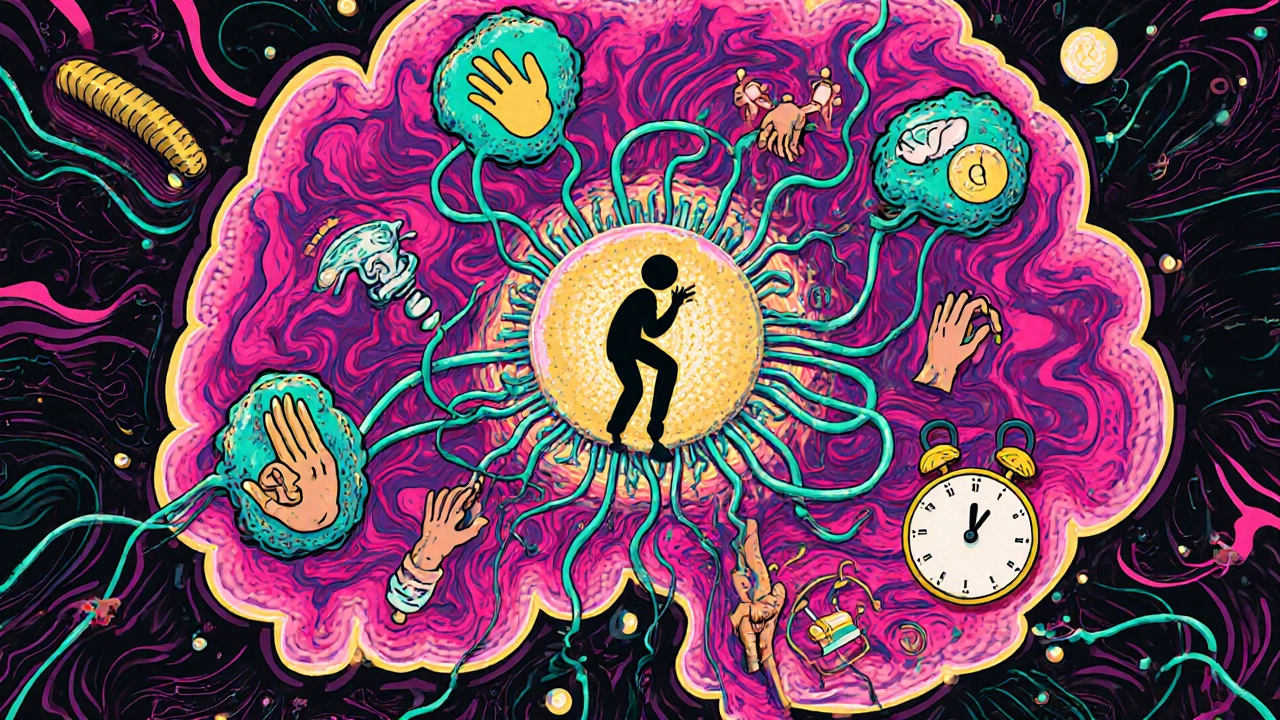
Most people know risperidone as a drug for schizophrenia or bipolar disorder. But if you or someone you care about has treatment-resistant OCD, you might have heard whispers about risperidone being used off-label. It’s not FDA-approved for OCD, yet some doctors prescribe it when SSRIs and therapy haven’t worked. So what’s the real story? Does risperidone actually help with obsessive thoughts and compulsive behaviors-or does it just trade one set of problems for another?
How Risperidone Works in the Brain
Risperidone is an atypical antipsychotic. It blocks dopamine D2 receptors and serotonin 5-HT2A receptors. That’s why it’s effective for psychosis: it calms overactive dopamine pathways. But OCD isn’t caused by psychosis. It’s tied to faulty circuits in the brain’s frontal cortex and basal ganglia, where serotonin and dopamine interact in complex ways. The theory? By tweaking both systems, risperidone might disrupt the loop of intrusive thoughts and compulsions. It’s not a cure, but for some, it breaks the cycle enough to make therapy stick.
What the Research Says
A 2018 meta-analysis in the Journal of Clinical Psychiatry reviewed 12 randomized trials involving 487 patients with OCD who didn’t respond to at least two SSRIs. Those who added risperidone saw a 30% to 40% reduction in Yale-Brown Obsessive Compulsive Scale scores-compared to just 10% to 15% in placebo groups. That’s meaningful. Not everyone improves, but for about 1 in 3 treatment-resistant cases, risperidone makes a measurable difference.
One real-world example: a 32-year-old woman in Wellington tried fluoxetine, sertraline, and CBT for five years. Her compulsive hand-washing kept her from leaving the house. After adding 1 mg of risperidone daily, her symptoms dropped by half within eight weeks. She still had urges, but she could resist them. Her therapist said it was the first time she’d made real progress.
When Doctors Consider Risperidone for OCD
Risperidone isn’t a first-line treatment. It’s reserved for:
- Patients who’ve tried at least two SSRIs at full dose for 12 weeks or more
- Those who’ve completed adequate CBT (usually 16+ sessions) with no lasting benefit
- People with severe symptoms-like hoarding, violent intrusive thoughts, or self-harming compulsions
- Patients who also show signs of tic disorders or mild psychotic features
It’s rarely used alone. Most often, it’s added to an SSRI. The combination works better than either drug alone. Some doctors start at 0.25 mg to 0.5 mg per day and slowly increase to 1 mg or 2 mg, depending on tolerance. Higher doses don’t usually mean better results-they just mean more side effects.
Common Side Effects and Risks
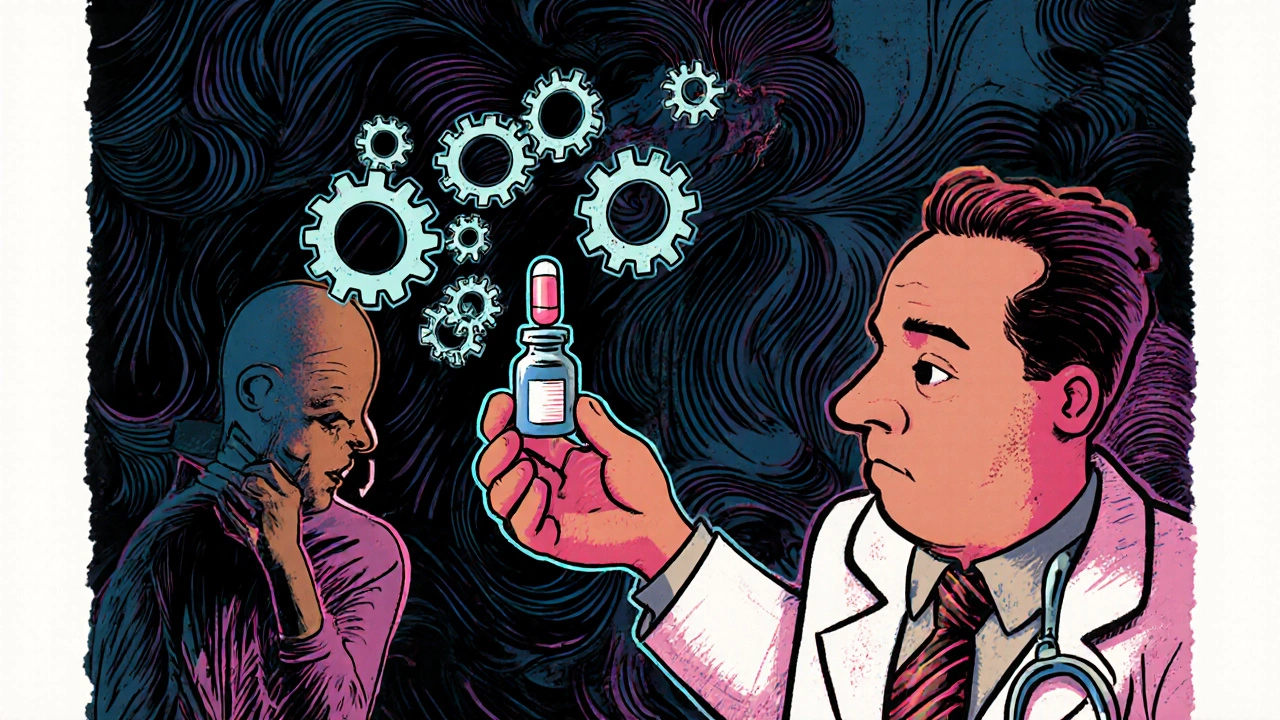
Every benefit comes with a cost. Risperidone’s side effects are real and sometimes serious:
- Weight gain: Up to 70% of users gain at least 5% of their body weight in six months. Fatigue and increased appetite are common.
- Drowsiness and dizziness: Especially in the first few weeks. Driving or operating machinery can be dangerous.
- Increased prolactin: Leads to breast enlargement, milk production, or missed periods-even in men. This can affect fertility and bone density over time.
- Movement disorders: Tremors, stiffness, or restlessness (akathisia). In rare cases, tardive dyskinesia-a permanent involuntary movement condition-can develop after long-term use.
- Metabolic issues: Higher risk of high blood sugar, cholesterol, and type 2 diabetes. Blood tests every 3 to 6 months are recommended.
These risks aren’t theoretical. A 2021 study from the New Zealand Pharmacovigilance Centre tracked 127 patients on long-term risperidone for OCD. Over three years, 41% developed metabolic syndrome. That’s why monitoring isn’t optional-it’s essential.
Who Should Avoid Risperidone
Some people shouldn’t take risperidone for OCD at all:
- Those with a history of neuroleptic malignant syndrome
- People with severe liver or kidney disease
- Individuals already taking other drugs that raise prolactin or cause QT prolongation
- Adolescents under 15-risperidone isn’t well studied in young teens for OCD
- Pregnant or breastfeeding women-risperidone crosses the placenta and enters breast milk
If you’re considering this medication, your doctor should check your baseline weight, blood sugar, cholesterol, and prolactin levels. Then repeat those tests every few months.
Alternatives to Risperidone
If the risks scare you, there are other options:
- Clomipramine: An older tricyclic antidepressant. More effective than SSRIs for OCD, but with stronger side effects like dry mouth, constipation, and heart rhythm risks.
- Deep Brain Stimulation (DBS): For extreme, disabling cases. Still experimental, but showing promise in clinical trials.
- Transcranial Magnetic Stimulation (TMS): Non-invasive brain stimulation. Less proven than DBS, but safer and covered by some insurance plans.
- Augmentation with other antipsychotics: Aripiprazole has a lower risk of weight gain and prolactin spikes. Some doctors prefer it over risperidone.
One key difference: aripiprazole is a partial dopamine agonist, not a blocker. That means it’s less likely to cause movement issues or metabolic problems. For younger patients or those worried about long-term health, it’s often the safer off-label pick.
The Bottom Line
Risperidone can help some people with severe, treatment-resistant OCD. But it’s not magic. It’s a tool-powerful, with serious trade-offs. The best results come when it’s used carefully: low dose, slow titration, regular monitoring, and always paired with therapy. If you’re considering it, ask your doctor: What’s my specific reason for trying this? What are the alternatives? How will we know if it’s working-or if it’s hurting me?
For many, the answer isn’t just about silencing thoughts. It’s about regaining control over life. Risperidone might help with that-but only if you’re fully aware of what you’re signing up for.
Is risperidone FDA-approved for OCD?
No, risperidone is not FDA-approved for obsessive-compulsive disorder. It’s approved for schizophrenia, bipolar mania, and irritability in autism. But doctors can legally prescribe it off-label for OCD when standard treatments fail. Many clinical guidelines, including those from the American Psychiatric Association, acknowledge this as a valid option for treatment-resistant cases.
How long does it take for risperidone to work for OCD?
Unlike SSRIs, which can take 8 to 12 weeks, risperidone often shows some effect within 2 to 4 weeks. But full benefits usually take 6 to 12 weeks. Most studies measure improvement at 8 weeks. If there’s no change by then, continuing the drug is unlikely to help. Patience is important, but so is knowing when to stop.
Can risperidone make OCD worse?
Rarely, but yes. Some patients report increased anxiety, agitation, or even new intrusive thoughts when starting risperidone. This usually happens in the first two weeks and often resolves with dose adjustment. If symptoms worsen significantly or you develop new psychotic features, stop the medication and contact your doctor immediately.
Is risperidone safe for teens with OCD?
It’s used cautiously in adolescents over 15, but not routinely. Studies in teens are limited, and side effects like weight gain and hormonal changes can affect development. Most child psychiatrists try SSRIs and CBT first. If risperidone is considered, the lowest possible dose is used, and growth, weight, and puberty markers are tracked closely.
What happens if I stop risperidone suddenly?
Stopping abruptly can cause withdrawal symptoms like nausea, insomnia, anxiety, or rebound OCD symptoms. In rare cases, it can trigger movement disorders or psychosis. Always taper slowly under medical supervision-usually over 2 to 4 weeks. Never stop on your own, even if you feel better.
Does risperidone cure OCD?
No. Risperidone doesn’t cure OCD. It helps reduce symptoms enough to make other treatments, like CBT, more effective. Most people need to stay on some form of treatment long-term. Think of it like insulin for diabetes-it manages the condition but doesn’t fix the underlying biology.
Shawna B
November 19, 2025 AT 17:50Risperidone for OCD? I just took one pill and my thoughts stopped. No more washing hands. No more checking locks. Just peace.
Precious Angel
November 20, 2025 AT 05:58Let me tell you something nobody else will: this isn’t medicine, it’s chemical suppression. They slap you with risperidone because they don’t want to sit with your pain. They don’t want to hear how your intrusive thoughts scream at 3 a.m. while you’re curled up on the bathroom floor. They just want you quiet. And yeah, maybe it works for some - but at what cost? Weight gain so bad you can’t recognize yourself in the mirror? Prolactin spikes that turn your body against you? And don’t even get me started on the akathisia - that restless, soul-crushing agony where you can’t sit still, can’t sleep, can’t breathe. This isn’t treatment. It’s corporate pharmacy’s answer to a human crisis. They sell you a bandage and call it a cure. I’ve seen it. I’ve lived it. And I’m not going to let you walk into this blind.
Melania Dellavega
November 20, 2025 AT 09:16I appreciate how grounded this post is. It’s rare to see someone lay out the trade-offs so honestly. I’ve been on an SSRI for seven years and tried CBT twice - it helped, but the thoughts never fully left. When my psychiatrist suggested risperidone, I was terrified. But we started at 0.25 mg, tracked my bloodwork every eight weeks, and kept therapy going. After ten weeks, I could finally walk into a grocery store without counting tiles. It didn’t erase my OCD, but it gave me space to fight it. I still have bad days. But now I have tools - and I’m not alone in this. That’s what matters.
Krys Freeman
November 22, 2025 AT 07:59Another brain drug for weak people. Just get a grip.
Sophia Lyateva
November 23, 2025 AT 06:46you know risperidone is just part of the govts mind control program right? they use it to make ppl docile. same stuff they give in prisons and schools. why do you think they push it for ocd? because quiet ppl dont ask questions. also check the pharma patents - its all connected.
Jerry Ray
November 23, 2025 AT 13:10That 2018 meta-analysis? Flawed. Most of those trials were industry-funded. And 30% improvement? That’s just a number. What about the people who gained 40 pounds and lost their sex drive? Nobody talks about that. Also - why is aripiprazole even mentioned? It’s basically risperidone’s less toxic cousin. Why not just say that upfront instead of pretending this is some deep scientific mystery?
David Ross
November 24, 2025 AT 17:33There is a disturbing trend in modern psychiatry - the normalization of antipsychotics for non-psychotic conditions. Risperidone, while effective in certain contexts, carries an unacceptable risk profile for a disorder like OCD, which is fundamentally a neurobehavioral condition, not a psychotic one. The metabolic consequences, endocrine disruption, and potential for irreversible movement disorders are not merely side effects - they are iatrogenic harms that disproportionately impact vulnerable populations, particularly adolescents and women. The fact that this is considered ‘off-label’ yet routinely prescribed speaks to a systemic failure of clinical caution. We must demand better - not just more drugs, but more rigorous, ethical, and patient-centered care.
gladys morante
November 26, 2025 AT 01:07I was on this for six months. Lost 30 pounds because I couldn’t eat. Then I stopped. My OCD came back worse. Now I’m on aripiprazole. Still not perfect, but at least I can sleep.
Lyn James
November 26, 2025 AT 14:11It’s not just the medication - it’s the entire system. We’ve turned mental health into a transaction. You have a thought? Here’s a pill. You feel anxious? Take this. You’re not broken - you’re being exploited. The pharmaceutical industry doesn’t want you healed. They want you dependent. Risperidone? It’s a profit center disguised as hope. And the doctors? They’re complicit. They get kickbacks, they get pressured by reps, they get bonuses for prescribing. They don’t care about your bone density or your prolactin levels - they care about the quota. You’re not a patient. You’re a revenue stream. And this post? It’s just another glossy brochure for the machine.
AARON HERNANDEZ ZAVALA
November 28, 2025 AT 12:18I’ve seen both sides. My sister took risperidone. It helped her stop checking the stove 20 times a night. But she gained weight and felt like a zombie. We switched to aripiprazole. She’s still on it. She’s happier. Not cured. But living. I think the key is not choosing between drugs - it’s choosing the right path for the person. Not the easiest path. Not the cheapest. The right one.
Bethany Hosier
November 29, 2025 AT 09:30As a former psychiatric nurse, I’ve seen patients on risperidone for OCD. The weight gain is real. The prolactin issues are terrifying. But I’ve also seen patients who couldn’t leave their homes for years - and after 3 months on 1mg, they went back to work. There’s no perfect answer. There’s only balance. And sometimes, the lesser evil is still an evil - but it’s the only one that lets someone breathe.