Imagine sitting down to a nice dinner, only to realize the sauce on your pasta contains hidden shrimp stock. For the millions of people living with shellfish allergy, a condition that triggers an immune response to marine invertebrates, this isn't just a bad meal-it can be a medical emergency. Unlike other food allergies that might cause mild discomfort, shellfish reactions are among the most severe and common worldwide. About 2% of the global population deals with this, and for adults over 40, that number jumps to nearly 4%. The scary part? It’s not always obvious what you’re reacting to.
The core issue lies in a protein called tropomyosin. This muscle protein is found in almost all shellfish and acts as the primary trigger for allergic reactions. Because tropomyosin is incredibly stable, cooking doesn’t destroy it. Whether you eat raw oysters or well-done lobster, the allergen remains intact. This stability explains why reactions happen even when food is thoroughly cooked. Understanding how this protein works is the first step to staying safe.
Understanding Cross-Reactivity: What You Can and Cannot Eat
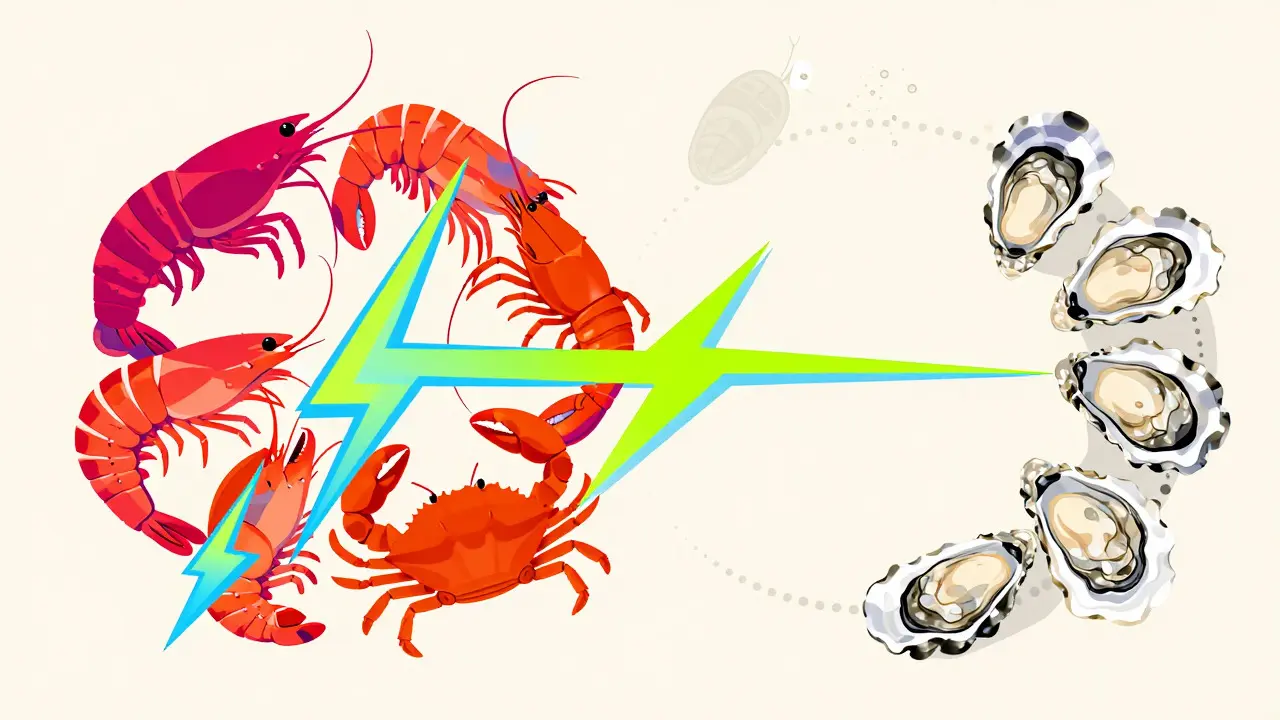
One of the biggest misconceptions about shellfish allergy is that if you’re allergic to one type, you’re allergic to all seafood. This isn’t true. Shellfish fall into two main groups: crustaceans (like shrimp, crab, lobster, and crawfish) and mollusks (like clams, oysters, scallops, and mussels). If you have a confirmed allergy to a crustacean, there is about a 75% chance you will react to another crustacean. This high rate of cross-reactivity happens because tropomyosin is nearly identical across these species.
However, the story changes when we look at mollusks. Only 15-20% of people allergic to crustaceans also react to mollusks. So, someone who breaks out in hives after eating shrimp might be perfectly fine eating oysters. But don’t guess. Always consult an allergist before trying new foods. Another tricky area is the link between shellfish and environmental allergens. Dust mites and cockroaches contain proteins similar to tropomyosin. Studies show that up to 68% of people sensitive to dust mites test positive for shellfish antibodies but never actually have a reaction when they eat shellfish. This leads to many false positives in standard blood tests.
| Allergic To | Risk Reacting To | Cross-Reactivity Rate |
|---|---|---|
| Shrimp | Crab | 92% |
| Shrimp | Lobster | 88% |
| Shrimp | Clams/Oysters | 30-40% |
| Dust Mites | Shellfish | High False Positive (No Clinical Reaction) |
Getting Accurate Diagnoses: Beyond Standard Tests
Standard skin prick tests and basic blood tests often give confusing results because they detect antibodies to multiple proteins at once. This is where component-resolved diagnostics come in. These advanced tests look specifically for IgE antibodies against tropomyosin and sarcoplasmic calcium-binding protein (SCBP). According to recent guidelines, testing for these specific components increases diagnostic accuracy to 92%. If your test shows high levels of anti-tropomyosin antibodies, you likely have a true clinical allergy. If the levels are low or negative, but you tested positive on a general panel, you might just be sensitized due to dust mite exposure.
The gold standard for diagnosis remains the oral food challenge, conducted under medical supervision. This involves eating small, increasing amounts of the suspected allergen while doctors monitor your reaction. It’s uncomfortable and carries risk, but it provides definitive answers. In 2024, the FDA approved new diagnostic panels that help differentiate true allergies from cross-reactive sensitization with 89% accuracy. Ask your allergist if these newer tests are available to you. Knowing exactly what you’re allergic to can mean the difference between avoiding all seafood and being able to safely enjoy oysters.
Dining Out Safely: A Practical Guide
Restaurant accidents are the leading cause of severe reactions for shellfish-allergic individuals. A survey found that 68% of people with this allergy had at least one accidental exposure while eating out in the past year. The highest risk comes from shared fryers. Oil used to cook shrimp retains allergenic proteins, meaning french fries fried in the same oil can trigger a reaction. Always ask if the restaurant has a dedicated fryer for non-shellfish items.
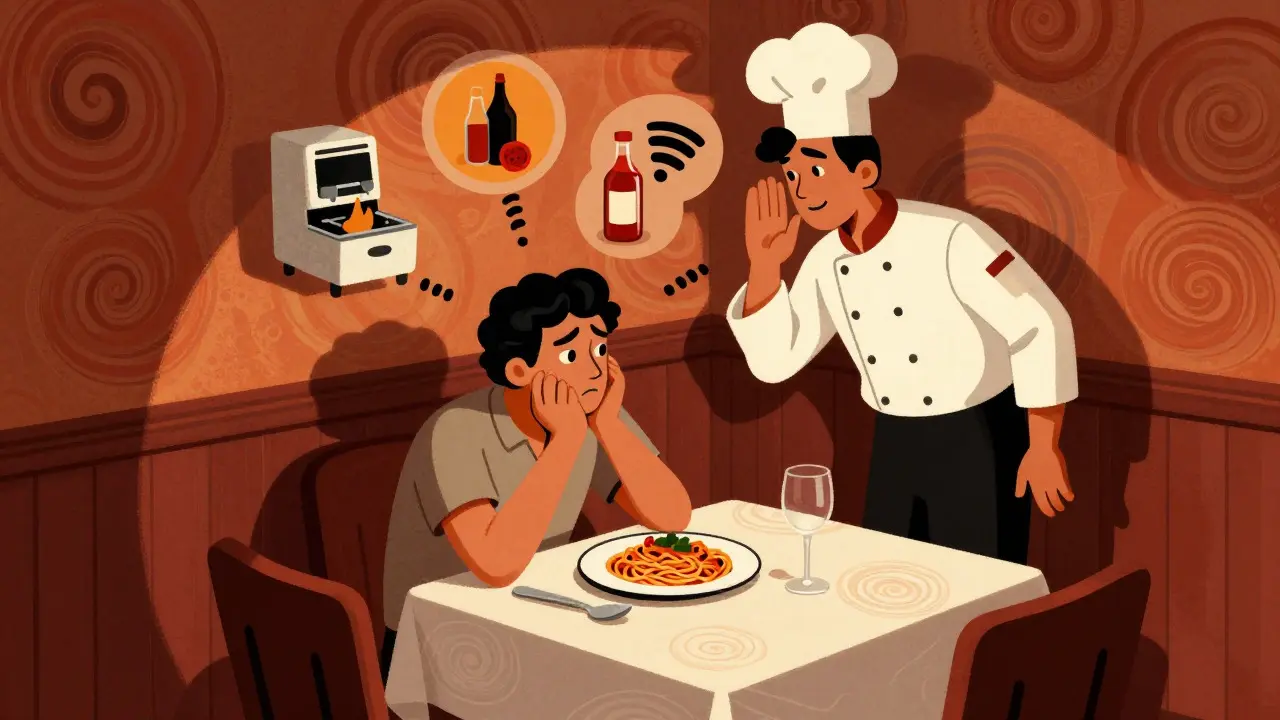
Communication is key. Don’t just tell the server; ask to speak with the chef. Servers are great hosts, but they aren’t trained in food safety protocols. A study showed that only 37% of servers correctly identify shellfish ingredients in complex dishes. Bring a chef card-a simple note listing your allergy and safe ingredients. Organizations like Food Allergy Research & Education (FARE) offer these in multiple languages. This helps bridge communication gaps, especially at ethnic restaurants where language barriers contributed to 32% of reported reactions.
- Call ahead: Give the kitchen 24 hours notice so they can prepare a clean workspace.
- Avoid seafood restaurants: Even if you order steak, the air and surfaces may be contaminated with shellfish particles.
- Watch for hidden ingredients: Asian sauces, broths, and soups often contain shrimp paste or fish sauce. Read labels carefully if bringing condiments.
- Carry epinephrine: Always have two auto-injectors with you. Antihistamines alone are not enough to stop anaphylaxis.
Navigating Hidden Risks and New Trends
Global aquaculture production has surged, meaning shellfish is more prevalent in menus than ever before. Climate change is also altering shellfish biology, potentially changing allergen profiles. While research is ongoing, the safest approach remains strict avoidance of known triggers. Be cautious with "novel" seafood preparations like ceviche or sashimi, where raw proteins are less denatured. Also, watch out for supplements containing krill oil or chitosan, which are derived from shellfish.
Technology is helping too. Apps like AllergyEats and Nosh List allow users to crowdsource safe restaurant options. Some chains now offer digital allergen menus with high accuracy. However, no app replaces direct communication with the kitchen. Stay informed about emerging treatments like peptide immunotherapy, which shows promise in desensitizing patients, though these are still in trial phases. For now, vigilance and preparation are your best defenses.
Can I eat fish if I have a shellfish allergy?
Yes, usually. Fish allergy is caused by a different protein called parvalbumin. There is no cross-reactivity between fish and shellfish unless you have separate, distinct allergies to both. Always confirm with your allergist.
Why do I test positive for shellfish allergy but never get sick?
You may have cross-reactivity with dust mites or cockroaches. Their proteins resemble tropomyosin, causing false-positive blood tests. Component-resolved testing can clarify if you have a true clinical allergy.
Is it safe to eat mollusks if I’m allergic to shrimp?
It depends. Only 15-20% of people allergic to crustaceans like shrimp also react to mollusks like clams or oysters. An oral food challenge supervised by a doctor is the only way to know for sure.
How long does shellfish allergy last?
Unlike milk or egg allergies, shellfish allergies rarely go away in adulthood. They are typically lifelong conditions requiring permanent avoidance strategies.
What should I do if I accidentally eat shellfish?
Use your epinephrine auto-injector immediately if you experience symptoms like swelling, difficulty breathing, or hives. Call emergency services right after. Do not wait to see if symptoms worsen.