When a patient gets a generic version of a specialty drug, many assume it’s just like picking up a regular pill at the corner pharmacy. But that’s not how it works. Even when the drug is no longer brand-name, the path from prescription to patient still goes through a specialty pharmacy. Why? Because it’s not about the price tag-it’s about the complexity.
What Makes a Drug a ‘Specialty’ Drug?
Specialty drugs aren’t defined by cost alone. They’re defined by how they’re made, how they’re given, and how closely they need to be watched. Most are biologics-large, complex molecules made from living cells. Think drugs for rheumatoid arthritis, multiple sclerosis, or cancer. Even when a generic version comes out, it’s rarely a true chemical copy. Instead, it’s a biosimilar, a highly similar but not identical version. And because of that, the rules change. These drugs often need refrigeration, special handling, or injection/infusion. Some require strict monitoring for side effects. Others come with FDA-mandated Risk Evaluation and Mitigation Strategies (REMS) that only certified providers can handle. That means even if the drug is cheaper, it still needs a specialty pharmacy to manage it.Why Providers Can’t Just Use Retail Pharmacies
You might wonder: if the generic version costs less, why not send it to Walgreens or CVS? The answer is simple-manufacturers lock it down. Many drug makers require that all versions of their drug, brand or generic, be distributed only through specialty pharmacies. This isn’t about profit. It’s about control. They want to make sure patients get the right training, the right follow-up, and the right safety checks. A 2023 study from the American Society of Health-System Pharmacists found that 98% of biologic drugs (including biosimilars) are distributed exclusively through specialty pharmacies. Even small-molecule generics-like methotrexate or cyclosporine-can be locked into this system if the manufacturer chooses to distribute them that way. Retail pharmacies simply don’t have the infrastructure to handle the paperwork, temperature controls, or patient education required.The Specialty Pharmacy Workflow: It’s Not Just Dispensing
Dispensing a specialty drug isn’t like handing over a bottle of ibuprofen. It’s a multi-step process that takes time and people. First, the prescription comes in. Then comes prior authorization-often the biggest bottleneck. Specialty pharmacies spend hours calling insurers, submitting lab results, and proving medical necessity. On average, it takes 7.2 days from prescription receipt to delivery. For oncology drugs, it can stretch to 8.7 days. That’s weeks longer than a typical retail prescription, which fills in under 1.2 days. Next, the pharmacy checks for financial assistance. Many specialty drugs-even generics-cost hundreds or thousands per month. Specialty pharmacies connect patients with copay programs, grants, or manufacturer support. Then comes patient education: how to inject it, what side effects to watch for, when to call the doctor. Nurses and care coordinators are part of the team. This isn’t optional. It’s required. And then, the drug ships. Patients don’t pick it up. It arrives at their door in temperature-controlled packaging. Follow-up calls happen within days. If the patient misses a dose or reports nausea, someone is already on it.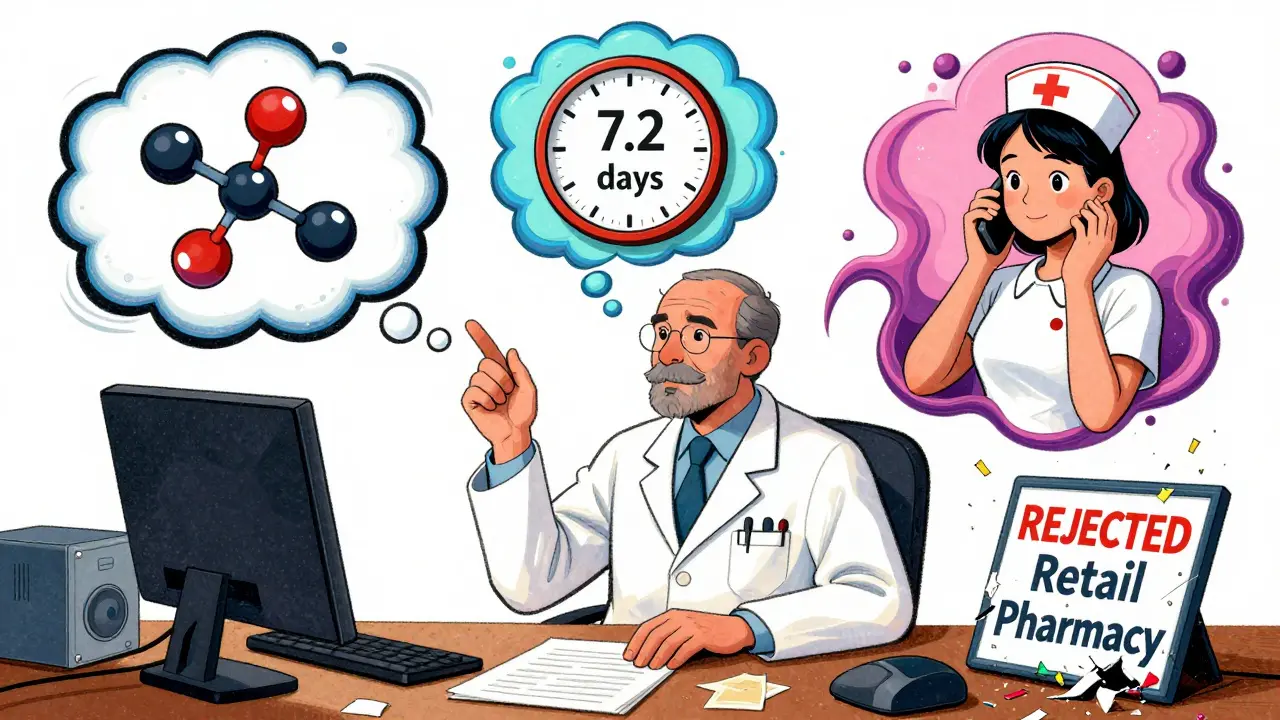
Generic Doesn’t Mean Simpler
Here’s where people get confused. They think: generic = simple. But in specialty pharmacy, that’s not true. A generic version of Xeljanz (tofacitinib) might cost half as much as the brand, but the patient still needs the same nurse to walk them through injection technique. The same REMS program applies. The same insurance hurdles remain. A Reddit thread from early 2024 had over 140 comments from patients who switched to a generic specialty drug and were shocked to find everything else stayed the same. One user wrote: “My generic version of Xeljanz still comes through the same specialty pharmacy with the same nurse follow-ups, which I actually appreciate because she knows my case history.” Another complained: “Went from $15 copay at Walgreens to $75 through specialty pharmacy-with a two-week delay.” The difference? One patient had continuity. The other had bureaucracy.The Role of Providers: More Than Just Prescribing
Providers-doctors, nurse practitioners, physician assistants-are the gatekeepers. They don’t just write the script. They have to choose the right pharmacy. They have to understand the distribution rules. They have to know which drugs require specialty handling, even if they’re generic. Many providers still assume generics can be filled anywhere. That’s a dangerous assumption. If a provider prescribes a generic specialty drug but sends it to a retail pharmacy, the pharmacy will reject it. The patient gets no medication. The provider gets a call from an angry patient. The insurer gets a denied claim. The best providers don’t just write prescriptions. They partner with specialty pharmacies. They know which ones have fast prior auth turnaround. Which ones have dedicated oncology teams. Which ones offer 24/7 nurse support. They track delivery times. They monitor patient feedback. They adjust their referrals based on real-world performance.Technology Is Changing the Game
One of the biggest headaches in specialty pharmacy is prior authorization. It’s slow. It’s confusing. It’s full of paperwork. But technology is helping. Real-Time Prescription Benefit (RTPB) systems now let providers see a patient’s coverage, copay, and pharmacy options before they even write the script. In 2023, Surescripts reported that RTPB cut prior auth processing time by 3.2 days across 4.7 million specialty prescriptions. Specialty pharmacies are also investing in integrated platforms that link patient records, lab results, and medication history. That means if a patient switches from a brand drug to a biosimilar, the system updates automatically. The care team stays informed. No one has to start from scratch.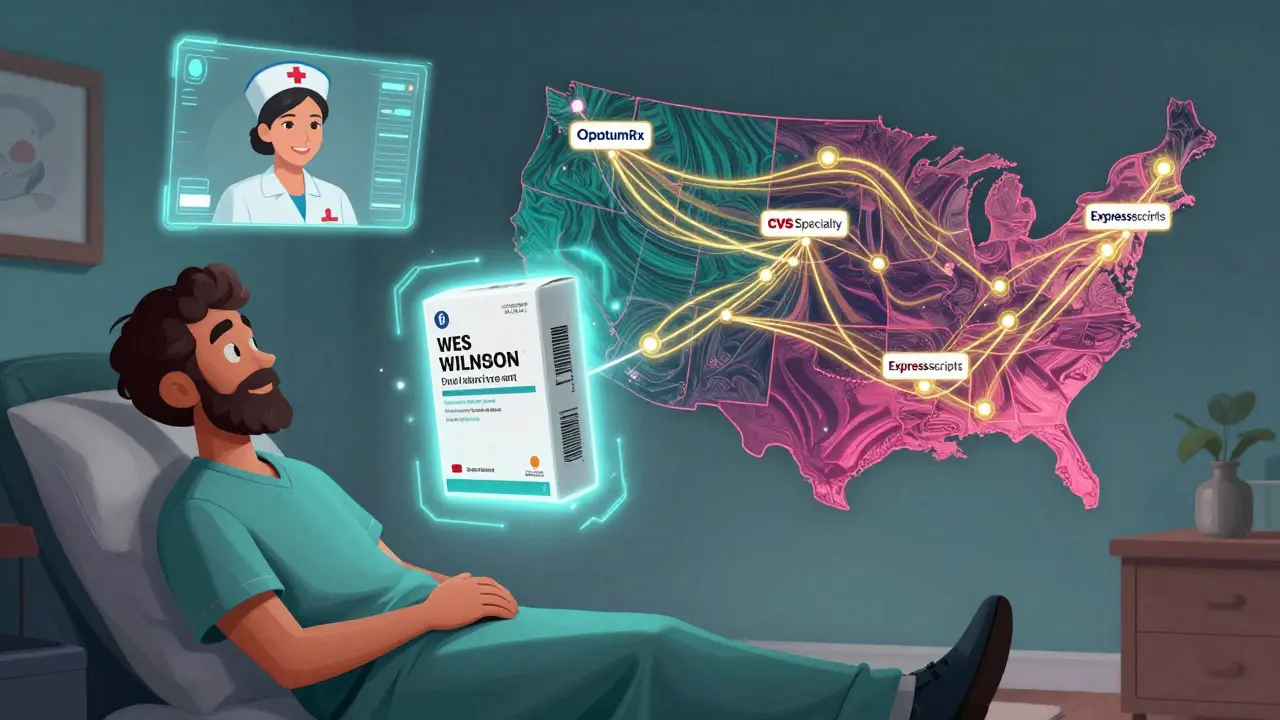
Who’s in Charge of Specialty Pharmacy?
The market is dominated by three big players: OptumRx, CVS Specialty, and Express Scripts. Together, they control 84% of the U.S. specialty pharmacy market. But there are hundreds of smaller regional pharmacies too-some tied to hospitals, some independent. In 2024, Walgreens bought Shields Health Solutions to bring specialty pharmacy services in-house. Other health systems are doing the same. Why? Because they want to control the entire patient journey-from clinic to pharmacy to home. That shift could change how providers choose pharmacies. Instead of referring to a national specialty pharmacy, they might refer to their own health system’s pharmacy. That could mean faster service, better coordination, and lower costs.What’s Next for Generic Specialty Drugs?
Biosimilars are the future. By 2028, they could make up nearly half of all specialty drug sales. The FDA has approved dozens already. Medicare now requires Part D plans to cover all FDA-approved biosimilars. That means more patients will get cheaper versions of expensive drugs. But they’ll still need specialty pharmacies to handle them. The service model doesn’t change just because the price does. The real question isn’t whether generics belong in specialty pharmacy. It’s whether the system can handle the volume. Right now, turnaround times are too slow. Patient satisfaction with delivery is low (3.1/5 on Trustpilot). The system is strained. Providers who understand this-and who actively choose pharmacies with strong patient support and fast tech-are the ones making the biggest difference.What Patients Need to Know
If you’re prescribed a generic specialty drug, don’t assume it’ll be easy. You’ll likely still get it through a specialty pharmacy. You’ll still need training. You’ll still get follow-up calls. You might still pay more than you expected. But here’s the good news: you’ll also get a team that knows your condition, your history, and your needs. That’s not something a retail pharmacy can offer. Ask your provider: Which specialty pharmacy do you recommend? Do they have a dedicated team for my condition? Can I stay with the same pharmacy if I switch to a biosimilar? Those questions matter more than the drug’s price tag.Why can’t I get my generic specialty drug at my local pharmacy?
Many specialty drugs-even generic versions-are restricted by manufacturers to be dispensed only through certified specialty pharmacies. These pharmacies have the training, equipment, and systems to handle complex drugs that need refrigeration, special administration, or strict monitoring. Retail pharmacies don’t meet those requirements, so they can’t legally fill the prescription.
Are biosimilars the same as generic drugs?
No. Traditional generics are exact chemical copies of small-molecule drugs. Biosimilars are highly similar to biologic drugs but aren’t identical because biologics are made from living cells. They’re complex proteins, so even small changes in manufacturing can affect how they work. That’s why biosimilars still need the same specialty pharmacy handling as their brand-name counterparts.
Do I have to use the same specialty pharmacy if I switch to a generic version?
You don’t have to, but it’s strongly recommended. Staying with the same pharmacy means your care team already knows your history, your side effects, your insurance issues, and your preferences. A 2024 MyHealthTeams survey found 68% of patients preferred keeping the same specialty pharmacy when switching to a generic or biosimilar because it meant no retraining, no lost records, and no delays.
Why does it take so long to get a specialty drug, even if it’s generic?
Specialty drugs require prior authorization, financial assistance coordination, patient education, and temperature-controlled shipping. Even with a generic drug, all these steps are still needed. The average turnaround is 7.2 days, with oncology and hepatitis C drugs taking longer. Retail prescriptions fill in under 1.2 days because they don’t require this level of support.
Can my doctor prescribe a generic specialty drug and send it to a retail pharmacy?
No. If the drug is under a manufacturer’s restricted distribution program, the prescription will be automatically rejected by any non-specialty pharmacy. Even if the drug is generic, the manufacturer’s rules still apply. The provider must send it to a certified specialty pharmacy-or the patient won’t get the medication.
Is there a difference in cost between brand and generic specialty drugs through specialty pharmacies?
Yes, but not always as much as you’d expect. The drug cost is lower for generics, but the dispensing fee and patient support services are usually the same. So while the medication itself might be cheaper, your copay might not drop significantly-especially if your insurance doesn’t have a separate tier for generics in specialty pharmacy.
Thomas Anderson
December 15, 2025 AT 12:18Look, I get it - generics sound like they should be easy, but specialty drugs? Nah. Even the cheap ones need refrigeration, special training, and a whole team just to hand you a syringe. Retail pharmacies aren’t built for this. They’re for Advil and cough syrup. This ain’t rocket science, it’s just logistics.
Dwayne hiers
December 16, 2025 AT 20:33The regulatory and operational complexity around biosimilars is non-trivial. Even when a molecule is technically ‘generic,’ the pharmacokinetic variability, cold chain requirements, and REMS compliance protocols necessitate a specialized distribution infrastructure. Retail pharmacies lack the certified personnel, integrated EHR interoperability, and risk mitigation frameworks mandated by the FDA for biologic agents. This isn’t a profit play - it’s a patient safety imperative.
Sarthak Jain
December 17, 2025 AT 16:43bro i just got my generic xeljanz and yeah it took 10 days but my nurse called me like 3x and even helped me with the copay app. i was gonna complain but then i realized… she remembers my bloodwork from last year. that’s wild. not sure if i’d get that at cvs.
Daniel Wevik
December 17, 2025 AT 23:43Let’s not romanticize this. Specialty pharmacies are a bureaucratic chokepoint disguised as ‘patient care.’ The 7.2-day turnaround? That’s not ‘service,’ that’s inefficiency. Manufacturers use these restrictions to maintain market control under the guise of safety. The real innovation isn’t in the pharmacy - it’s in the tech that bypasses them. RTPB is the future. Stop glorifying the middlemen.
Sinéad Griffin
December 18, 2025 AT 07:04AMERICA’S HEALTHCARE SYSTEM IS BROKEN AND THESE PHARMACIES ARE THE CULPRITS. WHY CAN’T WE JUST BUY MEDS LIKE WE BUY A PHONE? THEY’RE MAKING US WAIT FOR LIFE-SAVING DRUGS BECAUSE THEY WANT MORE MONEY. #SINGLEPAYERNOW
Edward Stevens
December 19, 2025 AT 19:10So let me get this straight - we pay $75 for a generic drug, wait two weeks, get a nurse call, and still can’t pick it up from Walgreens… because the manufacturer says so? And this is ‘patient care’? I’m starting to think the real specialty here is extracting money from people who are already sick.
Alexis Wright
December 20, 2025 AT 21:48Let’s be honest - this entire system is a grotesque farce of capitalist engineering. The manufacturer’s ‘control’ isn’t about safety - it’s about monopolistic rent-seeking disguised as clinical governance. The FDA’s REMS programs were never meant to be profit-enforcement tools. We’ve replaced the Hippocratic Oath with a supply chain contract. Patients aren’t being cared for - they’re being managed. And the ‘care coordinators’? They’re just the smiling faces on the conveyor belt of corporate extraction.
Wade Mercer
December 22, 2025 AT 14:11It’s not about the cost. It’s about responsibility. If you’re going to handle a drug that can kill you if you don’t inject it right, you need people who know what they’re doing. I don’t trust a teenager at CVS to explain how to store a biologic. This isn’t elitism - it’s ethics.
Natalie Koeber
December 24, 2025 AT 00:48they’re using ‘biosimilar’ as a cover for the same drugs they’ve been selling for years. the FDA is in on it. big pharma owns the regulators. you think the ‘specialty pharmacy’ is there to help you? nah. they’re just the middlemen in the psyop to keep you dependent. they track your vitals, your mood, your social media - all to sell you more ‘support services.’ wake up.
Rich Robertson
December 24, 2025 AT 21:28I’ve worked in a hospital pharmacy for 15 years. I’ve seen the shift from brand to biosimilar. The paperwork didn’t get easier - it just got more layers. But here’s the thing: patients who stick with the same specialty pharmacy? They’re way less likely to miss doses or end up in the ER. It’s not glamorous. It’s not sexy. But it works. If your nurse remembers your dog’s name and your last lab result? That’s not a feature. That’s the whole point.
Jonny Moran
December 26, 2025 AT 19:59Hey - I know this system’s frustrating. I’ve been there. But here’s what I’ve learned: the nurse who calls you after your first injection? She’s probably the only person who’s actually listening. Don’t hate the system. Find the good people in it. Ask your doc for a pharmacy with a dedicated team for your condition. And if you get a nurse who remembers your name? Hold onto that. That’s the real win.