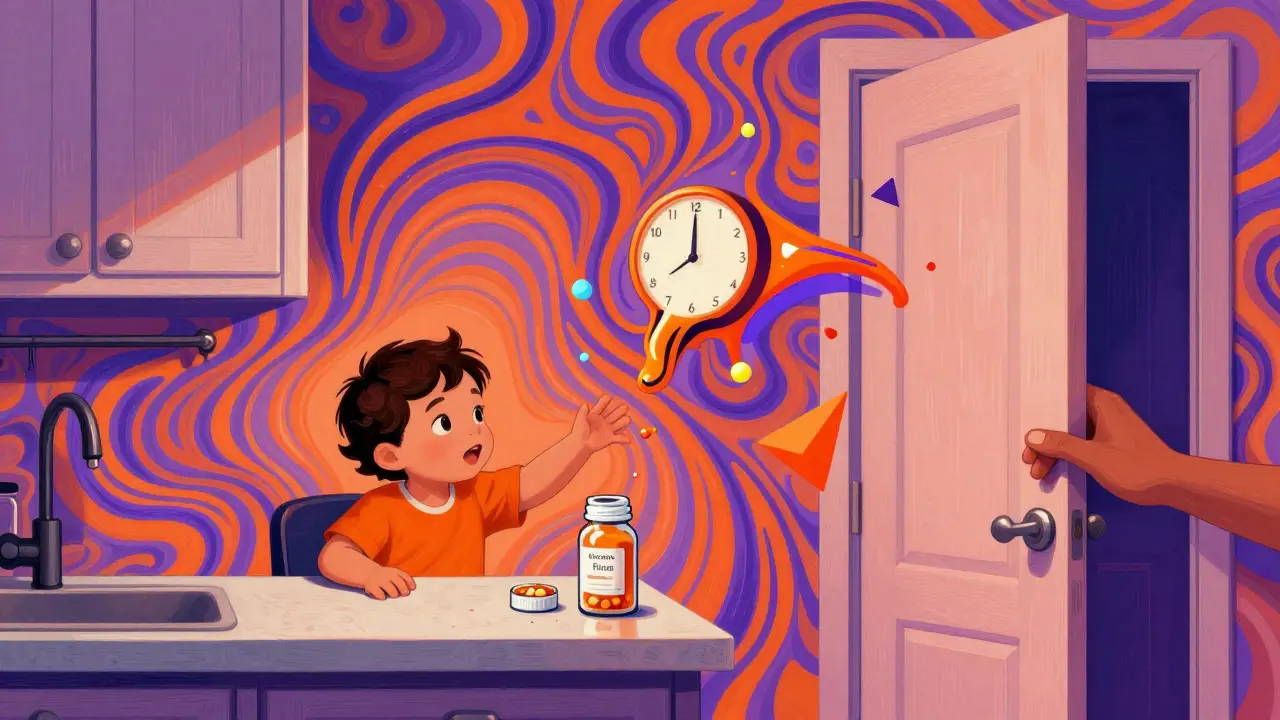
Every year, 60,000 children under five end up in emergency rooms because they got into medications they weren’t supposed to. That’s about 165 kids every single day. Most of these incidents aren’t caused by reckless parents - they happen because someone left a pill bottle on the counter for just two minutes while answering the door, or tucked a medicine into a purse during a visit to Grandma’s house. The truth is, kids are smarter, faster, and more curious than we give them credit for. And when it comes to medicine, even a single pill can be life-threatening.
Why Your Child Can Open That ‘Child-Resistant’ Bottle
You’ve bought the bottles with the twist-and-push caps. You’ve read the label: child-resistant packaging. But here’s the hard truth: those caps don’t work as well as you think. A 2023 analysis by Express Scripts found that 50% of children under five can open standard safety caps in under a minute - and that’s when they’re focused, not distracted. In real life, kids don’t need to be focused. They just need to be bored. A 24-month-old can figure out how to open a cabinet latch. By age three, many can twist off caps after watching an adult do it once. The U.S. Consumer Product Safety Commission tests these caps on groups of 200 kids aged 42 to 51 months. Even under lab conditions, a significant number still get through. That’s why experts say: child-resistant is not childproof. Relying on the bottle alone is like locking your front door but leaving the window wide open.The Two-Minute Rule: What You Must Do After Each Dose
The biggest danger isn’t when meds are stored - it’s when they’re being used. The Up and Away campaign calls this the Two-Minute Rule: Never leave medication unattended for more than 120 seconds. That includes:- Putting a pill on the counter while you get water
- Leaving a medicine dropper on the bathroom sink
- Setting down a prescription bottle while you answer the phone
Where to Store Medications: High, Locked, and Out of Sight
Forget the bathroom cabinet. That’s the worst place in the house. Kids know where the toothpaste is. They’ve climbed on the counter to see themselves in the mirror. They’ve pulled open drawers looking for bandaids. The CDC and Safe Kids Worldwide agree: medications should be stored above counter height - at least 36 inches off the ground - and inside a locked container. The most effective setup? A small lockbox made of steel or hardened plastic, at least 6 inches by 4 inches by 2 inches. It should fit in a high kitchen cabinet, a bedroom closet, or even a drawer that’s been fitted with a childproof lock. These boxes cost between $45 and $120. Amazon reviews for top-rated models like Med-Tek show 92% of users report zero access attempts by children after installation. Avoid these common mistakes:- Storing meds in purses, backpacks, or nightstands
- Leaving pill organizers on the coffee table
- Keeping medicine in the same drawer as snacks or candy
What About Refrigerated Medications?
Insulin, certain antibiotics, and other temperature-sensitive drugs need to stay cold. But your fridge isn’t safe. Kids open fridges all day long. They pull out snacks, juice, and sometimes, medicine. Seattle Children’s Hospital recommends storing refrigerated medications in a small, lockable mini-fridge placed on the top shelf of your main fridge - or better yet, in a dedicated lockbox that fits inside the fridge. If you use a lockbox inside the fridge, make sure it’s clearly labeled so adults know what’s inside. And never leave it unlocked just because it’s “in the fridge.” That’s how a 2022 CDC case happened: a 22-month-old found a vial of insulin in the fridge and injected it with a syringe left nearby. The child was hospitalized for days.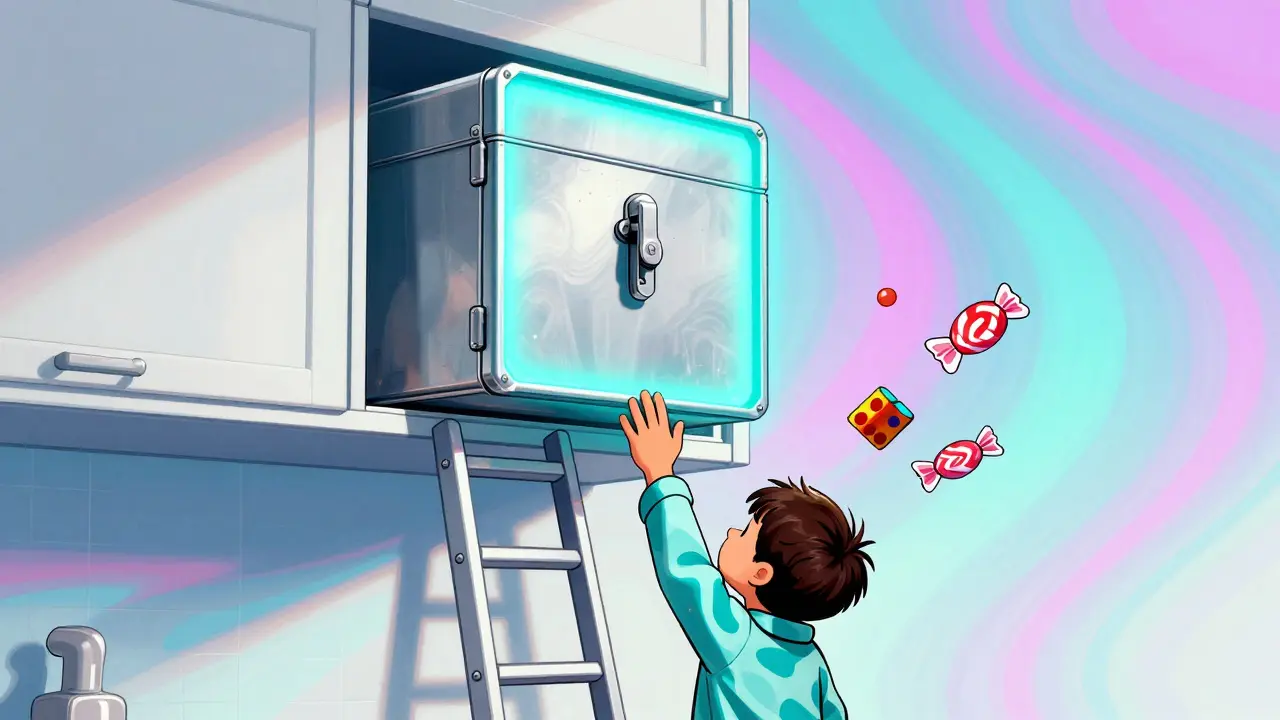
Grandparents, Visitors, and Travel: The Hidden Risks
One of the most dangerous myths is: “My grandchild knows not to touch medicine.” A 2024 Express Scripts survey found that 76% of grandparents don’t lock up medications when grandchildren visit. And 68% believe their grandchild “wouldn’t dare.” But children don’t understand danger the way adults do. They see colorful pills and think they’re candy. This is especially true for chewable medications. Tums look like SweeTarts. Aspirin looks like Skittles. A 2022 study from Children’s Mercy Hospital found a 17% spike in accidental ingestions of these types of meds among toddlers aged 2-4. When you travel:- Bring a portable lockbox (many are designed to fit in hotel safes)
- Never leave meds in your suitcase or car glove compartment
- Use the Up and Away Travel Safety Kit - a new CDC-recommended option that includes a small lockbox and clear instructions
What About Teenagers and Prescription Misuse?
It’s not just toddlers. Teens are the second biggest risk group. A 2023 guideline from the National Association of Pediatric Nurse Practitioners found that households using a monitored medication system - where teens log each dose and an adult verifies it - saw a 67% drop in prescription misuse. If you have teens taking medications like ADHD pills or painkillers:- Store them in a lockbox with a key you control
- Count pills weekly
- Have open conversations about why these drugs are dangerous if misused
What to Do With Old or Expired Medicine
Don’t flush it. Don’t throw it in the trash. Don’t leave it in an open cabinet “just until I get around to it.” The FDA recommends mixing expired or unused meds with something unappetizing - like coffee grounds or cat litter - sealing it in a plastic bag, then tossing it in the trash. Better yet: use a permanent drug disposal kiosk. As of 2023, 78% of U.S. pharmacies offer these free drop-off bins. Many are located in grocery stores, hospitals, and police stations. In New Zealand, pharmacies like Pharmacy2U and Countdown offer similar take-back programs. Check your local pharmacy - it’s free, safe, and prevents kids (or others) from finding old pills later.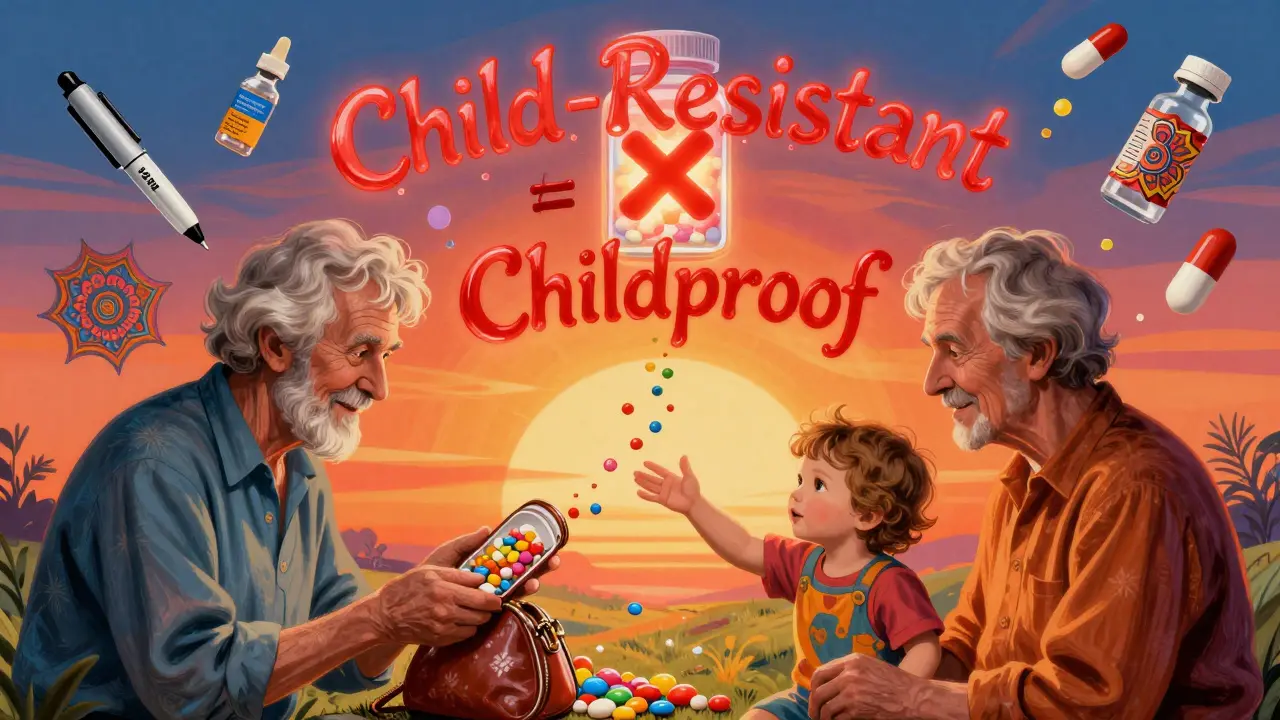
Emergency Medications: How to Balance Safety and Speed
What about asthma inhalers? Epinephrine auto-injectors? These can’t be locked away where you can’t reach them fast. Seattle Children’s Hospital recommends a medication triage system:- Emergency meds (inhalers, EpiPens): Store in a quick-access location - like a hook near the front door or a locked wall box with a fast key or code
- Daily meds: Locked high cabinet
- Occasional meds (like antibiotics): Locked box, only taken out when needed
Training and Drills: Make It a Habit
You wouldn’t skip fire drills. Why skip medicine safety drills? The American Academy of Family Physicians says families who practice regular “lock-up routines” reduce accidental access by 83%. Here’s how to do it:- Every Sunday, check all medicine locations
- Lock everything up - even if you think it’s “just for today”
- Ask your kids: “Where do we keep medicine?” If they can answer, you’ve got a problem
- Remind visitors: “We keep medicine locked up. Can you help us keep it that way?”
What’s Changing in 2025?
The FDA is rolling out a new pilot program in 2025: medication labels with pictograms. Instead of just text, you’ll see simple pictures showing: “Keep locked,” “Keep cool,” “Keep away from kids.” Early trials showed a 63% drop in accidental ingestions - because even parents who can’t read English understand a picture of a child with a red X over a pill bottle. Pharmaceutical companies are also testing dual-lock packaging - bottles that require two separate motions to open. Think: twist, then push. It’s not foolproof, but it’s harder for little hands. The goal? Reduce pediatric poisonings by 89% over the next decade. That’s 53,700 fewer ER visits every year.Final Thought: It’s Not About Trust - It’s About Design
You love your kids. You’re careful. You don’t mean to take risks. But safety isn’t about being careful - it’s about designing your home so mistakes don’t cost lives. A locked box costs less than a grocery run. A quick habit change takes less time than scrolling through your phone. Don’t wait for a near-miss. Don’t wait for a tragedy. Start today. Lock it up. Keep it high. Never leave it out. Your child won’t remember you did it - but they’ll grow up because you did.Can child-resistant caps really keep kids from opening medicine?
No. While child-resistant caps are required by law, they’re not foolproof. Studies show that 50% of children under five can open them in under a minute. Relying on caps alone is dangerous. Always store medicine in a locked container, regardless of the cap type.
Where’s the worst place to store medicine at home?
The bathroom cabinet. Kids climb on counters, open drawers, and explore every space they can reach. Medicine stored here is easily accessible - even if it’s on a high shelf. The safest place is a locked box in a high kitchen cabinet or bedroom closet, out of sight and out of reach.
Should I store my child’s ADHD medication in a locked box?
Yes - especially if you have other children in the house or teens who might be tempted to misuse it. ADHD medications are controlled substances and can be dangerous if taken by someone without a prescription. Use a lockbox and track doses with an adult verification system to reduce misuse by up to 67%.
What should I do with expired or unused medicine?
Don’t flush or throw it in the trash. Mix it with coffee grounds or cat litter, seal it in a plastic bag, then discard it. Better yet, drop it off at a pharmacy with a drug disposal kiosk - 78% of U.S. pharmacies now offer this service for free.
Is it safe to keep medicine in my purse or bag?
No. Bags get left on chairs, in cars, and on floors. Children can open them quickly. Even if you think your child wouldn’t reach in, accidents happen. Always return medicine to its locked storage spot immediately after use.
How can I make sure visitors remember to lock up medicine?
Simply say: “We keep all medicine locked up for safety - can you help us keep it that way?” Most people will respect that. If you’re hosting grandparents or babysitters, leave a small lockbox on the counter with a note: “Medicine is locked here. Please don’t move it.”
Are smart lockboxes worth the extra cost?
They can be - if you need alerts when someone opens the box. But their reliability is only about 43%, according to Consumer Technology Association testing. For most families, a simple key or combination lockbox under $60 is just as effective and more reliable. Save the tech for emergencies - not everyday storage.
Josh Potter
December 16, 2025 AT 01:55bro i left my insulin pen on the counter for 30 seconds while i grabbed a soda and my 3yo had it in her mouth before i turned around. she spit it out. i screamed like a banshee. never again. locked box in the closet now. no excuses.
Evelyn Vélez Mejía
December 16, 2025 AT 05:15The architecture of safety is not built upon vigilance-it is constructed through deliberate, unyielding design. To rely on human memory, on fleeting attention, on the myth of "I’ll just be a moment"-this is not care, it is hubris. The child does not comprehend danger; the adult must engineer environments where danger cannot manifest. A locked box is not an inconvenience-it is an act of love rendered tangible. Let the bottle be a relic of negligence. The future belongs to those who lock first, and wonder later.
Victoria Rogers
December 17, 2025 AT 18:03why are we babying parents? kids have been getting into stuff since cavemen. my grandpa used to keep his pills in a mason jar on the windowsill. i ate three of em at 4 and lived. now we got lockboxes and app alerts and CDC pamphlets. we’re turning parenting into a compliance nightmare. chill the f out.
Jane Wei
December 19, 2025 AT 13:04my sister’s kid got into her blood pressure meds once. she didn’t even know it until the paramedics showed up. now she has a lockbox in the top shelf of her pantry. no drama. no stress. just… locked. honestly? easiest thing i’ve ever seen a parent do to sleep better at night.
Nishant Desae
December 20, 2025 AT 00:20i come from a small village in india where medicine is kept in a tin box tied with a rope on the ceiling. no locks, no fancy gadgets, just high and out of reach. and guess what? we never had accidents. maybe the lesson is not the lockbox, but the habit: keep it away, keep it hidden, keep it simple. not every family can afford $60 boxes, but every family can hang a box on a nail. safety is not about cost-it is about intention.
Meghan O'Shaughnessy
December 20, 2025 AT 13:52in my house, we have a ritual: every Sunday, we do a "medicine sweep." we check all the lockboxes, we check the purses, we check the car console. we even ask the kids: "where do we keep the magic pills?" and if they say the bathroom, we laugh and say, "nope, that’s where we keep the toothpaste." it’s become a game. but it works. culture beats compliance every time.
Kaylee Esdale
December 21, 2025 AT 11:52my grandma used to keep her pills in her nightstand. i was 5 and i thought they were candy. i ate like 4. i was fine. but my mom cried for days. now i lock everything. no exceptions. even the ibuprofen. even the gummy vitamins. even the ones that look like skittles. just lock it. please.
Jody Patrick
December 22, 2025 AT 03:34if you have teens, count the pills. weekly. no excuses. my nephew stole his dad’s Adderall and sold it to his friends. dad didn’t notice until the school called. now they use a lockbox with a key. and they talk. real talk. not lectures. just: "this can kill you." it works.
Radhika M
December 23, 2025 AT 12:47my mom is a nurse. she says the worst place for meds is the bathroom. i used to think it was fine. now i have a lockbox in my kitchen cabinet. $45. took 10 minutes to install. no more panic. no more "oh god where did i leave it?" just lock it. done.