Supplement & Drug Interaction Checker
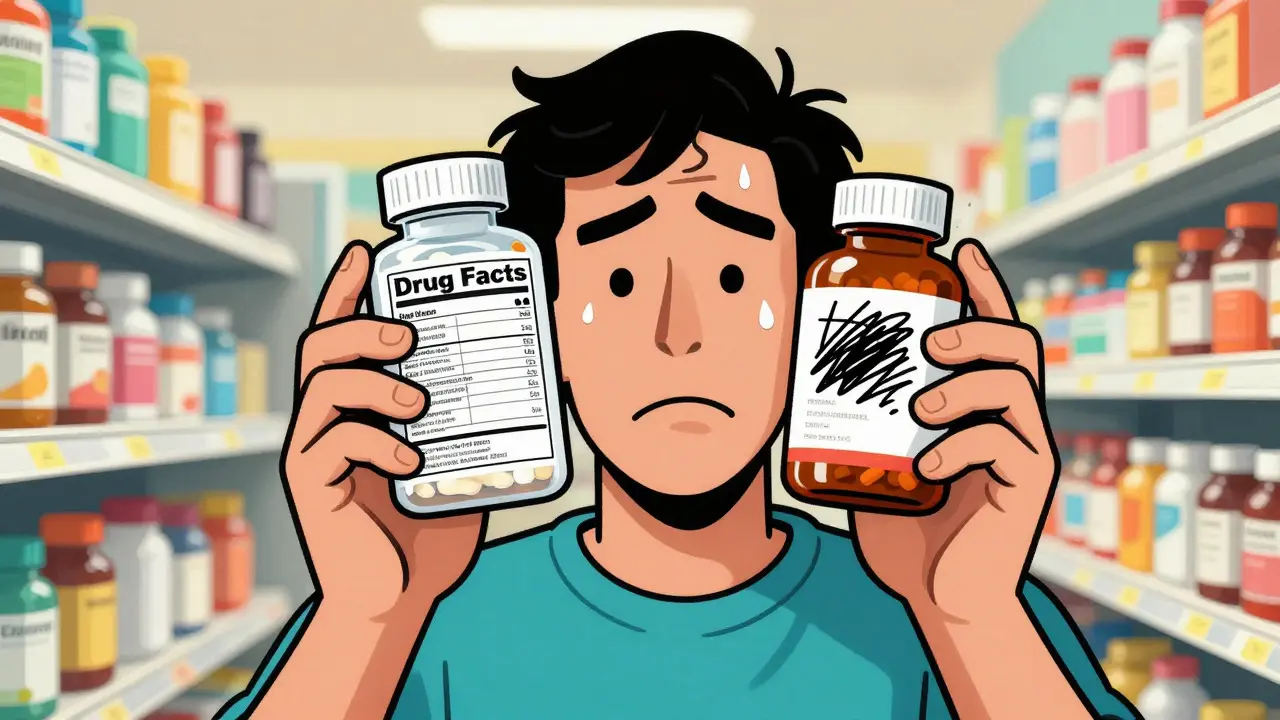
Grab a bottle of any over-the-counter pain reliever or a multivitamin from your local pharmacy. Now look at the back labels. You’ll notice a stark difference: one has a rigid, standardized box called Drug Facts, while the other features a Supplement Facts panel that lists ingredients but rarely warns about how they might clash with your prescription meds. This gap isn’t just annoying; it’s a safety blind spot. Under the Dietary Supplement Health and Education Act (DSHEA) of 1994, supplements are treated differently than drugs. While medications must prove safety before hitting shelves, supplements operate under a post-market system where manufacturers handle the risk assessment. The result? Only about 12.7% of popular supplements include any drug interaction warnings, compared to nearly all prescription drugs.
If you take daily medication, understanding this distinction is critical. You don’t need a medical degree to decode these labels, but you do need to know where to look and what to ignore. Here’s how to navigate the fine print so you can make informed choices without guessing.
The Two Worlds of Labeling: Drugs vs. Supplements
To read a label effectively, you first have to recognize which regulatory framework governs it. The U.S. Food and Drug Administration (FDA) enforces strict rules for both, but the requirements diverge significantly.
- Prescription and OTC Drugs: These follow the Federal Food, Drug, and Cosmetic Act. They require pre-market approval for safety and efficacy. Their labels use the standardized 'Drug Facts' format mandated since 1999. This format includes seven specific sections: Active Ingredients, Purpose, Uses, Warnings, Directions, Other Information, and Inactive Ingredients. Because the FDA requires comprehensive interaction studies, about 97.3% of prescription medications have detailed interaction warnings on their labels.
- Dietary Supplements: Governed by DSHEA, these products do not require FDA approval before sale. Manufacturers are responsible for ensuring safety, but they are not legally required to list potential drug interactions. Instead, they must provide a 'Supplement Facts' panel showing serving size, amount per serving, and percent daily value. Allergen declarations for the eight major food allergens (milk, eggs, fish, shellfish, tree nuts, peanuts, wheat, soybeans) are mandatory under the Food Allergen Labeling and Consumer Protection Act of 2004, but interaction data is voluntary.
This regulatory split means that when you buy a vitamin, you’re trusting the manufacturer to disclose conflicts. When you buy ibuprofen, you’re relying on federal standards. Knowing this helps you adjust your scrutiny level accordingly.
Anatomy of a Drug Facts Label
When you pick up an OTC medication like acetaminophen or a cold remedy, the Drug Facts standardized label format designed by the FDA to ensure consistent presentation of active ingredients, warnings, and directions panel is your primary source of truth. It’s structured to be scannable, but most people skim past the most important section. Here’s what each part actually tells you:
- Active Ingredients: Lists the chemical name and milligram amount. If you’re allergic to aspirin, you’ll see "salicylates" here. This is where you check for duplicates if you’re taking multiple OTC products.
- Purpose: Categorizes the effect, such as "Pain Reliever" or "Antihistamine." This helps you avoid taking two products that do the same thing, which can lead to accidental overdose.
- Warnings: This is the gold mine for interaction info. According to FDA usability studies, 87% of critical interaction information lives here. Look for phrases like "Do not use with..." or "Consult a doctor if you take...". For example, many NSAIDs will warn against concurrent use with blood thinners like warfarin.
- Directions: Dosing instructions. Pay attention to maximum daily doses, especially if you’re combining this with a prescription that contains the same active ingredient.
Prescription labels go even deeper. They feature a "Black Box Warning," the FDA’s most serious safety alert, found on about 500 medications. If your prescription has one, read it twice. It often highlights severe risks, including dangerous interactions with common supplements or other drugs.
Decoding the Supplement Facts Panel
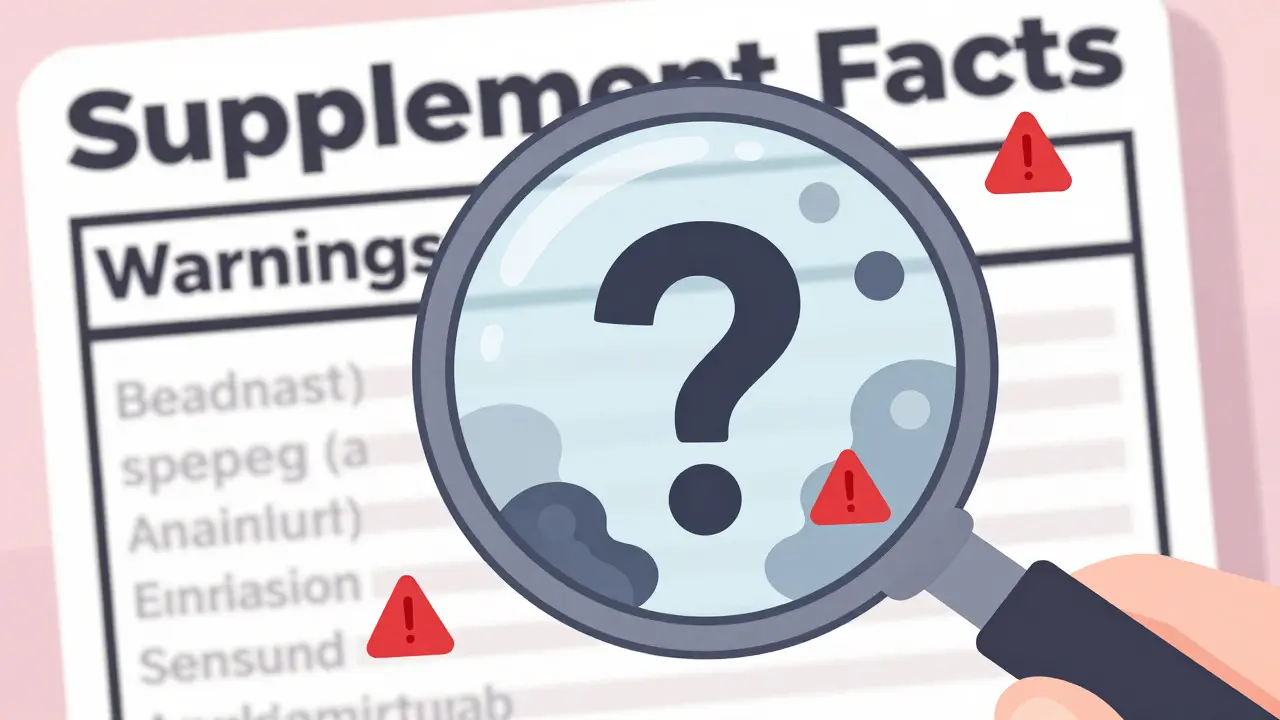
Now, flip that multivitamin over. The Supplement Facts mandatory panel on dietary supplement labels detailing serving size, nutrient amounts, and percent daily values looks similar to a nutrition label on food, but it lacks the warning structure of Drug Facts. Here’s how to extract value from it:
- Serving Size: Don’t assume one pill is one serving. Some labels define a serving as two capsules. If you take four pills, you’re consuming double the listed amounts. A 2023 University of Arizona study found that 43% of consumers misinterpret this, leading to unintended dosage levels.
- Amount Per Serving: Check the actual milligrams or micrograms. Compare this to the Recommended Daily Allowance (RDA). Taking 10x the RDA of a fat-soluble vitamin like Vitamin A can be toxic, whereas water-soluble vitamins are excreted more easily.
- Other Ingredients: This list includes fillers, binders, and proprietary blends. Proprietary blends are a red flag for transparency. In these blends, individual ingredient amounts are hidden. ConsumerLab.com’s 2023 analysis showed that 38% of supplements use this tactic to obscure quantities, making it hard to assess interaction risks based on dose.
- Allergens: Even if you’re not allergic, cross-contamination warnings matter if you have sensitivities. More importantly, some "natural" ingredients in this list are actually pharmacologically active.
Notice what’s missing? There’s no "Warnings" section listing drug interactions. That’s the gap you have to fill yourself using external resources.
Common High-Risk Interactions to Watch For
Since labels won’t always tell you, you need to know the big ones. The National Center for Complementary and Integrative Health (NCCIH) and various clinical studies highlight several frequent conflicts between popular supplements and common medications.
| Supplement | Medication | Potential Risk | Mechanism |
|---|---|---|---|
| Vitamin K / Green Tea Extract | Warfarin (Blood Thinner) | Reduced effectiveness of blood thinner | Vitamin K counteracts warfarin's mechanism, potentially increasing clotting risk. |
| St. John's Wort | Digoxin (Heart Medication) | Lower blood levels of digoxin | Induces liver enzymes that break down digoxin faster, reducing its therapeutic effect. |
| CoQ10 | Warfarin | Shortened prothrombin time | May reduce warfarin's anticoagulant effect by 15-25%, raising stroke risk. |
| Red Yeast Rice | Statins (e.g., Lovastatin) | Increased side effects | Contains monacolin K, the same active ingredient as lovastatin. Combining them doubles the dose. |
| Magnesium | Levothyroxine (Thyroid Med) | Reduced absorption of thyroid hormone | Magnesium binds to levothyroxine in the gut, preventing it from entering the bloodstream. |
These aren’t rare edge cases. The FDA’s Adverse Event Reporting System documented 1,960 supplement-related adverse events in 2022, with 28% involving potential drug interactions. One user on the American Diabetes Association forum reported a hypoglycemic episode with blood glucose dropping to 42 mg/dL after combining milk thistle with metformin without consulting their doctor. That’s a life-threatening drop caused by a lack of label warning.
Practical Steps to Verify Safety
So, how do you bridge the information gap? You don’t have to rely on guesswork. Here’s a practical workflow you can use every time you consider adding a new supplement or picking up an OTC med.
- Photograph the Label: Before leaving the store or opening the bottle, take a clear photo of the entire back label, including the ingredient list. This makes it easy to show your pharmacist or doctor later.
- Check the Warnings Section (for Drugs): Spend 30-60 seconds reading the "Warnings" section of any OTC drug. This is where 87% of critical interaction data resides. If it says "Consult a doctor if you take [your medication]," stop and call.
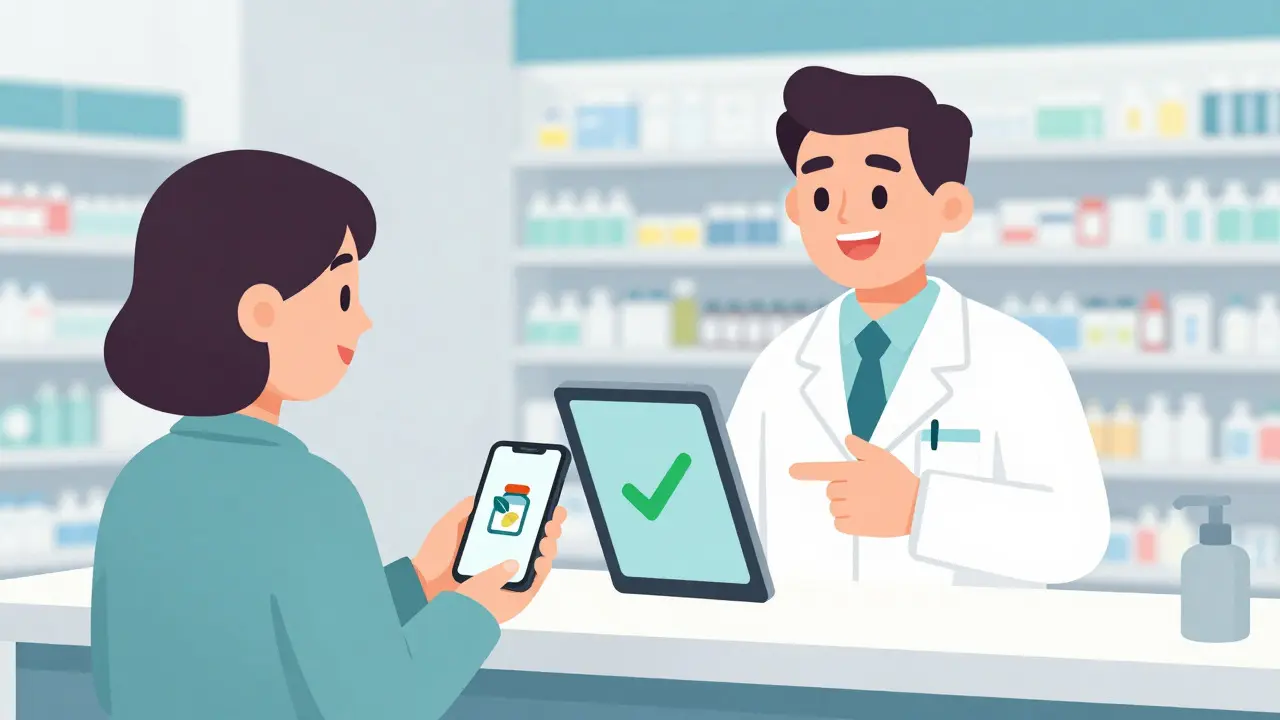
- Use Digital Tools: For supplements, use the free Medscape Drug Interaction Checker or similar databases. These tools analyze thousands of drug pairs. Input your prescription and the supplement’s active ingredients to get a risk rating.
- Ask Your Pharmacist: Pharmacists are trained to identify conflicts. Bring your photo or the product name. Ask specifically: "Does this interact with my current meds, and does the dose matter?"
- Timing Matters: Some interactions are minimized by spacing out doses. For example, taking magnesium two hours apart from levothyroxine can prevent absorption issues. Ask your provider if timing adjustments are safe for your specific regimen.
A 2023 medication safety program at the University of Florida found that consumers who received just 15 minutes of label-reading training reduced potential interaction risks by 63%. You don’t need a formal course; you just need a habit of checking before swallowing.
Why "Natural" Doesn't Mean "Safe"
One of the biggest misconceptions is that because a supplement is derived from plants or minerals, it’s inherently safer than synthetic drugs. This isn’t true. Red yeast rice, for instance, contains monacolin K, which is chemically identical to the prescription statin lovastatin. If you take red yeast rice alongside a statin, you’re essentially doubling your dose, increasing the risk of muscle pain and liver damage.
Similarly, high-dose Vitamin C (over 1,000 mg/day) can alter gastrointestinal pH, which Express Scripts Pharmacy’s 2023 analysis showed decreases the efficacy of certain antiretroviral medications by 22%. The body doesn’t distinguish between "natural" and "synthetic" when processing chemicals; it responds to molecular structure and concentration.
This is why Dr. Paul Offit, Director of the Vaccine Education Center at Children's Hospital of Philadelphia, stated in a 2022 JAMA commentary that the absence of mandatory drug interaction warnings on supplement labels represents one of the most significant patient safety gaps in modern medicine. Until regulations catch up, you are the final line of defense.
Frequently Asked Questions
Do I need to tell my doctor about every supplement I take?
Yes. The American Medical Association recommends physicians review patients' supplement use during annual exams. Since only 12.7% of supplements list interactions, your doctor needs the full picture to avoid conflicts. Bring a list of all supplements, including dosages, to every appointment.
What should I do if a supplement label says "Proprietary Blend"?
Be cautious. Proprietary blends hide individual ingredient amounts, making it hard to assess dose-dependent interactions. If you take sensitive medications, ask your pharmacist if the total blend amount could pose a risk, or choose a brand that discloses individual quantities.
Are OTC drug labels more reliable than supplement labels for interaction info?
Generally, yes. OTC drugs follow the FDA-mandated Drug Facts format, which requires specific warning sections. About 94% of OTC medications include interaction warnings, whereas only a small fraction of supplements do. Always read the Warnings section on OTC drugs carefully.
Can I take supplements and medications at the same time?
It depends on the specific pair. Some interactions are prevented by spacing doses (e.g., taking calcium away from thyroid meds), while others are unavoidable (e.g., St. John's Wort and digoxin). Always check with a healthcare provider for your specific combination rather than assuming timing solves all problems.
How can I find out if my supplement interacts with my prescription?
Use online tools like the Medscape Drug Interaction Checker, consult your pharmacist, or ask your doctor. Since supplement labels rarely list interactions, these external resources are essential for verifying safety before starting a new product.