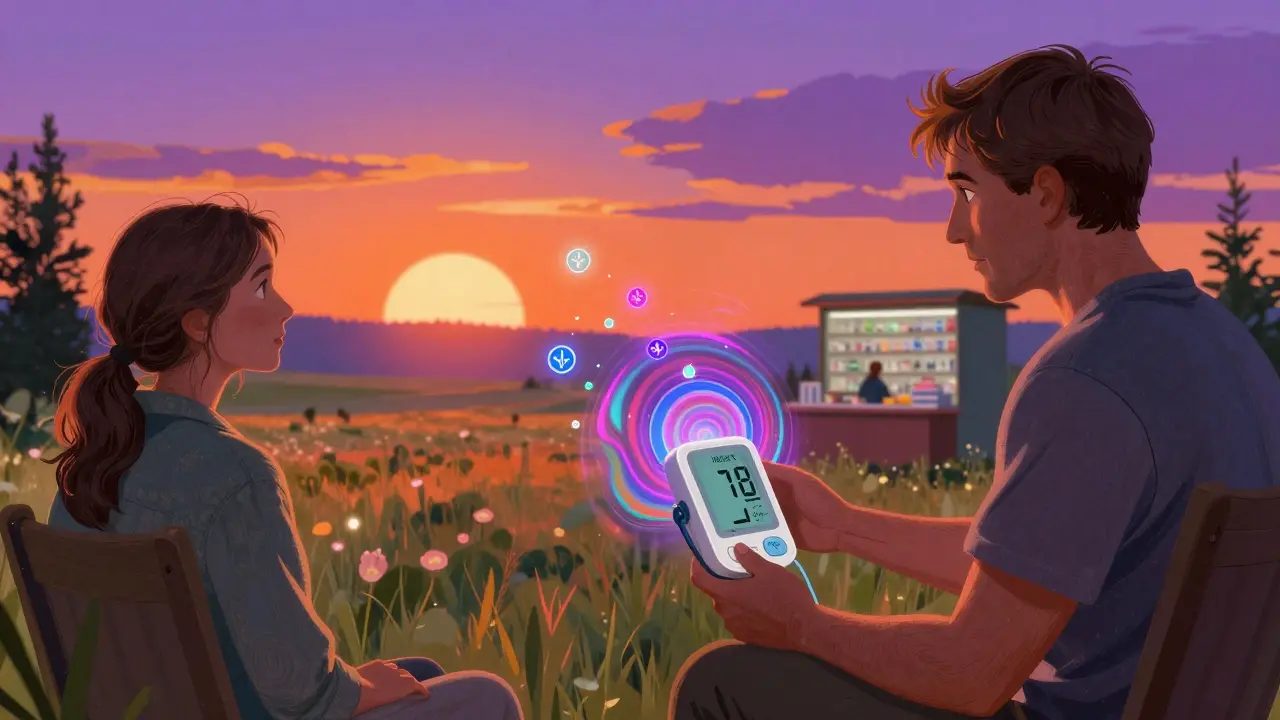
Side Effect Risk Calculator
This calculator uses data from rural telehealth programs showing that patients in remote areas have 23% higher preventable drug reactions than urban areas. Your risk score combines:
- Medication type (blood thinners, antidepressants, etc.)
- Your age group (older adults have higher risk)
- Rural location (limited access to care increases risk)
Why Rural Patients Need Better Side Effect Monitoring
Living far from a hospital doesn’t mean you should risk dangerous side effects from your meds. In rural areas, patients often wait days or weeks to see a doctor after noticing something’s off-dizziness, swelling, confusion, or a rash. By then, it’s too late. A 2020 Health Affairs study found rural patients suffer 23% higher rates of preventable drug reactions than those in cities. These aren’t just inconveniences. They’re hospital trips, ER visits, and sometimes, life-threatening events.
Telehealth isn’t just about seeing your doctor on a screen. It’s about catching problems early-before they become emergencies. With the right tools, a patient in Montana can report a new tremor, a patient in West Virginia can send a blood pressure reading, and a pharmacist in Mississippi can spot a dangerous trend-all before symptoms get worse.
How Telehealth Tracks Side Effects in Real Time
Modern telehealth for side effect monitoring uses three main tools working together: wearable sensors, smart pill dispensers, and symptom-tracking apps.
Devices like Bluetooth-enabled INR monitors let patients on blood thinners check their clotting levels at home. These gadgets send data directly to their care team. Studies show they’re accurate within ±3% for blood pressure and ±2 beats per minute for heart rate-close enough to trust. Smart pill dispensers like Hero Health track whether a patient took their pill. One 2021 study found they caught missed doses with 85% accuracy.
Apps that ask simple questions-“Did you feel dizzy today?” “Any nausea?”-are surprisingly effective. A 2022 study in the Journal of Telemedicine and Telecare showed these symptom reports matched in-person assessments 78% of the time. That’s better than many patients remember to tell their doctor during a rushed 10-minute visit.
What Works: Real Programs Making a Difference
The University of Mississippi Medical Center started a program in 2019 to monitor patients on warfarin, a common blood thinner. They gave out Bluetooth INR monitors and scheduled weekly video calls with pharmacists. Result? 92% of patients stayed in the program for over a year. That’s rare in rural care, where dropout rates often hit 50%.
In Oklahoma, a rural clinic teamed up with pharmacists to run daily check-ins with patients on antidepressants. They used a simple app that flagged when someone reported new confusion or suicidal thoughts. Within six months, hospital visits for psychiatric drug side effects dropped by 38%.
These programs don’t need fancy tech. They need structure: regular check-ins, clear escalation rules, and someone who follows up. A nurse or pharmacist calls if a patient misses a daily report. They don’t wait for an emergency.
The Tech Barriers Still Holding People Back
Not everyone can use a smartphone app. In rural areas, 28% of adults lack reliable broadband, according to the FCC’s 2023 report. Some areas still rely on 3G. Video calls freeze. Apps crash. Patients give up.
Older patients-especially those over 65-struggle even more. Pew Research found 34% of rural seniors say they don’t know how to use the apps. One patient in West Virginia told Healthcare.gov: “The video was so pixelated, my doctor couldn’t see my shaking hands.”
Even when the tech works, the learning curve is steep. Rural clinics report patients need two to three training sessions just to use the monitoring tools. Older adults need even more-on average, 3.2 sessions. That’s time clinics don’t always have.
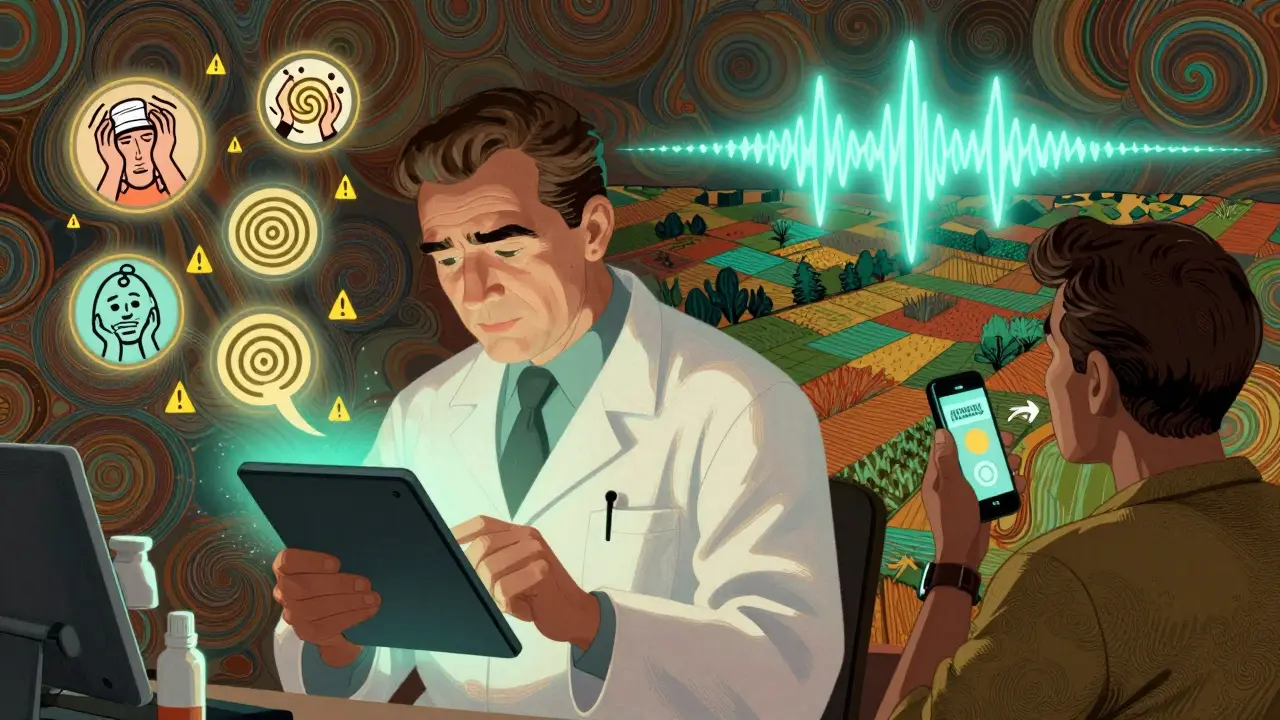
Who’s Responsible When Something Goes Wrong?
Telehealth doesn’t replace your doctor-it just gives them more data. But who’s watching that data? Too often, no one.
A 2022 AHRQ report found that 33% of rural telehealth programs lack clear follow-up rules. A patient reports nausea. The system logs it. But no one calls back. Days pass. The nausea turns into dehydration. Then a hospital visit.
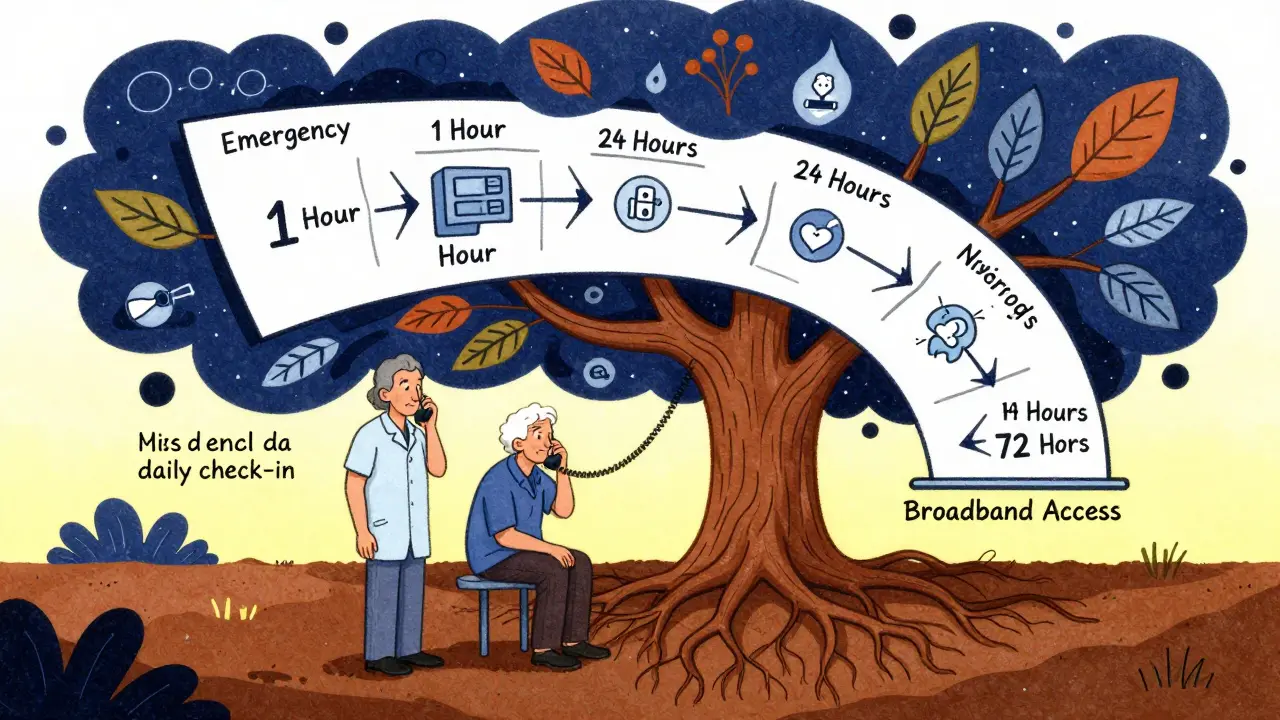
Successful programs have tiered responses:
- Immediate (within 1 hour): Trouble breathing, chest pain, swelling of the face-call 911 and notify the care team.
- Within 24 hours: Persistent vomiting, new confusion, severe dizziness-schedule a video call or phone check-in.
- Within 72 hours: Mild headache, slight fatigue-send a message, adjust meds if needed.
Without these rules, telehealth becomes a digital mailbox-full of messages, but no one reading them.
Why Pharmacists Are the Secret Weapon
Doctors are busy. Nurses are stretched thin. But pharmacists? They’re trained to know every drug, every interaction, every possible side effect.
The American Pharmacists Association found that when pharmacists lead telehealth monitoring, medication adherence jumps from 62% to 89%. At Vanderbilt University, pharmacists managing side effect checks cut severe reactions by 43%.
Pharmacists can spot patterns: “Your blood pressure dropped after you started this new antibiotic.” “Your INR spiked after you switched brands of warfarin.” They don’t need to wait for a doctor’s appointment. They can call, adjust the dose, or warn the patient-immediately.
That’s why the American Medical Association now recommends placing pharmacists at the center of rural telehealth side effect programs.
The Big Catch: Money and Fair Pay
Medicare pays $51 for every 20 minutes of remote monitoring. That’s it. Private insurers? Only 63% of them pay anything close to that.
For a rural clinic with three staff members running telehealth for 50 patients, that’s not enough to cover time, training, and tech. Many clinics just can’t afford to run these programs unless they get outside funding.
And there’s another problem: when big urban telehealth companies start offering services to rural patients, they often undercut local providers. A 2022 study found that urban telehealth services can reduce rural hospital revenue by 15%. That means fewer local jobs, fewer local clinics, and less long-term care.
Without fair reimbursement, telehealth won’t survive in rural areas. It’ll just become another service that helps people-but hurts the places they live.
What’s Next: AI, Wearables, and Better Access
The future is getting smarter. In 2023, the FDA approved AI tools like IBM Watson Health’s MedSafety system. It scans patient reports and flags possible side effects with 84% accuracy-before the patient even realizes something’s wrong.
Wearables are catching on too. A pilot in Arkansas uses sensors to detect subtle movement changes caused by antipsychotic drugs. It caught side effects 91% of the time.
CMS also started paying $27 per day for asynchronous monitoring-meaning patients can send text updates, voice notes, or photos anytime. No video call needed. That’s huge for people with bad internet.
And the government is finally acting. The FCC’s Rural Digital Opportunity Fund is pouring $20.4 billion into broadband by 2025. That’s the foundation everything else needs.
What Patients Can Do Right Now
If you’re on medication and live far from a clinic:
- Ask your provider if they offer telehealth side effect monitoring. Don’t wait for them to bring it up.
- Request a simple app or device to track symptoms. Even a paper log emailed weekly helps.
- Know your warning signs: swelling, confusion, chest pain, fainting, rash, or unusual bleeding.
- Don’t be afraid to call your pharmacist. They’re your best ally.
- If tech is too hard, ask for phone check-ins. Audio-only is covered by Medicare now.
You don’t need to be tech-savvy to stay safe. You just need someone who cares enough to listen.
What Clinics and Providers Must Change
For rural clinics to make telehealth work:
- Assign a dedicated care coordinator-someone whose job is to follow up on reports.
- Integrate monitoring tools with your electronic health record (Epic, Cerner, etc.). No more manual data entry.
- Train staff to recognize when a patient is struggling with tech. Offer in-person help, even if it’s just once a month.
- Use multilingual materials. 1 in 5 rural patients speaks a language other than English.
- Push for fair reimbursement. Advocate with state and federal reps. This isn’t optional-it’s life-saving.
Telehealth isn’t a luxury. It’s the only way many rural patients survive their treatment. Get it right, or don’t bother.
Frequently Asked Questions
Can telehealth really catch dangerous side effects before they become emergencies?
Yes. Programs using real-time monitoring-like Bluetooth INR devices for blood thinners or symptom-tracking apps for antidepressants-have reduced hospitalizations by 31% in rural areas. One patient in Montana avoided a brain bleed because his INR trended high two days before symptoms appeared. The system flagged it, his pharmacist called, and his dose was adjusted. That’s the power of timely data.
What if I don’t have good internet in my area?
You don’t need high-speed internet. Medicare now covers audio-only telehealth visits for side effect checks. You can call in, use a landline, or even send voice messages through secure apps. Some programs let you text symptoms or use a simple phone-based system that calls you daily. The goal is connection-not video quality.
Are these programs only for older adults?
No. While older adults are the largest group using telehealth for side effects, younger patients with chronic conditions-like epilepsy, diabetes, or mental health disorders-are benefiting too. A 2023 study showed rural teens on ADHD meds had 40% fewer emergency visits when their caregivers used weekly symptom check-ins via text.
Who pays for the devices and apps?
Many programs provide devices at no cost to patients, especially if they’re on Medicare or Medicaid. Some pharmaceutical companies, like Pfizer and Merck, fund monitoring tools for patients on their medications. Clinics may also use grants from federal or state rural health programs. Ask your provider-they often know where to get funding.
What if I’m not comfortable using technology?
You’re not alone. Many patients feel this way. The best programs offer in-person setup help-even if it’s just one visit. Some clinics send a community health worker to your home to install the app or device. Others use phone-based systems where you press buttons to report symptoms. No smartphone needed. Your safety matters more than your tech skills.
Is telehealth monitoring as accurate as seeing a doctor in person?
For most side effects-like nausea, dizziness, mood changes, or lab value trends-yes. In fact, patients report symptoms more honestly at home than in a clinic. The exception is physical exams: swelling you can’t see, rashes you can’t describe, or tremors too subtle for a camera. That’s why the best programs combine remote monitoring with occasional in-person visits every few months.
CHETAN MANDLECHA
December 23, 2025 AT 14:08Interesting piece. In India, we’ve been doing this for years with basic SMS-based symptom check-ins-no smartphone needed. Elderly patients with hypertension just reply 'OK' or 'Not good' to daily texts. Works surprisingly well. Tech doesn’t have to be fancy to save lives.
Lu Jelonek
December 23, 2025 AT 19:12As someone who grew up in rural Appalachia, I can’t stress enough how vital this is. My grandmother missed three doses of her blood thinner because the app kept crashing. She didn’t want to admit it-thought she was ‘too old’ to figure it out. That’s the real barrier: shame, not tech. We need compassionate onboarding, not just instructions.
Bartholomew Henry Allen
December 25, 2025 AT 09:26Stop wasting taxpayer money on apps. The real problem is government failure to fix rural broadband. No tech solution works if the infrastructure is 1995. Let’s fund fiber to every farm before we hand out smart pill dispensers. This is band-aid medicine wrapped in Silicon Valley buzzwords.
claire davies
December 27, 2025 AT 03:35Oh my goodness, this article made me tear up a little. I remember my neighbor in Cornwall who lived alone with diabetes and a $20 flip phone. Her daughter set up a weekly 5-minute voice call with the pharmacist-just enough to say ‘I’m dizzy’ or ‘No appetite.’ No app. No video. Just a human voice asking, ‘Are you safe today?’ That’s the magic. Not the algorithm. Not the sensor. Just someone who remembers to call. We’ve lost that in our rush to digitize everything.
Andy Grace
December 27, 2025 AT 08:33My uncle in Tasmania used a paper log and mailed it in. The clinic scanned it and called if something looked off. Simple. Reliable. No Wi-Fi needed. Maybe we’re overcomplicating this. Sometimes the most elegant solution is the oldest one.
Delilah Rose
December 28, 2025 AT 07:15I’ve been working in rural telehealth for a decade and I can tell you this: the real game-changer isn’t the tech-it’s the trust. Patients won’t report chest pain if they think they’re being judged for ‘bothering’ the system. Programs that train staff to say ‘Thank you for telling me’ instead of ‘Why didn’t you report this sooner?’ see 3x higher compliance. It’s not about data-it’s about dignity. And that’s something no algorithm can replicate.
Spencer Garcia
December 29, 2025 AT 05:25Pharmacists are the unsung heroes here. They know the drugs better than anyone. If your clinic doesn’t have one involved in monitoring, push for it. It’s the single most cost-effective upgrade you can make.
Abby Polhill
December 29, 2025 AT 23:39From a clinical informatics standpoint, the integration gap is the elephant in the room. EHR interoperability with wearable data streams remains fragmented-most platforms still rely on manual entry or proprietary APIs. Without HL7 FHIR compliance, you’re just creating data silos masquerading as innovation. We need standardized ontologies for adverse event reporting across telehealth modalities, not just more apps.