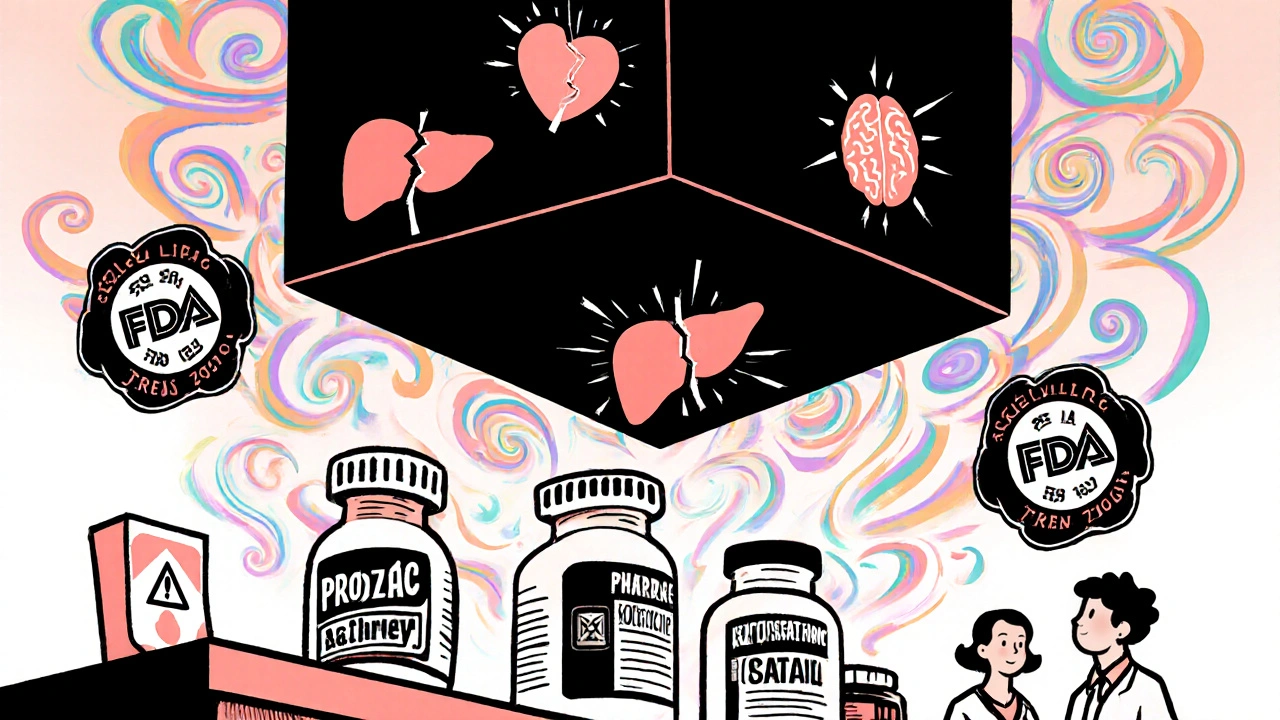
When you pick up a prescription, you might not notice it at first - a small, bold box printed in black on the medication insert. But that box? It’s not just formatting. It’s the FDA’s strongest possible warning: black box warning. And if your medication has one, it means something serious could happen. Not always. Not even often. But enough that doctors and regulators treat it like a red flag you can’t ignore.
What Exactly Is a Black Box Warning?
A black box warning - officially called a boxed warning - is the highest safety alert the U.S. Food and Drug Administration (FDA) can require on a prescription drug. It’s not a suggestion. It’s a legal requirement. The FDA puts it there when evidence shows the drug can cause serious, life-threatening, or even fatal side effects. These aren’t mild nausea or dizziness. These are things like liver failure, heart attacks, suicidal thoughts, or severe allergic reactions that can lead to death.There’s a reason it’s called a black box: it’s visually impossible to miss. The warning is printed in a thick black border, usually at the top of the prescribing information. It’s not buried in fine print. It’s front and center. That’s intentional. The FDA wants doctors to see it before they write the prescription. And patients to see it before they swallow the pill.
As of 2023, more than 400 prescription medications carry this warning. That’s about 15% of all prescription drugs on the market. Some of the most common ones include antidepressants like fluoxetine (Prozac), diabetes drugs like rosiglitazone, cancer treatments like azacitidine, and even birth control pills with estrogen. It’s not rare. It’s common - but misunderstood.
Why Do These Warnings Exist?
You might think the FDA tests every drug thoroughly before it hits the shelves. And they do - but not perfectly. Clinical trials involve thousands of people, but not millions. Rare side effects, especially ones that take years to show up, often don’t appear until the drug is being used by hundreds of thousands of real patients.That’s where post-market surveillance comes in. The FDA’s MedWatch program collects reports from doctors, pharmacists, and patients about unexpected side effects. If enough reports point to a dangerous pattern - say, a specific heart rhythm problem linked to a new arthritis drug - the FDA investigates. If the evidence is strong enough, they require the manufacturer to add a black box warning.
The FDA only mandates a black box warning in four situations:
- The drug has been shown to cause serious or life-threatening side effects that outweigh its benefits for some patients.
- The side effects can be avoided if the drug is used in a specific way - like avoiding it in pregnant women or people with certain medical conditions.
- The drug is approved only for very limited use, like treating a rare cancer when other treatments failed.
- The drug is especially dangerous for certain groups - like children, the elderly, or people with kidney disease.
Once added, these warnings rarely come off. Removing one requires overwhelming new evidence that the risk was overstated. Since 2000, only 12 black box warnings have been fully removed.
Does a Black Box Warning Mean I Shouldn’t Take the Drug?
This is the question most patients ask - and the one most doctors dread answering.No. A black box warning doesn’t mean the drug is unsafe. It means the drug is powerful. And like any powerful tool, it needs careful handling.
Take antidepressants. Almost all carry a black box warning for increased risk of suicidal thoughts in young adults under 25. But here’s the catch: untreated depression also carries a high risk of suicide. For many patients, the benefits of taking the medication - feeling better, sleeping better, getting back to work - far outweigh the risk. That’s why doctors don’t avoid these drugs. They monitor closely.
Same with biologic drugs for rheumatoid arthritis. Some carry warnings about increased risk of tuberculosis or lymphoma. But for someone in constant pain, unable to walk or hold a cup of coffee, the trade-off makes sense. The drug doesn’t cause cancer in most people. But in a small number, it can. So doctors test for TB first. They screen. They follow up. They don’t just hand out the prescription and walk away.
As one pharmacist in Wellington put it: “It’s not about avoiding the drug. It’s about using it wisely.”
How Do Doctors Decide to Prescribe a Drug With a Black Box Warning?
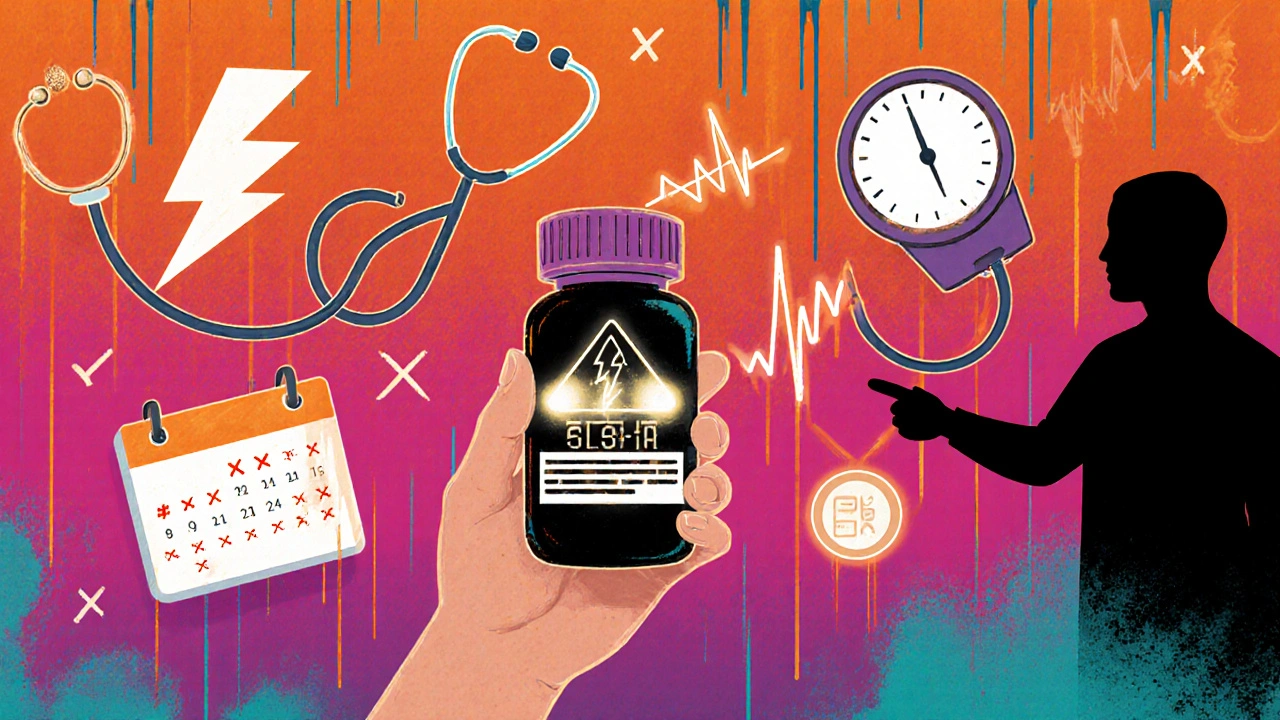
It’s not a simple yes or no. Doctors go through a mental checklist:- Is this the best option? Are there safer alternatives? For some conditions, yes. For others, no. If you have advanced cancer and every other drug failed, a drug with a black box warning might be your only shot.
- Am I the right patient? Does your age, medical history, or other medications increase your risk? A drug that’s risky for someone with liver disease might be fine for someone healthy.
- Can we reduce the risk? Will you need blood tests? Regular checkups? Avoiding alcohol? Getting a vaccine first? Doctors use these warnings to build safety nets around the treatment.
- Have I talked to you about it? Legally and ethically, doctors must discuss the warning with you. Not just say, “There’s a warning.” But explain what it means for you.
Studies show that 78% of patients want to know about black box warnings - but only 42% remember their doctor actually telling them. That gap matters. If you don’t understand the risk, you can’t make an informed choice.
What Should You Do If Your Medication Has a Black Box Warning?
Don’t panic. Don’t stop cold. Do this:- Read the warning. Don’t just glance. Read the actual text. It’s usually in the patient information leaflet. Look for words like “risk of,” “may cause,” “contraindicated in.”
- Ask your doctor three questions:
- What’s the specific risk for me?
- How will we monitor for it?
- What signs should I watch for and call you about?
- Know your warning signs. For example, if you’re on a drug with a suicide risk warning, watch for sudden mood changes, talking about death, or withdrawing from friends. If it’s a heart-related warning, watch for chest pain, irregular heartbeat, or shortness of breath. Write them down.
- Don’t skip follow-ups. If your doctor schedules blood tests or an EKG, go. Those aren’t just routine. They’re safety checks.
- Tell every provider. When you see a new doctor, dentist, or pharmacist, say: “I’m on a medication with a black box warning.” They need to know before they prescribe something else.
Pharmacists are your allies here. If you’re confused, ask them. They read the full prescribing information. They know what to watch for. And they’ve seen patients panic - and then realize the warning isn’t a death sentence.
Why Do Some People Still Take These Drugs Even After the Warning?
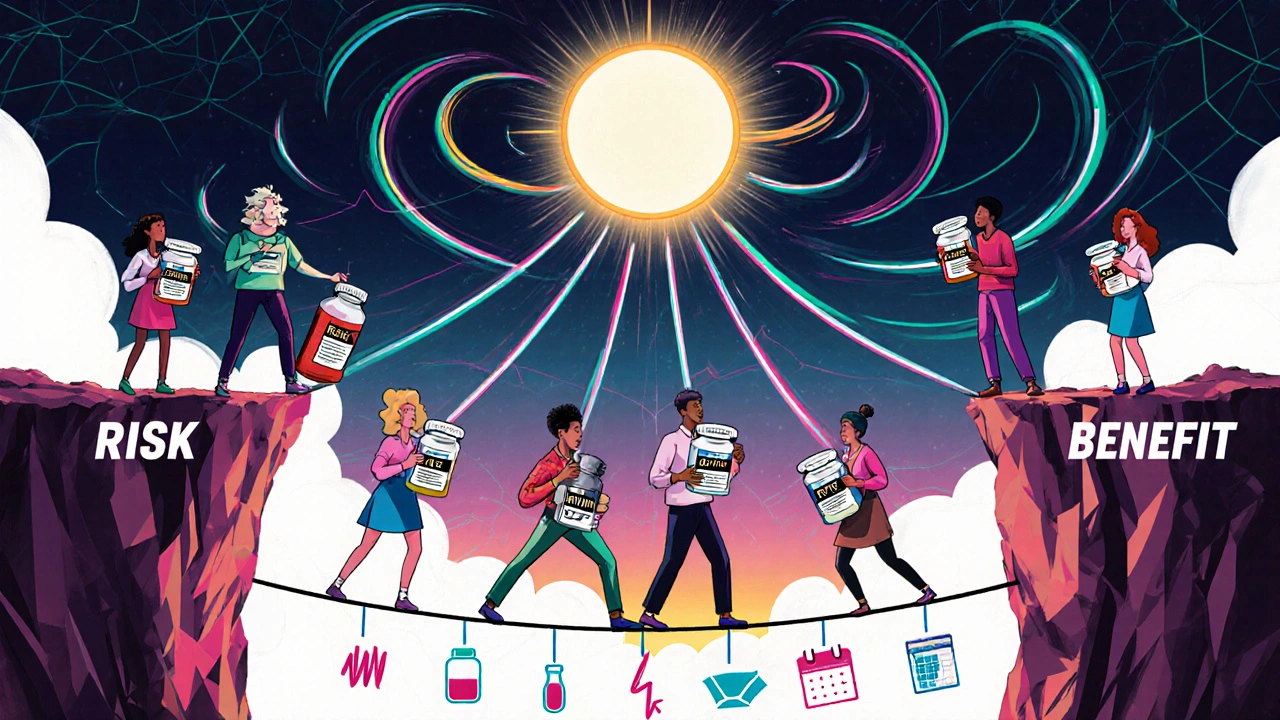
Because sometimes, the alternative is worse.Take rosiglitazone, a diabetes drug that got a black box warning in 2007 for increased heart attack risk. After the warning, prescriptions dropped by 70%. But 3.8 million people still took it. Why? Because for many, it was the only drug that kept their blood sugar under control. And uncontrolled diabetes causes strokes, kidney failure, and amputations. So they took the risk - with monitoring.
Same with cancer drugs. Some have warnings about sudden death from heart failure. But if you have stage 4 cancer and no other options, you’ll take it. You’ll weigh the chance of living six more months against the chance of dying suddenly. That’s not a choice you make lightly. But it’s a choice you make with your doctor - not with a Google search.
That’s why media coverage matters. When a drug gets a black box warning, headlines scream “DANGER.” But the real story is more complex. It’s not about fear. It’s about informed risk.
What’s Changing in the Future?
The system isn’t perfect. Warnings take months - sometimes years - to appear after a danger is spotted. But things are improving.In 2025, the FDA is launching a new AI-driven system to scan patient reports and hospital records for safety signals. It’s expected to flag risks 40% faster than before. That means warnings might come sooner - before more people are harmed.
They’re also testing “dynamic labeling” - digital medication guides that update in real time as new data comes in. Imagine your pharmacy app popping up a notice: “New safety alert for your medication. Here’s what you need to know.” That’s the future.
Right now, though, the black box is still the gold standard. It’s blunt. It’s loud. It’s not always clear. But it’s the best tool we have to say: “This drug can kill you - but it might also save you.”
Final Thought: It’s Not About Avoiding Risk. It’s About Managing It.
Medicine isn’t about zero risk. It’s about choosing the least bad option. A black box warning doesn’t mean “don’t take this.” It means “take this with eyes wide open.”If you’re on a drug with this warning, you’re not being experimented on. You’re being protected. Your doctor isn’t ignoring the risk. They’re managing it. And you? You’re not helpless. You’re part of the team. Ask questions. Watch for signs. Show up for checkups. That’s how you turn a warning into a safety net - not a scare tactic.
Does a black box warning mean the drug is banned or unsafe?
No. A black box warning does not mean the drug is banned or unsafe for everyone. It means the drug carries a risk of serious, potentially life-threatening side effects. Many people take these medications safely under careful medical supervision. The warning exists so doctors and patients can weigh the benefits against the risks before starting treatment.
Can I stop taking my medication if it has a black box warning?
Never stop taking a prescription medication without talking to your doctor first. Stopping suddenly can be dangerous - especially for drugs like antidepressants, seizure medications, or blood pressure pills. If you’re worried about the warning, ask your doctor about alternatives or whether you need more monitoring. But don’t make a decision on your own.
Are black box warnings only in the United States?
The term “black box warning” is specific to the U.S. FDA. Other countries have similar systems - like the European Medicines Agency’s “contraindications” or “precautions” - but they don’t use the same visual format. The strength and clarity of the warning vary by country. If you’re traveling or taking medication from outside the U.S., check your local health authority’s guidelines.
How long does it take for a black box warning to be added after a side effect is reported?
It can take months to years. The FDA needs strong, consistent evidence from multiple reports before acting. Historically, it took 18-24 months. But since 2022, with improved data systems, the average time has dropped to 6-9 months. New AI tools set to launch in 2025 aim to cut that even further.
Can a black box warning be removed?
Yes, but it’s rare. Only 12 black box warnings have been fully removed since 2000. Removing one requires overwhelming new evidence that the risk is much lower than originally thought - or that the warning was based on flawed data. The FDA sets a very high bar because once a warning is in place, it protects patients.
Do over-the-counter drugs have black box warnings?
No. Black box warnings only apply to prescription medications. Over-the-counter drugs have different labeling rules and may carry “Warnings” or “Precautions,” but nothing as strong or legally mandated as a black box warning. This is because prescription drugs are used under medical supervision and often carry higher risks.
Why do some people still get prescribed drugs with black box warnings?
Because for many conditions, there are no better options. For example, if someone has severe rheumatoid arthritis that doesn’t respond to other drugs, a biologic with a black box warning might be the only treatment that lets them walk again. The warning doesn’t mean the drug is bad - it means it’s powerful, and needs careful use.
Can I find out if my medication has a black box warning online?
Yes. Search the drug’s name + “FDA boxed warning” or visit the FDA’s website and use their drug database. Reputable sites like MedlinePlus, Mayo Clinic, and Drugs.com also list boxed warnings. But always confirm with your doctor or pharmacist - online sources can be outdated or misinterpreted.
Craig Ballantyne
November 20, 2025 AT 14:42Black box warnings are essentially risk stratification tools disguised as alarms. The FDA doesn't issue them lightly - they're the result of post-marketing pharmacovigilance data aggregation, often from MedWatch and FAERS. What's underappreciated is how these warnings are evidence-weighted, not just frequency-based. A 0.02% incidence of hepatotoxicity with statistical significance can trigger one. It's not about fearmongering; it's about calibrated risk communication.
Victor T. Johnson
November 21, 2025 AT 23:29Nicholas Swiontek
November 23, 2025 AT 16:42Love this breakdown. Seriously. I’ve seen patients panic over these warnings and stop meds cold - and then end up in the ER because their depression spiked or their blood sugar went nuclear. The real hero here is the doctor who takes the time to explain it like a conversation, not a lecture. That’s the difference between fear and empowerment.
Robert Asel
November 25, 2025 AT 16:25It is imperative to underscore that the black box warning is not a mere advisory construct; it is a legally mandated disclosure, codified under 21 CFR § 201.57, and its omission constitutes a violation of the Federal Food, Drug, and Cosmetic Act. The FDA's authority to enforce such labeling is derived from the Kefauver-Harris Amendments of 1962, which established the requirement for demonstrable efficacy and safety prior to marketing approval.
Shannon Wright
November 26, 2025 AT 05:22What I find so powerful about this is how it flips the script on patient agency. We’re not passive recipients of pills - we’re active participants in risk management. When a doctor says, ‘We’re going to monitor your liver enzymes every 6 weeks,’ that’s not bureaucracy - that’s partnership. And when you learn to recognize the warning signs - sudden fatigue, mood shifts, palpitations - you’re not just following instructions, you’re becoming your own safety net. That’s the kind of education that saves lives, not just prevents lawsuits.
vanessa parapar
November 27, 2025 AT 10:22Ben Wood
November 28, 2025 AT 22:04Sakthi s
November 30, 2025 AT 13:56Rachel Nimmons
November 30, 2025 AT 20:19The black box is just the tip. Did you know the FDA approves drugs based on trials funded by the manufacturers? And the trials are often designed to minimize side effects? They know the risks - they just don’t tell you until after you’re hooked. The real danger isn’t the drug - it’s the system that lets them sell it to you before they fully understand it.
Abhi Yadav
December 1, 2025 AT 02:43Julia Jakob
December 2, 2025 AT 22:52So the FDA adds these warnings after people die... and then acts like they’re protecting us? That’s not protection - that’s damage control. And the fact that they take years to act means hundreds, maybe thousands, get hurt before they bother. Meanwhile, we’re supposed to trust them? Nah. I read the warning. I still take it. But I don’t trust the system.
Robert Altmannshofer
December 3, 2025 AT 08:47Man, this is one of those posts that makes you feel less alone. I’ve been on a black box drug for 4 years. My doc and I treat it like a high-performance engine - regular tune-ups, no shortcuts, and we watch the gauges like hawks. I’ve had friends quit because they were scared. I get it. But I’m alive, working, laughing, hiking - and I didn’t get there by avoiding the warning. I got there by owning it. You’re not a lab rat. You’re a partner. And that’s worth more than any fear.