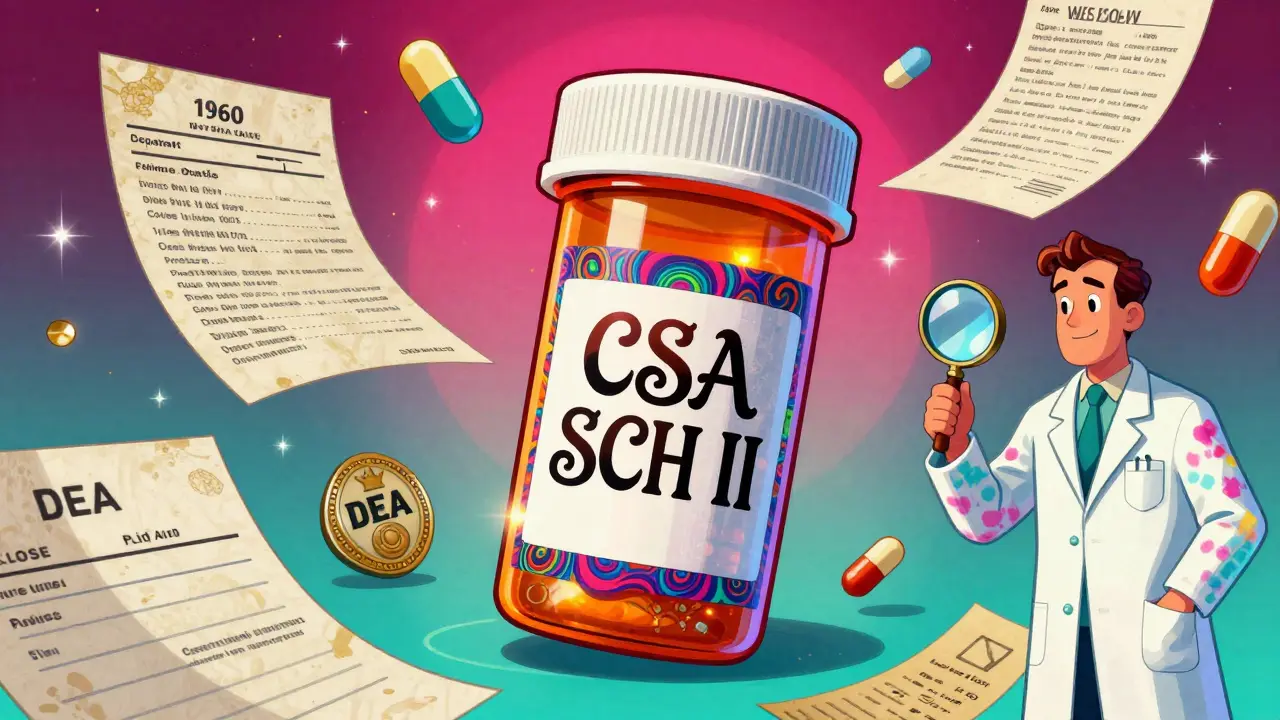
When you pick up a prescription for pain medication, anxiety relief, or sleep aid, the label on that bottle isn’t just a reminder to take your pills. It’s a legal document tied to a federal system designed to track who gets what, how much, and why. That system is the Controlled Substances Act (CSA), and it’s the reason your doctor writes certain prescriptions by hand, why some refills aren’t allowed, and why pharmacists ask for ID every time you pick up a bottle.
What Are Controlled Substances and Why Do They Have Special Labels?
Not every drug is treated the same under U.S. law. The Controlled Substances Act, passed in 1970, divides drugs into five categories-called schedules-based on three things: how likely they are to be abused, whether they have a medical use, and how dangerous they are if misused. These aren’t arbitrary groupings. They’re based on scientific reviews by the FDA and the Department of Health and Human Services, then finalized by the DEA. The label on your prescription bottle must include the drug’s schedule code. You might see something like "CSA SCH II" or "NARC" printed near the bottom. That’s not random. It tells the pharmacist, the DEA, and even law enforcement exactly what rules apply to that drug. A Schedule II drug like oxycodone has different rules than a Schedule IV drug like Xanax, and those differences show up right on the label.The Five Schedules: What Each One Means
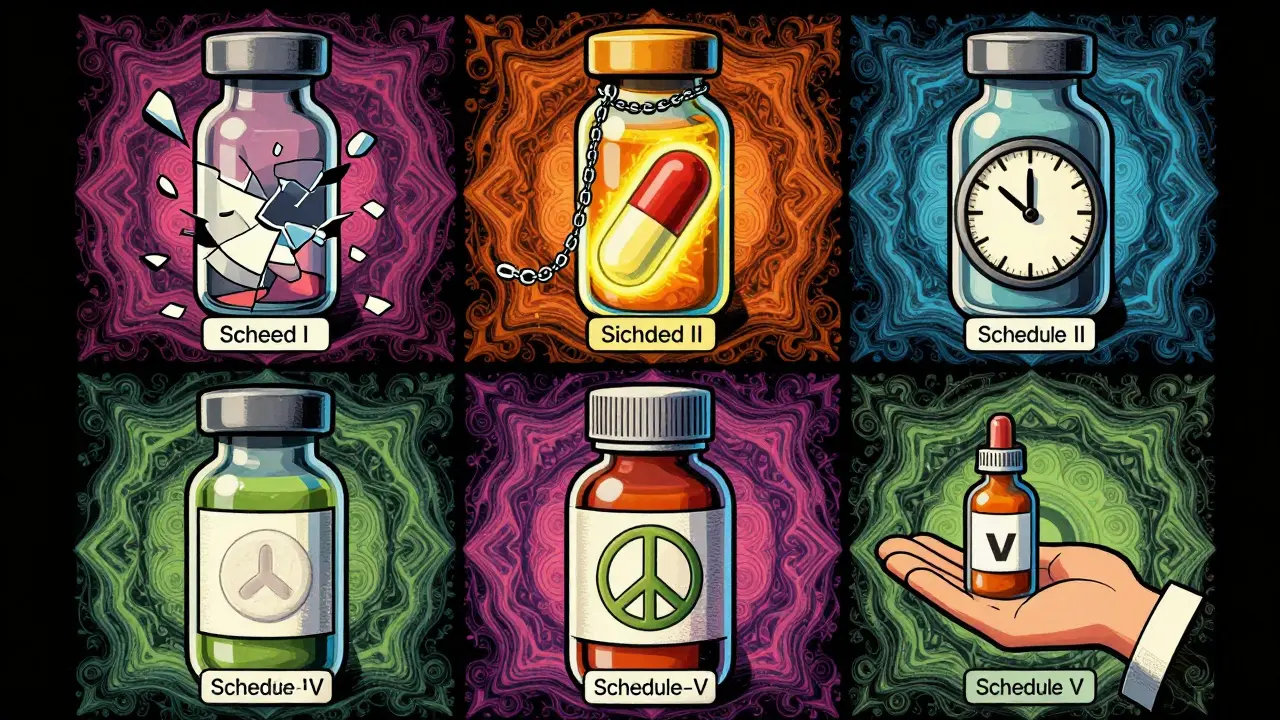
The five schedules aren’t just numbers-they’re legal categories with real-world consequences.- Schedule I: These drugs have no accepted medical use in the U.S. and a high potential for abuse. Examples include heroin, LSD, and (as of 2025) marijuana under federal law. You can’t get a prescription for these. They’re not sold in pharmacies. They’re not even studied in most hospitals without special federal approval.
- Schedule II: These drugs have high abuse potential but are used medically. Think fentanyl, morphine, Adderall, and oxycodone. They’re powerful. A single prescription can’t be refilled. You need a new written prescription every time-no calls, no texts, no emails. In 47 states, it must be on a special tamper-resistant paper. Electronic prescriptions are allowed in a few places, but even then, the system flags them for extra review.
- Schedule III: Moderate abuse potential. These include hydrocodone with acetaminophen (like Vicodin), ketamine, and some anabolic steroids. You can get up to five refills in six months. Electronic prescriptions are fine. These are the most commonly dispensed controlled substances in U.S. pharmacies-nearly 60% of all controlled prescriptions fall here.
- Schedule IV: Lower abuse potential. Benzodiazepines like Xanax, Valium, and sleep meds like Ambien fall here. Refills are allowed up to five times in six months. Most are prescribed electronically. Pharmacists see these every day.
- Schedule V: Lowest risk. These include cough syrups with tiny amounts of codeine, antidiarrheal meds with diphenoxylate, and pregabalin. Some can be bought over the counter, but only with a pharmacist’s approval. No DEA registration is needed for the pharmacy to stock them.
Here’s the catch: the same drug can be in different schedules depending on how it’s made. Pure codeine? Schedule II. Codeine mixed with acetaminophen in a 15mg tablet? Schedule III. Codeine cough syrup with only 1.5mg per 5ml? Schedule V. The label has to reflect that exact formulation. One tiny change in ingredients changes the legal status.
How Labels Work in Practice
The label on your controlled substance prescription isn’t just a reminder. It’s a compliance tool. It must include:- The patient’s full name
- The prescriber’s name and DEA number
- The drug name and strength
- The quantity dispensed
- The date dispensed
- The number of refills allowed
- The CSA schedule code (e.g., "CSA SCH III")
For Schedule II drugs, the original prescription must be physically presented to the pharmacy. No electronic copies. No screenshots. No faxes. That’s why your doctor’s office sometimes takes days to send your prescription in-it has to be printed, signed, and hand-delivered. One nurse in an oncology clinic told me it takes 15 extra minutes per Schedule II prescription just to verify, log, and file it.
For Schedule III-V drugs, electronic prescriptions are standard. The pharmacy’s system automatically checks the DEA database to confirm the prescriber is licensed. The label still shows the schedule, but the paperwork is lighter.
Why the System Is Both Necessary and Flawed
The DEA says the system works. It tracks 1,245 unique controlled substances across the country. Pharmacies report 92.7% of their controlled substance prescriptions are for Schedules III-V. That means the system is mostly handling lower-risk drugs, which is good. But the system also has glaring holes. Cannabis is the biggest example. It’s federally Schedule I-no medical use, high abuse potential. Yet 38 states allow medical cannabis. That creates chaos. A patient in California can legally get a cannabis prescription. But if they cross state lines, they’re carrying a Schedule I drug under federal law. Pharmacists in border towns get confused. Insurance won’t cover it. Doctors hesitate to recommend it. In 2023, the Department of Health and Human Services recommended moving cannabis to Schedule III. If that happens, it’ll be the biggest change to the system since 1970. It would mean doctors could prescribe it, refills would be allowed, and pharmacies could stock it like any other Schedule III drug. Another problem? The system doesn’t always match real-world risk. Tramadol, a Schedule IV painkiller, is addictive. Alcohol, which kills tens of thousands a year, isn’t controlled at all. Meanwhile, a Schedule V cough syrup with a trace of codeine requires more paperwork than a bottle of ibuprofen.What This Means for Patients
If you’re on a Schedule II drug, you need to plan ahead. No last-minute refills. If you’re traveling, bring extra. If you lose your prescription, you’re out of luck-you can’t get a replacement. Pharmacies won’t give you a single pill without a new, valid prescription. For Schedule III-V drugs, refills are easier. But pharmacists still have to log everything. If you’re on a long-term medication like gabapentin (Schedule V) or alprazolam (Schedule IV), your pharmacy may require you to pick it up in person, even if you’ve been taking it for years. That’s not because they don’t trust you-it’s because the law says they have to.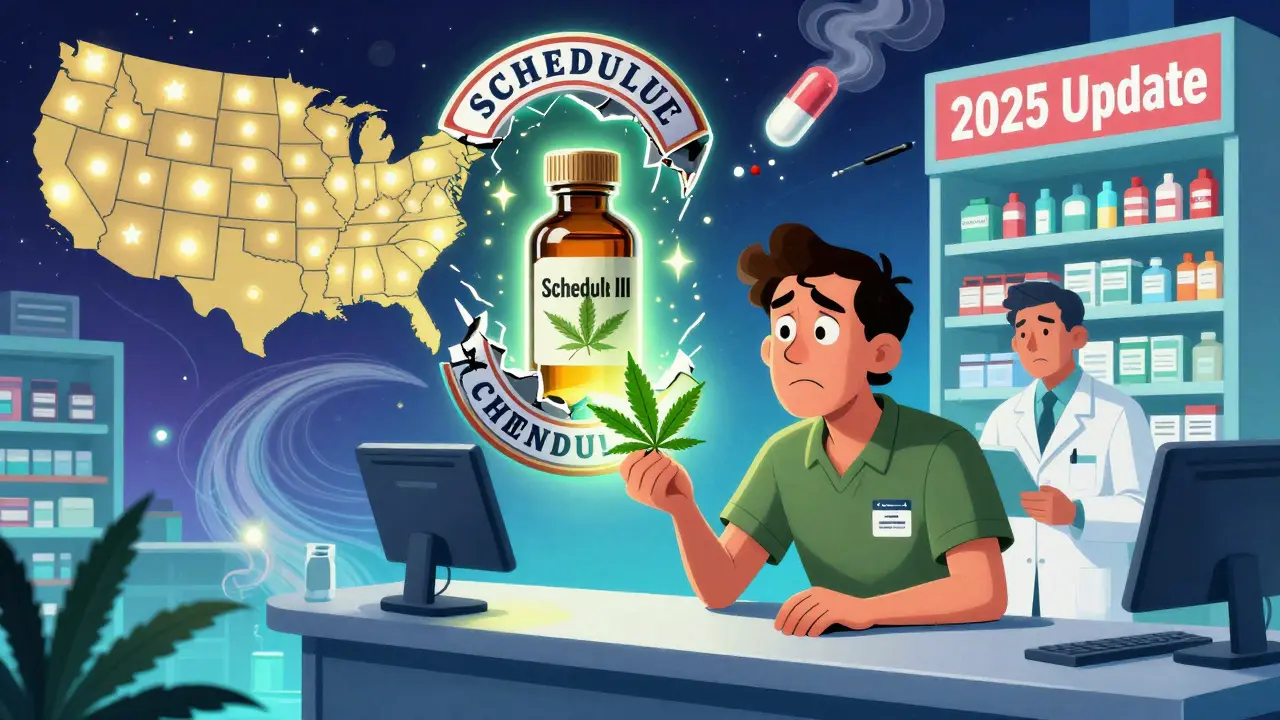
What’s Changing in 2025 and Beyond
The DEA’s 2023 Strategic Plan aims to cut the time it takes to reschedule a drug from two years to one. That’s a big deal. Right now, it takes forever to move a drug from one schedule to another-even when science says it should change. In 2025, the DEA updated its Controlled Substance Code Number list for the first time in over a year. Eight new synthetic opioids were added to Schedule I. That’s routine-new designer drugs pop up every year. But the real story is the potential rescheduling of cannabis. If it moves to Schedule III, it won’t just affect patients. It will change how pharmacies stock drugs, how insurers cover them, and how doctors write prescriptions. Experts predict we’ll see more changes. Some think we’ll need a sixth or seventh schedule in the next 15 years to better separate drugs with different risks. For now, the five-schedule system remains, even if it’s outdated.What You Should Do
If you’re prescribed a controlled substance:- Check the label for the schedule code. Know what rules apply.
- For Schedule II: Never run out. Plan refills weeks in advance.
- Keep your original prescription receipt. You may need it for insurance or travel.
- If you’re unsure about refills, ask the pharmacist. Don’t assume.
- Don’t share your medication. Even Schedule IV drugs can be dangerous if misused.
The system isn’t perfect. But it’s the one we have. Understanding it helps you avoid delays, fines, or worse-running out of medication when you need it most.
Why can’t I refill my Schedule II prescription?
Schedule II drugs, like oxycodone or fentanyl, have a high risk of abuse and dependence. Federal law prohibits refills to prevent overuse and diversion. Each prescription is valid only once. If you need more, your doctor must write a new one. This rule exists to protect you and others from addiction and illegal resale.
Can I get a Schedule III drug without a prescription?
No. All Schedule III drugs require a prescription from a licensed provider. While they have lower abuse potential than Schedule II drugs, they still carry risk. Some, like hydrocodone/acetaminophen, are among the most commonly prescribed painkillers. Even though refills are allowed, you cannot legally buy them over the counter.
Why is marijuana still Schedule I if it’s legal in my state?
Federal law and state law are separate. While 38 states allow medical marijuana, the federal government still classifies it as Schedule I-meaning no accepted medical use and high abuse potential. This creates legal conflicts. Doctors can recommend it in legal states, but they can’t prescribe it under federal law. Pharmacies can’t stock it federally, and insurance won’t cover it. A federal rescheduling to Schedule III is under review and could change this.
What does the DEA code on my prescription mean?
The DEA code (like "CSA SCH III" or "NARC") tells the pharmacy and the DEA which schedule the drug belongs to. This code triggers specific rules: how the prescription is written, whether refills are allowed, and how it’s recorded in federal databases. It’s not just for show-it’s a legal requirement for tracking controlled substances.
Are over-the-counter cough syrups with codeine really controlled?
Yes. Even cough syrups with small amounts of codeine (less than 200mg per 100ml) are Schedule V controlled substances. You can buy them without a prescription in some states, but only behind the pharmacy counter, with ID, and with a pharmacist’s approval. The limit is strict: too much codeine and it becomes Schedule III. That’s why you can’t just grab one off the shelf like you would with regular cold medicine.
How do I know if my medication is a controlled substance?
Check the prescription label. If it says "CSA SCH II," "CSA SCH III," or similar, it’s controlled. You can also ask your pharmacist directly. Common controlled substances include opioids (oxycodone, hydrocodone), stimulants (Adderall), benzodiazepines (Xanax), and sleep aids (Ambien). If your doctor says it’s "regulated," it’s likely controlled.
Harry Henderson
January 26, 2026 AT 15:17This system is a goddamn mess and everyone knows it. I got denied my oxycodone refill because some bureaucrat decided my doctor’s fax wasn’t ‘secure enough’-even though I’ve been on it for 5 years without issue. Meanwhile, my neighbor buys fentanyl patches off some guy on Instagram and nobody bats an eye. The law doesn’t protect us-it protects paperwork.
Kegan Powell
January 26, 2026 AT 23:45man i just wanna take my anxiety meds without being treated like a criminal 🤷♂️ i get why the rules exist but like... why does my xanax bottle have more paperwork than my car title? the system feels less like harm reduction and more like surveillance with a side of bureaucracy. also why is weed still schedule 1 but alcohol is just... free? 🤔
April Williams
January 26, 2026 AT 23:52Oh please. You people act like this is some kind of conspiracy but it’s not. People die from overdoses because they get lazy and think they can just ‘grab another pill’ when they run out. This system saves lives. I’ve seen addicts lose everything because refills were too easy. Stop complaining and take responsibility. Also, if you’re on Schedule II, you should’ve planned ahead. It’s not rocket science.
Paul Taylor
January 28, 2026 AT 19:02Let me tell you something about Schedule III drugs. They’re the most common controlled substances in the country. Nearly 60% of all controlled prescriptions are for these. That means the system is already built around managing moderate risk, not high risk. The real problem isn’t the schedule-it’s that we treat all controlled substances like they’re equally dangerous. A Vicodin isn’t the same as an oxycontin. But the label doesn’t show that. The DEA doesn’t care about nuance. They care about boxes. And we’re all stuck inside those boxes because changing them takes years and a congressional hearing. Meanwhile, people are suffering because they can’t get their meds on time. We need a smarter system. Not more paper.
Desaundrea Morton-Pusey
January 29, 2026 AT 11:11Why do we even have this system? The government can’t even control guns but they’re obsessed with tracking cough syrup? This is pure performative regulation. They don’t care if you get your meds-they care about looking tough on drugs. And don’t even get me started on the ‘federal vs state’ mess. We’re a country that can’t agree on whether a plant is illegal or not. This isn’t science. It’s politics in a white coat.
Murphy Game
January 30, 2026 AT 20:58Ever wonder why the DEA updates the code list every year? It’s not about new drugs. It’s about control. Every time they add a synthetic opioid to Schedule I, they’re creating a new revenue stream for private prisons and pharmaceutical companies. The system isn’t broken-it’s working exactly as designed. They need you scared. They need you dependent. They need you to think the only safe option is what’s on the label. Wake up. The DEA doesn’t protect you. They profit from your fear.
John O'Brien
January 31, 2026 AT 04:52Bro the fact that you need a signed paper for Schedule II and a screenshot won’t cut it is wild. My doctor’s office takes 2 days to mail it because they don’t have a fax machine. Meanwhile my cousin in Canada just texts his prescription to the pharmacy and gets it same day. We’re living in 1970 with a 2025 internet. It’s insane. And yeah, I know it’s ‘for safety’ but if safety was the goal, we’d be tracking opioid prescriptions with blockchain, not paper.
Andrew Clausen
February 1, 2026 AT 18:48Incorrect. The Controlled Substances Act does not require the label to include the phrase ‘NARC.’ That term is not a legally recognized designation under the CSA. The only required identifier is the schedule code, such as ‘CSA SCH III.’ The use of ‘NARC’ is a pharmacy-specific convention, not a federal mandate. Additionally, the DEA does not enforce tamper-resistant paper requirements-those are state-level regulations. Misinformation like this undermines public understanding of the law.
Anjula Jyala
February 2, 2026 AT 01:11Actually, the Schedule V threshold for codeine is 200mg per 100ml, not 1.5mg per 5ml. That’s 30mg per 100ml, which is well below the legal limit. You’re confusing mg/mL with total volume. The correct cutoff for Schedule III is 90mg per 100ml of codeine. Also, pregabalin is Schedule V in the US? No, it’s Schedule V only if it’s in combination with other substances. Pure pregabalin is Schedule V? Wrong. You’re spreading pharmacological misinformation. This is why people don’t trust the system-because the information is sloppy.
Kathy McDaniel
February 3, 2026 AT 22:57lol i just realized my ambien bottle says ‘csa sch iv’ and i thought it was a typo for ‘csa sch 4’ 😅 i’ve been taking it for 3 years and never thought to look closer. also my pharmacist always smiles when i pick it up like we’re in on a secret. guess we are. hope they don’t run out of these little bottles before my trip next week 🤞