Acarbose vs. Miglitol Decision Tool
Select the factor that matters most to you. Based on your choice, we'll recommend which medication might be better for your situation.
Most people's top concern with these medications
Acarbose shows slightly better HbA1c reduction
Miglitol shows mild weight loss benefits
Easier to manage high-carb meals
Why: Slightly stronger HbA1c reduction (0.5-1.0%) compared to miglitol.
Consider if: Your main priority is blood sugar control over GI comfort.
Note: More than 70% of users report gas as the main side effect
Why: Absorbed 50-100% versus less than 2% for acarbose, resulting in 30% less flatulence.
Consider if: You've experienced significant gas and bloating with acarbose.
Note: 6.1/10 average patient rating versus 5.2/10 for acarbose
Important considerations
Both drugs require careful dose adjustment and dietary management to minimize side effects. Start low and go slow, and avoid high-fiber foods during initial adaptation period.
Consult your doctor before making any changes to your medication regimen.
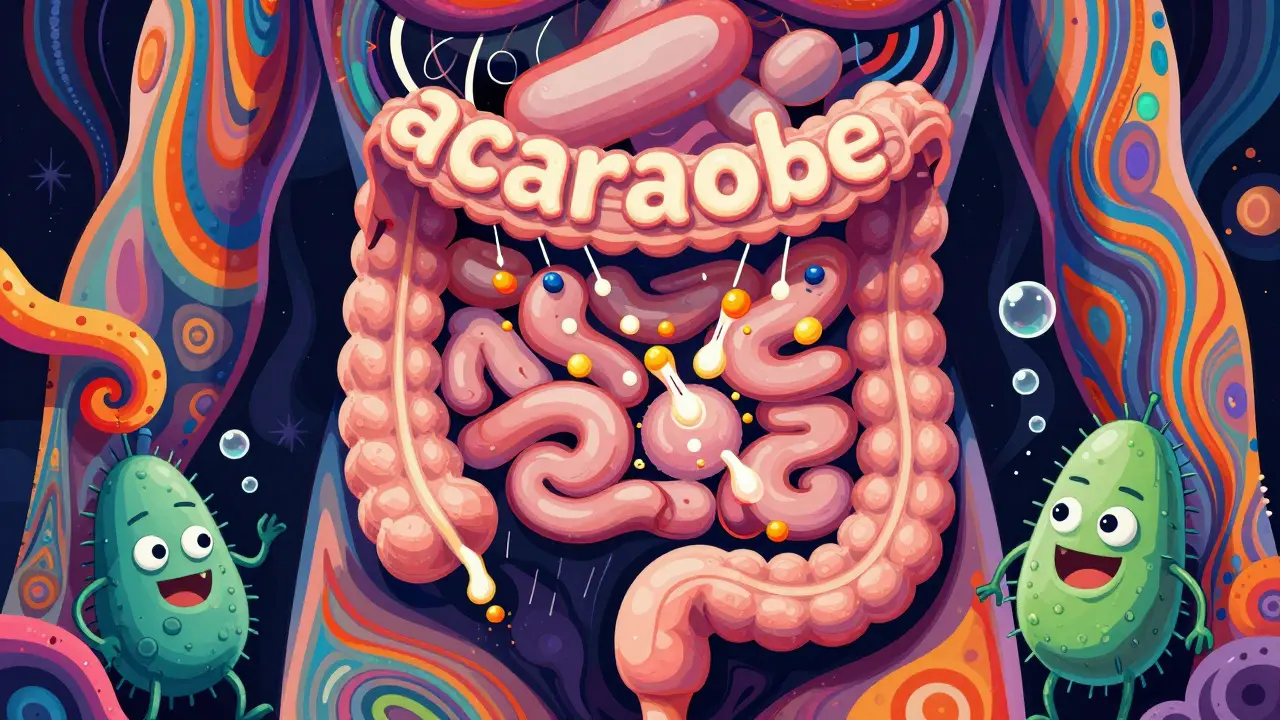
When you're managing type 2 diabetes, controlling blood sugar is only half the battle. For many people prescribed acarbose or miglitol, the real challenge isn't the disease - it's the gas, bloating, and discomfort that come with taking them. These drugs, known as alpha-glucosidase inhibitors, work by slowing down how fast your body breaks down carbs. That helps prevent blood sugar spikes after meals. But the undigested carbs don't disappear - they travel to your colon, where gut bacteria ferment them. And that’s what causes the embarrassing, sometimes painful, side effects.
Why Do Acarbose and Miglitol Cause So Much Gas?
Both drugs block enzymes in your small intestine that normally digest starches and sugars. That means more carbs reach your colon intact. Your gut bacteria feast on them, producing hydrogen, methane, and carbon dioxide - the same gases that cause flatulence. The difference between acarbose and miglitol comes down to how they're absorbed.
Acarbose barely gets absorbed into your bloodstream - less than 2% of it enters your system. It stays right where it's needed: in your upper intestine. But that also means more undigested carbs pile up in the lower gut. Miglitol, on the other hand, gets absorbed about 50-100% of the time. It doesn't linger as long in the intestine, so fewer carbs spill into the colon. That’s why studies show miglitol causes less gas and bloating than acarbose.
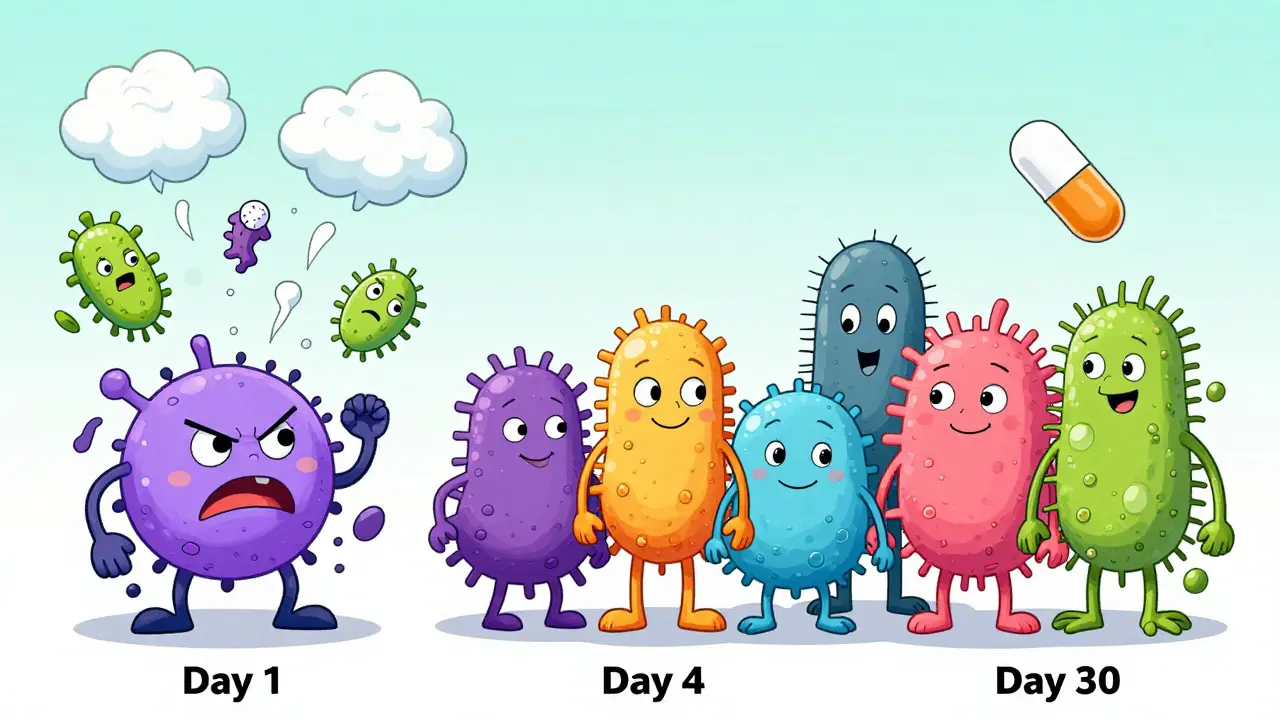
A 2010 crossover study with 20 men found acarbose raised flatus scores by nearly 50% compared to miglitol. Another analysis of 3,175 patients showed 30% quit taking these drugs within 12 weeks because the side effects were too much. The good news? Most people adapt. Symptoms peak between days 3 and 7, then drop sharply by week 2 to 4 as your gut microbiome adjusts.
How to Start Without Getting Sick
Many doctors start patients on the lowest dose possible - 25 mg three times a day - and wait 2 to 4 weeks before increasing it. This slow ramp-up is not optional. Jumping straight to 100 mg? That’s a recipe for disaster. One study showed this approach cut discontinuation rates from 30% down to just 12%.
Take the pill with the first bite of each meal. It’s not a suggestion - it’s science. The drug needs to be in your gut when food arrives. If you take it after eating, it won’t work as well. And if you skip a meal, skip the dose. Taking it on an empty stomach doesn’t help - it just irritates your stomach.
Start with one dose a day - maybe with your biggest meal - and wait a week before adding the next. Some people find this makes all the difference. Reddit user u/DiabeticDave1982 started with 25 mg once daily, then slowly increased over six weeks. By month two, his gas was barely noticeable.
Diet Changes That Actually Work
You don’t need to go low-carb. But you do need to be smart about what carbs you eat - especially in the first few weeks.
Avoid high-fiber foods like beans, lentils, broccoli, and whole grains during the first 2 to 4 weeks. Fiber feeds the same gut bacteria that are already overworked from the drug. Stick to simple carbs like white rice, pasta, and potatoes. Once your body adjusts, you can slowly reintroduce fiber.
Also, skip sugary drinks and candy. Simple sugars like glucose and fructose can overwhelm the system even more. They’re not fully blocked by the drug and can cause sudden spikes in gas. Aim for 45 to 60 grams of carbs per meal - consistent, not excessive.
One user, u/SugarFreeSue, said avoiding high-fiber snacks during the first month made miglitol bearable. She didn’t give up carbs - she just chose cleaner ones.
Over-the-Counter Fixes That Help
If gas is still a problem after adjusting your dose and diet, there are proven solutions:
- Activated charcoal: Take 500 mg capsules 30 minutes before meals. Studies show they reduce flatus volume by about 32%. They’re not magic, but they help.
- Simethicone: Found in Gas-X and Mylanta Gas. Take 120 mg three times daily. It breaks up gas bubbles, reducing bloating by 40%.
- Probiotics: Look for strains like Lactobacillus GG (10 billion CFU daily) or Bifidobacterium longum BB536. A 12-week trial showed a 37% drop in flatulence with Lactobacillus GG. The 2023 ADA conference highlighted Bifidobacterium longum, which cut gas frequency by 42% when combined with miglitol.
These aren’t cures - they’re tools. Use them while your body adapts. Once your gut settles, you may not need them anymore.
Acarbose vs. Miglitol: Which Is Easier to Tolerate?
Both lower HbA1c by 0.5% to 1.0% and don’t cause weight gain or low blood sugar. But here’s the real difference:
| Feature | Acarbose | Miglitol |
|---|---|---|
| Systemic Absorption | <2% | 50-100% |
| Typical Dose | 50-100 mg three times daily | 25-100 mg three times daily |
| Flatus Incidence | 73% of negative reviews | 61% of negative reviews |
| Average Patient Rating | 5.2/10 (Drugs.com) | 6.1/10 (Drugs.com) |
| Weight Impact | Neutral | Mild weight loss (avg. 1.2 kg at 12 weeks) |
| Best For | Stronger HbA1c reduction | Lower GI side effects |
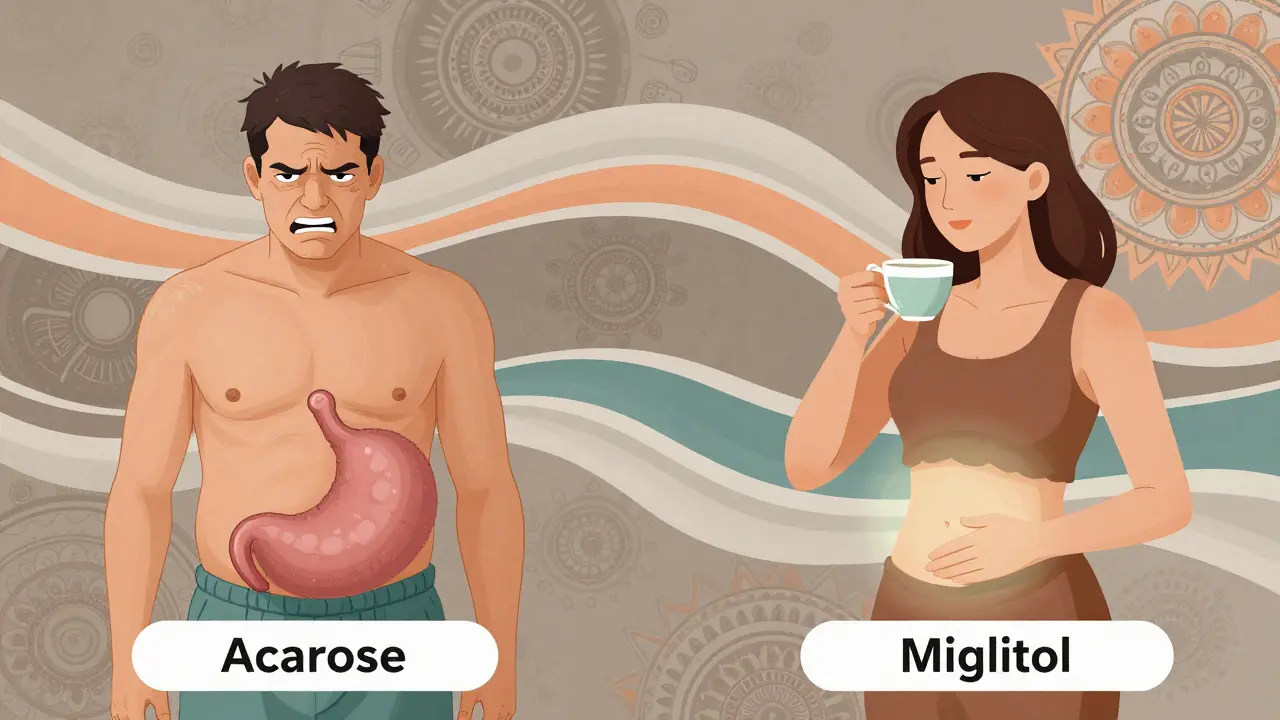
If your main concern is avoiding gas and bloating, miglitol is the better choice. It’s slightly less effective at lowering HbA1c, but it’s far more tolerable. For people who can’t take metformin, or need a weight-neutral option, miglitol often wins.
When Should You Consider Stopping?
Most side effects fade. But if you’ve tried everything - low dose, diet tweaks, probiotics - and you’re still in pain after 8 weeks, talk to your doctor. There are other options: GLP-1 agonists, SGLT2 inhibitors, or even insulin. You don’t have to suffer.
Don’t quit because you’re embarrassed. But don’t stay stuck either. Your diabetes management should fit your life - not break it.
What’s New in 2026?
There’s good news on the horizon. In 2023, the FDA approved a new combo pill - Acbeta-M - that combines acarbose with metformin in a controlled-release formula. Early trials showed 28% less gas than regular acarbose. And research into personalized dosing is growing. Scientists are now testing genetic markers that predict who’s likely to have severe side effects. In the future, a simple saliva test might tell you whether acarbose or miglitol is right for you.
For now, the best advice remains simple: start low, go slow, eat smart, and give your gut time to adapt. Most people who stick with it for two months say the side effects become a non-issue. The key isn’t avoiding the drug - it’s learning how to live with it.
Why does acarbose cause more gas than miglitol?
Acarbose stays mostly in the upper intestine and doesn’t get absorbed into the bloodstream. This means more undigested carbs reach the colon, where gut bacteria ferment them into gas. Miglitol is absorbed more fully, so fewer carbs make it to the colon, leading to less gas production. Studies show miglitol causes about 30% less flatulence than acarbose.
How long do GI side effects last with acarbose or miglitol?
Symptoms usually peak between days 3 and 7 after starting the drug. Most people notice significant improvement by week 2 to 4. By week 6 to 8, 70-80% of users report much lower gas and bloating as their gut bacteria adapt to the increased carbohydrate load. Consistency is key - skipping doses or eating irregular meals can reset the adaptation process.
Can I take simethicone or activated charcoal with acarbose or miglitol?
Yes, both are safe to use together. Simethicone (like Gas-X) helps break up gas bubbles and reduces bloating. Activated charcoal can reduce flatus volume by about 32% when taken 30 minutes before meals. Probiotics like Lactobacillus GG or Bifidobacterium longum also help by balancing gut bacteria. These aren’t replacements for dose adjustment - they’re supportive tools.
Is miglitol better than acarbose for weight loss?
Yes. While both drugs are weight-neutral, miglitol has been shown to cause a small but consistent reduction in body weight - about 1.2 kg (2.6 lbs) over 12 weeks. This effect isn’t seen with acarbose or other AGIs like voglibose. The reason isn’t fully understood, but it may be linked to miglitol’s absorption pattern and its influence on gut hormones that regulate appetite.
Should I avoid fiber completely while taking these drugs?
Not forever, but yes - during the first 2 to 4 weeks. High-fiber foods like beans, lentils, broccoli, and whole grains feed the same gut bacteria that are already overwhelmed by the undigested carbs from the drug. This worsens gas and bloating. After your body adapts, you can slowly reintroduce fiber. Aim for 25-30 grams per day, spread evenly across meals.
Why are these drugs more common in Japan than in the U.S.?
Japanese diets are higher in carbohydrates - often 60-65% of calories - compared to 45-50% in the U.S. Since acarbose and miglitol work best on carb-heavy meals, they’re more effective there. Also, patients in Japan are more willing to tolerate GI side effects for better blood sugar control. In the U.S., metformin dominates as first-line therapy, and AGIs are usually reserved for those who can’t tolerate it.
What should I do if I miss a dose?
If you miss a dose, skip it and take the next one at the regular time. Don’t double up. Taking extra doses after a meal won’t help - the drug needs to be in your gut at the start of eating. Missing one dose won’t ruin your progress, but inconsistent timing can make side effects worse.
Can I take these drugs if I have IBS or Crohn’s disease?
Generally, no. These drugs are not recommended for people with inflammatory bowel disease, intestinal obstruction, or severe digestive disorders. The extra gas and bloating can worsen symptoms. If you have IBS, talk to your doctor about alternatives like GLP-1 agonists or SGLT2 inhibitors, which don’t affect gut fermentation.
J. Murphy
March 24, 2026 AT 19:12rebecca klady
March 26, 2026 AT 12:24Namrata Goyal
March 27, 2026 AT 18:51Alex Arcilla
March 27, 2026 AT 20:47Brandon Shatley
March 28, 2026 AT 11:58Blessing Ogboso
March 30, 2026 AT 12:17Jefferson Moratin
April 1, 2026 AT 03:53Zola Parker
April 1, 2026 AT 07:52florence matthews
April 1, 2026 AT 22:42Kevin Y.
April 2, 2026 AT 10:42Raphael Schwartz
April 2, 2026 AT 10:59