Antipsychotics and Stroke Risk in Seniors with Dementia
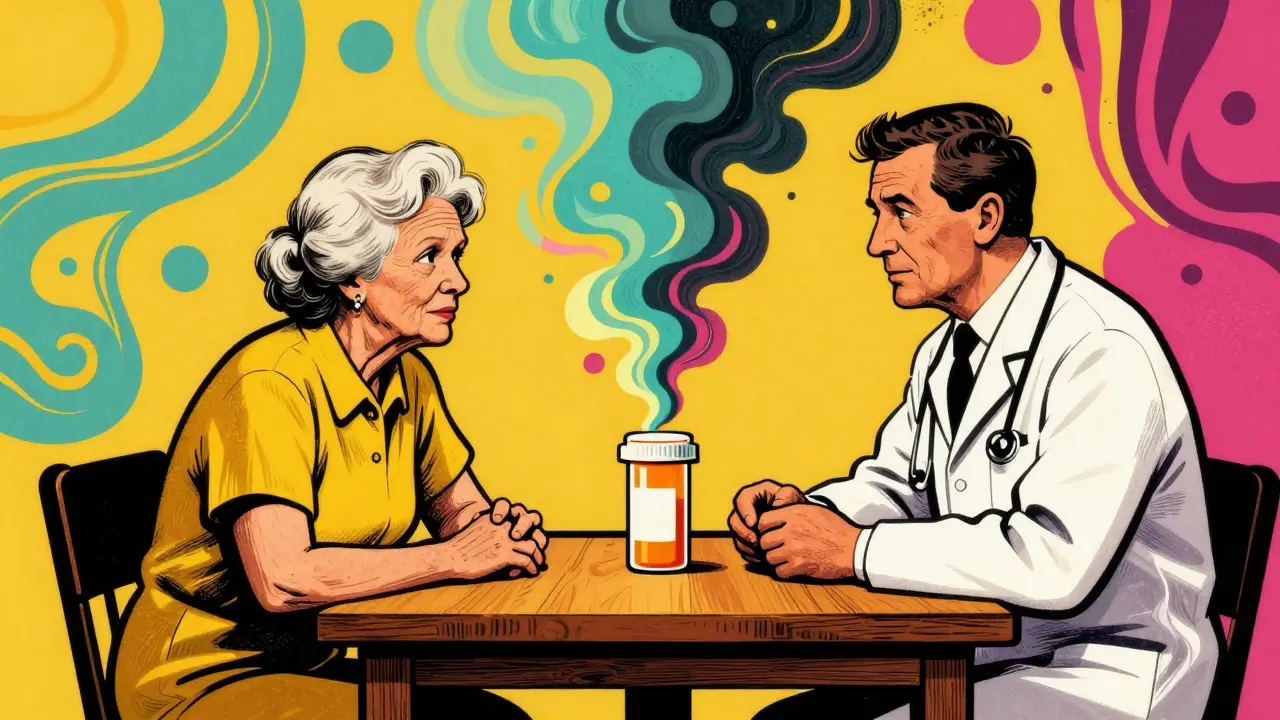
Imagine sitting at the kitchen table with your doctor. Your loved one has dementia. They are pacing, shouting, or becoming aggressive. It feels like an emergency. The doctor suggests medication called antipsychotics to calm things down. You nod because you just want peace for everyone. But later, you wonder if that medicine is making another problem worse. This is a very real situation for many families in Wellington and beyond.
The connection between these powerful drugs and physical harm is serious. We are talking about the risk of having a stroke right under your nose. While these medications can help control severe behaviors, they come with significant risks for older adults. Understanding these dangers doesn't mean you have to panic, but it means you can ask better questions when decisions are made.
Understanding Antipsychotics in Elder Care
Before we talk about danger, we need to know what we are dealing with. Antipsychotics are a class of prescription medications primarily designed to manage psychosis, hallucinations, and delusions. Originally created for schizophrenia, they became common tools for dementia care decades ago. Doctors often prescribe them for what researchers call Behavioral and Psychological Symptoms of Dementia (BPSD). These include agitation, aggression, wandering, and anxiety.
However, using them for dementia is considered "off-label." This means they weren't approved specifically for treating dementia symptoms initially. Despite this, nursing homes and community clinics continue to use them frequently. The issue isn't just side effects like drowsiness. The real concern lies deep in the vascular system.
The FDA Warning and Mortality Statistics
You might have heard whispers about this risk, but the official data is stark. Back in 2005, the U.S. Food and Drug Administration issued a black box warning. FDA Black Box Warning is the strongest safety warning required by the FDA for prescription medicines, indicating significant health risks. This warning stated that elderly patients with dementia-related psychosis treated with antipsychotics had a higher risk of death compared to those taking a placebo.
We need to look at the numbers to see why this matters. Analyses of seventeen trials showed a modal duration of 10 weeks. During that time, patients on these drugs had a 1.6 to 1.7 times higher risk of death than those not on them. The causes were often heart failure, sudden death, or pneumonia, but stroke was a major contributor. It's not just about dying; it's about suffering a devastating brain event while trying to survive a behavioral crisis.
How Medications Trigger Stroke Mechanisms
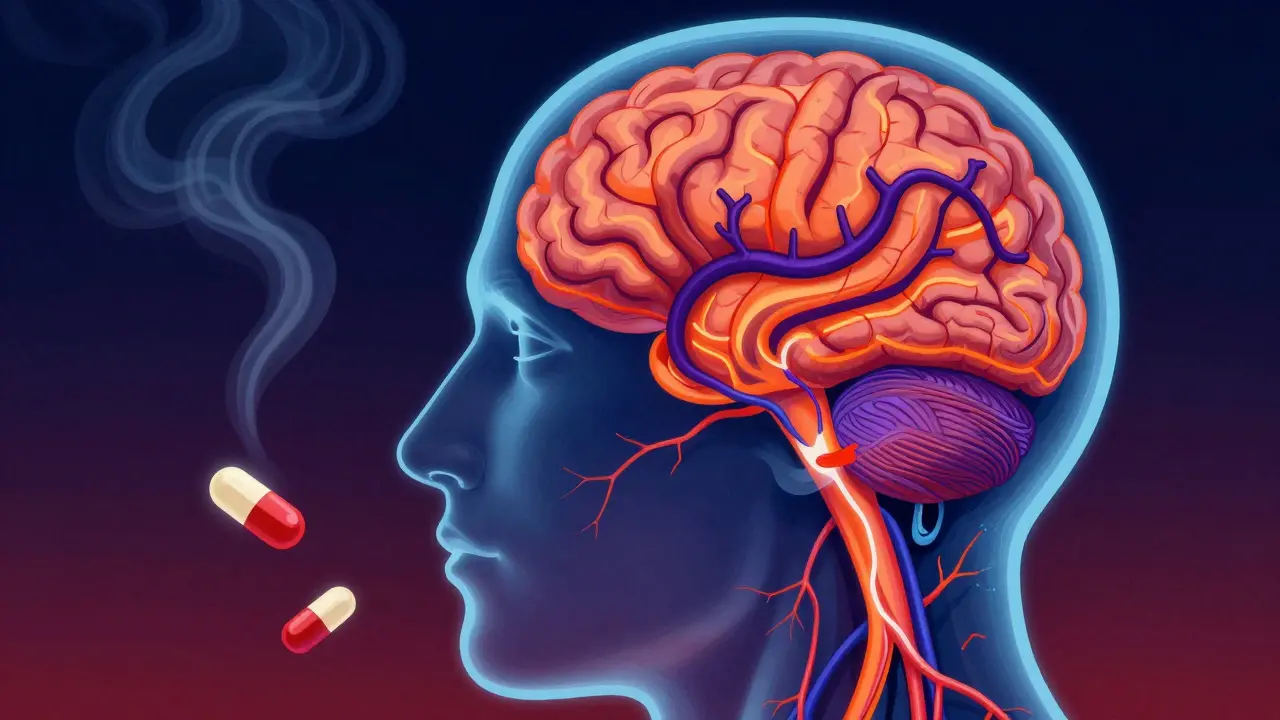
It isn't magic; it is biology. Antipsychotics affect chemicals in the brain, but they also affect blood flow. One key mechanism is orthostatic hypotension. This happens when blood pressure drops suddenly when a person stands up. If an older person stands quickly after taking medication, they can fall or lose consciousness. Worse, reduced blood flow to the brain can trigger ischemic events.
Another factor is metabolic syndrome development. Some of these drugs cause weight gain, high blood sugar, and bad cholesterol levels over time. Cerebrovascular Event is a medical term covering strokes and transient ischemic attacks affecting blood vessels supplying the brain. When you mix metabolic changes with the direct effects on neurotransmitters that regulate cerebral blood flow, the risk profile changes. Research published in the American Journal of Epidemiology confirmed that stroke risk partially mediates the mortality difference between drug classes. Essentially, the stroke contributes significantly to the higher death rates seen in studies.
Comparing First and Second Generation Drugs
Not all antipsychotics work the same way. Families often hear doctors differentiate between first-generation and second-generation agents. Let's break down the differences clearly.
| Typical Antipsychotics First-Generation Antipsychotics vs Atypical Antipsychotics Second-Generation Antipsychotics | |
|---|---|
| Examples | Hallucination control (Haloperidol) |
| Primary Side Effects | Movement disorders (tremors) |
| Stroke Risk Profile | Higher long-term cerebrovascular risk (>90 days) |
| Mortality Data | Equivalently high risk as SGAs in short term |
| Best Usage | Rarely preferred for dementia due to risk |
Research by Gill et al. analyzed over 32,000 Canadians aged 65 and older. They found equivalent rates of ischemic stroke between users of both types. However, more recent systematic reviews suggest long-term use of typical antipsychotics might carry greater cerebrovascular risk than atypical ones if used for more than 90 days. Even so, the overall mortality increase remains similar between the two groups.
Guidelines and Expert Recommendations
If the risks are this high, why do doctors still prescribe them? The answer is complex. Severe behaviors can threaten the safety of the patient or staff. Sometimes, other methods fail. However, experts are moving toward stricter rules. The American Geriatrics Society's Beers Criteria explicitly recommend avoiding these drugs for dementia neuropsychiatric symptoms. American Geriatrics Society Beers Criteria is a clinical tool listing medications potentially inappropriate for older adults. It highlights that benefits rarely outweigh the risks for long-term management.
The American Heart Association notes that even brief exposure matters. A study involving Veterans Affairs data revealed that the elevation in stroke risk is apparent even after short usage. This contradicts earlier assumptions that only long-term use posed significant risks. This means that a "just for a few days" approach still carries danger. Dr. Devine and Dr. Memon noted that duration of therapy influences risk, suggesting potential utility for very brief interventions only when absolutely necessary, but this remains a high-wire act.

Safer Alternatives to Medication
You don't always have to medicate behavior. Non-pharmacological interventions should be the first line of defense. This involves changing the environment or routine to reduce distress. For example, if a patient wanders, secure locks might help rather than sedating them. If they get angry in the afternoon, check for pain, constipation, or infection first.
Some strategies include:
- Music therapy tailored to the patient's history.
- Physical exercise routines to burn excess energy.
- Simplifying the daily schedule to reduce confusion.
- Checking for unmet physical needs like thirst or hunger.
These steps take effort from caregivers, but they avoid the internal physiological damage that drugs cause.
Making Decisions with Confidence
When a nurse tells you a patient is being started on an antipsychotic, don't just nod. Ask specific questions. Ask the doctor to define the target symptom. Is it dangerous aggression or just mild fussiness? Ask for a timeline. If they agree to try the med, when will they review it? A plan should exist to taper the dose off once the behavior stabilizes.
Also, consider the patient's baseline. People with multiple comorbid risk factors for stroke, such as existing heart disease or hypertension, need extreme caution. Their sample size might be small in your case, but the population risk is large. The goal is to find a balance where dignity isn't lost to safety measures, and safety isn't compromised by medication. It is a negotiation, not just a prescription.
Do all antipsychotics increase stroke risk?
Yes, both first-generation (typical) and second-generation (atypical) antipsychotics have been linked to increased stroke risk in elderly dementia patients. The FDA black box warning covers both classes.
Can antipsychotics ever be safe for dementia?
They may be used in short-term emergencies for severe aggression, but guidelines strongly advise avoiding them for chronic management due to mortality risks.
What is the Beers Criteria list?
It is a list published by the American Geriatrics Society identifying medications that should generally be avoided in older adults due to poor benefit-risk ratios.
How much does stroke risk increase?
Studies show odds of stroke can be 1.8 times higher when exposed to these medications compared to when unexposed. Even brief exposure can trigger this effect.
Are there signs of stroke to watch for?
Watch for sudden weakness on one side, trouble speaking, vision loss, or severe headache, especially shortly after starting a new medication.
Does age matter for stroke risk?
Yes, age-stratified estimates indicate a greater triggering effect among older patients. Older seniors are more vulnerable to the hemodynamic changes caused by these drugs.
What is a non-drug alternative?
Alternatives include music therapy, regular exercise, simplifying routines, and addressing underlying pain or infections before resorting to chemical restraints.
Is the risk reversible if stopped?
Stopping the medication removes the ongoing trigger, but damage from a stroke is permanent. Prevention through early detection of adverse effects is crucial.
Who monitors these medications in nursing homes?
Geriatricians, psychiatrists, and primary care physicians monitor usage, though regulations require periodic review to assess necessity versus harm.
Navigating dementia care is hard enough without added hidden dangers. By knowing the facts about antipsychotics and stroke risk, you can advocate for the safest path for your loved ones. Every decision starts with information, and now you have a clearer picture of the trade-offs involved.
Amber Armstrong
March 31, 2026 AT 02:34My grandmother ended up in a nursing home last year when her behavior got too wild for us to handle. She used to sit quietly until the medication kicked in really badly. The staff told us it was necessary to keep everyone safe during her episodes. We trusted them because we did not know any better about the side effects involved. It was shocking to read this information now knowing she passed away so soon after starting those drugs. They said she had a seizure event though I think it might have been something vascular. Every day she became more confused and less able to recognize her own children. We spent hours watching her decline while the doctors nodded and wrote prescriptions. It hurts to realize we might have consented to the poison unknowingly. Families are desperate when the shouting starts late at night and nothing calms them down. But looking back, the silence came with a high price that nobody warned us about clearly. You cannot undo what has happened once the brain suffers those kinds of injuries permanently. I wish someone had pushed harder for music therapy instead of the chemical solution. Caregivers need to fight for non-drug methods even if it feels exhausting for everyone involved. Reading this makes me want to check every report from my mother-in-laws facility immediately today.
Victor Ortiz
March 31, 2026 AT 20:34Doctors play god with weak bodies and call it management. This data proves incompetence is rampant in the field. People die because of lazy prescribing habits. You can ignore it but the body keeps the score always.
Ruth Wambui
April 2, 2026 AT 18:07They sell the disease to fix the symptoms caused by the cure. A perfect loop of dependency designed by corporate pharma giants. Watch the shadows move.
Michael Kinkoph
April 3, 2026 AT 12:40This is a moral failing!---We must act!!! Stop the negligence now!!!!
Jonathan Sanders
April 5, 2026 AT 01:47Oh great, one more way to kill grandma faster.
emma ruth rodriguez
April 6, 2026 AT 07:43It is imperative that healthcare professionals adhere strictly to established geriatric guidelines. The Beers Criteria serve as a critical framework for identifying inappropriate medications. Antipsychotics fall squarely into this category due to their documented adverse cardiovascular effects. Physicians often overlook these warnings when faced with immediate behavioral crises in institutional settings. However, the short-term relief gained does not justify the long-term mortality statistics observed. Clinical trials consistently demonstrate a significant elevation in cerebrovascular events during treatment. Patients with pre-existing hypertension require even stricter monitoring protocols than healthy peers. Non-pharmacological interventions must always precede the consideration of chemical restraint measures. Music therapy has shown efficacy in reducing agitation without inducing metabolic dysfunction. Staff training regarding environmental triggers is often insufficient in current nursing home models. Increased education for family members allows for better advocacy during the admission process. Regular review intervals are mandatory to prevent unnecessary prolonged exposure to these agents. Documentation of benefit versus risk should be updated monthly rather than annually. Failure to taper doses appropriately leads to withdrawal symptoms that mimic worsening dementia. We must prioritize safety above convenience when managing psychiatric symptoms in the elderly demographic.
Beccy Smart
April 6, 2026 AT 12:10Yup 🙄💊😴
Rick Jackson
April 7, 2026 AT 15:12The boundary between protection and harm is thin indeed.
sanatan kaushik
April 9, 2026 AT 14:18Stop giving poison to old people. It is murder disguised as help. Doctors are criminals.
Debbie Fradin
April 10, 2026 AT 14:03Demand answers from the administration right now.
Brian Yap
April 11, 2026 AT 07:59Yeah mate, seen this happen down here at the aged care places. Just do not go in blind about what they give people. Cheers.
Jonathan Alexander
April 11, 2026 AT 21:29Imagine the sheer terror of watching your parent fade away while you hold a prescription pad. The world feels like a trap when doctors offer a magic pill for madness. Shadows stretch across the hallway where old souls wait for their next dose. Silence follows the injection, but is it peace or is it death creeping closer? I feel the weight of every family who signed away safety for a quiet evening. Stroke is a word that hangs heavy over the dinner table conversation now. The pills look innocent in the plastic tray meant for dispensing. But inside lies the machinery of destruction ready to seize the blood flow. We stand helpless against the bureaucratic machinery of modern elder care facilities. Fear grips the heart of anyone reading about black box warnings. What nightmare awaits the unsuspecting relative who just nods along at appointments. The cost of a quiet night is measured in arteries rupturing deep inside brains. It is a tragedy played out in sterile rooms behind locked doors constantly. Someone needs to scream about this before another generation loses their elders silently. The horror is real and it is hiding in plain sight within our medical system.
Charles Rogers
April 12, 2026 AT 16:44Anyone letting their parents stay on these meds is negligent.