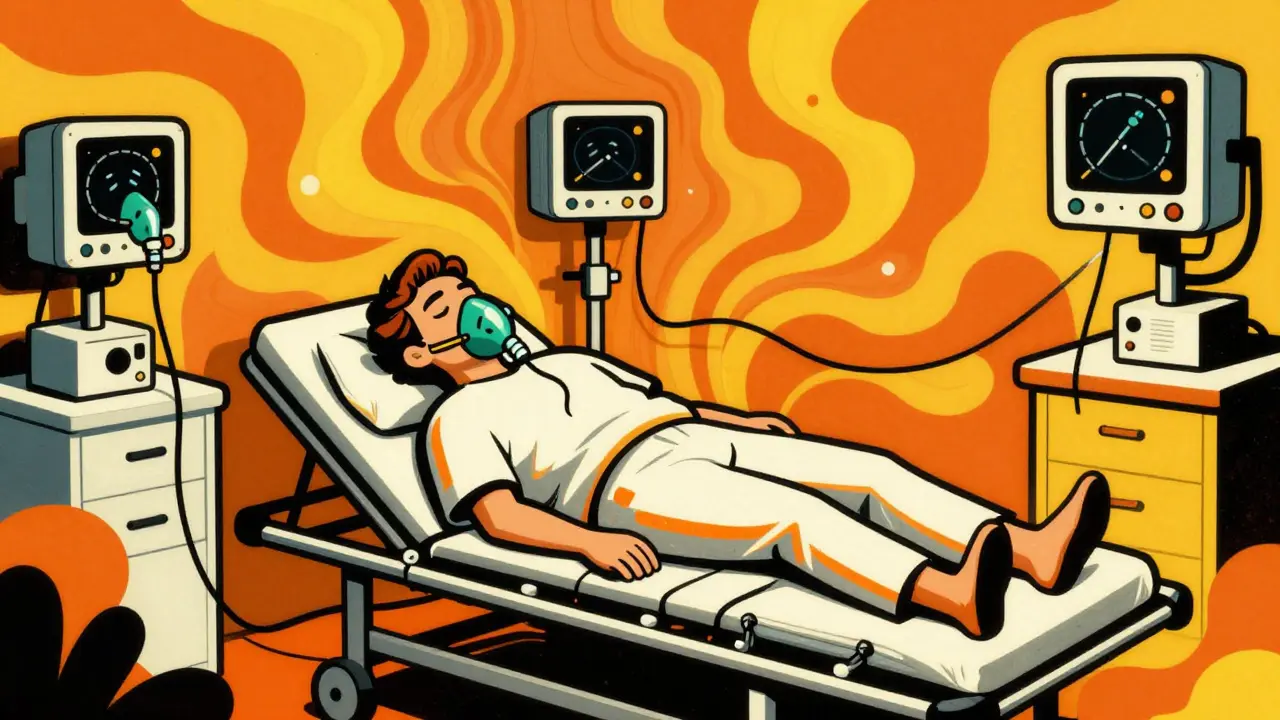
Imagine walking into an emergency room where a patient is barely breathing. Their eyes are half-closed, their skin is pale, and they can’t stay awake no matter how hard you try to rouse them. This isn’t just a bad night’s sleep or a hangover. This is Benzodiazepine Overdose, a critical medical event defined by excessive central nervous system (CNS) depression. While these medications are commonly prescribed for anxiety, insomnia, and seizures, taking too much-or mixing them with other substances-can quickly turn a routine prescription into a life-threatening situation. You might think benzodiazepines are safe because they are legal prescriptions, but the data tells a different story. In 2022 alone, the American Association of Poison Control Centers reported over 112,000 human exposure cases involving these drugs. While death from a pure benzodiazepine overdose is rare, the real danger lies in what happens when you mix them with opioids or alcohol.
The Silent Threat: Why Context Matters More Than Dose
To understand the risk, you have to look at how these drugs work. Benzodiazepines enhance the effect of the neurotransmitter GABA in your brain, which slows down neural activity. When taken within therapeutic limits, this helps calm anxiety or induce sleep. But when the dose exceeds what your body can handle, that calming effect turns into profound sedation and respiratory depression. The scary part? A person can look relatively stable on the surface while their breathing becomes dangerously shallow. According to CDC data from 2022, 92% of fatalities linked to benzodiazepines involve co-ingestants, particularly opioids. This synergy creates a multiplier effect where neither drug alone might be fatal, but together they shut down the brain’s drive to breathe.
It is also crucial to recognize that not all benzodiazepines behave the same way. Alprazolam, for instance, causes significantly greater CNS depression compared to others. Data from Emergency Care BC shows it is 3.2 times more likely to require intubation than other common benzos like diazepam or lorazepam. If you are dealing with an overdose scenario, knowing exactly which medication was ingested changes the urgency and the expected outcome. Long-acting agents like chlordiazepoxide (Librium), first synthesized in 1955, linger in the system longer, requiring extended monitoring periods that can stretch up to 48 hours in elderly patients or those with liver issues.
Immediate Action: The ABCDE Protocol
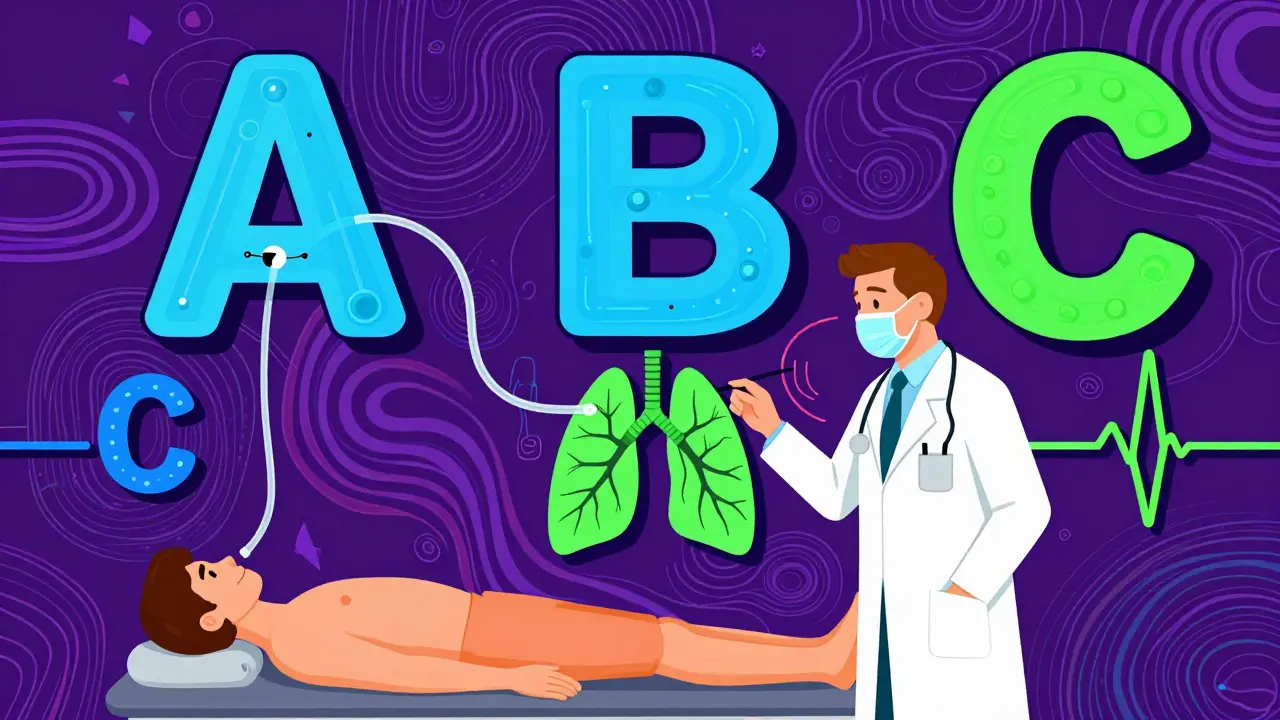
When seconds count, structured thinking saves lives. Medical professionals rely on the ABCDE approach, standardized by the Resuscitation Council UK, to manage any acute emergency. For benzodiazepine overdose, this protocol is non-negotiable. It starts with Airway. Is the patient able to keep their airway open? If their Glasgow Coma Scale (GCS) score drops to 8 or below, you need immediate expert intervention, often from an anesthesiologist, to secure the airway. Next comes Breathing. Are they breathing adequately? Continuous pulse oximetry and ECG monitoring become essential here. Standard initial care involves administering oxygen via a non-rebreather mask at 15L/min. However, if the patient has Chronic Obstructive Pulmonary Disease (COPD) and a history of CO2 retention, you must switch to a Venturi mask to avoid suppressing their respiratory drive further.
Circulation follows, requiring serial blood pressure checks every 5 to 15 minutes during the acute phase. Hypotension can occur, especially if the patient is dehydrated or has taken other depressants. Then comes Disability, which involves assessing neurological status beyond just consciousness. This includes checking pupil size and response to light, though pupils may remain normal in pure benzodiazepine overdose unlike opioid overdoses where pinpoint pupils are common. Finally, Exposure ensures you check for other signs of trauma or injection sites that might hint at mixed substance use. This systematic approach prevents tunnel vision, ensuring you don’t miss a hidden co-ingestant that could change the entire treatment plan.
| Factor | Pure Benzodiazepine Overdose | Mixed Overdose (e.g., with Opioids) |
|---|---|---|
| Respiratory Risk | Mild to moderate depression (87% of cases) | High risk of arrest (15-fold increase) |
| Coma Depth | Deep coma in only 4.3% of cases | Frequent deep coma requiring ventilation |
| Pupil Response | Usually normal/reactive | Often pinpoint (if opioids involved) |
| Reversal Agent | Flumazenil (use with extreme caution) | Naloxone (for opioid component) |
| Monitoring Duration | Minimum 6 hours | Extended until full resolution (often 12+ hours) |
Diagnostic Testing: Ruling Out the Hidden Killers
You cannot treat what you do not measure. In the chaotic environment of an ER, diagnostic testing provides the clarity needed to make safe decisions. The first step is always point-of-care glucose testing. Hypoglycemia mimics many symptoms of CNS depression, including confusion and lethargy. If blood sugar is low, treating it can resolve the issue instantly. Beyond glucose, serum acetaminophen and aspirin levels are mandatory. Why? Because people rarely overdose on just one thing. Acetaminophen toxicity doesn’t show immediate symptoms but can cause fatal liver failure days later. Catching it early allows for N-acetylcysteine administration, which is highly effective if given within 8 to 10 hours of ingestion.
Serum ethanol concentration and urine toxicology screening are also standard requirements per BMJ Best Practice guidelines. These tests confirm the presence of alcohol or illicit drugs that might complicate recovery. In recent years, the rise of illicitly manufactured benzodiazepines like etizolam and clonazolam has added another layer of complexity. These synthetic versions are 3 to 10 times more potent than traditional pharmaceuticals and account for nearly 70% of severe overdose cases in parts of the Western U.S. Standard urine screens might not detect these newer analogs, making clinical judgment based on symptom severity even more critical than lab results alone.
The Flumazenil Debate: To Reverse or Not to Reverse?
If there were a magic bullet for benzodiazepine overdose, it would be Flumazenil, a specific antagonist that blocks benzodiazepine receptors. It sounds perfect, right? Wrong. The medical community has largely moved away from using flumazenil as a routine treatment, and for very good reasons. Dr. John Howland, a leading toxicologist, notes that flumazenil should be reserved for extremely rare cases: pure benzodiazepine overdoses in non-dependent patients who are failing supportive care. Why such strict limits? Because flumazenil carries a 38% risk of precipitating seizures in patients who are chronically dependent on benzodiazepines. If a patient has been taking benzos daily for months, suddenly removing that sedative effect can trigger violent, uncontrollable seizures that are harder to manage than the original overdose.
Furthermore, flumazenil has a short half-life of about 41 minutes. This means its effects wear off quickly, often requiring repeat dosing every 20 minutes. In mixed overdoses, especially those involving tricyclic antidepressants or other seizure-lowering agents, flumazenil can cause arrhythmias and cardiac instability. A survey by the American College of Emergency Physicians found that 78% of emergency departments have stopped stocking flumazenil routinely due to these safety concerns. Only 12.3% of physicians report ever administering it. The consensus is clear: the risks of inducing seizures or cardiac issues far outweigh the benefit of waking someone up temporarily, especially since supportive care is so effective.

Supportive Care: The Gold Standard of Treatment
So, if we aren’t using flumazenil, what do we do? We wait. Supportive care remains the cornerstone of benzodiazepine overdose management. This involves maintaining a patent airway, ensuring adequate oxygenation, and supporting circulation. Most patients with isolated benzodiazepine overdose will wake up on their own as the drug metabolizes. The key is patience and vigilance. Asymptomatic patients require a minimum observation period of 6 hours. Symptomatic patients must be monitored until complete resolution of CNS depression, which typically takes 12 hours. For elderly patients or those with comorbidities, this window extends to 24-48 hours.
During this time, continuous monitoring is vital. Use tools like the Pasero Sedation Scale to track level of consciousness objectively. Re-assess every 15 minutes after any intervention. One common pitfall is premature discharge. Patients may appear awake but still suffer from significant ataxia (loss of coordination). Ataxia persists longer than sedation, creating a high risk for falls and injury once the patient leaves the hospital. Discharge criteria should include not just being awake, but having normal motor function and stable vitals for several hours. Activated charcoal is generally useless unless administered within 60 minutes of ingestion, offering only a 45% reduction in absorption. After that window, it provides no benefit and adds aspiration risk.
Future Trends: Technology and Harm Reduction
The landscape of overdose management is evolving rapidly. New technologies are emerging to improve outcomes. The FDA recently approved clinical trials for the BenzAlert™ monitor, a device capable of measuring continuous benzodiazepine blood levels. Early phase 3 results show 94.7% accuracy in predicting when sedation will resolve, potentially reducing unnecessary ICU stays. Additionally, point-of-care ultrasound (POCUS) is becoming standard in ERs. Studies show POCUS reduces intubation delays by 22 minutes by allowing rapid assessment of respiratory muscle function without waiting for arterial blood gas results.
On a broader scale, harm reduction programs are integrating benzodiazepine education. Thirty-seven U.S. states now include benzo recognition in naloxone distribution programs. Since naloxone reverses opioids but not benzos, first responders need to know that a patient might stop breathing again once the naloxone wears off if benzos are still active in their system. With illicit benzo use rising, public awareness is as critical as medical intervention. The American College of Medical Toxicology projects a 40% increase in ED visits related to these drugs by 2025, driven largely by counterfeit pills laced with potent synthetics. Understanding this trend helps communities prepare better resources and education.
What are the first signs of a benzodiazepine overdose?
The earliest signs usually include extreme drowsiness, confusion, slurred speech, and unsteady gait. As the overdose progresses, symptoms worsen to include severe sedation, slow or shallow breathing (respiratory depression), low blood pressure, and loss of consciousness. In severe cases, the patient may become unresponsive and stop breathing entirely.
Is flumazenil safe to use for all benzodiazepine overdoses?
No, flumazenil is not safe for everyone. It is contraindicated in patients with chronic benzodiazepine dependence because it can trigger life-threatening seizures. It is also risky in mixed overdoses involving tricyclic antidepressants or other pro-convulsant drugs. Most emergency departments now reserve it for very specific, rare cases under strict supervision.
How long does it take for a benzodiazepine overdose to resolve?
For asymptomatic patients, a minimum observation period of 6 hours is required. Symptomatic patients typically require monitoring until CNS depression fully resolves, which usually takes 12 hours. However, in elderly patients or those with liver/kidney issues, the drug may linger for 24 to 48 hours, requiring extended hospitalization.
Why are mixed overdoses more dangerous than pure benzodiazepine overdoses?
Mixed overdoses, particularly with opioids or alcohol, create a synergistic effect that drastically increases the risk of respiratory arrest. While pure benzo overdoses cause mild to moderate depression in most cases, adding opioids increases the risk of breathing failure by 15-fold. This combination accounts for the vast majority of benzodiazepine-related deaths.
What diagnostic tests are performed during a benzodiazepine overdose evaluation?
Standard testing includes point-of-care glucose testing to rule out hypoglycemia, serum acetaminophen and aspirin levels to check for co-ingestants, serum ethanol concentration, and urine toxicology screening. Continuous monitoring of oxygen saturation, ECG, and blood pressure is also essential throughout the observation period.