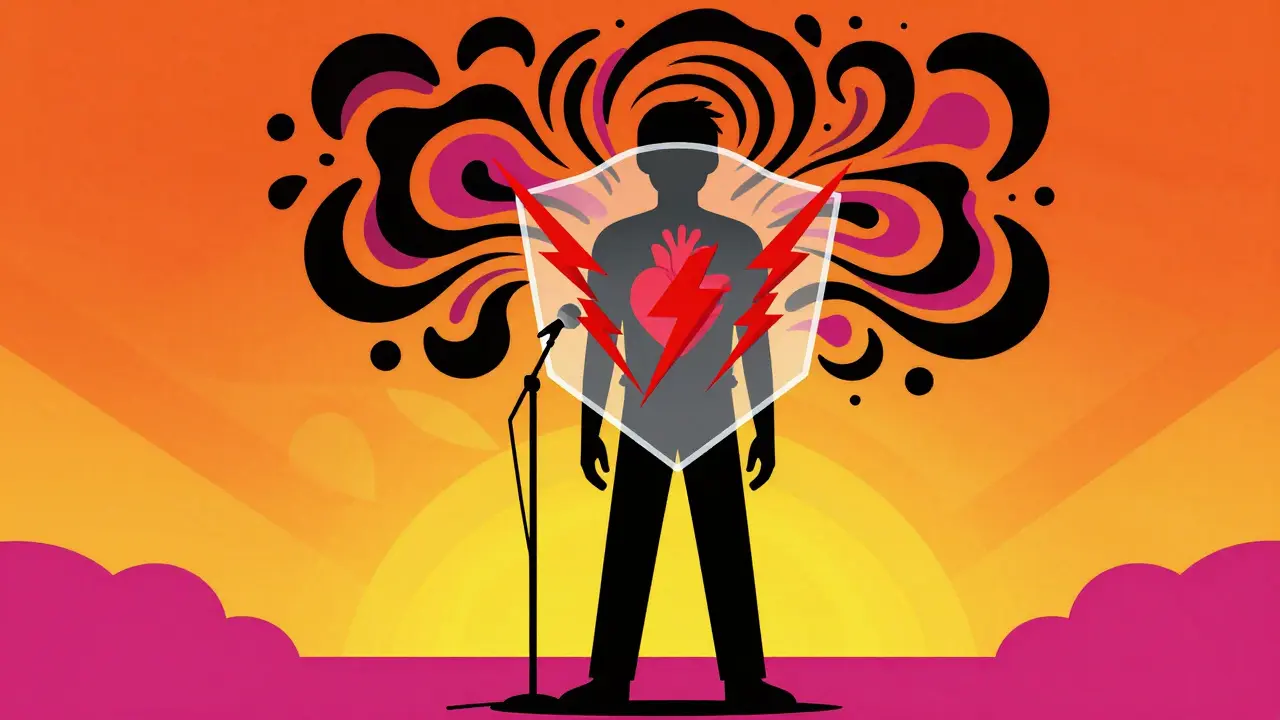
You know the feeling. Your heart hammers against your ribs like a trapped bird. Your palms get slick with sweat. Your hands tremble so badly you can barely hold a coffee cup, let alone a microphone or a violin bow. You are about to speak in front of people, perform on stage, or walk into a high-stakes meeting, and your body is screaming that you are in mortal danger.
This isn’t just nervousness. For many, this is Social Anxiety Disorder (SAD), a persistent fear of being judged or scrutinized by others. While therapy addresses the root thoughts, there is a specific tool that stops the physical panic button from getting stuck: Beta-Blockers.
Specifically, a drug called Propranolol. It’s not a sedative. It doesn’t make you feel high, drowsy, or detached. Instead, it acts like a shield against your own adrenaline. But here is the catch: it works brilliantly for some situations and fails completely for others. Understanding exactly when and how to use it can mean the difference between freezing up and performing with confidence.
How Beta-Blockers Actually Work on Anxiety
To understand why Propranolol helps, you have to look at what happens in your body during a panic response. When you face a social threat-real or perceived-your brain triggers the "fight or flight" system. It floods your bloodstream with epinephrine (adrenaline) and norepinephrine. These chemicals bind to beta-adrenergic receptors in your heart, lungs, and muscles.
The result? Your heart races, your breathing quickens, and your hands shake. This is your body preparing to run from a predator. The problem is, the predator is usually just a boardroom full of colleagues or an audience at a wedding.
Beta-Blockers work by blocking those specific receptors. They don’t stop your brain from feeling afraid. They simply prevent the adrenaline from doing its job physically. If you take Propranolol, your heart rate stays steady even if your mind is racing. Your hands stop trembling. Your voice loses that shaky quiver. By silencing these physical cues, you break the feedback loop where seeing your own shaking makes you feel more anxious, which makes you shake more.
Crucially, Propranolol has a rapid onset. It starts working within 30 to 60 minutes and peaks around 90 minutes after ingestion. This makes it ideal for predictable, time-limited events. Unlike Selective Serotonin Reuptake Inhibitors (SSRIs), which take four to six weeks to build up in your system, Propranolol is ready to go when you need it, then leaves your system within a few hours.
The Performance Anxiety Powerhouse
The strongest evidence for using Beta-Blockers lies in performance anxiety. This includes public speaking, musical performances, acting auditions, and sports competitions. Research shows efficacy rates of 65% to 70% for these specific scenarios.
Consider the experience of professional musicians. A landmark study published in the Journal of the American Medical Association involving 42 professional musicians found that Propranolol significantly reduced hand tremors and performance-related anxiety without affecting cognitive function or motor skills negatively. For a violinist, steady hands are non-negotiable. For a speaker, a steady voice commands authority.
User reports consistently highlight this benefit. On forums like Reddit’s r/Anxiety, users describe taking 10mg to 40mg of Propranolol before major presentations. One user noted that while their mind still felt nervous, their body remained calm enough to deliver a TEDx talk without visible shaking. The drug allows you to access your preparation and skill set without your physiology sabotaging you.
| Treatment Type | Best Used For | Onset of Action | Addiction Risk | Addresses Psychological Fear? |
|---|---|---|---|---|
| Beta-Blockers (e.g., Propranolol) | Performance anxiety, public speaking | 30-60 minutes | None | No (Physical symptoms only) |
| SSRIs (e.g., Sertraline) | Chronic, generalized Social Anxiety | 4-6 weeks | Low | Yes (Over time) |
| Benzodiazepines (e.g., Alprazolam) | Acute panic attacks | 15-30 minutes | High (23-34% risk) | Yes (Sedation) |
| Cognitive Behavioral Therapy (CBT) | Long-term remission, root causes | 8-16 weeks | None | Yes (Core mechanism) |
Why Beta-Blockers Fail for Generalized Social Anxiety
If Propranolol is so effective for speakers, why isn’t it prescribed for everyone with Social Anxiety Disorder? Because SAD is rarely just about a single speech. It is often a pervasive, daily struggle with fear of judgment in everyday interactions-making small talk, eating in public, or answering questions in a meeting.
Here is the hard truth: Beta-Blockers do nothing for the psychological component of anxiety. They will not stop catastrophic thinking. They will not quiet the inner critic that says, "Everyone thinks I’m stupid." A 2023 systematic review by Dr. Charlotte Archer analyzed multiple studies and concluded there was no significant beneficial effect of beta-blockers compared to placebo for patients with general social phobia. The statistical difference was negligible (SMD -0.07).
If you take Propranolol to go to a party, your heart might stay calm, but you will still feel terrified of saying the wrong thing. You might still avoid eye contact. You might still leave early because you feel socially inadequate. The drug masks the engine revving, but it doesn’t fix the steering wheel. For chronic, generalized anxiety, first-line treatments remain SSRIs and Cognitive Behavioral Therapy (CBT).

Safety Profile: Why Doctors Prefer Them Over Benzodiazepines
Historically, doctors prescribed benzodiazepines like Xanax (alprazolam) for acute anxiety. However, the landscape has shifted dramatically due to safety concerns. Benzodiazepines carry a high risk of dependence, with studies showing a 23% to 34% risk of addiction with regular use. They also cause sedation, memory impairment, and cognitive dulling-side effects that are disastrous for someone trying to give a sharp, engaging presentation.
Beta-Blockers, by contrast, have zero addiction potential. They are not controlled substances. They do not impair cognitive function or memory. You remain alert, focused, and present. This makes them particularly attractive for professionals who need to be at the top of their game.
However, they are not without risks. Propranolol is contraindicated for people with asthma, as it can cause bronchoconstriction (tightening of the airways). It can also mask the symptoms of low blood sugar (hypoglycemia), which is dangerous for diabetics. Additionally, common side effects include fatigue (reported by 35% of users), dizziness, and cold extremities. Musicians, in particular, need to test the dosage carefully, as cold fingers can affect dexterity.
Combining Beta-Blockers with Behavioral Therapy
The most effective approach for many patients is not choosing between medication and therapy, but combining them strategically. Dr. Ellen Vora, a board-certified psychiatrist, notes that beta-blockers can serve as a scaffold for exposure therapy. Exposure therapy involves gradually facing feared social situations to desensitize the fear response. But if your physical panic is too overwhelming, you cannot engage in the cognitive work required to reframe your thoughts.
In this model, Propranolol lowers the physiological barrier. It gives you the physical stability to attend the feared situation. Once you are there, calm and steady, you can practice new behaviors and challenge negative thoughts. Over time, as your brain learns that the social situation is safe, you may need less medication. The drug buys you the space to heal through Cognitive Behavioral Therapy.
Digital CBT platforms have also emerged as viable adjuncts. Studies show apps like Woebot Health can achieve significant remission rates for mild to moderate anxiety, offering a scalable option for those who cannot access traditional therapy immediately. Combining digital CBT with occasional Propranolol use for high-stress events creates a comprehensive management plan.
Practical Guide: How to Use Propranolol for Anxiety
If your doctor determines that Propranolol is right for you, timing and dosing are critical. It is not a drug you pop five minutes before you walk on stage. It requires planning.
- Timing: Take the dose 60 to 90 minutes before the anxiety-provoking event. Peak plasma concentration occurs at roughly 90 minutes.
- Dosage: Typical doses range from 10mg to 40mg. Start low. Many clinicians recommend starting with 10mg or 20mg to assess tolerance, especially regarding blood pressure and energy levels.
- Test Run: Never try it for the first time on the day of your big event. Take it during a low-stakes practice session or a minor social interaction to see how your body reacts. Do you feel dizzy? Too tired? Cold?
- Duration: Effects last approximately 3 to 4 hours. Plan your activity accordingly.
- Contraindications Check: Ensure you do not have asthma, uncontrolled diabetes, or severe bradycardia (slow heart rate).
Cost is another factor. Generic Propranolol is incredibly affordable, often costing $4 to $10 for a month’s supply depending on insurance. This makes it accessible compared to newer, branded anxiety medications or out-of-pocket therapy sessions, which can cost $100 to $200 per hour.
The Future of Treatment and Current Guidelines
Despite their popularity, beta-blockers remain an off-label treatment for anxiety. They were never FDA-approved specifically for this indication. This lack of formal approval has led to calls for more rigorous research. The National Institute of Mental Health (NIMH) has announced a planned randomized controlled trial to definitively assess propranolol's efficacy for performance anxiety, aiming to recruit 300 participants across 15 sites.
Current clinical guidelines from the American Psychiatric Association position beta-blockers strictly as secondary or adjunctive options. They should never be used as monotherapy for Social Anxiety Disorder. The consensus among experts is clear: they are a tool for symptom management in specific contexts, not a cure for the disorder itself.
As we move forward, the integration of pharmacological aids like Propranolol with robust behavioral interventions remains the gold standard. Whether you are a musician fighting tremors or a manager battling presentation jitters, understanding the limits and strengths of this medication empowers you to take control of your performance and your peace of mind.
Can I buy Propranolol over the counter for anxiety?
No. Propranolol is a prescription-only medication. You must consult a healthcare provider to obtain a prescription. They will evaluate your medical history, particularly checking for asthma or heart conditions, to ensure it is safe for you.
Does Propranolol make you feel relaxed or happy?
No. Propranolol does not alter your mood or make you feel "high" or sedated. It only blocks the physical effects of adrenaline, such as a racing heart or shaking hands. You will still feel mentally anxious if the cognitive aspects of your anxiety are not addressed.
Is Propranolol addictive?
No. Unlike benzodiazepines (such as Xanax or Valium), beta-blockers like Propranolol do not carry a risk of physical dependence or addiction. They are considered safe for intermittent use under medical supervision.
How long does it take for Propranolol to kick in?
Propranolol typically begins to work within 30 to 60 minutes after ingestion. Peak effectiveness is reached at approximately 90 minutes. Therefore, it is crucial to take it well before your scheduled event.
Can I use Propranolol for everyday social anxiety?
It is generally not recommended for generalized, daily social anxiety. Studies show it has little to no effect on the psychological fears associated with chronic Social Anxiety Disorder. For daily anxiety, SSRIs or Cognitive Behavioral Therapy (CBT) are the preferred first-line treatments.
What are the common side effects of Propranolol?
Common side effects include fatigue, dizziness, and cold hands or feet. Less commonly, it can cause nausea or sleep disturbances. Serious side effects are rare but can include slow heart rate or breathing difficulties in asthmatics.
Is Propranolol FDA-approved for anxiety?
No. Propranolol is approved by the FDA for treating high blood pressure, angina, and certain heart rhythm disorders. Its use for anxiety is "off-label," meaning it is a recognized and common medical practice but not the primary indication listed on the official label.