Medication Brain Fog Risk Calculator
Identify Your Brain Fog Risk
Check if your medications are contributing to memory problems or brain fog. Based on the Anticholinergic Cognitive Burden scale.
Your Brain Fog Risk Assessment
Key Recommendations:
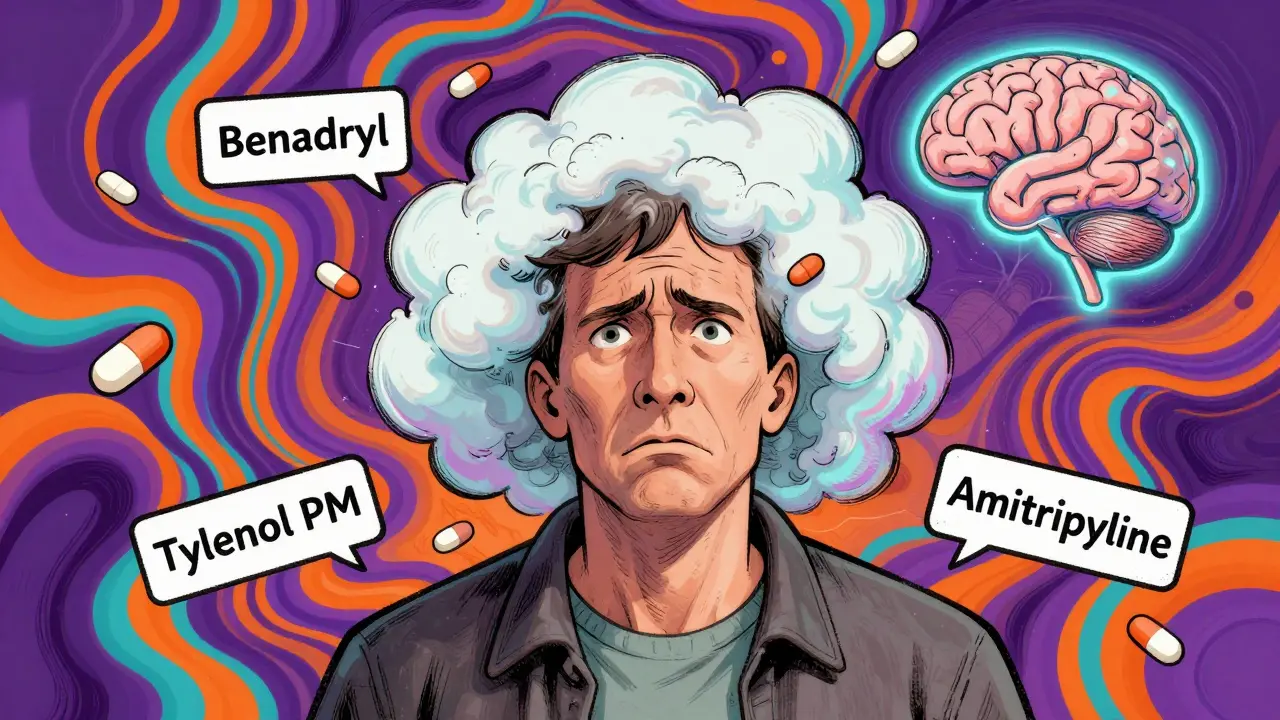
Have you ever taken a pill for sleep, pain, or allergies, only to feel like your thoughts are wrapped in cotton? You’re not alone. Every day, millions of people experience brain fog - that hazy, slow-motion feeling where words slip away, memories vanish, and focus just won’t stick. And more often than not, the culprit isn’t aging, stress, or even lack of sleep. It’s something sitting in your medicine cabinet.
What’s Really Causing Your Brain Fog?
Brain fog from medications isn’t just a vague feeling. It’s a measurable drop in cognitive function. You might forget where you put your keys, struggle to follow a conversation, or zone out during a meeting. These aren’t normal lapses. They’re side effects of drugs that interfere with how your brain sends signals.
The biggest offenders? Drugs that block acetylcholine, a chemical your brain needs to form memories and stay alert. This group is called anticholinergic drugs. They include common over-the-counter sleep aids like Benadryl and Tylenol PM, which contain diphenhydramine. Studies show people who take these regularly have a 54% higher risk of developing dementia over seven years. Even worse, they can cause memory blackouts - waking up with no recollection of the night before.
Then there are benzodiazepines and sleep hypnotics like Xanax, Ambien, and zopiclone. These don’t just make you sleepy. They quiet down parts of your brain responsible for turning short-term memories into long-term ones. Research using brain scans found these drugs can reduce memory formation by up to 30%. Ambien users report memory gaps in 15% of cases - that’s three times more than older benzodiazepines like lorazepam.
Other Medications That Quiet Your Mind
It’s not just sleep and allergy meds. Many prescriptions you might not suspect are also to blame.
Tricyclic antidepressants like amitriptyline (Elavil) have strong anticholinergic effects. People taking them are over four times more likely to develop memory problems than those on newer SSRIs like sertraline. Even worse, they’re often prescribed for nerve pain or insomnia - conditions that already make people feel foggy.
Opioids like oxycodone and hydrocodone don’t just dull pain. They mess with the brain’s memory centers. At standard doses, they can cut working memory capacity by 25%. That means holding a number in your head long enough to dial it? Harder. Following a recipe? Tougher.
And then there’s chemo brain. About 75% of cancer patients on chemotherapy report memory lapses, trouble concentrating, and mental fatigue. These symptoms often start within weeks of treatment and can last for months - sometimes years - after it ends.
Even statins, the cholesterol-lowering pills millions take daily, have been questioned. While large studies show no major memory impact for most people, a small percentage (1-2%) report noticeable fog. If you started statins and suddenly felt mentally slower, it’s worth talking to your doctor.
Who’s Most at Risk?
You don’t have to be old to experience this, but older adults are far more vulnerable. About 30% of seniors on multiple medications report cognitive side effects. Why? Their bodies process drugs slower. Their brains are more sensitive. And they’re more likely to be on several of these drugs at once.
Here’s who’s most at risk:
- People over 65
- Those taking three or more medications daily
- People with existing memory concerns
- Those using OTC sleep aids or antihistamines regularly
- Cancer patients on chemotherapy
- Anyone taking corticosteroids like prednisone at doses above 20mg/day
One 2023 AARP survey found that 62% of adults over 50 blamed their memory issues on medications - not aging. And in Amazon reviews of diphenhydramine products, over 1,200 people wrote about waking up with no memory of the night before.
How to Tell If It’s the Drug - Not Dementia
This is critical: medication-induced brain fog is usually reversible. That’s the big difference from Alzheimer’s or other neurodegenerative diseases.
With dementia, memory loss gets worse over time. It spreads. It doesn’t go away. But with drug-related fog?
- Symptoms start soon after you begin a new medication
- They get worse if you increase the dose
- They improve or vanish within days or weeks after stopping
One Reddit user, u/MemoryLapse2023, took 5mg of Ambien for two weeks and had complete memory blackouts. Within 72 hours of quitting, everything cleared up. That pattern shows up again and again - in patient forums, clinical case studies, and doctor’s offices.
If your fog appeared after starting a new pill - even if it was prescribed - the drug is likely the trigger.
What to Do: A Clear Plan for Relief
You don’t have to live with brain fog. Here’s how to take control.
Step 1: List Every Medication - Including OTC
Write down everything you take. Prescription, over-the-counter, supplements. Even that nighttime allergy pill you “only take once in a while.” Many people forget these. But they’re often the biggest culprits.
Step 2: Check Your Anticholinergic Burden
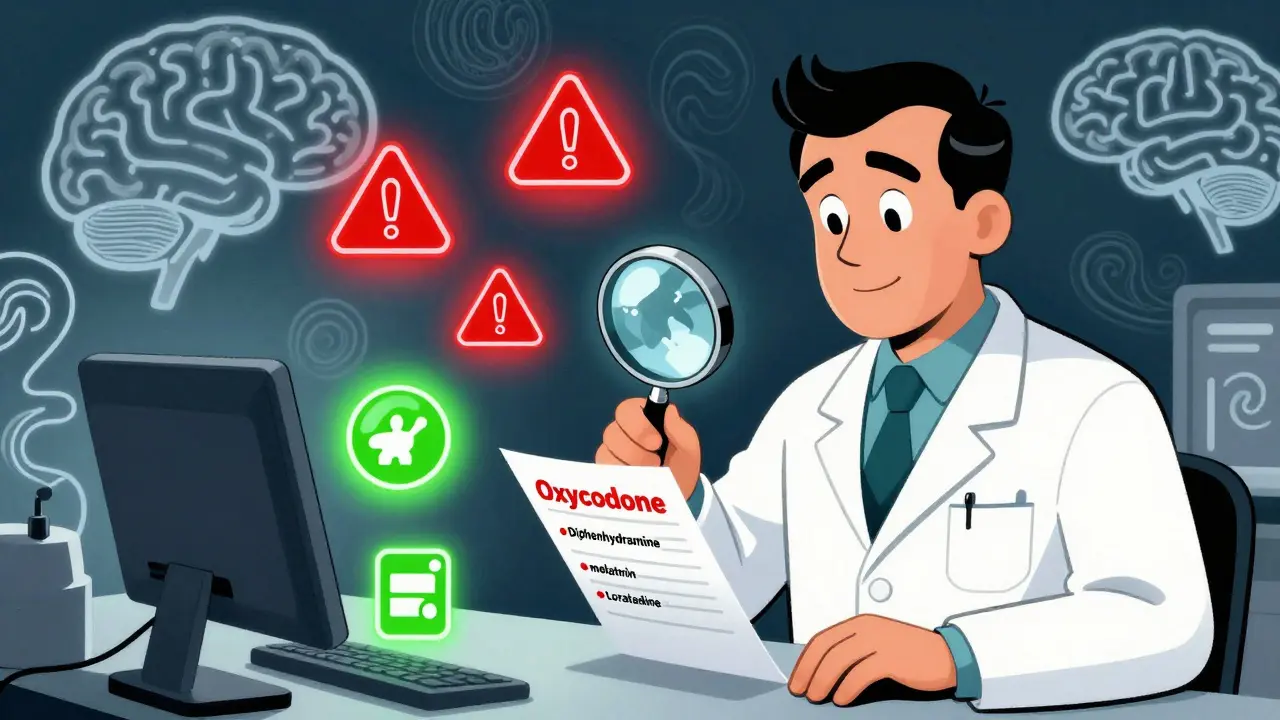
Not all anticholinergics are equal. First-generation antihistamines like diphenhydramine are high-risk. Second-generation ones like loratadine (Claritin) or cetirizine (Zyrtec) are much safer. The same goes for sleep aids: melatonin and trazodone have far less cognitive impact than Ambien or Benadryl.
Ask your doctor to check your medication list using the Drug Burden Index or Anticholinergic Cognitive Burden (ACB) scale. Many hospitals now use these tools. If your score is 2 or higher, you’re at increased risk.
Step 3: Swap High-Risk Drugs
Here are safer alternatives:
- For sleep: Try melatonin (0.5-5mg) or trazodone (25-50mg). Clinical trials show 85% of users see improvement within two weeks.
- For allergies: Switch from diphenhydramine to loratadine, cetirizine, or fexofenadine.
- For pain: Ask about duloxetine (Cymbalta) instead of opioids. It’s 40% less likely to cause brain fog.
- For depression: SSRIs like sertraline or escitalopram are far safer than tricyclics like amitriptyline.
Step 4: Time Your Doses
Simple trick: Take sleep-inducing or drowsiness-causing meds at night - not in the morning. A Johns Hopkins study found this one change reduced daytime brain fog by 35% in 78% of patients.
Step 5: Go Slow
Never stop a prescribed medication cold turkey. Work with your doctor to taper one drug at a time. If your brain fog doesn’t improve after two weeks, move to the next suspect. Most people see improvement within 3-14 days after changing a medication.

What’s Changing in 2026
The medical world is waking up. In March 2024, the FDA required all benzodiazepines to carry clear warnings about memory loss. Hospitals now use electronic systems that flag high-risk drug combinations before they’re prescribed. The NIH launched the iCARE study in January 2024 - a $12.7 million project to personalize medication choices based on genetics.
And it’s not just doctors. Pharmacists now get paid to review your meds for cognitive risk under new 2024 Medicare rules. That means you can walk into your pharmacy and ask: “Could any of my pills be making me foggy?” - and they’ll help you answer it.
Final Thought: You Have Power
Brain fog from meds isn’t a normal part of life. It’s a signal. A sign that something in your treatment plan needs adjusting. You don’t have to accept it. You don’t have to blame yourself. You just need to ask the right questions - and know which drugs to question.
Take your list. Talk to your doctor. Try one swap at a time. Many people report feeling like themselves again within days. Your memory isn’t gone. It’s just buried under the wrong pill.
Can over-the-counter sleep aids really cause memory loss?
Yes. Over-the-counter sleep aids like Benadryl, Tylenol PM, and Unisom contain diphenhydramine - a powerful anticholinergic drug. Studies show regular use increases dementia risk by 54% over seven years and can cause memory blackouts. Even occasional use can lead to next-day brain fog. Safer alternatives include melatonin or trazodone.
How long does it take for brain fog to go away after stopping a medication?
It varies, but most people notice improvement within 3-14 days. For drugs like benzodiazepines or anticholinergics, cognitive function often starts bouncing back within a week. In some cases, especially with long-term use, it may take 4-6 weeks to see full improvement on standard memory tests. Patience matters - but so does stopping the drug.
Are all antidepressants bad for memory?
No. Tricyclic antidepressants like amitriptyline have strong anticholinergic effects and are linked to a 4.2-fold higher risk of memory problems. But newer SSRIs like sertraline, escitalopram, or fluoxetine have minimal impact. In fact, their odds ratio for memory issues is only 1.8 - much closer to normal. If you’re on an older antidepressant and feel foggy, ask about switching.
Can chemotherapy cause permanent memory problems?
For about 35% of cancer patients, cognitive issues from chemotherapy - known as "chemo brain" - last beyond treatment. These include trouble focusing, slow thinking, and memory lapses. While many recover within months, others experience lingering effects for years. The good news? Cognitive rehab, exercise, and sleep hygiene can help. Talk to your oncologist about referrals.
Is there a test to see if my meds are causing brain fog?
There’s no single blood test, but doctors use tools like the Anticholinergic Cognitive Burden (ACB) scale and Drug Burden Index. These scores estimate your risk based on your medication list. Hospitals now use these in electronic records to flag high-risk combinations. You can also ask your pharmacist to run your list through one of these tools - many now offer this service for free under Medicare’s 2024 changes.
shannon kozee
March 20, 2026 AT 20:54Been on Zyrtec for years after Benadryl wrecked my focus. No more midnight grocery runs where I forget why I walked into the kitchen. Switching was the best decision I ever made.
trudale hampton
March 22, 2026 AT 03:18My grandma took Ambien for 8 years. One day she just stopped cold turkey and said she felt like she’d been living in a fog. Took 3 weeks but she’s back to reading novels and remembering birthdays. Hope this helps someone else.
Bryan Woody
March 24, 2026 AT 00:38So let me get this straight - we’ve got a whole industry built on drugging people into oblivion and calling it sleep? And now we’re shocked when their brains turn to mush? The FDA warning came in 2024? Bro it’s been obvious since 1998. We’re not patients we’re cash cows with pulse rates. And don’t even get me started on statins - you think cholesterol is the enemy? Nah. Profit is. Your doctor didn’t prescribe that for your health. They prescribed it because the rep brought free donuts.
Stop taking meds like they’re candy. Start asking questions like your memory depends on it - because it does.
Timothy Olcott
March 25, 2026 AT 12:27AMERICA IS BEING POISONED BY BIG PHARMA 😤💊☠️
They sell you pills to sleep so you can work harder so they can get richer
STOP TRUSTING DOCTORS THEY GET PAID BY THE BOTTLE
READ THE LABELS OR DIE FOGGY
Desiree LaPointe
March 25, 2026 AT 20:55Oh honey. You think this is new? I’ve been telling people since grad school that diphenhydramine is just a chemical lobotomy in a pill bottle.
And yet here we are - 2024 - and people still think ‘OTC’ means ‘harmless.’ Sweetheart, if it makes you sleepy, it’s not a snack. It’s a sedative. And if you’re taking it weekly? Congrats. You’re basically running a low-grade cognitive experiment on yourself.
Also - ‘chemo brain’? That’s not even the half of it. Try being on prednisone for six months and then trying to remember your own child’s middle name. It’s not a metaphor. It’s a tragedy wrapped in a prescription.
Jackie Tucker
March 27, 2026 AT 14:35It’s not the drugs. It’s the narrative. We’ve been conditioned to believe that cognitive decline is inevitable - so we reach for convenience instead of confronting the deeper rot: our relationship with medicine as a cultural crutch.
There’s a philosophical vacuum here. We don’t ask why we need to sleep with chemicals. We don’t interrogate why pain is treated with opioids instead of rest, movement, or community. We outsource our biology to corporations that sell us dreams in tablet form.
And then we wonder why we forget our own names.
Shaun Wakashige
March 27, 2026 AT 22:42Yeah whatever. I take Benadryl once a month and I'm fine. You people are overreacting. 😑
Paul Cuccurullo
March 29, 2026 AT 22:17I want to thank you for writing this with such clarity and compassion. As someone who helped my mother taper off amitriptyline, I can attest - the relief was almost immediate. She started remembering our conversations. She laughed again. This isn’t just medical advice. It’s a gift to families.
Solomon Kindie
March 31, 2026 AT 18:52anticholinergic burden is a real thing but you know what's worse? The fact that no one talks about how the system rewards prescribing these drugs because they're cheap and insurance pays for them
doctors get bonuses for hitting targets and patients get foggy brains
the real problem isn't the meds it's the economics of healthcare
you think your pharmacist cares? they're paid per script not per brain function
and don't even get me started on how Medicare incentivizes polypharmacy
we're not in a medical crisis we're in a financial one
Nicole James
April 2, 2026 AT 05:01Did you know the FDA knew about this since the 1980s? And they buried it? And the pharmaceutical companies? They funded studies that said ‘no link’? And now they’re ‘warning’ us? It’s all a scam.
They’re not trying to help you - they’re trying to make you dependent on MORE drugs to fix the damage from the first ones.
They’re testing this on seniors because they think we’re easy to manipulate.
Check your pills. Look up the manufacturer. See if they have ties to the military-industrial complex.
I’ve been tracking this since 2017. This isn’t medicine. It’s psychological warfare.