
First-Generation Antihistamine Risk Calculator
Select the factors that apply to you to estimate your risk of impairment.
Your Risk Profile
Based on current medical guidelines
You are currently at a low risk of severe impairment if taken as directed for acute symptoms.
Critical Warning
Do not drive or operate machinery.
You take a single pill for your itchy eyes or a bad case of hives. Within thirty minutes, the itching stops. But then, you feel it. A heavy fog settles over your brain. Your eyelids droop. You stumble to bed, only to wake up eight hours later feeling like you’ve been hit by a truck. This isn’t just "sleepiness." It is a profound physiological shutdown caused by first-generation antihistamines, a class of drugs that includes household names like Benadryl (diphenhydramine) and Phenergan (promethazine).
We often treat these medications as harmless over-the-counter fixes. We pop them for allergies, insomnia, or motion sickness without thinking twice. But there is a reason doctors are increasingly warning against their use, especially for older adults. These drugs don't just block histamine; they flood your central nervous system with sedative and anticholinergic effects that can linger for nearly a full day.
The Blood-Brain Barrier Breach
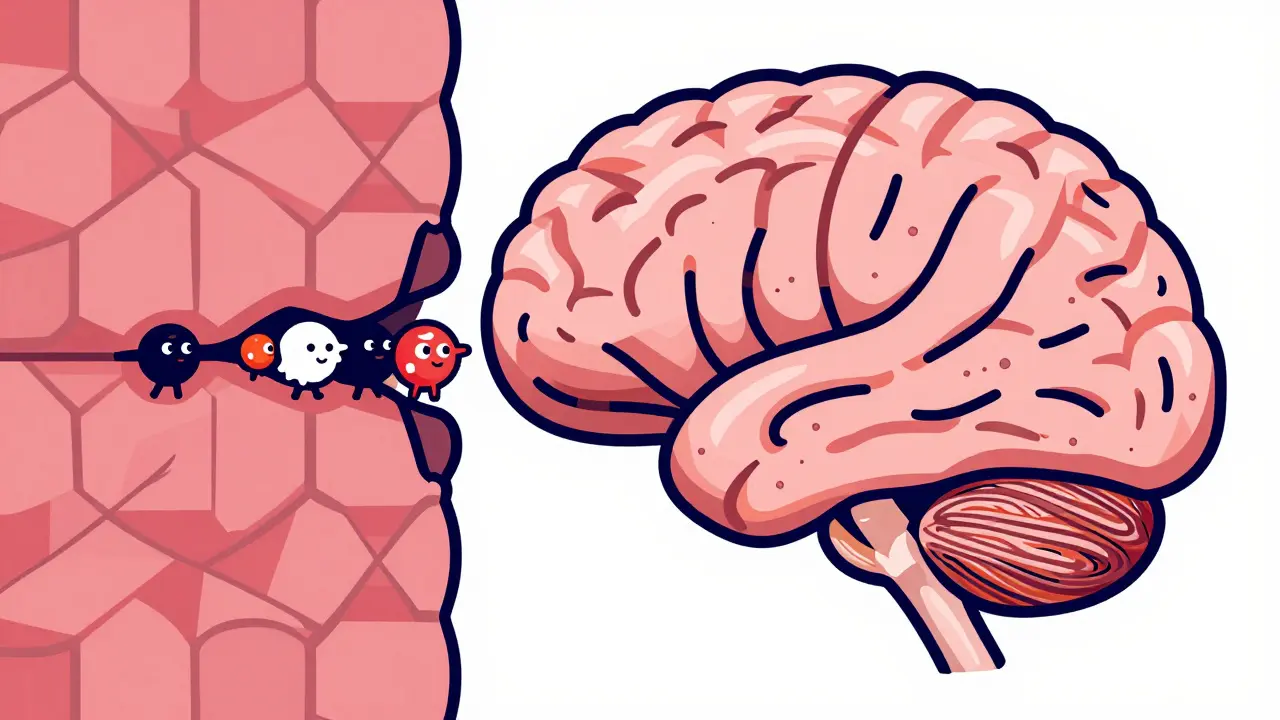
To understand why first-generation antihistamines make you so sleepy, you have to look at how they move through your body. The human brain is protected by a highly selective filter called the blood-brain barrier. This barrier keeps toxins out but allows essential nutrients in. First-generation antihistamines are chemically designed to slip right past this guard.
These molecules are small and lipophilic, meaning they dissolve easily in fats. This property allows them to cross the fatty membranes of the blood-brain barrier with ease. Once inside the brain, they bind to H1 receptors not just on the surface of your skin, but deep within your central nervous system. Studies show that after a standard dose, brain concentrations of drugs like diphenhydramine can reach 15-25 ng/mL within an hour. In contrast, newer second-generation antihistamines stay mostly out of the brain, maintaining levels below 1 ng/mL.
This difference in penetration explains the drastic change in side effects. When these drugs occupy H1 receptors in the brain, they disrupt normal neurotransmitter activity. The result is significant sedation. Research using driving simulators shows that first-generation antihistamines create a "sedation index" of 0.7 to 0.9, where 1.0 represents maximum impairment. Second-generation alternatives score between 0.1 and 0.3. Essentially, taking a first-gen antihistamine impairs your reaction time and attention span similarly to having a blood alcohol content near the legal limit for driving.
What Are Anticholinergic Effects?
Sedation is the most obvious side effect, but it’s not the only one. First-generation antihistamines are "dirty" drugs in pharmacological terms. They don't just target H1 receptors; they also bind strongly to muscarinic acetylcholine receptors. These two receptor types share about 45% structural similarity, which confuses the drug into binding to both.
When the drug blocks acetylcholine, a key neurotransmitter responsible for muscle contraction and glandular secretion, you experience what is known as anticholinergic effects. These symptoms can be uncomfortable and sometimes dangerous:
- Dry mouth: Saliva production drops significantly, leading to discomfort and increased risk of dental decay.
- Blurred vision: The muscles controlling pupil size and lens focus become sluggish.
- Urinary retention: The bladder muscle relaxes, making it difficult to empty the bladder completely. This is particularly risky for men with enlarged prostates.
- Constipation: Gut motility slows down, leading to digestive stagnation.
- Cognitive impairment: Acetylcholine is vital for memory and learning. Blocking it leads to confusion, forgetfulness, and "brain fog."
For many users, these effects are mild annoyances. For others, particularly the elderly, they signal a serious health risk. The American Geriatrics Society Beers Criteria explicitly lists first-generation antihistamines as potentially inappropriate for older adults. Chronic use is associated with a 54% increased risk of cognitive decline and dementia. The cumulative burden of blocking acetylcholine in the aging brain appears to accelerate neurodegenerative processes.
Why Do We Still Use Them?
If the side effects are so severe, why haven't we abandoned first-generation antihistamines? There are three main reasons: cost, specific therapeutic benefits, and habit.
First, they are cheap. A bottle of 24 diphenhydramine tablets costs around $5, while equivalent doses of newer prescription-strength antihistamines can cost $15 or more. For budget-conscious consumers, the price difference is compelling.
Second, their side effects are actually useful in certain contexts. Because they cause such strong drowsiness, they are effective short-term treatments for insomnia. They reduce sleep onset latency by 30-40 minutes. Similarly, their ability to calm the inner ear makes them superior for treating motion sickness, with efficacy rates of 70-80% compared to 40-50% for second-generation drugs. They also possess antiemetic properties, helping to stop nausea and vomiting.
Third, familiarity breeds trust. Many people grew up seeing their parents take Benadryl for colds or allergies. The cultural association with safety persists, even as medical guidelines shift. However, this habit ignores the reality that these drugs were developed between 1937 and 1950, long before our current understanding of neuropharmacology.

Who Is Most at Risk?
Not everyone reacts to first-generation antihistamines in the same way. Genetics play a surprising role. These drugs are metabolized by enzymes in the liver, specifically CYP2D6 and CYP3A4. People who are "poor metabolizers" due to genetic variations process these drugs much slower. They can experience brain concentrations two to three times higher than average, leading to prolonged and intense sedation.
Age is the biggest risk factor. As we age, our bodies clear drugs less efficiently, and our brains become more sensitive to anticholinergic effects. An adult might feel mildly groggy for four hours; an older adult might experience confusion and falls for the entire day. This is why regulatory bodies are tightening restrictions. In 2022, the UK banned over-the-counter sales of promethazine to minors, citing safety concerns. The FDA has issued warnings about operating machinery, noting that impairment can last up to six hours, though some studies suggest cognitive deficits persist for up to 18 hours.
Combining these drugs with alcohol is another major danger. Alcohol increases the permeability of the blood-brain barrier, allowing 40-60% more of the antihistamine to enter the brain. This synergy can lead to dangerous levels of respiratory depression and extreme sedation.
| Feature | First-Generation (e.g., Diphenhydramine) | Second-Generation (e.g., Cetirizine, Loratadine) |
|---|---|---|
| Brain Penetration | High (Crosses blood-brain barrier easily) | Low (Stays mostly in peripheral tissues) |
| Sedation Level | Severe (Impairs driving/reaction time) | Mild to None |
| Anticholinergic Effects | Common (Dry mouth, urinary retention) | Rare |
| Duration of Action | 4-6 Hours | 12-24 Hours |
| Best Used For | Insomnia, Motion Sickness, Acute Allergies | Chronic Allergies, Daytime Use |
| Cost | Low ($5 for 24 tabs) | Higher ($15+ for generic equivalents) |
Practical Advice for Safe Use
If you must use a first-generation antihistamine, follow these rules to minimize harm:
- Take them at night. Never take these drugs during the day if you need to drive, operate machinery, or perform tasks requiring mental clarity. The "hangover effect" is real and can impair you well into the next morning.
- Avoid alcohol. Even small amounts of alcohol can dangerously amplify the sedative effects.
- Limit duration. Use these drugs for acute issues like a sudden allergic reaction or a single night of insomnia. Do not use them daily for chronic allergies.
- Check other medications. Many common drugs, including some antidepressants, antipsychotics, and bladder control medications, also have anticholinergic properties. Combining them creates an additive effect that can lead to toxicity.
- Elderly caution. If you are over 65, avoid these drugs entirely unless explicitly prescribed and monitored by a doctor who understands the dementia risks.
The landscape of allergy treatment is changing. Newer "third-generation" antihistamines are currently in clinical trials, designed to offer the potency of older drugs without crossing the blood-brain barrier. Until those become widely available, the choice is clear: for daytime allergy relief, choose a second-generation option. Reserve first-generation antihistamines for specific, short-term needs like severe motion sickness or occasional sleeplessness, and always respect their powerful impact on your brain.
How long does the drowsiness from Benadryl last?
While the label says 4-6 hours, studies show cognitive impairment and drowsiness can persist for up to 18 hours in some individuals. It is safest to assume you will be impaired for the rest of the day and part of the next morning.
Are first-generation antihistamines safe for seniors?
Generally, no. The American Geriatrics Society advises against their use in older adults due to high risks of confusion, falls, urinary retention, and long-term cognitive decline. Safer alternatives exist.
Why do these drugs cause dry mouth and blurred vision?
These are anticholinergic side effects. The drugs block acetylcholine receptors, which control saliva production and eye muscle focus. This is a separate mechanism from how they stop itching.
Can I drink alcohol while taking diphenhydramine?
No. Alcohol increases the amount of drug that enters the brain by 40-60%, significantly worsening sedation and increasing the risk of dangerous respiratory depression.
Is it better to use Zyrtec or Benadryl for allergies?
For most people, Zyrtec (cetirizine) or Claritin (loratadine) is better because they provide similar allergy relief without the severe drowsiness and cognitive impairment. Benadryl should be reserved for nighttime use or specific conditions like motion sickness.