Imagine ordering a medication you need for a chronic condition, only to find out the pills are actually filled with toxic levels of a chemical or, worse, contain no active ingredient at all. It sounds like a nightmare, but it's a reality for thousands of people every year. The FDA has warned that a staggering 96% of pharmacy websites globally are illegal operations. When you're dealing with your health, "guessing" if a website is legit isn't an option. You need a way to separate the professional medical services from the dangerous storefronts.
The good news is that licensed online pharmacies operate under strict rules and are easy to spot if you know where to look. A legitimate service doesn't just sell pills; it manages your health with the same care as a local drug store. This guide will show you exactly how to verify a service so you can get your medication without risking your life.
Quick Safety Checklist for Online Pharmacies
Before you enter your credit card details, run through this fast check. If a site fails even one of these, leave immediately.
- Prescription Required: Do they demand a valid prescription from your doctor? (If they say "no prescription needed," it's a scam).
- Physical Address: Is there a real street address and a working phone number listed?
- Pharmacist Access: Can you actually speak with a licensed pharmacist for a consultation?
- Secure Connection: Does the URL start with
https://and show a padlock icon? - Payment Method: Do they use standard credit cards or demand weird payments like wire transfers or crypto?
How to Verify Legitimacy Using Industry Standards
Looking at a website's design isn't enough; scammers are great at making things look professional. You need to use third-party verification tools that actually check the legal licenses of the business.
One of the gold standards is the VIPPS is an accreditation program developed by the National Association of Boards of Pharmacy (NABP) to identify safe internet pharmacy sites. If a pharmacy has the VIPPS seal, it means they've met 17 strict criteria across categories like medication safety, privacy, and pharmacy practice standards. However, be careful: the FDA has warned that some illegal sites use fake images of the VIPPS seal. Don't just trust the picture; use the NABP Safe Site Search Tool to confirm the accreditation in their database.
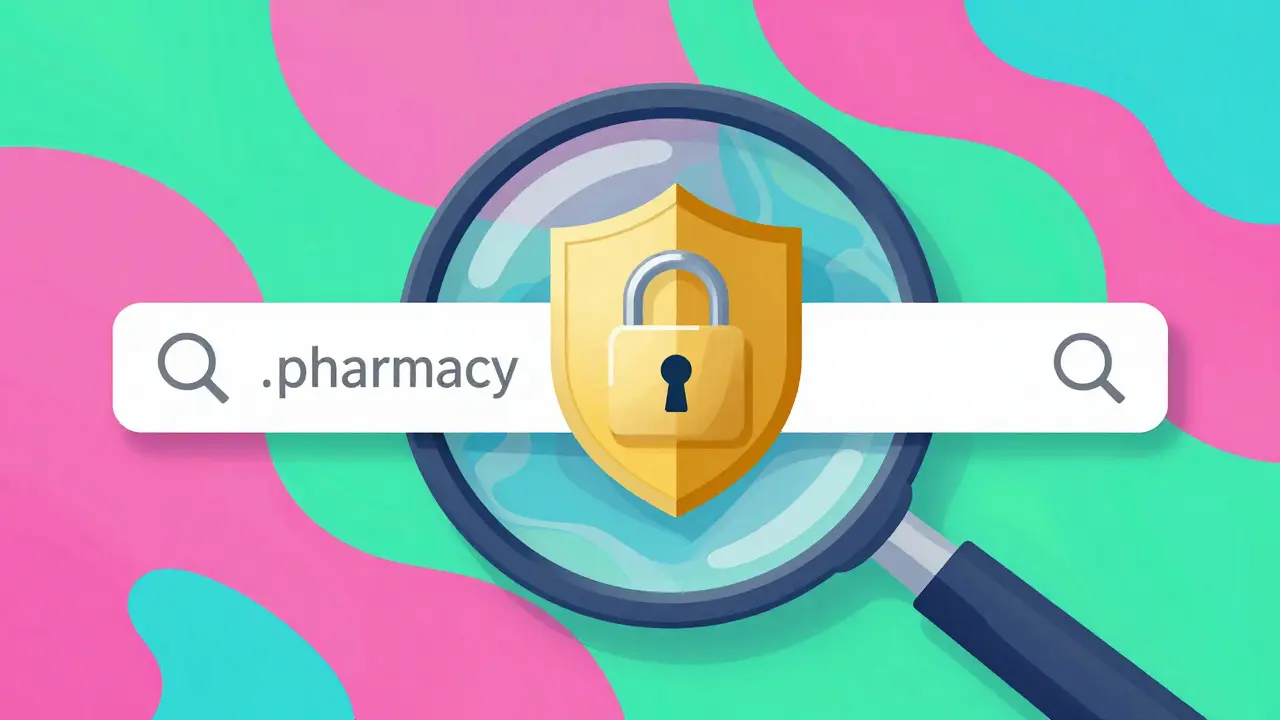
Another highly reliable indicator is the .pharmacy domain. This isn't just a fancy web address; it's a restricted domain. To get a
.pharmacy domain is
a specialized top-level domain managed by NABP that requires rigorous licensing verification before a site can use it.
If a site ends in .pharmacy, it's a strong signal they've passed a vetting process.
For those looking at international options, especially from Canada, be extra cautious. Many sites claim to be "Canadian pharmacies" to sound more legitimate, but NAPRA reports that about 42% of these sites actually operate from other countries. Always verify through provincial pharmacy regulatory authorities to ensure they are actually licensed in Canada.
| Feature | Licensed Pharmacy | Illegal/Rogue Site |
|---|---|---|
| Prescription Requirement | Mandatory for prescription drugs | Often optional or "prescribed online" |
| Pharmacist Access | Available for consultation | No professional access |
| Licensing | Verified by state/provincial boards | Fake or missing licenses |
| Payment | Secure credit/debit portals | Wire transfers, Crypto, Western Union |
| Pricing | Fair market value | "Too good to be true" discounts |
The Danger of "No-Prescription" Sites
It might seem convenient to get medication without a doctor's visit, but this is the biggest red flag in the industry. When a site bypasses the prescription process, they are bypassing the safety check that ensures the drug is right for your body and won't interact dangerously with other meds you're taking.
The risks are concrete. Consumer Reports previously found cases where counterfeit "Viagra" contained toxic levels of active ingredients, exceeding labeled amounts by 200-300%. This can lead to heart failure or severe allergic reactions. Legitimate services, like Express Scripts is a major pharmacy benefit manager and licensed mail-order pharmacy service, always insist on a valid script because that is the only way to ensure patient safety.
Step-by-Step Verification Protocol
If you've found a pharmacy you want to use, follow this exact workflow to ensure you're safe. This process usually takes about 15 minutes but can save you from a medical emergency.
- Check the URL: Ensure it is
https://. Check for the.pharmacyextension. - Search the BeSafeRx Tool: Use the BeSafeRx is an FDA-supported resource that helps consumers verify if an online pharmacy is licensed location tool to cross-reference the site with state board databases.
- Validate the Address: Google the physical address listed on the site. If it's a residential home or a PO box, be wary.
- Contact the Pharmacist: Send a question about your medication. A real pharmacy will have a licensed professional answer you; a scam site will give you a generic customer service response.
- Confirm the Seal: If they show a VIPPS or LegitScript seal, go to the official NABP or LegitScript website and search for the pharmacy by name to see if the seal is actually active.
Common Pitfalls and Red Flags
Scammers are getting better at mimicking real stores. Here are a few subtle things that often trip people up.
First, watch out for "mystery shopping" or "too-good-to-be-true" pricing. If a medication costs $500 at your local pharmacy and this site is selling it for $50, it's likely a counterfeit. Real pharmacies have overhead and wholesale costs; they can't just give drugs away for 90% off.
Second, be cautious of sites that push you toward "telehealth" consultations that feel rushed. While legitimate telehealth is great, some rogue sites use a "rubber stamp" doctor who approves any prescription without a real exam just to get your money. A real Healthcare Provider is a licensed medical professional who evaluates a patient's health history before issuing a prescription will ask you detailed questions about your health and current medications.
Is it legal to buy prescription drugs online?
Yes, it is legal as long as the pharmacy is licensed in the jurisdiction where it operates and you have a valid prescription from a licensed healthcare provider. The illegality comes from buying from unlicensed "rogue" pharmacies or purchasing controlled substances without a prescription.
What should I do if I think I received counterfeit medicine?
Stop taking the medication immediately. Contact your doctor to see if you need medical attention and report the incident to the FDA's MedWatch program. This helps regulators track illegal operations and warn other consumers.
Why do some sites ask for payment in Bitcoin or wire transfers?
This is a massive red flag. Legitimate pharmacies use secure payment processors (credit cards, PayPal) because these methods provide consumer protection and a paper trail. Crypto and wire transfers are irreversible, meaning once you send the money, you have no way to get it back if the drugs never arrive or are fake.
Are all .pharmacy websites safe?
While the .pharmacy domain is highly restricted and requires verification by the NABP, you should still perform your own due diligence. Always check for a valid prescription requirement and a physical address, as no single marker is 100% foolproof.
How can I tell if a VIPPS seal is fake?
A fake seal is just an image on a page. A real accreditation can be verified by visiting the National Association of Boards of Pharmacy (NABP) official website and using their search tool to see if the pharmacy is currently listed as accredited.
Next Steps for Your Safety
If you're currently using an online service and aren't sure if it's safe, don't wait for a bad reaction to check. Go to the BeSafeRx website today and plug in the pharmacy's name. If you can't find a physical address or a way to talk to a pharmacist, it's time to switch to a verified provider.
For those who prefer a set-and-forget approach, consider using a pharmacy benefit manager or a large, well-known mail-order service provided by your insurance. These usually have the most rigorous vetting processes and the highest level of regulatory oversight, removing the guesswork from your healthcare.
David Snyder
April 13, 2026 AT 19:07This is a really helpful breakdown for anyone feeling overwhelmed by the options online. It is great to see a clear path to staying safe!
Clint Humphreys
April 14, 2026 AT 09:30It is all well and good to trust these official seals but we have to ask ourselves who actually monitors the monitors in this corporate pharmacy complex. If you look at the way these regulatory bodies are funded you will see a revolving door between the big pharma lobbyists and the people writing the safety standards which makes me wonder if the .pharmacy domain is just another way to create a monopoly on the market. I mean just think about the data collection happening in the background while you are clicking those secure links because your health history is the most valuable commodity on the dark web right now and these government-backed sites are basically just honeypots for the deep state to keep tabs on who is taking what medication and why. It's a friendly reminder to keep your eyes open because the system is designed to make you feel safe while they consolidate power over every single pill you swallow from birth to death.
Kenzie Evans
April 14, 2026 AT 21:29Imagine thinking a checklist is enough to stop a professional scammer in 2024. This is basic stuff that anyone with half a brain already knows so why is it being presented as some kind of revolutionary guide?
john chiong
April 16, 2026 AT 15:35absolute madness that people still fall for those fake canadian sites when the red flags are screaming in your face
Scott Lofquist
April 18, 2026 AT 09:21Actually, the .pharmacy TLD is far more rigorous than most people realize 🙄. Most of you probably don't even know how DNS verification works in the first place, but it's not just some random registration fee. It's literally an ecosystem of trust 🛡️. If you can't see the value in that, you're just ignoring the evolution of digital healthcare 💊.
melissa mac
April 18, 2026 AT 17:10I think it's important to remember that some people might be using these sites because they truly cannot afford their local pharmacy. We can encourage safety while also acknowledging the systemic issues that drive people to these risky alternatives.
Olivia Lo
April 18, 2026 AT 21:32The intersection of pharmaceutical jurisprudence and digital accessibility creates a complex ontological tension. We must consider the heuristic frameworks used to determine legitimacy while maintaining a cautious epistemological approach to the claims made by regulatory bodies. It is a delicate balance between patient autonomy and the necessity of institutional oversight to prevent iatrogenic harm from counterfeit agents.
Catherine Mailum
April 19, 2026 AT 16:23oh wow because a website that asks for my credit card is just so much more trustworthy than everything else in my life right now lol
Milo Tolley
April 21, 2026 AT 09:04The sheer audacity of these rogue entities!!! They are essentially bypassing all Pharmacopeia standards!!! It is an absolute catastrophe for patient safety!!!
Billy Wood
April 22, 2026 AT 00:59STAY SAFE EVERYONE!!! CHECK THOSE LINKS!!!
Mary Johnson
April 23, 2026 AT 09:37You people are so naive if you think the FDA is actually protecting you. They probably run half of these rogue sites themselves to see who is trying to get around the system so they can flag you as a dissident. I've seen the patterns and the way these' guides' are written is exactly how they bait you into using 'approved' channels that are just tracking devices for your biological data. It's a trap and you're all walking right into it while pretending you're being 'safe'.
Jasmin Stowers
April 24, 2026 AT 14:54totally agree
Princess Busaco
April 25, 2026 AT 06:29It is honestly exhausting how many people need to be told not to buy medicine from a website that accepts Bitcoin. I mean really, do we have to spell out every single obvious detail for the masses? I've spent years studying the nuances of consumer behavior and the level of ignorance displayed by the average internet user is truly staggering. It is a tragedy of the modern age that we have all this information at our fingertips and yet people still treat their health like a gamble at a cheap casino. If you can't take five minutes to verify a domain, you probably shouldn't be managing your own medication anyway.
Tabatha Pugh
April 26, 2026 AT 11:05I actually looked up some of these sites and it's crazy how many of them just copy-paste their 'About Us' sections from each other. I bet half the people reading this don't even know how to use a WHOIS lookup to see where the server is actually hosted.