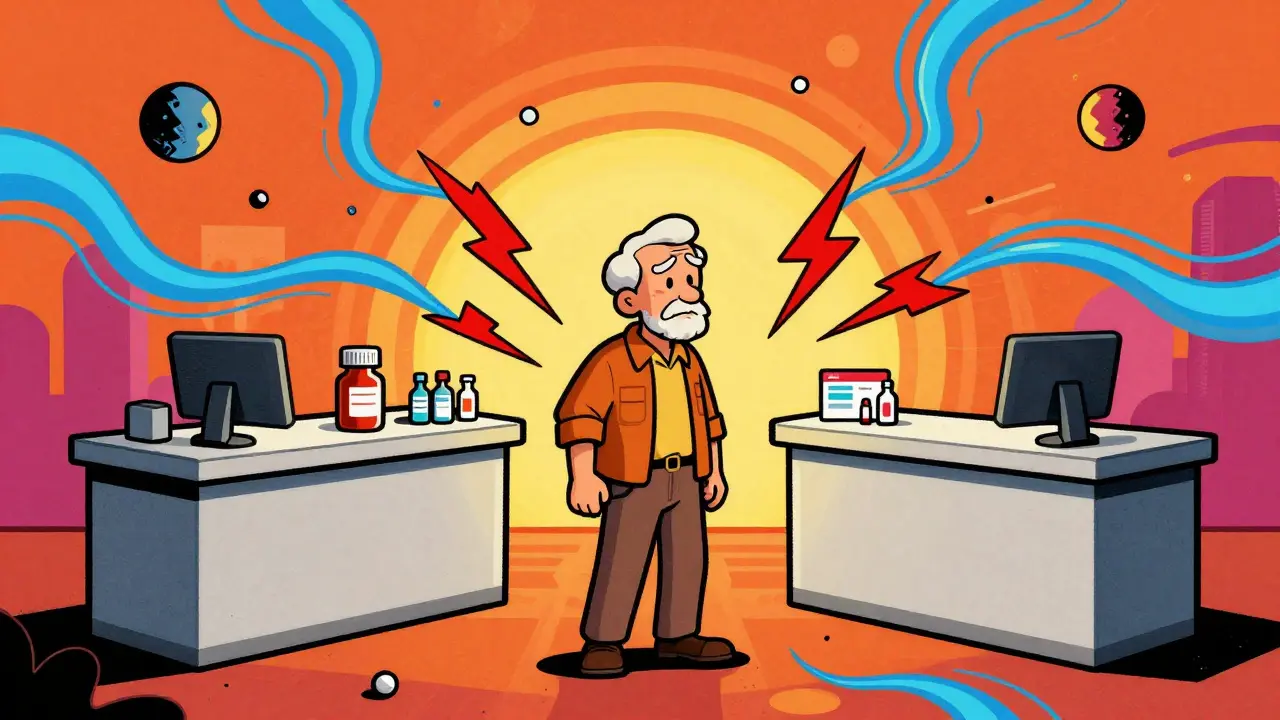
Imagine this: your father takes heart medication from the pharmacy downtown. He moves to assisted living on the other side of town. The new pharmacist doesn't see his full history because the two pharmacies use different systems. Suddenly, he's prescribed a blood thinner that clashes with his existing heart pill. This isn't just a hypothetical nightmare; it happens far too often in fragmented healthcare networks.
If you are managing care for seniors across multiple locations-whether you run a chain of pharmacies or coordinate care for family members seeing different doctors-the risk of error spikes. The good news? Centralized pharmacy management software is technology that connects multiple pharmacy locations into one unified system to track prescriptions, inventory, and patient data securely has evolved to solve this exact problem. It’s no longer about just counting pills; it’s about creating a safety net that follows the patient everywhere they go.
The Hidden Dangers of Disconnected Systems
When pharmacies operate in silos, data gets lost. For seniors who often take five or more medications daily, this fragmentation is dangerous. Studies show that without standardized drug databases, prescription errors occur in 1.3% of multi-location scenarios. That might sound small, but in a busy community, that translates to dozens of missed interactions or duplicate therapies every month.
The core issue is usually inconsistent naming conventions. One system might list a drug by its brand name, while another uses the generic code. Dr. William Eggleston, a Professor of Pharmacy Practice at Binghamton University, notes that centralized systems reduce these errors by standardizing nomenclature. In fact, 17% of errors in multi-pharmacy settings stem directly from inconsistent drug naming. When you connect the dots, you stop relying on memory and start relying on verified data.
What Centralized Software Actually Does
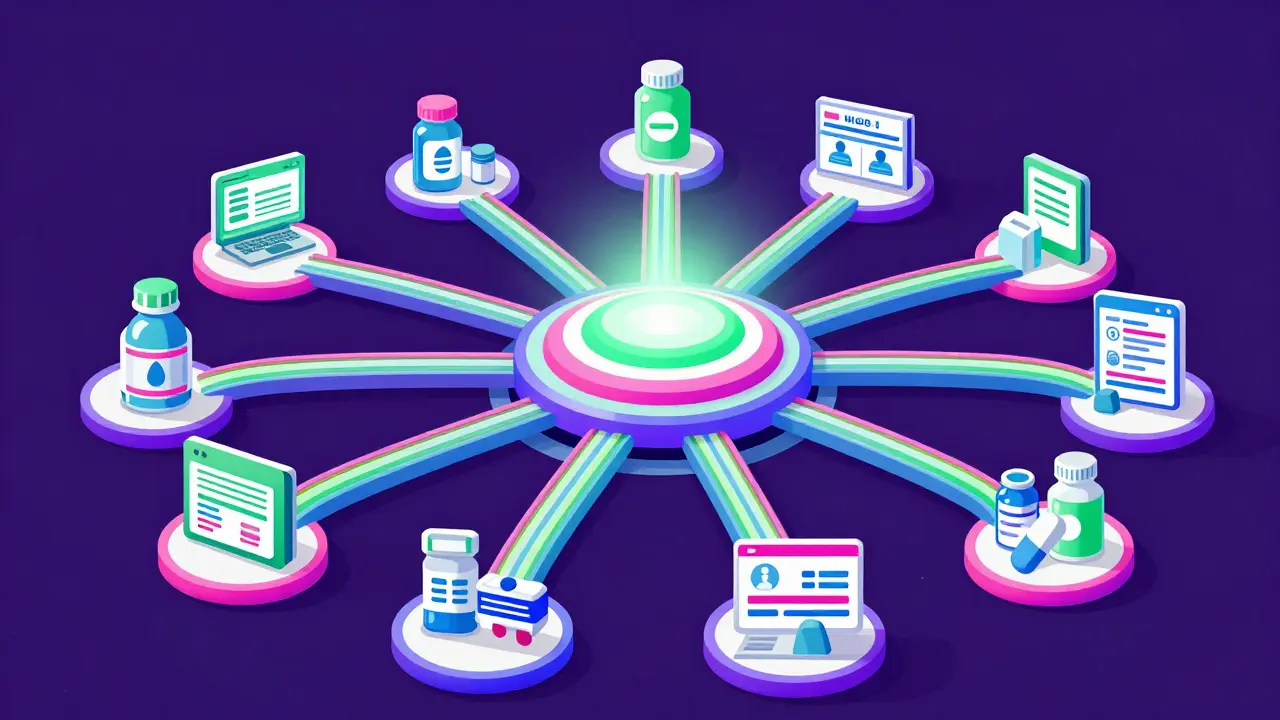
Think of centralized software as the brain of your operation. Instead of each location keeping its own separate diary of patient records, everything syncs to a central hub. Here is what that looks like in practice:
- Universal Drug Files: Every location sees the same National Drug Codes (NDC), pricing, and medication names. If a prescriber writes "Lisinopril," every pharmacist knows exactly which formulation is being referenced.
- Cross-Location Patient Profiles: A patient can fill a prescription at Store A, have their refill sent to Store B, and still have their full allergy history visible to the pharmacist at Store C.
- Real-Time Inventory Balancing: If Store A runs out of a critical senior medication, the system automatically checks Store B and suggests a transfer, preventing delays in care.
Systems like EnterpriseRx by McKesson and PrimeRx by PioneerRX have become industry standards because they handle this complexity seamlessly. EnterpriseRx, for instance, uses load balancing to reduce prescription wait times by 32% across high-volume chains. Meanwhile, PrimeRx allows patients to designate preferred pickup locations, ensuring continuity even if their routine changes.
Security: Protecting Sensitive Health Data
With great connectivity comes great responsibility. You cannot simply share patient data without robust security. HIPAA compliance is non-negotiable, but modern threats require more than just basic passwords.
Leading platforms now use AES-256 encryption for all data transfers between locations. This means that even if data is intercepted during transmission, it remains unreadable. Additionally, tools like DocStation implement FIDO2 security keys for central office authorization. This biometric-level security reduced unauthorized prescription access by 94% in recent implementations. For families managing care, knowing that only authorized clinicians can view or alter a senior’s profile provides peace of mind that goes beyond simple privacy-it ensures integrity.
| Platform | Best Feature for Safety | Cost Structure | Uptime Guarantee |
|---|---|---|---|
| EnterpriseRx | Real-time patient profile access reduces duplicate therapy by 29% | $450/location/month (discounts for 15+ stores) | 99.99% SLA |
| PrimeRx Pro | Seamless prescription transfer across preferred locations | Competitive tiered pricing | 99.98% (verified 2022-2023) |
| Datascan Central Store | AI Watchdog detects diversion patterns with 92.4% accuracy | Custom quotes based on volume | Daily automated sync |
| DocStation | Integrated clinical services and vaccine tracking | Subscription-based per location | High availability cloud architecture |
The Human Element: Avoiding Over-Centralization
Technology is powerful, but it isn't infallible. Dr. Linda Tyler, Chief Pharmacist at Mayo Clinic, warns against "over-centralization without local clinical oversight." She points out that 12% of medication errors in chain pharmacies happen during prescription transfers when local pharmacists fail to verify transferred scripts. The system flags the interaction, but the human must make the final call.
The solution is a "hub-and-spoke" model. The central system manages the drug files, pricing, and broad safety alerts (the hub). However, local pharmacists retain authority over clinical decisions (the spokes). This hybrid approach reduced medication errors by 38% in a 2023 study by the University of California. It respects the expertise of the local pharmacist while leveraging the power of big data.
Implementation: What to Expect
Switching to a centralized system is not plug-and-play. It requires preparation. On average, deployment for a chain of 5-10 locations takes 8-12 weeks. Staff training averages 16 hours for technicians and 24 hours for pharmacists. Chains report 12% higher adoption rates when using vendor-certified trainers rather than internal staff trying to teach themselves.
Be prepared for data migration hiccups. About 27% of chains experience prescription history discrepancies during the transition. This means you may need to manually verify up to 14.7% of active patient profiles initially. Plan for this downtime. Communicate with patients early. Explain that the short-term inconvenience leads to long-term safety.
Future-Proofing Your Care Strategy
The landscape is shifting rapidly. By 2027, the Pharmacy Quality Alliance predicts centralized systems will be mandatory for chains with three or more locations. Regulatory bodies like CMS now require cross-location error tracking for Medicare Part D compliance. Furthermore, AI features are becoming standard. Datascan’s AI Watchdog 2.0, launched in early 2024, analyzes prescription patterns to identify potential diversion with remarkable accuracy. Meanwhile, integrations with Epic EHR systems allow real-time communication between pharmacies and hospital prescribers, closing the gap where 18% of medication errors originate.
For seniors, this means fewer trips to the doctor for reconciliation, fewer phone calls to clarify dosages, and a higher likelihood that their complex medication regimens work together harmoniously. It’s not just about efficiency; it’s about dignity and health.
Is it safe to switch pharmacies frequently for seniors?
Frequent switching is risky unless the pharmacies share a centralized database. Without shared records, pharmacists cannot see previous prescriptions, increasing the chance of dangerous drug interactions. Always ensure the new pharmacy can access the patient's full history before transferring any medications.
How much does multi-pharmacy management software cost?
Costs vary significantly. Basic solutions like Liberty Software's PharmacyOne start around $299 per location monthly. Premium enterprise solutions like McKesson's EnterpriseRx charge approximately $450 per location, though volume discounts apply for larger chains. Consider the cost of errors versus the subscription fee; the ROI in safety is substantial.
Can family members access these centralized systems?
Most professional pharmacy management systems do not offer direct public access due to HIPAA regulations. However, many integrate with patient portals or apps that allow authorized caregivers to view refill statuses and medication lists. Check with your specific provider for caregiver access options.
What is the "hub-and-spoke" model in pharmacy management?
The hub-and-spoke model centralizes administrative tasks like drug file maintenance and pricing (the hub) while leaving clinical decision-making to local pharmacists (the spokes). This balances efficiency with personalized care, reducing errors by 38% compared to fully automated or fully decentralized models.
How long does it take to implement a centralized pharmacy system?
Implementation typically takes 8-12 weeks for small to mid-sized chains. This includes data migration, staff training (16-24 hours per employee), and testing. Expect some initial disruption as historical data is verified, but proper planning minimizes impact on daily operations.
Jonhnnie john13
June 7, 2026 AT 23:13the stats are nice but you ignore the massive overhead of migrating legacy data. most chains fail because they dont clean their historical records before switching.
Roderick Gooden
June 8, 2026 AT 13:25I have to say that while I appreciate the detailed breakdown of the various software options available in the market today, it is absolutely crucial for any organization looking to implement such a system to consider the long-term implications of vendor lock-in and the potential for increased operational costs over time which can often outweigh the initial savings promised by these centralized platforms especially when you factor in the ongoing maintenance fees and the necessity for continuous staff training programs that must be updated regularly as the software evolves and new features are introduced which requires significant investment of both time and resources from the pharmacy management team who are already stretched thin dealing with daily operations and patient care responsibilities.
ANGELA CHINENYE
June 10, 2026 AT 12:47It is important to note that HIPAA compliance is not just about encryption; it involves strict access controls and audit trails. Ensure your chosen platform provides real-time monitoring of user activity to prevent unauthorized access. Regular audits are essential.
Aishwarya Thankachan
June 12, 2026 AT 12:15OMG this is so true! 😱 The interoperability issues are literally killing us. We need better API standards between Epic and Cerner instead of these proprietary silos. 🤦♀️ #HealthTechFail
Jerry Mathews
June 13, 2026 AT 08:56Hey everyone, just wanted to chime in that the hub-and-spoke model really works if you trust your local pharmacists. Don't let the tech override clinical judgment. Keep it simple and human.
Lenny Cruz
June 13, 2026 AT 18:27Centralized systems are a dystopian nightmare for privacy advocates. You're creating a honeypot for hackers. Decentralized ledgers would be safer, but nobody wants to deal with the complexity. Typical.
Aswin Narayan J
June 14, 2026 AT 05:35In India we still struggle with basic digital records in rural areas. This luxury of 'over-centralization' is irrelevant where connectivity is poor. Stop preaching to those who cant even get a stable internet connection.
Jennifer Legore
June 15, 2026 AT 21:24This is wonderful news for senior care! :) Let's embrace technology to keep our elders safe. The future is bright with these advancements. Keep up the great work! :)
Lisa Thomas
June 17, 2026 AT 18:20I am terrified of the data breaches. One hack and my dad's entire medical history is on the dark web. How do we know these companies are actually secure?
Nicholas Bowling
June 17, 2026 AT 20:30you guys are all missing the point. its not about safety its about control. big pharma wants to track every pill you take. wake up sheeple.
Jay Foreman
June 18, 2026 AT 18:46I tried EnterpriseRx last year and it was a disaster. The support team was useless and the downtime cost us thousands. Do yourself a favor and stick to manual logs until AI actually works.
Cathy N
June 18, 2026 AT 23:02just wondering if anyone has used PrimeRx with Medicare patients. seems like the billing integration might be tricky based on what i read online
Adelaide Motata
June 19, 2026 AT 05:46lol only clueless managers think this solves anything. pharmacists are too busy counting pills to check these fancy dashboards. stop wasting money on shiny toys.
Mike Crump
June 20, 2026 AT 17:58Let's paint a picture here: imagine a world where your grandma's meds don't clash because the computer caught it. That's the dream. But yeah, training is key. Don't skip the human element folks!
Samantha Arbuckle
June 22, 2026 AT 15:41technology should serve humanity not the other way around. if the system makes pharmacists feel like robots then we have failed. balance is everything 🌟