
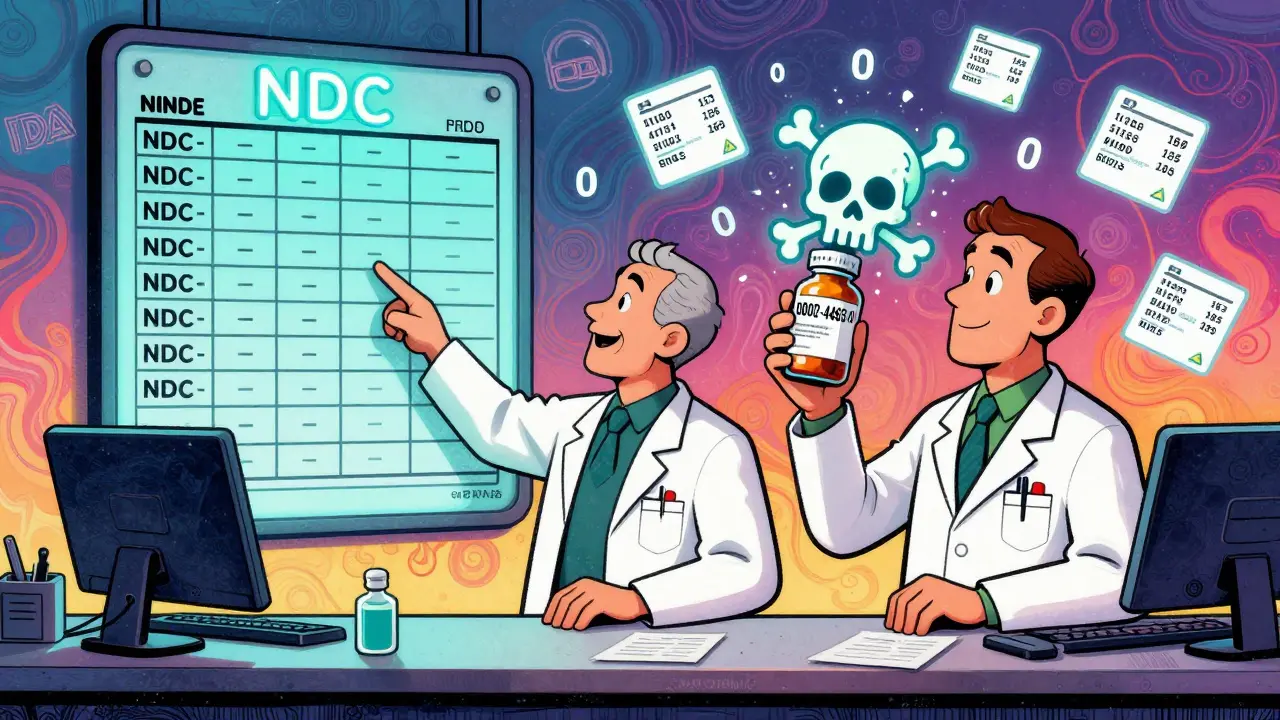
Getting the right medication isn’t just about the name on the bottle. One wrong digit in the NDC number can mean a patient gets 20mg of Prozac instead of 10mg - a potentially dangerous mistake. The NDC number is your last line of defense against these errors. It’s not just a barcode or a random string of numbers. It’s a precise code that tells you exactly which drug, strength, form, and package you’re holding. If you work in a pharmacy, hospital, or clinic, reading it right isn’t optional. It’s life-or-death.
What Is the NDC Number and Why Does It Matter?
The National Drug Code (NDC) is a 10-digit number assigned by the U.S. Food and Drug Administration (FDA) to every prescription and over-the-counter medication sold in the United States. It’s not optional - every drug product must have one. Think of it like a social security number for medicine. No two drugs share the same NDC. Even two versions of the same drug - say, a 10mg tablet versus a 20mg tablet - have completely different NDCs.
Why does this matter? Because in 2023, about 12% of reported medication dispensing errors came from misreading or misinterpreting the NDC, according to the Institute for Safe Medication Practices. That’s not a small number. That’s hundreds of preventable mistakes every week. The NDC isn’t just for billing. It’s the backbone of the Drug Supply Chain Security Act, which tracks every pill from manufacturer to patient. If the NDC is wrong, the whole chain breaks.
The Three Parts of the NDC Number
The NDC has three segments, each with a specific meaning. These segments are separated by hyphens. The format can vary - you’ll see 4-4-2, 5-3-2, or 5-4-1 - but the meaning of each part stays the same.
- Labeler Code (first segment): This 4 to 6 digits identifies the company that makes, repackages, or distributes the drug. For example, 00002 belongs to Eli Lilly. This tells you who’s responsible for the product.
- Product Code (second segment): This 3 to 4 digits tells you the exact drug, strength, and dosage form. This is the most critical part. For instance, 3105 might mean 10mg capsule, while 4465 means 20mg capsule - same drug, different strength. Mix these up, and you’re giving the wrong dose.
- Package Code (third segment): This 1 or 2 digits tells you the package size. 01 might mean a bottle of 30 tablets. 02 might mean a bottle of 100. It doesn’t change what the drug is, but it tells you how much you’re getting.
Here’s an example: NDC 00002-3105-01. Labeler: Eli Lilly. Product: Prozac 10mg capsule. Package: 30-count bottle. Now compare that to 00002-4465-01. Same company. Same drug. But 4465 means 20mg. That’s a 100% dose difference. One digit changes everything.
How to Find the NDC on the Packaging
You won’t always find the NDC in the same place. It’s usually printed on the side or bottom of the bottle, vial, or blister pack. Sometimes it’s near the lot number or expiration date. In many cases, it’s circled in red on the label - a visual cue for pharmacy staff. Don’t assume it’s the same as the barcode. The barcode may encode the NDC, but you need to read the numbers directly to verify them.
Never rely on memory. Even if you’ve dispensed Prozac 10mg a hundred times, always check the NDC on the actual bottle before handing it over. That’s how errors happen - familiarity blinds you. A 2023 survey of 1,200 pharmacists found that 63% had encountered at least one NDC-related mix-up per month. Most of those came from assuming they knew what they were seeing.
How to Convert a 10-Digit NDC to 11-Digit Billing Format
Here’s where most people get tripped up. The NDC on the bottle is 10 digits. But for insurance billing - Medicare, Medicaid, private insurers - you need an 11-digit version in the 5-4-2 format. That means you have to add a zero in the right place.
How do you know where to add it? Look at the format:
- If it’s 4-4-2 → Add a zero at the start of the labeler code → becomes 5-4-2
- If it’s 5-3-2 → Add a zero in the product code → becomes 5-4-2
- If it’s 5-4-1 → Add a zero at the end of the package code → becomes 5-4-2
Example: NDC 00002-3105-01 is 5-4-1. To bill, you change it to 00002-3105-010. You didn’t change the drug. You just made it fit the billing system’s format. Get this wrong, and your claim gets rejected. That delays the patient’s refill and adds stress to the whole process.
Many pharmacies use software that auto-converts the NDC. But if you’re working manually - in a small clinic, during a system outage, or when verifying a new drug - you need to know how to do it yourself. Practice with a few real examples. It takes less than a minute once you get the pattern.
Verify Against the FDA’s NDC Directory
Don’t guess. Don’t rely on memory. Don’t trust a coworker’s word. Always check the NDC against the FDA’s official National Drug Code Directory. It’s free, updated daily, and accessible online or via their mobile app. Type in the 10-digit NDC. The system will show you the exact drug name, strength, dosage form, manufacturer, and marketing status.
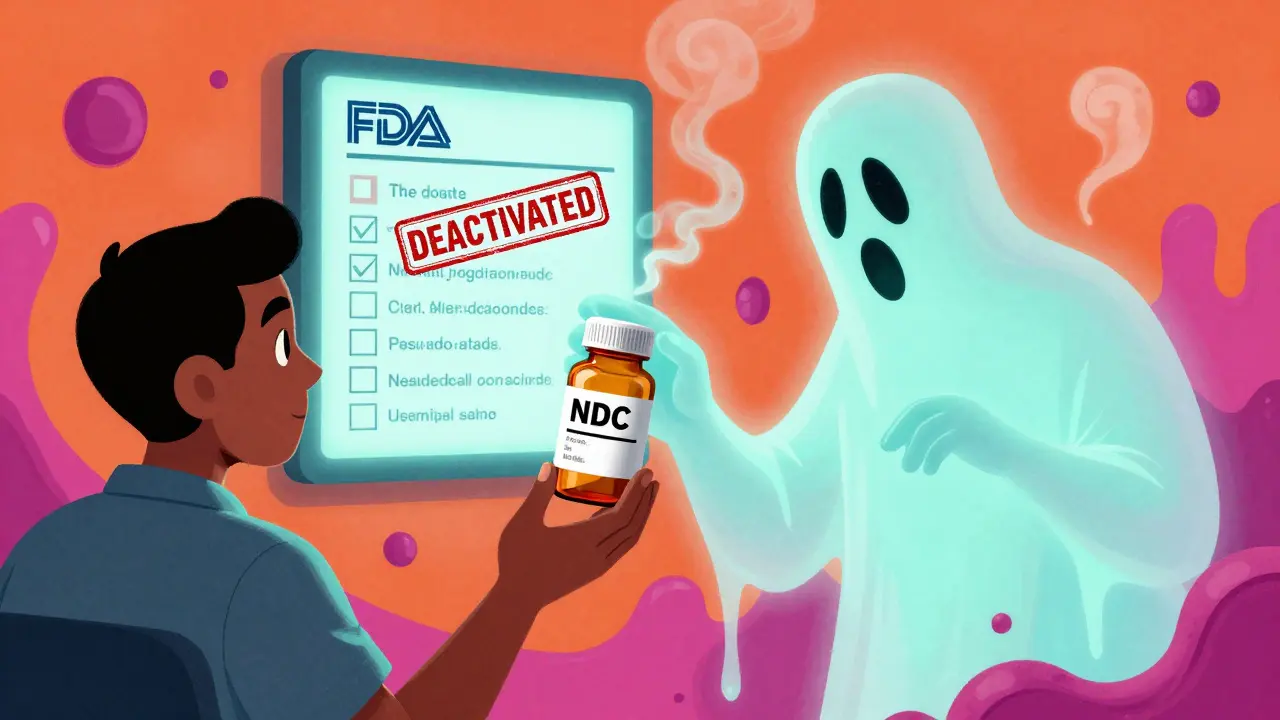
Why is this step non-negotiable? Because manufacturers sometimes change packaging, reformulate drugs, or discontinue products. In 2023 alone, over 8,500 NDCs were deactivated. If you’re using an old label or a repackaged drug from a third party, the NDC might be valid but no longer active. The FDA directory will flag that. You’ll know it’s discontinued - and you won’t dispense it.
Also, the directory tells you if the product is approved for sale. Some counterfeit or imported drugs have fake NDCs. The FDA system catches those. You’re not just verifying the number - you’re verifying the legitimacy of the drug.
Common Mistakes and How to Avoid Them
Here are the top three errors pharmacists make - and how to stop them:
- Mixing up product and package codes: Confusing 3105 (10mg capsule) with 01 (bottle of 30) is a classic. Always say it out loud: “Labeler 00002, product 3105, package 01.” Verbalizing forces your brain to process each part.
- Assuming format: If you see a 10-digit NDC, don’t assume it’s 5-4-1. Count the digits between hyphens. One extra digit in the labeler code changes everything.
- Skipping the conversion: If you’re billing, you need 11 digits. If you’re verifying, you need the original 10. Know which one you’re using and why.
Best practice? Use the two-person check for high-alert drugs - insulin, blood thinners, chemotherapy. A 2022 study found that double-checking adds 37 seconds per verification. That’s less than a minute. But it cuts errors by over 60%.
What Happens When the NDC Doesn’t Match?
If the NDC on the bottle doesn’t match the prescription - stop. Don’t dispense. Don’t guess. Call the prescriber. Check the FDA directory. Look up the drug name and strength. Is this a different brand? A generic? A repackaged version?
For example, if the prescription says “Lisinopril 10mg tablet,” but the NDC on the bottle points to “Lisinopril 20mg tablet,” you have two choices: contact the pharmacy that sent it, or refuse to dispense. Never assume the label is wrong. The prescription could be wrong. Or the manufacturer could have switched packaging. Only the NDC tells you the truth.
One pharmacist in Arizona told me she caught a fatal error when a patient’s NDC for Warfarin 5mg was switched to 10mg. The labeler code was correct. The package code was correct. But the product code had changed. She caught it because she read the digits aloud. The patient was on dialysis. A 10mg dose could have caused internal bleeding.
What’s Changing in the Future?
The FDA is moving to a 12-digit NDC by 2025. That means longer labeler codes and no more format variations. Everything will be 6-4-2. This will reduce confusion. But for now, you still need to handle the old formats.
Also, NDCs are now being linked to Global Trade Item Numbers (GTINs) for supply chain tracking. That’s good for logistics. But it doesn’t replace the need to read the NDC yourself. Technology helps - but human verification still saves lives.
Final Checklist: Your NDC Verification Routine
Before you hand any medication to a patient, run through this:
- Locate the NDC on the packaging - not the barcode, the printed numbers.
- Count the digits between hyphens to identify the format (4-4-2, 5-3-2, or 5-4-1).
- Break it into three parts: labeler, product, package.
- Compare the product code to the prescription: drug name, strength, form.
- Verify the package code matches the quantity ordered.
- Look up the 10-digit NDC in the FDA’s NDC Directory.
- If billing, convert to 11-digit 5-4-2 format by adding the zero in the right spot.
- Double-check with a second person for high-risk medications.
It’s not complicated. But it’s not optional. Every time you skip a step, you’re gambling with someone’s health. The NDC is your tool. Use it right.
Can two different drugs have the same NDC number?
No. Each NDC is unique to one specific drug product - including its manufacturer, strength, dosage form, and package size. Even two versions of the same drug with different strengths (like 10mg and 20mg tablets) will have completely different NDCs. The FDA ensures this by assigning each combination a unique code.
What if the NDC on the bottle doesn’t match the one on the prescription?
Stop. Do not dispense. Verify the prescription with the prescriber or the originating pharmacy. The mismatch could mean a wrong drug, wrong strength, or a generic substitution that wasn’t authorized. Always cross-check with the FDA’s NDC Directory to confirm the product’s identity before proceeding.
Do I always need to convert the NDC to 11 digits?
Only for billing and insurance claims. When verifying the medication itself - like when you’re pulling it off the shelf or checking it against a patient’s order - use the original 10-digit NDC on the label. The 11-digit format is required by Medicare, Medicaid, and most insurers for claims processing, but not for patient safety checks.
How do I know which segment is the product code?
The product code is always the second segment - the one that defines the drug’s active ingredient, strength, and dosage form. For example, in NDC 00002-3105-01, 3105 is the product code. This tells you it’s Prozac 10mg capsules. The labeler code (00002) tells you it’s Eli Lilly. The package code (01) tells you it’s a 30-count bottle.
Can I rely on the pharmacy software to handle NDC verification?
Software helps, but it’s not foolproof. Systems can have glitches, outdated databases, or misconfigured settings. The FDA and ASHP both require manual verification as a safety step. Always read the NDC on the physical label and cross-check it with the prescription - even if the system says it matches. Human eyes catch what algorithms miss.
Are NDC numbers used outside the United States?
No. The NDC is a U.S.-only system. Other countries use different identifiers - like the European Medicines Agency’s EMA code or Canada’s DIN (Drug Identification Number). If you’re working with imported medications, you’ll need to verify those using their country’s system. Never assume a foreign drug’s code is an NDC.
clarissa sulio
February 1, 2026 AT 17:21Bridget Molokomme
February 1, 2026 AT 18:25Vatsal Srivastava
February 3, 2026 AT 18:22Brittany Marioni
February 4, 2026 AT 12:16Monica Slypig
February 6, 2026 AT 11:20Becky M.
February 7, 2026 AT 16:24jay patel
February 8, 2026 AT 20:16Ansley Mayson
February 10, 2026 AT 08:53