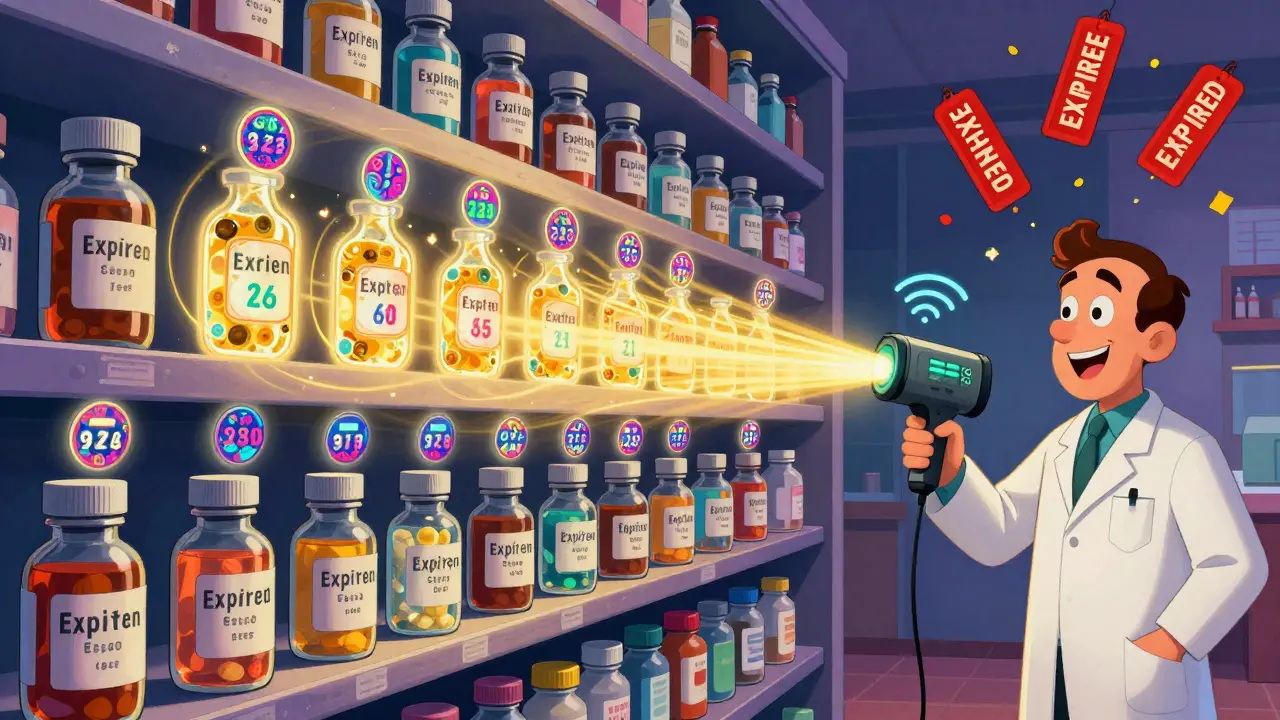
Every year, hospitals and pharmacies throw away millions of dollars worth of expired medications-not because they’re unused, but because no one knew they were about to expire. In emergency rooms, nursing homes, and even home care settings, people still rely on handwritten labels, paper logs, and guesswork to track when a pill, injection, or IV bag goes bad. That’s risky. Expired medications can lose potency, change chemical structure, or even become harmful. The good news? You don’t have to do it the old way anymore. Technology now makes it possible to track expiration dates with near-perfect accuracy-automatically, in real time, and with zero manual input.
Why Tracking Expiration Dates Matters
It’s not just about avoiding waste. Giving someone an expired antibiotic could mean their infection doesn’t clear up. An expired epinephrine auto-injector might not save a life during anaphylaxis. In long-term care, outdated pain meds can lead to unnecessary suffering. The FDA and DEA don’t just recommend tracking expiration dates-they require it for controlled substances. A single mistake can trigger an audit, a fine, or worse-a patient injury.
Studies show that up to 20% of medications in hospital cabinets expire before they’re used. That’s not poor inventory management-it’s a system failure. Manual checks just can’t keep up. A pharmacy with 500 different drugs needs to scan each one, note the lot number, and cross-reference the expiration date. Do that once a week? You’re behind. Do it daily? You’re overwhelmed. Technology fixes this.
How RFID Systems Work
The most powerful tool for tracking medication expiration today is RFID-Radio Frequency Identification. Think of it like the chip in your credit card, but for pills. Each medicine bottle, vial, or tray gets a tiny tag embedded with a unique code. When you place a tray of medications into a scanner, it reads all of them at once-no scanning one by one.
Systems like KitCheck is a RFID-based medication tracking system that uses ultra-high frequency (UHF) tags to read hundreds of items in under 30 seconds do more than just count inventory. They know exactly when each item expires. If a drug is within two days of its expiration date, the system flags it automatically. It won’t let you pull it for use. Some systems even block the drawer from opening if an expired item is inside.
Real-world results speak for themselves. Texas Children’s Hospital cut their inventory counting time from 12 hours down to 45 minutes. They also stopped throwing away $1.2 million in expired high-value drugs each year. Hospitals using RFID report 100% inventory accuracy-compared to 65-75% with manual methods.
Electronic Medication Administration Records (eMAR)
If RFID tracks what’s in the cabinet, eMAR tracks what’s given to the patient. An eMAR is an electronic system that replaces paper medication charts and logs every dose given, who gave it, and when. But it goes further. eMAR platforms like eVero integrates directly with pharmacy systems to auto-update expiration dates and alert staff before a medication is dispensed.
This is especially useful in settings like intellectual and developmental disability (IDD) agencies, where patients take multiple medications daily. Staff no longer need to flip through binders or call pharmacies to check dates. The system shows everything: current stock, next refill date, and expiration. If a medication expires while on the shelf, the system sends a notification to the pharmacy to reorder. No more last-minute scrambles.
Automated Dispensing Cabinets (ADCs)
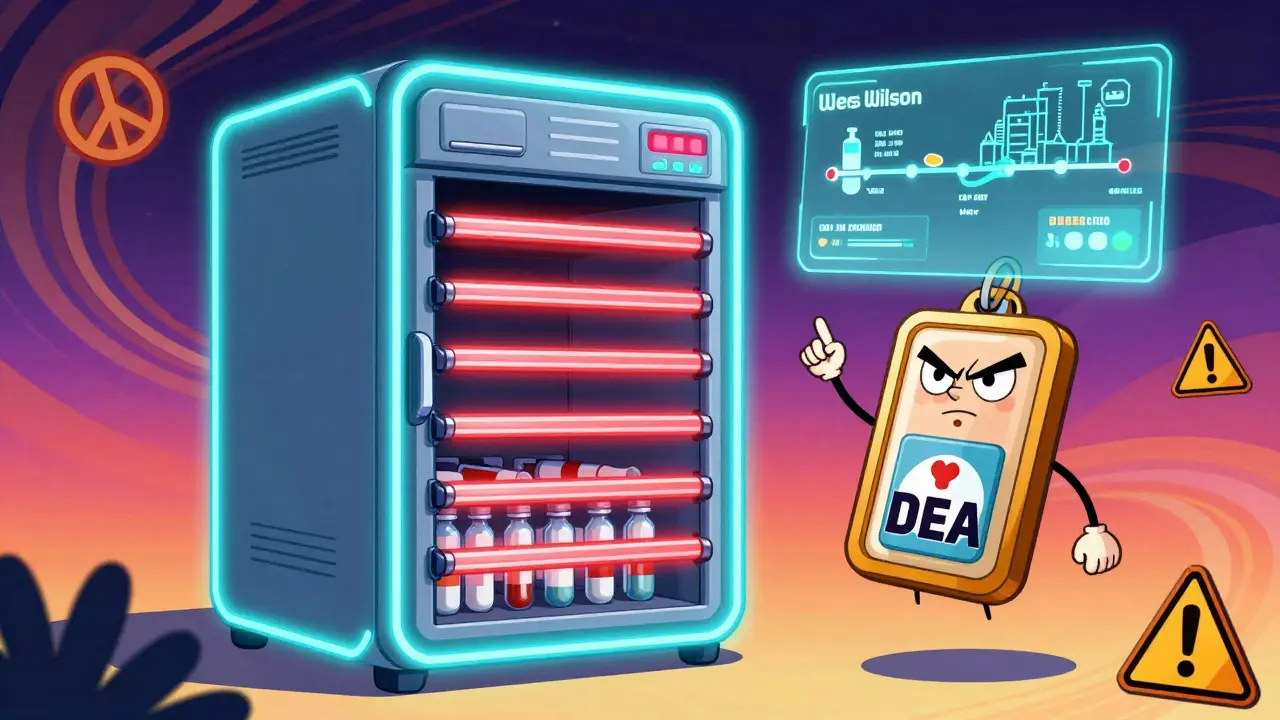
Most hospitals use Automated Dispensing Cabinets (ADCs) are smart cabinets that store, dispense, and track medications with built-in expiration monitoring. These look like high-tech vending machines. You log in with a badge or biometric scan, select the medication, and it releases only what’s needed. The cabinet doesn’t just count pills-it logs the lot number and expiration date every time you take one.
These cabinets are especially helpful for narcotics and high-risk drugs. The DEA requires strict tracking of controlled substances. ADCs automatically generate reports for audits. If a drug expires, the cabinet won’t let anyone access it. No exceptions. TouchPoint Medical reports that 85% of pharmacists become fully proficient with ADCs within six weeks of training.
Mobile Solutions for Smaller Settings
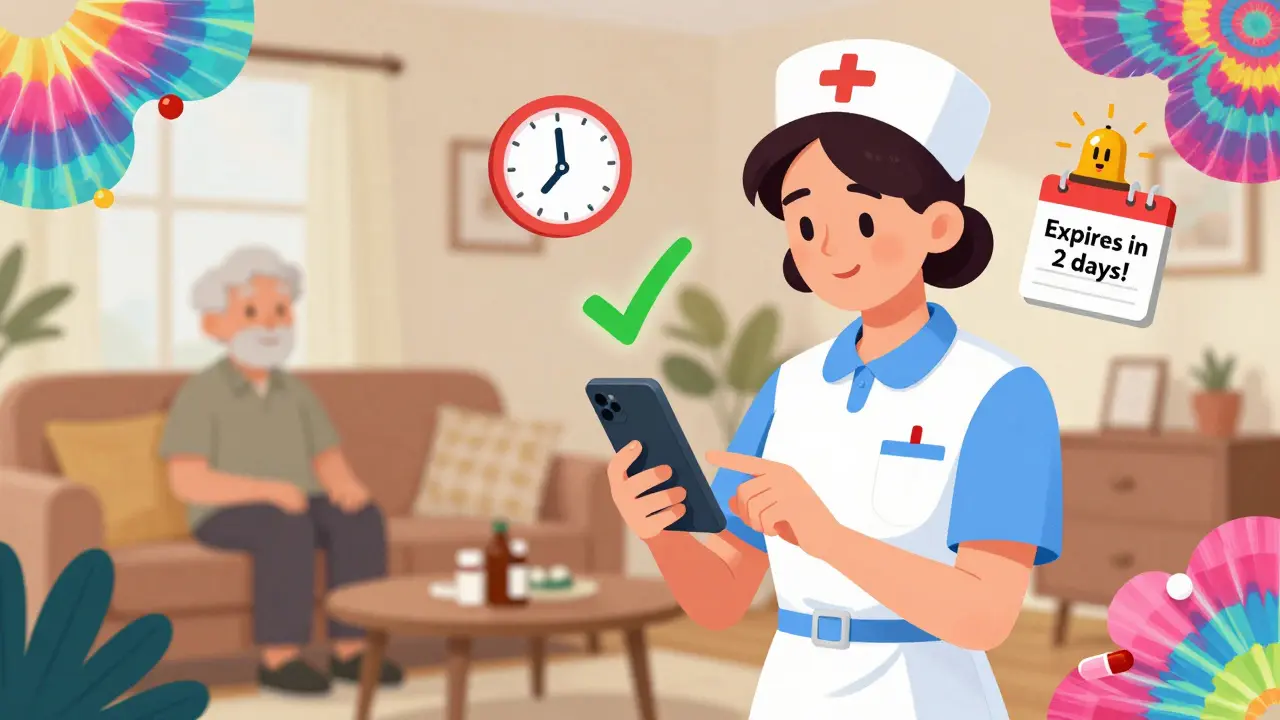
You don’t need a full hospital system to track expiration dates. LogRx is a mobile app that runs on iPhones and Android devices and works without extra hardware. Emergency medical teams, home care nurses, and small clinics use it to scan barcodes on medication packages. The app checks the expiration date against the current date and alerts you if it’s expired or within 7 days of expiring.
Portland Fire & Rescue switched to LogRx in 2023. They went from manually checking 300+ medications every quarter to scanning them in 20 minutes. "We’ve cut our administrative workload in half," they said. "And we’ve had zero compliance issues since." It’s simple, cheap, and works anywhere-even without Wi-Fi, since it stores data locally until it syncs later.
What About DrugXafe and Supply Chain Tracking?
Some systems go beyond the hospital. DrugXafe uses electronic product codes (EPCs) to track medications from the manufacturer all the way to the patient. If a drug is recalled, the system knows exactly which bottles are affected and where they are. It blocks sales automatically if the barcode shows the product is expired.
This matters most for large pharmacy chains and distributors. But it’s also useful for hospitals that get shipments directly from manufacturers. If your supplier tags each box with an EPC, you don’t have to re-tag it. That cuts setup time and errors.
How to Get Started
Switching to technology isn’t instant. It takes planning. Here’s a realistic timeline:
- Assess your needs (2-4 weeks): What do you track? Pills? Injections? Narcotics? How many items? Where are they stored?
- Choose your system (1-2 weeks): RFID for large inventories? eMAR for care homes? Mobile app for EMS?
- Install hardware/software (1-3 weeks): Scanners, tags, servers, apps.
- Tag existing inventory (2-6 weeks): This is the biggest job. You’ll need staff to scan every bottle, vial, and tray. Mid-sized facilities need 40-80 hours of labor.
- Train staff (2-6 weeks): Don’t skip this. Resistance is common. Show them how it saves time.
- Test and go live (2-4 weeks): Run parallel checks. Compare old logs with new system. Fix glitches.
Total time? 8 to 17 weeks. But once it’s running, you’ll save hours every week. One hospital saved 200 hours a month just on inventory counts.
Costs and ROI
RFID systems cost between $50,000 and $200,000 to install, depending on size. eMAR and mobile apps are cheaper-$5,000 to $20,000. But here’s the real math:
- Reduced waste: Hospitals report 15-20% less expired medication disposal. That’s tens of thousands saved yearly.
- Time savings: Inventory counts drop from hours to minutes. Staff can focus on patients, not paperwork.
- Compliance: Avoid fines from DEA or FDA inspections.
- Reduced errors: No more giving expired drugs. That’s priceless.
A 2024 study in the Journal of Hospital Pharmacy found hospitals using RFID saved $120,000 to $300,000 per year. The system pays for itself in less than a year.
What to Watch Out For
Not every system works everywhere. Common pitfalls:
- Legacy system incompatibility: If your pharmacy software is 10 years old, it might not talk to new tracking tools. Test integration before buying.
- Staff resistance: 62% of hospitals report pushback. Involve staff early. Let them test the system. Show them how it makes their job easier.
- Tagging errors: If you miss tagging a single vial, it won’t be tracked. Double-check.
- Over-reliance: Technology helps, but doesn’t replace human judgment. Always visually check expiration dates before giving a drug.
The Future Is Here
By 2027, Gartner predicts 45% of U.S. hospitals will use RFID for medication tracking-up from 25-30% today. AI is starting to enter the mix. Intelliguard Health piloted a system in early 2025 that predicts which drugs are likely to expire next based on usage patterns. It doesn’t just warn you-it suggests reorder quantities.
Blockchain is being tested for supply chain transparency. Imagine knowing exactly where your insulin came from, who handled it, and when it was stored. That’s coming.
The goal isn’t just to avoid expired drugs. It’s to make medication safety seamless. No more guesswork. No more panic before audits. Just confidence-every time you hand a patient their medicine.
Can I use smartphone apps to track medication expiration at home?
Yes. Apps like LogRx and Medisafe let you scan barcodes on prescription bottles and set reminders for expiration dates. They work offline and sync when you have internet. This is especially helpful for caregivers managing multiple medications for elderly relatives. Just make sure the app stores data securely and doesn’t share it without permission.
Do all medications expire exactly on the printed date?
Not always. The expiration date is the last day the manufacturer guarantees full potency and safety. Many drugs remain effective months or even years past that date, especially if stored properly in cool, dry places. But for critical medications-like epinephrine, insulin, or antibiotics-you should never use them past the date. The risk isn’t worth it.
Is RFID tagging expensive for small clinics?
It can be. RFID requires tags on each item, scanners, and software. For a small clinic with under 100 medications, a mobile app like LogRx or a simple eMAR system is more cost-effective. Save RFID for larger facilities with hundreds of SKUs or high-value drugs. Start small, then scale.
What happens if a system fails?
All serious systems have backups. RFID and eMAR systems store data in the cloud and locally. If the network goes down, you can still access the last known inventory. Most systems also allow manual override for emergencies-but only with supervisor approval. Always have a printed backup list for critical meds.
Are there regulations requiring expiration tracking?
Yes. The FDA’s Drug Supply Chain Security Act (DSCSA) requires full traceability for prescription drugs by 2023. The DEA mandates electronic tracking for controlled substances. CMS requires long-term care facilities to have expiration tracking for all medications. Non-compliance can lead to fines, loss of funding, or legal liability.