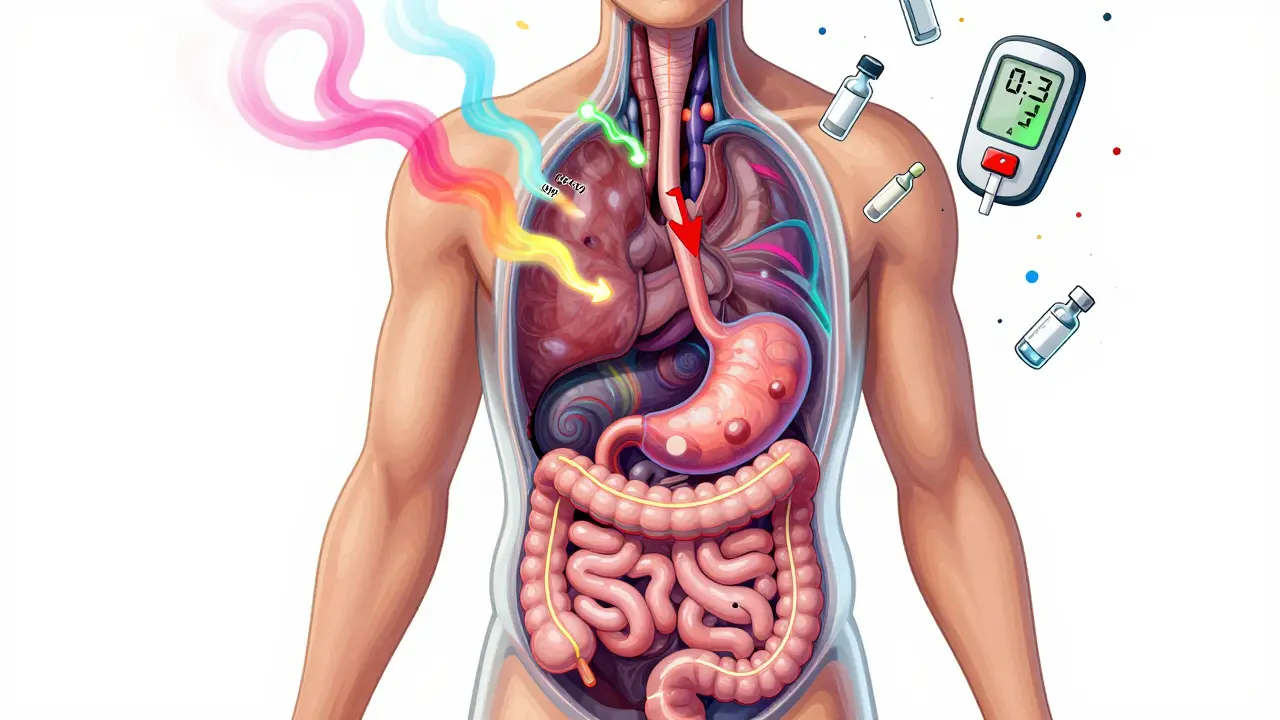
When someone has type 2 diabetes and struggles with obesity, medicine alone often isn’t enough. Pills, insulin, diet changes - they help, but many people still can’t get their blood sugar under control or keep the weight off. That’s where metabolic surgery comes in. It’s not just about losing weight. It’s about resetting how your body handles sugar, fat, and hormones - sometimes even reversing diabetes for years, sometimes permanently.
What Actually Happens During Metabolic Surgery?
Metabolic surgery, also called bariatric surgery, changes the structure of your stomach and intestines. It’s not a quick fix. It’s a long-term tool. The most common procedures are gastric bypass, sleeve gastrectomy, and biliopancreatic diversion with duodenal switch. Each one works differently, but they all do something surprising: they start improving blood sugar within days - before you’ve lost much weight at all.
That’s because these surgeries change how your gut talks to your pancreas. Hormones like GLP-1 and PYY spike right after eating, signaling your body to make more insulin and feel full faster. Ghrelin, the hunger hormone, drops. This isn’t just about eating less. It’s about your body relearning how to manage glucose. Studies show that 80% of people with type 2 diabetes who get gastric bypass see their blood sugar normalize within weeks. For some, insulin injections stop entirely.
How Much Weight Do People Really Lose?
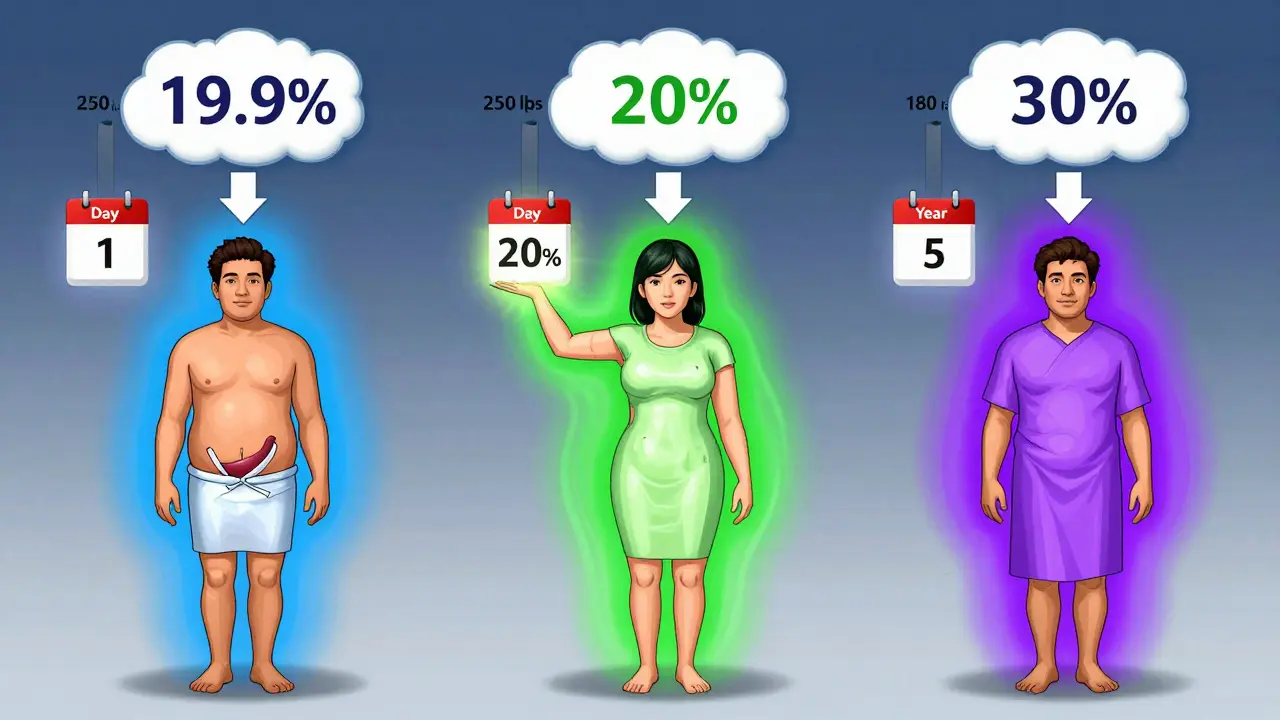
Medical therapy alone - diet, exercise, medication - typically leads to less than 1% weight loss over five years. In contrast, people who have metabolic surgery lose, on average, 27.7% of their starting body weight. That’s not a small number. For someone weighing 250 pounds, that’s over 69 pounds gone.
Here’s how the numbers break down by procedure:
- Gastric bypass: 19.9% weight loss at six years (compared to 8.3% with medical therapy)
- Sleeve gastrectomy: 18-22% weight loss at five years
- Biliopancreatic diversion: Up to 30% weight loss long-term
These aren’t theoretical numbers. They come from real patients tracked over a decade. The Swedish Obese Subjects study followed over 2,000 people for 15 years. Those who had surgery kept off significantly more weight than those who didn’t - and they had far fewer diabetes complications.
Diabetes Remission: What Does It Really Mean?
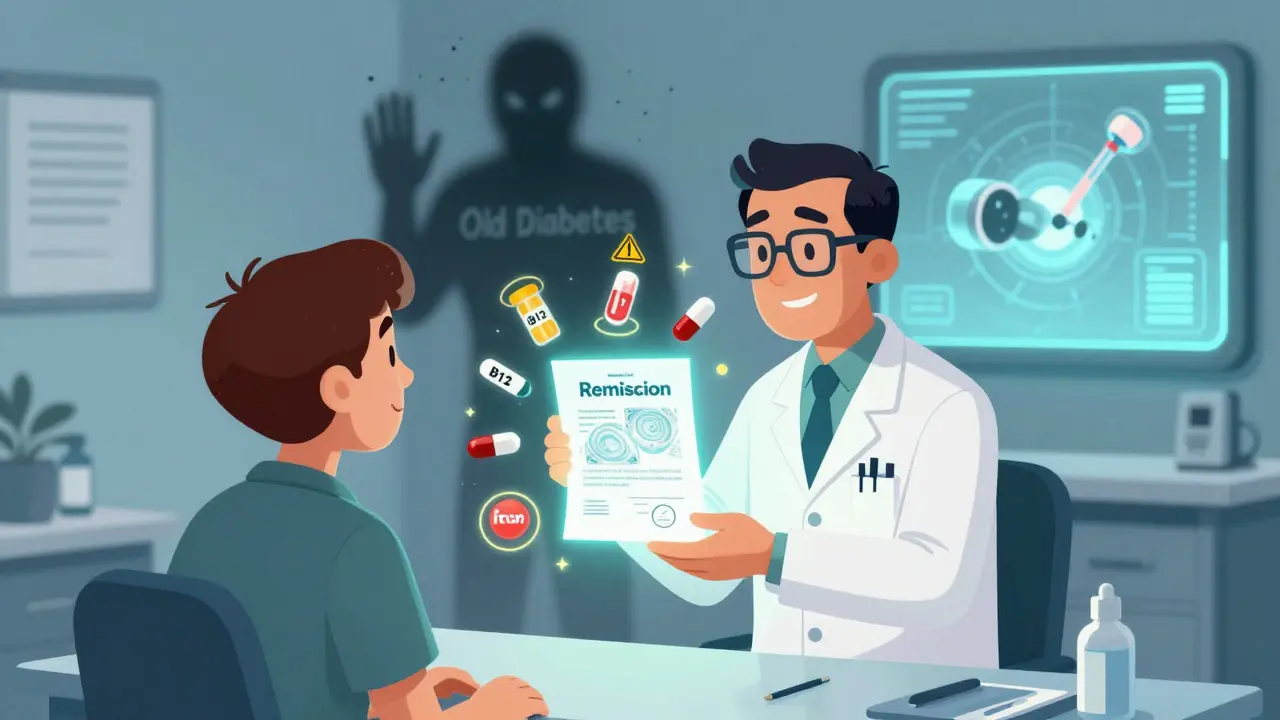
Remission doesn’t mean you’re cured. It means your blood sugar stays normal without needing any diabetes medications. That’s huge. It means no more finger pricks, no more insulin shots, no more worry about nerve damage, kidney failure, or vision loss.
But remission rates vary by procedure and patient:
- Gastric bypass: 42% remission at one year, 29% at five years
- Sleeve gastrectomy: 37% at one year, 23% at five years
- Biliopancreatic diversion: 95% remission at one year - the highest of any procedure
And it’s not just about BMI. People with lower pre-surgery blood sugar levels and those who don’t need insulin yet have the best odds. One study found that patients with a BMI between 24 and 30 - not even classified as severely obese - had a 93% remission rate after gastric bypass. That challenges the old idea that only people with BMI over 35 qualify.
Even if remission doesn’t last forever, most people still benefit. A 2013 study in the Annals of Surgery found that 24% had complete remission for five or more years, 26% had partial remission (blood sugar improved but still needed meds), and 34% had better control with fewer drugs. That’s a win, even if it’s not perfect.
Why Some People Don’t Stay in Remission
It’s not magic. Remission can fade. The same Swedish study showed that while 72% were in remission at two years, that dropped to 36% by year 10. Why? Weight regain. Loss of beta-cell function. Changes in diet or activity. The body slowly slips back into old patterns.
But here’s the key: even when diabetes returns, it’s usually milder. People who had surgery still need fewer medications and have better overall blood sugar control than those who never had surgery. One expert put it this way: “Each year of remission reduces your risk of kidney disease, eye damage, and nerve problems by 19%.” That adds up over time.
Who Benefits Most - And Who Doesn’t?
Not everyone is a candidate. And not everyone gets the same results.
Best candidates:
- People with type 2 diabetes for less than 10 years
- Those who don’t use insulin yet
- Patients with BMI ≥35 (or ≥30 if diabetes is poorly controlled)
- People who’ve tried diet, exercise, and medication without lasting results
Poorer outcomes are linked to:
- Long-standing diabetes (over 15 years)
- Regular insulin use before surgery
- Very high HbA1c levels (over 9%)
- Significant pancreatic damage
Insulin users? Their remission rate drops to around 30% or lower. That’s why doctors often recommend surgery before insulin becomes necessary.
The Hidden Costs: Risks and Long-Term Care
Surgery isn’t risk-free. The biggest concerns are long-term:
- Nutritional deficiencies - iron, vitamin B12, calcium, vitamin D
- Anemia - especially in women
- Bone fractures - due to calcium and vitamin D loss
- Chronic gastrointestinal issues - dumping syndrome, nausea, diarrhea
That’s why lifelong follow-up is non-negotiable. You need blood tests every 6-12 months. You need supplements. You need to eat differently. Many people don’t realize this. They think surgery is the end. It’s really the beginning of a new kind of health management.
The ARMMS-T2D trial found that surgical patients had higher rates of anemia and gastrointestinal problems after 12 years. But they also had fewer heart attacks, strokes, and kidney disease. The trade-off? You trade short-term discomfort for long-term survival.
Why Isn’t Everyone Getting This Done?
Here’s the truth: only 1-2% of people who qualify for metabolic surgery actually get it. Why?
- Insurance won’t cover it if your BMI is under 35
- Doctors don’t talk about it - they assume you’ll keep trying pills
- Patients fear surgery - they think it’s dangerous or “giving up”
- There’s a myth that you’ll gain all the weight back anyway
But the data doesn’t lie. Surgery is more effective than any medication or diet program at achieving lasting diabetes remission. The American Diabetes Association has recommended it since 2016. The International Diabetes Federation says the same. The evidence is solid. The barrier isn’t science - it’s access, awareness, and fear.
What’s Next? The Future of Metabolic Surgery
Researchers are pushing boundaries. The RESET trial is testing surgery on people with BMI as low as 27. Endoscopic procedures - like gastric balloons or aspiration systems - are emerging as middle-ground options. They’re less invasive but don’t offer the same long-term results.
One study found that people with BMI under 30 who had gastric bypass had nearly the same remission rates as those with higher BMI. That could change who qualifies. If you have type 2 diabetes and a BMI of 28, you might still benefit - even if you’re not “severely obese.”
But the biggest lesson? Surgery isn’t a cure. It’s a tool. It works best when paired with lifelong habits: healthy food, regular movement, and medical follow-up. The body doesn’t forget how to mismanage sugar. But with the right support, it can learn again.
Can metabolic surgery cure type 2 diabetes?
It can lead to remission - meaning normal blood sugar without medication - but it’s not a permanent cure for most people. Remission rates drop over time, especially if weight is regained. However, even when diabetes returns, blood sugar control and medication needs are usually better than before surgery.
Is metabolic surgery only for people with BMI over 35?
No. While guidelines often focus on BMI ≥35, studies show people with BMI as low as 27-30 can achieve significant diabetes remission, especially with gastric bypass. The American Society for Metabolic and Bariatric Surgery now recommends considering surgery for those with BMI 30-34.9 if diabetes is uncontrolled despite medical therapy.
Which surgery has the best results for diabetes?
Biliopancreatic diversion with duodenal switch has the highest remission rate (95% at one year), followed by gastric bypass (80-85%). Sleeve gastrectomy is less effective but still helps 37% of patients at one year. Gastric banding has the lowest success, around 57%. The choice depends on individual health, weight, and risk tolerance.
Do I still need to take medication after surgery?
Many people stop all diabetes medications within weeks or months after surgery. But some still need metformin or other drugs - especially if their diabetes was advanced before surgery. Insulin users often need to continue some form of insulin, though usually in much smaller doses. Always follow your doctor’s guidance on medication changes.
What are the biggest risks of metabolic surgery?
The main long-term risks are nutritional deficiencies (iron, B12, calcium, vitamin D), anemia, bone fractures, and gastrointestinal issues like dumping syndrome. These can be prevented with lifelong supplements and regular blood tests. Short-term risks include infection, bleeding, and leaks - but these are rare with experienced surgical teams.
How long does it take to see results after surgery?
Blood sugar often improves within days - sometimes even before significant weight loss. Many patients stop insulin within 1-2 weeks. Weight loss happens over 6-18 months. Full metabolic benefits, including cholesterol and blood pressure improvements, continue to develop over 2-5 years.
Alex Arcilla
March 24, 2026 AT 05:46winnipeg whitegloves
March 25, 2026 AT 18:18Korn Deno
March 26, 2026 AT 06:51Aaron Sims
March 27, 2026 AT 18:50Stephen Alabi
March 29, 2026 AT 05:31Agbogla Bischof
March 29, 2026 AT 12:41Pat Fur
March 30, 2026 AT 14:43Natasha Rodríguez Lara
March 30, 2026 AT 19:31