
For decades, people with obesity were told to just eat less and move more. It wasn’t laziness. It wasn’t lack of willpower. It was a misunderstanding of what obesity actually is. Today, we know obesity is a chronic disease-not a lifestyle choice. It’s a complex condition rooted in biology, genetics, and brain chemistry, with layers of metabolic dysfunction that go far beyond the number on a scale.
Why Obesity Is Classified as a Disease
In 2013, the American Medical Association officially recognized obesity as a disease. That wasn’t just a change in wording-it changed how doctors think, how insurance pays, and how patients are treated. The World Health Organization defines obesity as a BMI of 30 or higher, but that number alone doesn’t tell the full story. Two people with the same BMI can have completely different health risks. One might have normal blood pressure, insulin sensitivity, and liver function. The other might already be on the path to type 2 diabetes, heart disease, or fatty liver disease. The Obesity Medicine Association describes obesity as a neurobehavioral disease, meaning it affects how the brain regulates hunger, fullness, and energy use. Fat tissue isn’t just storage-it’s active. In obesity, fat cells release inflammatory signals, disrupt hormones like leptin and ghrelin, and interfere with how the body uses insulin. This is called adiposopathy-fat tissue disease. It’s not that people are fat because they’re unhealthy. They’re unhealthy because their fat tissue is malfunctioning.The Metabolic Toll of Excess Fat
When fat builds up, especially around the organs (visceral fat), it starts to poison the body from within. People with obesity have, on average, two to three times higher levels of C-reactive protein, a key marker of inflammation. That constant low-grade inflammation is what drives so many complications. The risks aren’t theoretical. Someone with obesity has a three times higher chance of developing type 2 diabetes. Their risk of heart disease jumps by 2.5 times. At least 13 types of cancer are linked to excess body fat, including breast, colon, and liver cancer. Non-alcoholic fatty liver disease affects 75% of people with a BMI over 35. Sleep apnea shows up in 70% of cases. And for every 5-point increase in BMI, the risk of osteoarthritis doubles. It’s not just about weight. It’s about metabolic health. You can be overweight and metabolically healthy. You can also be normal weight and metabolically unhealthy. That’s why doctors now look at waist circumference, blood sugar, cholesterol, liver enzymes, and blood pressure-not just BMI.Why Diets Fail and Weight Comes Back
Most people who lose weight through dieting regain it within five years. That’s not because they gave up. It’s biology. When you lose weight, your body fights to get it back. Leptin, the hormone that tells your brain you’re full, drops sharply. Ghrelin, the hunger hormone, spikes. Your metabolism slows down by 15-20%-even if you’re exercising. Your brain rewires itself to crave high-calorie foods. It’s not weakness. It’s evolution. Studies show that 90% of people who lose weight through dieting alone regain most of it. This isn’t failure. It’s the body’s survival mechanism. And when people keep failing, they blame themselves. That’s where stigma hurts the most. A 2022 survey found 67% of people with obesity reported being judged by healthcare providers. Some were denied surgeries, screenings, or even basic care because of their weight.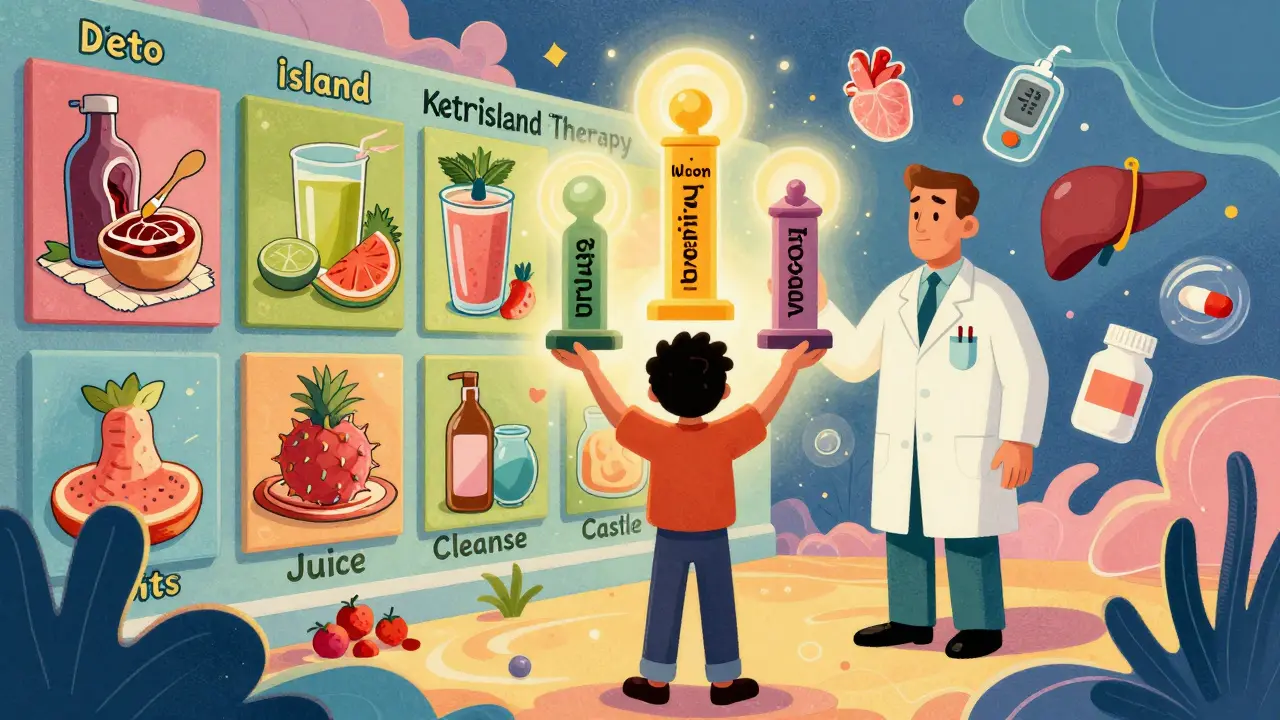
What Actually Works: Evidence-Based Strategies
The old model of ‘eat less, move more’ doesn’t work for chronic disease. You wouldn’t treat high blood pressure with just salt restriction. You wouldn’t treat asthma with only breathing exercises. You use medication, lifestyle changes, and ongoing support. Obesity is the same. The most effective approach combines three pillars:- Medical nutrition therapy-not fad diets, but personalized eating plans from a dietitian trained in obesity medicine. The goal isn’t perfection. It’s sustainability.
- Physical activity-150 minutes a week of moderate exercise like brisk walking, swimming, or cycling. It’s not about burning calories. It’s about improving insulin sensitivity, reducing inflammation, and protecting muscle mass.
- Behavioral counseling-12 or more sessions focused on emotional triggers, sleep, stress, and habit change. Each extra hour of counseling adds about 0.23% more weight loss on average.
Medications: A Game-Changer
For years, obesity medications were limited, underused, or dismissed. That’s changed. Today, five FDA-approved drugs are available for chronic weight management. The most powerful are GLP-1 receptor agonists like semaglutide (Wegovy) and tirzepatide (Zepbound). These mimic gut hormones that reduce appetite and slow digestion. Clinical trials show people using semaglutide lose 15-18% of their body weight over 68 weeks. That’s not just a few pounds. That’s enough to reverse prediabetes, lower blood pressure, and reduce liver fat. In the SELECT trial, semaglutide also cut major heart events by 20% in people with obesity and existing heart disease. Side effects? Yes-nausea, vomiting, and diarrhea are common at first. But most people adjust. And 42% of users on Reddit’s r/Obesity community reported life-changing results with these drugs. Still, cost and access are huge barriers. Monthly prices range from $10 to $1,400, depending on insurance. In 37 states, you need prior authorization just to get a prescription.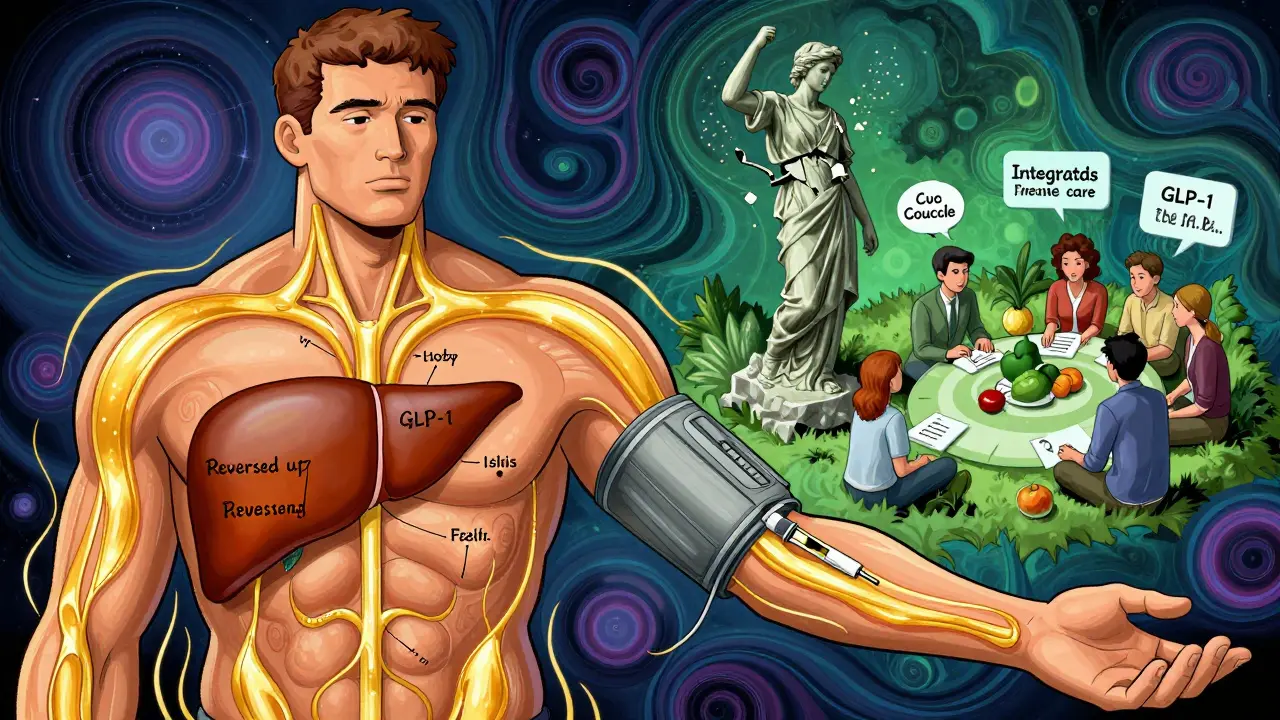
Surgery: When Medication Isn’t Enough
Bariatric surgery isn’t a last resort-it’s a medical treatment. For people with severe obesity (BMI ≥40) or BMI ≥35 with related conditions like diabetes, it’s often the most effective long-term option. Procedures like gastric bypass and sleeve gastrectomy change gut hormones, reduce appetite, and improve insulin sensitivity. Success rates are high: 70-80% of patients lose over 20% of their body weight and keep it off for 10+ years. But it’s not simple. Vitamin deficiencies happen in 41% of patients. Dumping syndrome affects nearly a third. And 37% say they didn’t get enough long-term support. The key is choosing a center that performs at least 125 surgeries a year, as recommended by the Metabolic and Bariatric Surgery Accreditation and Quality Improvement Program. And it’s not a cure-it’s a tool. Lifelong follow-up with a nutritionist and doctor is non-negotiable.The Future: Better Tools, Better Care
New drugs are coming fast. Retatrutide, a triple hormone agonist approved in 2023, showed an average 24.2% weight loss in early trials-the highest ever recorded. The ICD-11 now includes detailed obesity staging that measures organ damage, not just BMI. And researchers are exploring the gut microbiome, finding that people with obesity often have lower levels of anti-inflammatory bacteria like Faecalibacterium prausnitzii. But the biggest obstacle isn’t science. It’s access. Only 10% of U.S. medical schools require obesity training. There are only 1,200 certified obesity medicine dietitians in the country. And 93% of eligible adults never get guideline-recommended treatment. The solution isn’t more willpower. It’s more systems. Integrated care models that combine digital coaching, medication, counseling, and regular monitoring could cut U.S. obesity-related healthcare costs by $190 billion a year by 2030. But we need more providers, better insurance coverage, and an end to weight bias in medicine.What You Can Do Right Now
If you’re struggling with weight and metabolic health:- Ask your doctor for a full metabolic panel-not just BMI.
- Seek out a registered dietitian with obesity certification.
- Don’t dismiss medication. If you’ve tried diets and failed, it’s not you-it’s the approach.
- Focus on health markers, not just the scale. Blood sugar, energy levels, and sleep matter more.
- Find support. Whether it’s a group, a counselor, or an online community, you don’t have to do this alone.
Is obesity really a disease, or just a result of poor choices?
Obesity is officially recognized as a chronic disease by the American Medical Association, the World Health Organization, and the Obesity Medicine Association. It’s caused by complex interactions between genetics, brain chemistry, hormones, and environment. While behavior plays a role, blaming it on ‘lack of willpower’ ignores the biological reality-like blaming high blood pressure on not eating enough celery. The body’s regulatory systems are disrupted, making weight loss extremely difficult without medical support.
Why do I keep regaining weight after losing it?
Your body fights to return to its highest weight. When you lose weight, hunger hormones like ghrelin rise, and fullness hormones like leptin drop. Your metabolism slows by 15-20%, even if you’re exercising. Studies show 90% of people who lose weight through dieting regain most of it within five years. This isn’t failure-it’s biology. That’s why long-term management, not short-term diets, is needed.
Are weight-loss medications safe and effective?
Yes, five FDA-approved medications are now available for chronic weight management, including semaglutide and tirzepatide. Clinical trials show these drugs help people lose 15-24% of body weight on average, with improvements in blood sugar, blood pressure, and liver health. Side effects like nausea are common at first but usually improve. These aren’t magic pills-they work best when combined with lifestyle changes and medical supervision.
Is bariatric surgery worth it?
For people with severe obesity or obesity-related diseases like type 2 diabetes, bariatric surgery is one of the most effective long-term treatments. About 70-80% of patients keep off 20% or more of their weight after 10 years. But it requires lifelong follow-up for nutrition, vitamins, and mental health. It’s not cosmetic-it’s metabolic surgery that changes how your body regulates hunger and insulin.
How can I find a doctor who treats obesity as a disease?
Look for providers certified by the Obesity Medicine Association or those who use the Edmonton Obesity Staging System. Ask if they offer medication, behavioral counseling, and nutrition therapy-not just ‘eat less’ advice. Avoid doctors who blame you for your weight or refuse to treat you because of your size. You deserve care that addresses the biology of your condition, not just the number on the scale.
Lily Steele
January 31, 2026 AT 09:20I used to think it was all about willpower until I started seeing how my body reacted after losing 30 pounds. The hunger was insane, and no matter how much I worked out, I felt like I was running uphill. It’s not laziness-it’s biology. Glad we’re finally talking about this like a real disease.
Sidhanth SY
February 1, 2026 AT 04:05Man, I’ve seen this in my family. My uncle had bariatric surgery and now he’s got his life back. But the real issue? Nobody talks about the mental side. You gotta have support, or you’re just fighting your own brain.
Adarsh Uttral
February 1, 2026 AT 08:38so like... obesety is a disease? ok but why do people still eat pizza at 2am then? 🤔
April Allen
February 2, 2026 AT 15:41Obesity as a chronic disease is a paradigm shift grounded in neuroendocrinology and adipokine dysregulation. The adipose tissue isn’t inert storage-it’s an endocrine organ secreting leptin, adiponectin, IL-6, and TNF-alpha, creating a pro-inflammatory state that drives insulin resistance and ectopic lipid deposition. The failure of traditional caloric restriction models stems from homeostatic set-point theory, where the hypothalamus defends a higher adipostat via orexigenic neuropeptide upregulation and metabolic adaptation. GLP-1 agonists work because they directly modulate the arcuate nucleus, restoring satiety signaling. This isn’t weight loss-it’s metabolic reprogramming.
Jason Xin
February 4, 2026 AT 14:33So let me get this straight… we’re calling obesity a disease now, but if you have high cholesterol because you eat nothing but donuts, that’s just ‘bad choices’? Funny how the medical community suddenly gets serious when there’s a drug for it.
Yanaton Whittaker
February 6, 2026 AT 03:46AMERICA IS WEAK. We used to be tough. Now we give out pills instead of telling people to get off the couch. This is why we’re falling behind. Stop coddling people-make them work for it! 💪🇺🇸
Kathleen Riley
February 7, 2026 AT 09:53It is an incontrovertible fact that the human organism, by virtue of its evolutionary architecture, is predisposed toward energy conservation. To pathologize adiposity without addressing the sociocultural determinants of caloric excess is to engage in a form of medical reductionism that obscures the true locus of causality.
Beth Cooper
February 8, 2026 AT 04:59Wait… so you’re telling me Big Pharma and the AMA teamed up to reclassify obesity as a disease so they could sell expensive drugs? That’s why my insurance won’t cover kale but pays for $1400 shots? 🤨 I knew it. They’re turning fat into a profit center. Next they’ll say being tired is a disorder and sell you caffeine IV drips.
Donna Fleetwood
February 9, 2026 AT 05:13You’re not broken. You’re not lazy. You’re just fighting a system that was never designed for your body. I lost 40 lbs with semaglutide and therapy-not because I was ‘stronger,’ but because I finally got the right tools. Keep going. You’ve got this.
Melissa Cogswell
February 10, 2026 AT 02:32I’m a dietitian and I see this daily. People think ‘eat less, move more’ is advice, but it’s not. It’s a demand without resources. Real treatment needs nutrition counseling, behavioral support, and sometimes meds. One size doesn’t fit all. And yes-meds work. I’ve seen patients regain control after years of failure.
Diana Dougan
February 11, 2026 AT 22:54so like... glp-1? yeah right. i tried that and got so nauseous i threw up my coffee. then my friend said she got it for free from a ‘clinical trial’ but she’s actually just a spy for big pharma. i’m not buying it. also, carbs are evil. keto saved me. #flatbellytruth
Bobbi Van Riet
February 13, 2026 AT 01:05I’ve been on this journey for 12 years. I’ve tried every diet, every supplement, every cleanse. The only thing that stuck was finding a therapist who understood emotional eating and getting on tirzepatide after years of denial. It’s not about willpower-it’s about rewiring your relationship with food and your body. And honestly? The hardest part wasn’t the weight loss. It was learning to trust myself again after being told I was ‘weak’ for so long. I wish someone had told me this earlier.
Holly Robin
February 14, 2026 AT 11:35THEY’RE LYING TO YOU. OBESITY ISN’T A DISEASE-IT’S A LIE TO GET YOU TO TAKE PILLS. THE REAL PROBLEM? SUGAR. SUGAR IS THE NEW SMOKING. BUT THEY DON’T WANT YOU TO KNOW THAT BECAUSE THE GOVERNMENT AND FOOD COMPANIES MAKE BILLIONS. THEY WANT YOU TO THINK YOU NEED A $1000 SHOT WHEN YOU JUST NEED TO STOP EATING CEREAL. I LOST 80 LBS WITH JUST WATER AND WALKING. THEY’RE HIDING THE TRUTH. #STOPBIGPHARMA
Shubham Dixit
February 16, 2026 AT 02:55In India, we don’t have this problem because we eat roti and dal, not burgers. Americans are weak because they eat processed junk and sit all day. We have yoga and walking to temple. No need for expensive drugs. Your problem is not biology-it’s your culture. You’ve lost your way. We still know how to live. You just need discipline, not a prescription.
KATHRYN JOHNSON
February 18, 2026 AT 01:48Obesity is a behavioral failure. The medicalization of personal responsibility is a dangerous precedent. If we continue to pathologize excess weight, we erode the foundational principles of self-discipline and accountability that have sustained human progress for millennia.