
Diarrhea is more than just an inconvenience; it’s a disruptive, dehydrating ordeal that can ruin your day-or your vacation. You’re stuck near a bathroom, wondering if popping a pill will fix the problem or make it worse. The answer isn’t always simple. Over-the-counter (OTC) anti-diarrheal medications like loperamide (Imodium) and bismuth subsalicylate (Pepto-Bismol) are powerful tools in your medicine cabinet, but they are not one-size-fits-all solutions.
Using these drugs incorrectly can trap harmful bacteria in your gut, prolonging an infection or causing severe complications. On the other hand, using them correctly can reduce bathroom visits by up to 60% within 24 hours, allowing you to rehydrate and recover faster. This guide breaks down exactly how these medications work, which one is right for your specific symptoms, and the critical red flags that mean you should skip the pharmacy and head straight to a doctor.
Understanding Your OTC Options: Loperamide vs. Bismuth Subsalicylate
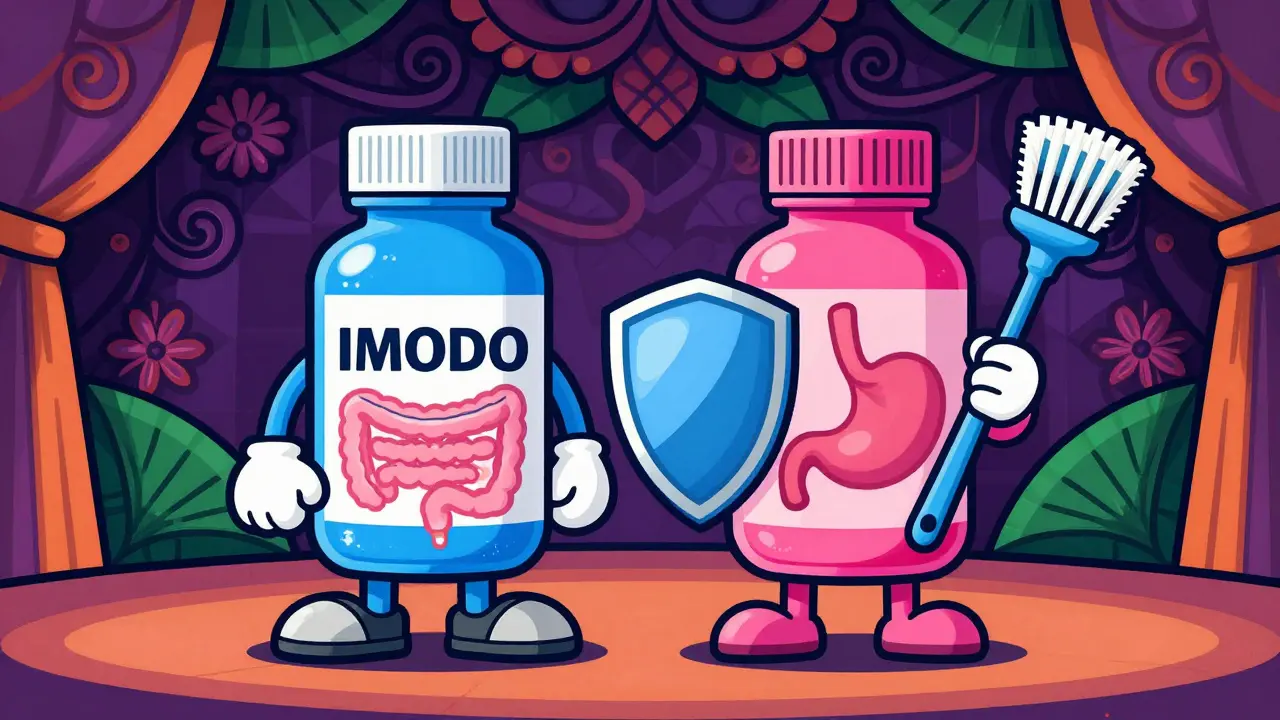
When you walk into a pharmacy, you’ll mostly encounter two main types of active ingredients. They work differently, so choosing the wrong one might leave you feeling just as sick. Let’s look at what’s actually happening inside your body when you take each medication.
Loperamide is a synthetic opioid agonist that slows down intestinal movement without affecting the brain at standard doses. It works by binding to receptors in the large intestine, effectively hitting the brakes on your gut motility. This increases the time water has to be absorbed from your stool, making it firmer. It’s fast-acting, often providing relief within 30 to 60 minutes. Because it doesn’t cross the blood-brain barrier, you won’t feel any sedative effects, which makes it popular for urgent situations.
In contrast, Bismuth subsalicylate is a compound that coats the stomach lining, absorbs toxins, and fights bacteria. Unlike loperamide, which simply slows things down, bismuth subsalicylate actively reduces inflammation and kills certain pathogens like E. coli and Campylobacter. It also helps with nausea and stomach cramps, offering broader symptom relief. However, it takes longer to kick in and comes with a cosmetic side effect: it can turn your tongue and stools black. This is harmless but startling if you aren’t expecting it.
| Feature | Loperamide (Imodium) | Bismuth Subsalicylate (Pepto-Bismol) |
|---|---|---|
| Primary Mechanism | Slows gut motility | Coats mucosa, antimicrobial, anti-inflammatory |
| Onset of Action | 30-60 minutes | 1-2 hours |
| Best For | Pure watery diarrhea, urgent control | Traveler’s diarrhea, nausea, mild cramping |
| Key Side Effect | Constipation | Black stools/tongue |
| Avoid If | Bloody stool, fever >100.4°F | Aspirin allergy, bleeding disorders |
How to Take These Medications Safely
Getting the dose right is crucial. Under-dosing might not help, while over-dosing can lead to serious health risks, including heart problems with loperamide or salicylate toxicity with bismuth. Always follow the label instructions strictly.
For loperamide, the standard adult protocol is to take 4mg after the first loose stool, followed by 2mg after each subsequent unformed stool. Do not exceed 8mg in a 24-hour period unless directed by a healthcare provider. If your symptoms persist beyond 48 hours, stop taking it. For children, check the age restrictions carefully; liquid formulations are generally approved for ages 6 and up, while caplets are for ages 12 and older.
For bismuth subsalicylate, adults typically take 30mL of liquid or two tablets every 30 to 60 minutes as needed, up to six doses in 24 hours. Remember that this medication contains salicylates, similar to aspirin. If you are allergic to aspirin, have a bleeding disorder, or are taking blood thinners, avoid this product entirely. It is also not recommended for children or teenagers recovering from viral infections due to the risk of Reye’s syndrome.
The Golden Rule: Hydration Is More Important Than Medication
Medications treat the symptom, but dehydration is the real danger. Diarrhea causes rapid loss of fluids and electrolytes, which can become life-threatening quickly, especially for the elderly and young children. No pill replaces the need for hydration.
You should drink oral rehydration solutions (ORS) that contain sodium and glucose in the correct ratio to maximize absorption. Sports drinks can help, but they often have too much sugar and not enough salt. Look for products specifically labeled as oral rehydration salts or use a WHO-recommended recipe. Sip slowly rather than gulping, which can trigger more vomiting or bowel movements. Avoid dairy, caffeine, alcohol, and high-fiber foods during the acute phase, as these can irritate the gut further. Stick to the BRAT diet-bananas, rice, applesauce, and toast-until your stomach settles.
Red Flags: When to Stop Self-Treating and See a Doctor
This is the most critical part of managing diarrhea at home. Anti-diarrheals are meant for short-term, symptomatic relief of mild cases. They are dangerous if used for serious infections because they keep the pathogens trapped in your intestines, allowing them to multiply and invade the bloodstream.
You must seek immediate medical attention if you experience any of the following:
- Bloody or black tarry stools: This indicates inflammation or bleeding in the digestive tract, possibly from bacterial infections like Shigella or C. diff.
- High fever: A temperature above 100.4°F (38°C) suggests an infectious cause that requires diagnosis and possibly antibiotics.
- Severe abdominal pain: Cramping is normal, but intense, localized, or persistent pain could signal appendicitis or other surgical emergencies.
- Signs of severe dehydration: Dark urine, dizziness, dry mouth, sunken eyes, or confusion.
- Prolonged duration: Diarrhea lasting more than 48 hours in adults or 24 hours in children without improvement.
If you have recently traveled internationally, taken antibiotics, or been hospitalized, do not self-treat. These factors increase the risk of resistant bacterial infections or Clostridioides difficile, which require specific medical management.

Common Mistakes to Avoid
Many people misuse OTC diarrhea meds out of desperation or misunderstanding. Here are the most frequent errors that lead to complications:
- Combining medications: Never take loperamide and bismuth subsalicylate together unless advised by a doctor. This increases the risk of side effects without adding significant benefit.
- Exceeding the maximum dose: Taking more than 8mg of loperamide daily does not speed up recovery and can cause cardiac arrhythmias, particularly in those with underlying heart conditions.
- Ignoring the cause: Using anti-diarrheals for food poisoning or viral gastroenteritis can prolong the illness. These conditions usually resolve on their own within a few days with proper hydration.
- Continuing too long: If symptoms don’t improve within 48 hours, stop the medication and consult a healthcare provider. Persistent diarrhea may indicate a chronic condition like IBS or IBD.
Special Considerations for Travelers
Traveler’s diarrhea affects 20-50% of international tourists, often caused by contaminated food or water. Bismuth subsalicylate is particularly useful here because it can be taken prophylactically to reduce risk by up to 65%. Start taking it twice daily before departure and continue throughout your trip. However, it’s messy and tastes chalky, so many prefer carrying loperamide for emergency use only. Remember, if you develop a fever or bloody stool while traveling, seek local medical care immediately rather than masking symptoms with OTC drugs.
Can I give Imodium to my child?
Loperamide is FDA-approved for children aged 6 and older in liquid form and 12 and older in caplet form. However, the NHS warns against using it for children under 12 without medical consultation due to the risk of paralytic ileus. Always consult your pediatrician before giving any anti-diarrheal to a child, as hydration is the primary treatment for pediatric diarrhea.
Why did my poop turn black after taking Pepto-Bismol?
This is a harmless and expected side effect. Bismuth subsalicylate reacts with sulfur in your digestive tract to form bismuth sulfide, which is black. It occurs in nearly all users and resolves shortly after stopping the medication. If you are not taking bismuth and notice black, tarry stools, seek medical attention immediately as this may indicate gastrointestinal bleeding.
Is it safe to take anti-diarrheals if I have a fever?
No. A fever above 100.4°F (38°C) combined with diarrhea often signals an invasive bacterial or parasitic infection. Slowing down your gut with anti-diarrheals traps these pathogens, potentially worsening the infection and leading to systemic complications. Seek medical evaluation instead.
How long can I safely use loperamide?
For acute diarrhea, limit use to 48 hours. If symptoms persist beyond this window, discontinue the medication and consult a healthcare provider. Long-term use without medical supervision can mask underlying conditions like inflammatory bowel disease or chronic infections.
Does loperamide cause constipation?
Yes, constipation is a common side effect, reported by about 12% of users. Since loperamide slows intestinal motility, taking too much or using it for too long can lead to severe constipation or even toxic megacolon in rare cases. Stop the medication if your stools become hard and difficult to pass.
Aishwarya Thankachan
June 6, 2026 AT 17:23Jerry Mathews
June 7, 2026 AT 17:48Lenny Cruz
June 8, 2026 AT 04:10Aswin Narayan J
June 8, 2026 AT 13:08Jonathan Paul
June 9, 2026 AT 22:40Roderick Gooden
June 11, 2026 AT 21:41ANGELA CHINENYE
June 12, 2026 AT 09:15Francis Saul
June 14, 2026 AT 06:49Dave Villeneue
June 15, 2026 AT 14:47Rachel Harrypersad
June 17, 2026 AT 05:40