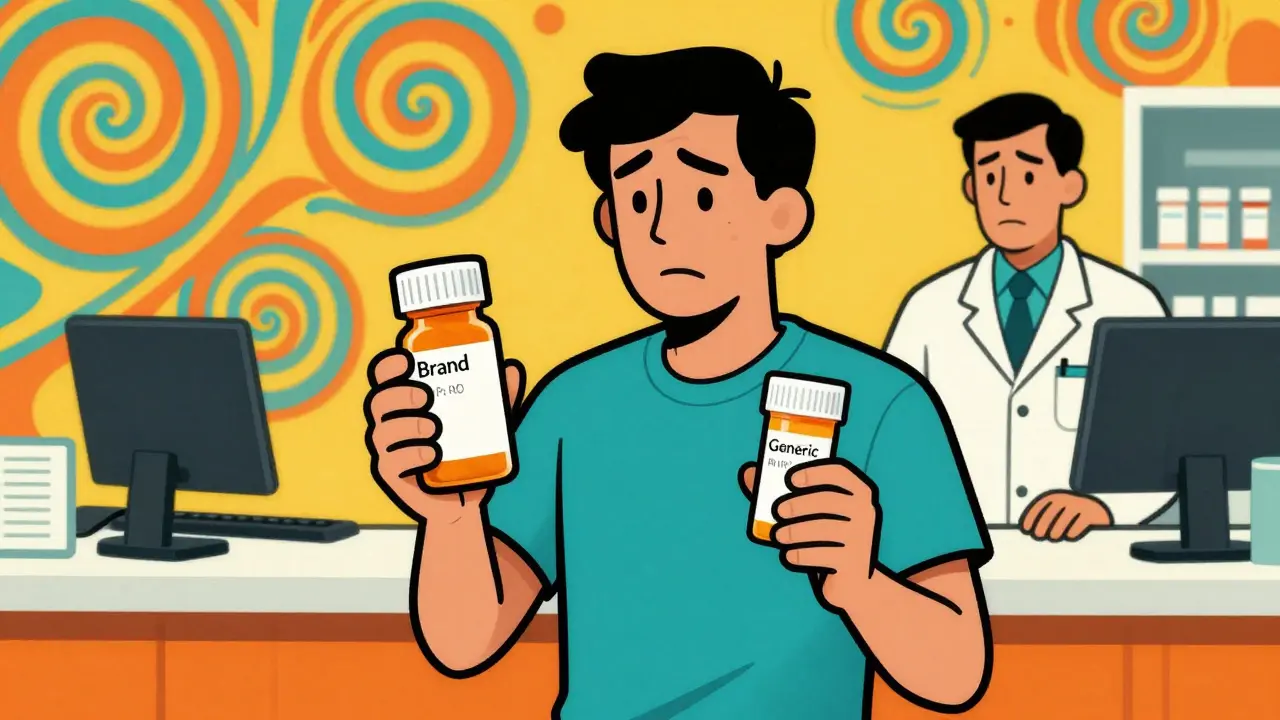
Walk into a pharmacy with a prescription for blood pressure medication. The pharmacist hands you two options: the brand name and the generic. On paper, the generic looks like a no-brainer-it’s supposed to be cheaper. But when you swipe your insurance card, the receipt might tell a different story. Sometimes, that 'cheap' generic costs you more at the register than the expensive brand-name drug. It sounds broken, right? That’s because it is.
You aren’t imagining things. The system that determines what you pay out of pocket for prescription drugs is a complex web of insurance plans, manufacturer rebates, and pharmacy benefit manager contracts that often prioritize middlemen profits over patient savings isn't designed to give you the lowest price. It’s designed to manage risk for insurers. Understanding why your copay for a generic statin might be higher than a brand-name alternative requires looking past the shelf price and into the mechanics of your insurance plan.
The Illusion of Generic Savings
We’ve all heard the pitch: generics are just as good as brands but cost a fraction of the price. And mostly, that’s true. The FDA requires generic drugs to contain the same active ingredients as their brand-name counterparts and demonstrate bioequivalence. This means they work the same way in your body, even if the fillers or colors differ. On average, generic medications cost 80-85% less than their brand-name versions. In fact, nine out of ten prescriptions filled in the U.S. are for generics.
So why do we still spend so much on medicine? Because while generics dominate volume, brand-name drugs account for nearly 75% of total prescription drug expenditures. The Schaeffer Center at USC reported that despite generics representing only about 18% of overall U.S. retail prescription drug expenditures (which hit $350 billion in 2020), their use saved the system $338 billion that year alone. Over a decade, those savings approach $2.4 trillion.
But here’s the catch: market distortions mean patients often overpay for generics by 13-20%. Why? Because of a lack of price transparency and supply chain inefficiencies. Middlemen-specifically Pharmacy Benefit Managers (PBMs)-often capture the difference between what the insurer pays and what the pharmacy gets, leaving patients with higher out-of-pocket costs than necessary. You’re paying for the system’s friction, not just the pill.
How Your Insurance Plan Dictates Your Price
Your out-of-pocket cost depends heavily on how your insurance benefit is designed. A 2021 study published in JAMA Network Open by Rome et al. analyzed 79 brand-name drugs and found a startling disconnect between list prices and what patients actually paid. About half of commercially insured patients were insulated from price hikes through fixed copayments. If your plan says you pay $10 for any generic, it doesn’t matter if the drug’s wholesale price doubles; your cost stays flat.
However, the other half of patients-those with coinsurance or deductible-based plans-felt every penny of those increases. When list prices rose by a median of 16.7% (adjusted for inflation) over two years, these patients saw their out-of-pocket spending climb directly. If you have a high-deductible health plan, you are essentially paying cash until you meet your threshold. In this scenario, the 'discount' your insurer negotiated with the drug manufacturer never reaches your wallet.
- Fixed Copay Plans: You pay a set amount (e.g., $15). List price changes don’t affect you directly, but insurers may move drugs to higher tiers to offset rising costs.
- Coinsurance Plans: You pay a percentage (e.g., 20%) of the drug’s cost. If the list price goes up, your bill goes up.
- Deductible-Based Plans: You pay 100% of the cost until you hit your annual deductible. These patients are most exposed to raw pricing fluctuations.
The Medicare Part D Trap: Why Generics Can Cost More
If you are on Medicare, the math gets even stranger. There is a structural flaw in Medicare Part D that can make high-priced specialty generics cost you more out of pocket than brand-name drugs. This happens due to the 'donut hole' or coverage gap mechanics.
Here is how it works: Brand-name manufacturers are required by law to pay discounts during the coverage gap. These discounts count toward your out-of-pocket spending, helping you reach catastrophic coverage faster. Once you hit catastrophic coverage, you only pay 5% of the drug price instead of 25%. Generic manufacturers, however, do not provide these same mandatory discounts.
A 2019 analysis by Vanderbilt University Medical Center highlighted this disparity. Patients using brand-name drugs needed to spend just $982 to reach catastrophic coverage. Patients relying on generics had to spend $3,730-a 279% higher threshold. This meant that for some conditions requiring expensive generic treatments, staying on the generic kept you stuck in the expensive coverage gap longer, costing you more in the short term. While policy discussions continue to address this, the current structure inadvertently penalizes patients who choose generics for certain high-cost therapies.
| Feature | Generic Drugs | Brand-Name Drugs |
|---|---|---|
| Average Cost Difference | 80-85% cheaper than brand | Baseline high cost |
| Prescription Volume | ~90% of all prescriptions | ~10% of all prescriptions |
| Total Expenditure Share | ~18% of total spending | ~75% of total spending |
| Medicare Coverage Gap Discount | No mandatory manufacturer discount | Mandatory discount counts toward OOP max |
| Patient Exposure to Price Hikes | High for coinsurance/deductible plans | High for coinsurance/deductible plans |
Bypassing the System: Cash Prices and New Models
Because the insurance system is so opaque, many patients are finding better deals by skipping insurance altogether for generics. In 2020, only 4% of U.S. prescriptions were paid with cash, but 97% of those cash payments were for generic drugs. Why? Because cash prices at transparent pharmacies can be lower than your insurance copay.
Models like Mark Cuban Cost Plus Drug Company (MCCPDC) and Blueberry Pharmacy have gained traction by stripping out the middlemen. They buy drugs directly and add a small markup (often 15-18%). A 2024 study by Kouzy analyzing 124 generic drugs found that patients could save money on 11.8% of generic prescriptions using MCCPDC, with a median savings of $4.96 per script compared to using insurance. For uninsured patients, the savings were even more dramatic.
This doesn’t work for everyone. Medicaid patients, for instance, saw no savings in the study because their government-negotiated rates are already low. But for commercially insured individuals with high deductibles, checking the cash price before swiping your card is becoming a standard money-saving habit. Tools like GoodRx also allow patients to bypass traditional insurance channels, offering discounted prices that compete with copays.
Practical Steps to Lower Your Prescription Costs
You don’t have to accept the first price quoted at the pharmacy counter. Here is how to take control of your out-of-pocket expenses:
- Ask for the Cash Price: Before filling a generic, ask the pharmacist, "What is the cash price without insurance?" Compare this to your copay. If the cash price is lower, pay cash. You won’t owe this amount toward your deductible, but you’ll keep more money in your pocket today.
- Check Tier Status: Log into your insurer’s portal. Is your generic on Tier 1 (lowest cost) or Tier 2? If it’s moved to a higher tier, ask your doctor if there is an equivalent generic on Tier 1.
- Use Prior Authorization Wisely: If you need a brand-name drug for medical reasons, your doctor must file a prior authorization. Don’t assume insurance will cover it automatically. Ensure the paperwork specifies 'dispense as written' to avoid automatic substitution with a generic that might not work for you.
- Leverage Transparency Apps: Use apps that scan barcodes to compare prices across local pharmacies and national discount programs. Prices for the same generic can vary by 20% or more between chains just blocks apart.
- Review Your Plan Annually: During open enrollment, look at your drug formulary. If you take multiple medications, calculate the total estimated out-of-pocket cost for each plan option, not just the monthly premium.
What’s Changing in 2026?
The landscape is shifting. Congressional interest in capping out-of-pocket spending in Medicare Part D has led to new regulations aimed at protecting seniors from catastrophic drug bills. Additionally, the Medicare Payment Advisory Commission (MedPAC) continues to push for reforms that would level the playing field between generic and brand drugs, potentially by adjusting how manufacturer discounts are calculated in the coverage gap.
However, change is slow. Dr. Stacie Dusetzina from Vanderbilt University noted that simply excluding manufacturer discounts from out-of-pocket calculations would 'make brand-name drugs more expensive instead of making generic drugs less expensive.' The real solution lies in increasing price transparency and reducing PBM fees. Until then, patients must remain vigilant shoppers.
The bottom line is that 'cheaper' isn't always cheaper at the register. By understanding the mechanics of your insurance, recognizing the traps in Medicare Part D, and being willing to pay cash for generics when it makes sense, you can significantly reduce your healthcare costs. Don’t let the complexity of the system dictate your budget. Take charge of your prescriptions.
Why does my generic drug cost more than the brand name with insurance?
This usually happens due to your insurance plan's tier structure or rebate agreements. Insurers often negotiate large rebates with brand-name manufacturers, which lowers the net cost to the insurer but doesn't always lower your copay. Conversely, if a generic is placed on a higher tier due to limited competition or specific PBM contracts, your copay may rise. Additionally, in Medicare Part D, the lack of manufacturer discounts for generics in the coverage gap can make them effectively more expensive out-of-pocket than brands for some patients.
Are generic drugs really as effective as brand names?
Yes. The FDA requires generic drugs to have the same active ingredient, strength, dosage form, and route of administration as the brand-name drug. They must also demonstrate bioequivalence, meaning they work the same way in the body. Differences in inactive ingredients (like fillers or dyes) are generally insignificant, though rare allergies to specific fillers can occur.
Should I pay cash for my prescriptions instead of using insurance?
It depends on the drug and your plan. For many common generics, cash prices at transparent pharmacies (like Mark Cuban Cost Plus Drug Company) or via discount coupons (like GoodRx) can be lower than your insurance copay, especially if you have a high-deductible plan. However, paying cash usually means the payment does not count toward your insurance deductible. Always compare the cash price to your copay before deciding.
What is the 'donut hole' in Medicare Part D?
The 'donut hole' or coverage gap is a phase in Medicare Part D where beneficiaries pay a higher percentage of their drug costs after reaching initial coverage limits but before hitting catastrophic coverage. Brand-name drugs receive mandatory manufacturer discounts that count toward out-of-pocket maximums, helping patients exit the gap faster. Generics do not have this same discount structure, which can sometimes make them more expensive to reach catastrophic coverage.
How do Pharmacy Benefit Managers (PBMs) affect my drug costs?
PBMs act as intermediaries between insurers, pharmacies, and drug manufacturers. They negotiate rebates and set formularies. Critics argue that PBMs often retain a portion of these rebates rather than passing them on to patients, leading to higher list prices and out-of-pocket costs. Lack of transparency in PBM pricing contributes to patients overpaying for generics by an estimated 13-20%.