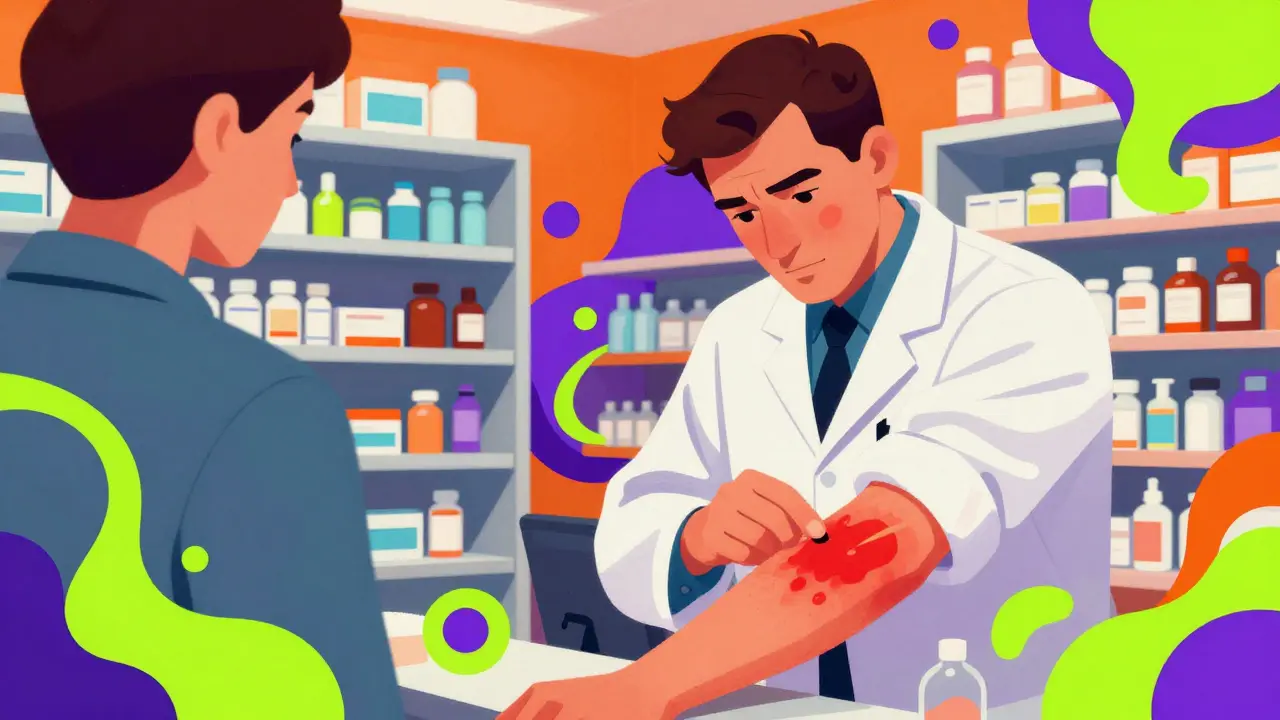
Imagine a patient walks into your pharmacy complaining of a sudden, severe skin rash after switching to a cheaper generic version of a medication they've used for years. At first glance, it looks like a standard allergic reaction. But as a pharmacist, you know that while the active ingredient is the same, a different filler or binder in that specific generic brand could be the culprit. This is where the real work begins. Reporting this isn't just a bureaucratic task; it's a critical safety net that prevents other patients from suffering the same fate.
When we talk about adverse event reporting is the process of identifying and documenting harmful or unintended effects resulting from the use of a health product, we're talking about the frontline of patient safety. For generic medications, the stakes are uniquely high. Because these drugs are designed to be bioequivalent to brand names, many clinicians assume they are identical in every way. However, subtle differences in excipients or manufacturing can lead to unexpected reactions. Pharmacists are often the only professionals in the care chain with the specific clinical training to spot these patterns early.
Key Takeaways for Pharmacy Practice
- Frontline Detection: Pharmacists are best positioned to identify reactions to generic excipients that prescribers might miss.
- Reporting Channels: Systems like MedWatch and FAERS are essential for tracking generic drug safety globally.
- Legal Mandates: Requirements vary by region, but the professional ethical obligation to report remains universal.
- Impact: Pharmacist-led initiatives can increase event documentation by over 30%, directly improving public health warnings.
Defining Adverse Drug Reactions in the Generic Context
Not every side effect is an adverse event. To report accurately, you need to distinguish between expected pharmacology and a true Adverse Drug Reaction (ADR). According to the Ontario College of Pharmacists, an ADR is a harmful and unintended effect. While a known side effect (like dry mouth with an antihistamine) is expected, an ADR is something that disrupts the patient's health unexpectedly.
The situation gets more serious when we hit the "serious" threshold. A reaction is classified as serious if it leads to hospitalization, causes life-threatening conditions, results in permanent disability, or leads to congenital malformations. In the world of generics, a "serious" event might be a sudden loss of efficacy in a narrow therapeutic index drug-like warfarin or levothyroxine-due to a bioequivalence issue. If a patient's INR spikes dangerously after a generic switch, that is a high-priority event that demands immediate reporting.
The Regulatory Landscape and Legal Obligations
Depending on where you practice, reporting might be a "strong suggestion" or a legal requirement. In the United States, federal law doesn't strictly mandate that every healthcare provider report every event, but the FDA strongly encourages it. Most reports actually enter the system via manufacturers, who act as middlemen for reports sent by pharmacists.
Other regions are much more direct. In British Columbia, for instance, the Health Professions Act makes it a professional mandate. Pharmacists there must notify the patient's practitioner, update the PharmaNet record, and report the reaction to Health Canada. This codified approach removes the guesswork and treats pharmacovigilance as a core part of the job, not an optional add-on. New Jersey has similar strictures, requiring consultant pharmacists to document errors in medical records before their shift ends.
| Region | Requirement Level | Primary Reporting Tool | Key Mandate |
|---|---|---|---|
| United States (Federal) | Encouraged | MedWatch / FAERS | Serious/Unexpected events |
| British Columbia (CA) | Mandatory | Health Canada / PharmaNet | Notify provider & government |
| European Union | Mandatory (since 2012) | EMA EudraVigilance | All healthcare professionals |
Why Generic Safety Requires Special Attention
Why focus so much on generics? Because of the "equivalence assumption." When a doctor prescribes a generic, they assume the patient will respond exactly as they did to the brand. If a patient develops a reaction, the prescriber might attribute it to a new illness or a different drug. However, the pharmacist is the one who knows exactly which manufacturer supplied the bottle.
As Dr. Michael Cohen from the Institute for Safe Medication Practices points out, pharmacists are the first to recognize bioequivalence issues. Whether it's a difference in the rate of absorption (Cmax) or an uncommon dye in a tablet causing a reaction, the pharmacist holds the data point-the NDC code-that links the reaction to the specific product. Without the pharmacist's report, these patterns remain invisible to regulators.
Overcoming the Barriers to Reporting
Let's be honest: reporting takes time. A survey by the National Community Pharmacists Association found that most pharmacists spend 15 to 30 minutes per report. In a busy retail environment, that's a lifetime. This is why under-reporting is a massive problem. Some estimates suggest only 5-10% of ADRs are actually reported to Health Canada.
To move the needle, we have to change the workflow. Using electronic health records (EHR) with built-in modules is a start, but for community pharmacies, the shift is toward integrated pharmacy practice management systems. Pilot programs in Texas and California have shown that integrating reporting tools directly into the dispensing software can cut reporting time by 40%. The goal is to make reporting a few clicks rather than a long form.
Beyond time, there's the "awareness gap." Some pharmacists hesitate because they aren't sure if the reaction is "serious enough" to report. The rule of thumb should always be: if you suspect the medication caused the event and it was unexpected, report it. It's better for the FDA Adverse Event Reporting System (FAERS) to have a redundant report than to miss a signal that could lead to a nationwide recall.
The Path Forward: Active Pharmacovigilance
We are moving away from passive reporting (waiting for a phone call) toward active monitoring. The FDA's Sentinel Initiative is a great example, expanding to include community pharmacy data to find safety signals in real-time. We are also seeing a shift toward the European model, where mandatory reporting has already increased event documentation by 220%.
By 2025, it's predicted that a majority of U.S. states will adopt formal reporting requirements. This isn't about adding more paperwork; it's about acknowledging that the pharmacist is the final check in the safety chain. When you report a generic drug reaction, you aren't just filling out a form-you're contributing to a global database that protects millions of patients.
What is the difference between a side effect and an adverse drug reaction?
A side effect is a known, expected pharmacological effect of a drug (e.g., drowsiness with diphenhydramine). An adverse drug reaction (ADR) is an unintended, harmful effect that occurs at normal doses. While some side effects can be ADRs if they are severe or unexpected, the key distinction is that ADRs are unplanned and harmful, requiring documentation for safety monitoring.
Where should I report a suspected generic drug reaction in the US?
The primary channel is the FDA's MedWatch program. You can submit reports electronically through the MedWatch Online portal or via a traditional paper form. Additionally, reporting the event to the drug manufacturer is highly effective, as 98% of reports in the FAERS database come through manufacturer-led submissions.
Does the manufacturer of a generic drug have a role in this process?
Yes, manufacturers are critical. They are required to submit periodic safety reports to regulatory bodies. If a pharmacist reports a serious and unexpected event to a manufacturer, the manufacturer generally must report it to the FDA within 15 days. This ensures that product-specific issues are tracked across different batches and regions.
What information is needed for a complete ADR report?
A comprehensive report should include the patient's medical and medication history, the exact product name and NDC code (to identify the specific generic manufacturer), a detailed description of the reaction, the timeline of when the reaction occurred relative to the drug start/switch, and the outcome of any interventions used to treat the reaction.
Why are generic drugs sometimes more prone to reporting issues?
Because generics are considered "bioequivalent," there is a psychological bias that they are identical to the brand. This leads to under-reporting because providers may assume the reaction is due to the patient's condition rather than a specific formulation difference or an excipient in the generic version.
Next Steps for Practitioners
If you're looking to improve your pharmacy's reporting rate, start by designating a "safety lead" in your staff to manage the documentation process. Create a simple internal log of all suspected reactions, even if they aren't immediately reported to the FDA. This allows you to spot trends within your own patient population.
For those in high-volume settings, explore whether your practice management software has API integrations for MedWatch. If you encounter a patient with a suspected generic-related ADR, your first step should be to secure the NDC code from the bottle and contact the prescribing physician to ensure the patient's immediate safety before proceeding with the formal report.
Doug DeMarco
April 12, 2026 AT 08:39This is such a great reminder for all of us in the field! 🌟 It's easy to get bogged down in the rush, but keeping our patients safe is why we're here. Let's all try to be a bit more proactive with our reporting! 🙌
Rakesh Tiwari
April 12, 2026 AT 14:03Oh sure, because we all know that the pharmaceutical giants just love it when we report their little "manufacturing hiccups" to the FDA. I'm sure the reports go straight into a shredder while the execs laugh all the way to the bank. Truly a miracle of modern medicine.
Chad Miller
April 14, 2026 AT 13:30honestly just too much paperwork man... like why is it so hard for them to just fix the drugs in the first place lol thid is just lazy system design
Thabo Leshoro
April 16, 2026 AT 09:04The pharmacovigilance... systemic failures... are truly heartbreaking!!! We must prioritize the therapeutic index... and the bioequivalence... for the sake of the vulnerable!!! It is so sad when the fillers... cause such distress!!!
Julie Bella
April 17, 2026 AT 14:45I totaly agree!! We have a moral duty to protect people! I actually had a patient last week who tried to hide a rash from me but I told them they MUST report it because it's the right thing to do!! 😡 Some people just dont care about public safety it's disgusting!! 🙄
emmanuel okafor
April 19, 2026 AT 07:11it is interesting how we think of drugs as just chemicals but they are also about trust between a person and their healer everything is connected in a way
Camille Sebello
April 20, 2026 AT 14:15I need to know your specific store... are you actually doing this? Some of you are just lying for the board... be honest!!
Franklin Anthony
April 22, 2026 AT 12:28friendly reminder that the system is rigged and those reporting tools are probably just harvesting our data to see which pharmacists are too honest for their own good lol’s just a way for the big guys to keep tabs on the frontline while they switch out fillers for cheaper industrial sludge and tell us its bioequivalent when we all know the truth is buried in a redacted pdf somewhere in dc it’s honestly funny how people still trust the medwatch portal like it’s some holy grail of safety when the whole thing is just a facade to make us feel like we have a say in a corporate machine that only cares about the bottom line and not the patient with the rash