
Vasculitis isn’t one disease-it’s a group of rare autoimmune conditions where your immune system turns on your own blood vessels. Instead of protecting you, it attacks the walls of arteries, veins, and capillaries, causing swelling, damage, and sometimes blockages. This can cut off blood flow to organs, leading to serious harm-or even death-if not caught early. The good news? Most types are treatable. The catch? They’re often missed because symptoms like fatigue, joint pain, or rashes look like the flu, arthritis, or allergies.
How Vasculitis Starts: When Your Immune System Attacks Your Blood Vessels
Your blood vessels are the highways of your body. They carry oxygen and nutrients to every organ. In vasculitis, the immune system mistakes vessel walls for foreign invaders. White blood cells swarm the area, triggering inflammation. This isn’t just a minor irritation-it tears through the vessel wall. Early on, neutrophils dominate, causing damage that leads to fibrinoid necrosis. Later, lymphocytes take over, making the inflammation chronic.
What triggers this? No one knows for sure. Genetics may play a role. Some people carry genes that make their immune system more likely to misfire. Infections, medications, or environmental factors might push it over the edge. But unlike infections, this inflammation doesn’t go away on its own. It keeps going until you stop it with powerful drugs.
Types of Vasculitis: Size Matters
Doctors classify vasculitis by the size of the blood vessels it targets. This isn’t just academic-it tells you what organs are at risk and how to treat it.
- Large-vessel vasculitis affects the aorta and its biggest branches. Giant cell arteritis (GCA) hits people over 50, often targeting the temples. It can cause headaches, jaw pain when chewing, and even sudden vision loss. Takayasu arteritis mostly affects young women and can narrow arteries in the arms and legs, making pulses hard to feel.
- Medium-vessel vasculitis includes polyarteritis nodosa (PAN), which can damage kidneys, nerves, and the gut. Kawasaki disease is the big one in kids under five. It inflames coronary arteries, and if untreated, up to 25% develop dangerous aneurysms.
- Small-vessel vasculitis is the most common and often the most dangerous. This group includes granulomatosis with polyangiitis (GPA), microscopic polyangiitis (MPA), and eosinophilic granulomatosis with polyangiitis (EGPA). These are often linked to ANCA antibodies-a key marker doctors test for. GPA can cause sinus infections, lung nodules, and kidney failure. MPA mostly attacks the kidneys and lungs. EGPA starts with asthma and allergies, then spirals into organ damage.
There’s also Buerger’s disease, which only happens in smokers. It blocks small arteries and veins in hands and feet. Quitting tobacco isn’t optional-it’s the only thing that stops progression.
What Symptoms Should Raise a Red Flag?
Vasculitis doesn’t have one signature symptom. It mimics everything. But if you have a mix of these, especially with no clear cause, it’s time to see a specialist:
- Purple or red spots on the skin, especially on the lower legs
- Unexplained fevers, night sweats, or weight loss
- Joint pain or muscle aches that don’t improve
- Numbness, tingling, or weakness in hands or feet
- Shortness of breath or coughing up blood
- Chronic sinus infections or nosebleeds
- Stomach pain after eating, or blood in stool
- Sudden vision changes or headaches near the temples
One of the scariest things? Kidney damage can happen with almost no symptoms. You might feel fine-until your creatinine spikes and your kidneys are failing. That’s why urine tests and blood pressure checks are non-negotiable if vasculitis is suspected.
How Doctors Diagnose Vasculitis
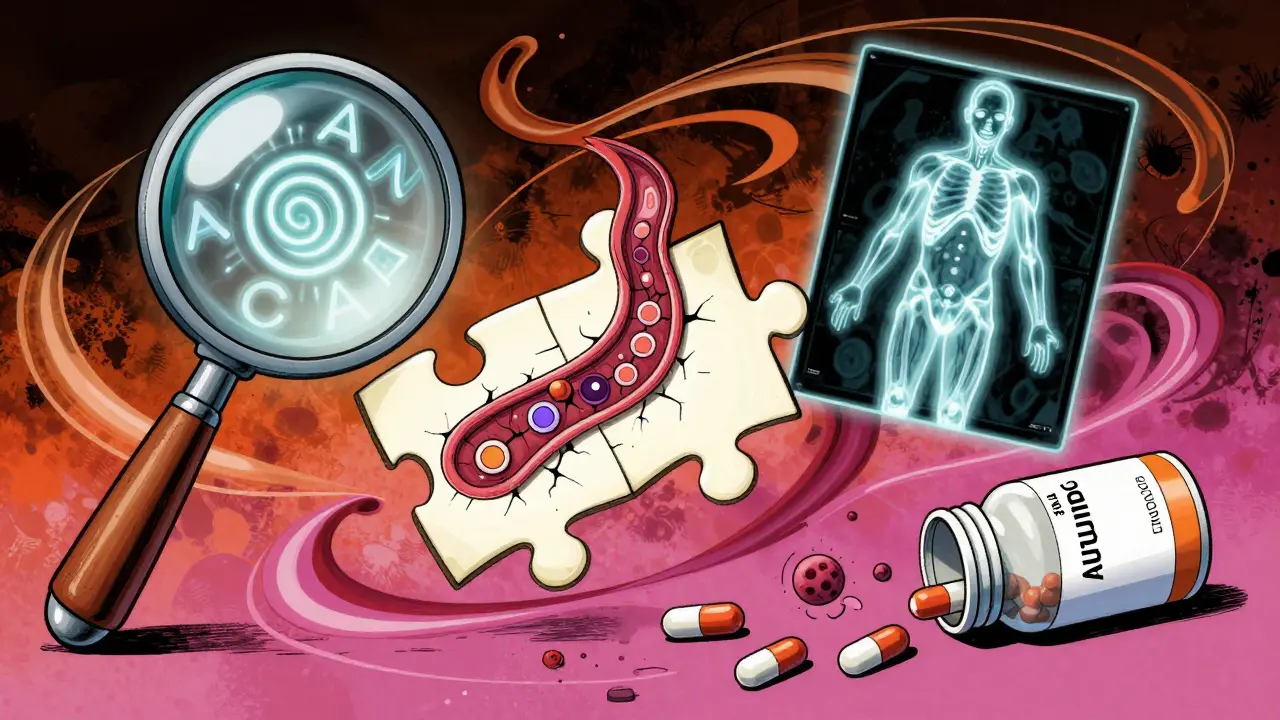
There’s no single blood test for vasculitis. Diagnosis is a puzzle. You need four pieces:
- Lab tests: ESR and CRP levels are almost always high. But the real clue? ANCA antibodies. c-ANCA (targeting proteinase-3) points strongly to GPA. p-ANCA (targeting MPO) is linked to MPA and EGPA. These aren’t perfect-they can be positive in other diseases-but when combined with symptoms, they’re powerful.
- Imaging: CT scans or MRIs can show inflamed arteries. A PET scan can highlight areas of active inflammation. In giant cell arteritis, ultrasound of the temporal artery can show a "halo sign"-a thickened vessel wall.
- Biopsy: This is the gold standard. A small piece of affected tissue-skin, kidney, lung, or even a temporal artery-is looked at under a microscope. Finding immune cells inside the vessel wall, along with signs of necrosis, confirms the diagnosis.
- Organ function tests: Kidney function (creatinine, eGFR), lung function (chest X-ray, CT), and urine analysis for blood or protein are critical. Even if you feel fine, your kidneys might be silently failing.
The Five Factor Score helps doctors predict how bad it might get. It looks for: kidney involvement, heart problems, gastrointestinal bleeding, nerve damage, and lung damage. The more factors, the higher the risk of death without treatment.
Treatment: Stopping the Attack Before It’s Too Late
Treatment depends on how severe it is and which organs are involved. But the goal is always the same: shut down the immune attack, then keep it off.
For severe cases, doctors start with high-dose prednisone-often 0.5 to 1 mg per kg of body weight daily. That’s a lot. It works fast, but side effects pile up: weight gain, bone loss, diabetes, mood swings. So they pair it with a stronger drug to get the immune system under control faster.
For ANCA-associated vasculitis, the old standard was cyclophosphamide. It’s effective but toxic-can cause infertility and bladder cancer. Now, rituximab is often preferred. It targets B-cells, the immune cells that make ANCA antibodies. It’s safer and just as effective.
In 2021, the FDA approved avacopan, a new drug that blocks a key part of the immune response (C5a receptor). In the ADVOCATE trial, patients on avacopan + low-dose steroids had the same remission rates as those on high-dose steroids-but they took 2,000 mg less prednisone over a year. That’s huge for long-term health.
For giant cell arteritis, tocilizumab (an IL-6 blocker) is now approved as an add-on. It helps people reduce steroid doses faster and lowers relapse risk.
For Kawasaki disease, it’s all about timing. High-dose IVIG (immune globulin) and aspirin given within 10 days of fever start can cut the risk of coronary aneurysms from 25% to under 5%.
And for Buerger’s disease? No drug works if you keep smoking. Quitting is the only cure.

What Happens After Treatment?
Remission doesn’t mean cured. About half of people with ANCA vasculitis relapse within five years. That’s why maintenance therapy lasts 18 to 24 months-or longer. Drugs like azathioprine, methotrexate, or continued rituximab keep the immune system quiet.
Regular monitoring is key. Blood tests, urine checks, and imaging aren’t optional. Some patients now use new biomarkers like urinary MCP-1 or BAFF levels to predict flares before symptoms start. These aren’t standard yet, but they’re coming.
Long-term, the biggest risks are steroid damage and organ failure. Bone density scans, eye exams, and heart checks become part of routine care. Many patients end up on calcium, vitamin D, and bisphosphonates to protect bones.
Prognosis: It’s Not a Death Sentence
With treatment, 80-90% of people with ANCA vasculitis go into remission. Survival rates for polyarteritis nodosa without major organ damage are 95% at five years. But if kidneys or lungs are involved, that drops sharply.
Early diagnosis changes everything. Studies show patients wait 6 to 12 months on average before getting the right diagnosis. By then, damage may already be done. That’s why if you have persistent, unexplained symptoms-especially with multiple organ involvement-push for a rheumatologist.
Vasculitis can be deadly. But it’s not inevitable. People live full lives with it. They work, travel, raise families. They just need the right team, the right meds, and the right vigilance.
Frequently Asked Questions
Can vasculitis be cured?
There’s no permanent cure, but most types can be controlled with medication. Many people stay in remission for years. Some may need low-dose treatment for life. The goal is to prevent flares and organ damage-not to eliminate the disease entirely.
Is vasculitis hereditary?
It’s not directly inherited like cystic fibrosis. But certain genes can make your immune system more likely to misfire. If a close relative has vasculitis, your risk is slightly higher-but still very low overall. Environmental triggers are usually needed to start the disease.
Can children get vasculitis?
Yes. Kawasaki disease is the most common type in kids under five. Others like Henoch-Schönlein purpura can also affect children. Pediatric vasculitis often requires different treatment than adult versions. Kids with Kawasaki disease need urgent cardiac monitoring because coronary artery damage can develop silently.
What’s the difference between vasculitis and lupus?
Lupus is a systemic autoimmune disease that can cause vasculitis as one of its many features. But vasculitis can also happen on its own-like in GPA or giant cell arteritis. So lupus can include vasculitis, but not all vasculitis is lupus. Testing for specific antibodies (like ANA for lupus vs. ANCA for vasculitis) helps tell them apart.
How long does treatment last?
Induction therapy (strong drugs to get the disease under control) usually lasts 3 to 6 months. Maintenance therapy to prevent relapse typically lasts 18 to 24 months, sometimes longer. Some patients, especially those with frequent flares, need low-dose treatment for years. Stopping too soon is the most common reason for relapse.
Can I still exercise with vasculitis?
Yes-if your condition is stable. Exercise helps with fatigue, muscle strength, and mental health. But avoid high-impact activities if you have bone loss from steroids or if you have active kidney or heart involvement. Work with your doctor to build a safe routine. Walking, swimming, and light resistance training are usually recommended.