DRESS Syndrome RegiSCAR Diagnostic Calculator
Symptom Checklist
RegiSCAR Score
Diagnosis Likelihood
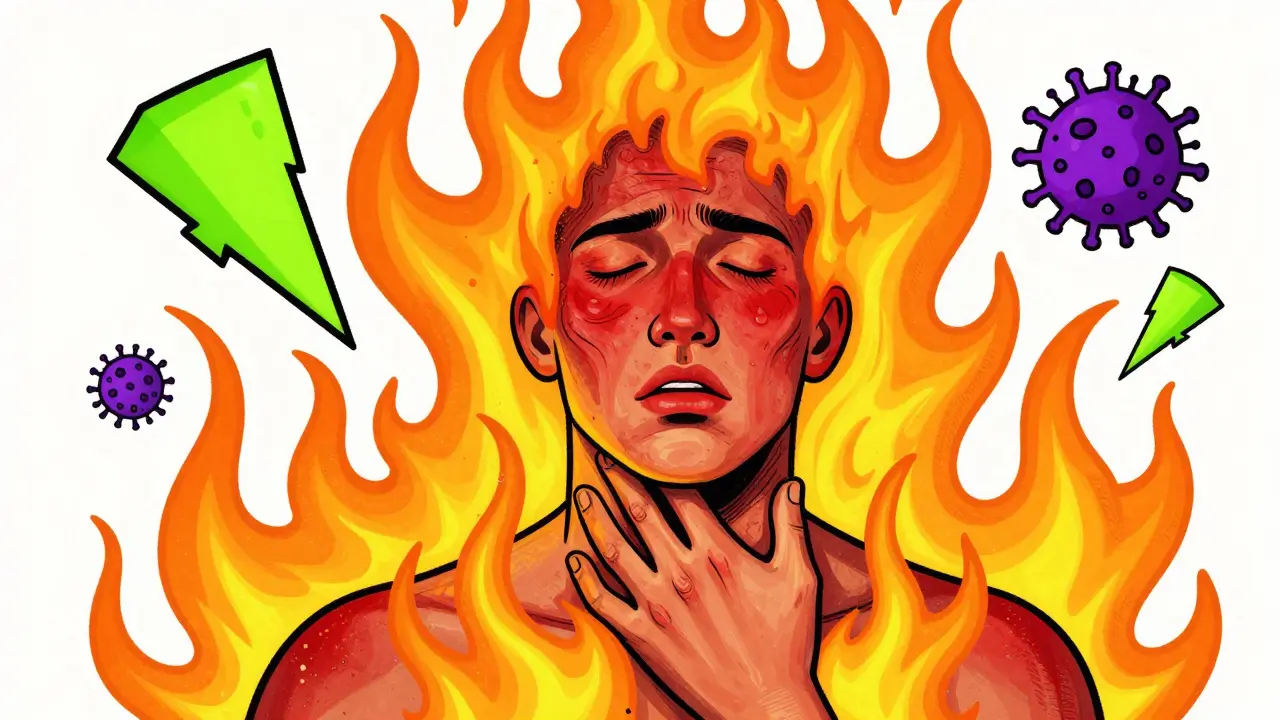
Imagine starting a new medication for pain or seizures. Two weeks later, you feel fine. Then, suddenly, your temperature spikes to 39°C (102°F). A rash breaks out on your face and spreads rapidly. You assume it’s an allergy or a virus. But this isn’t just a bad rash. It could be DRESS syndrome, a life-threatening condition where your immune system attacks your own organs in response to a drug.
DRESS stands for Drug Reaction with Eosinophilia and Systemic Symptoms. Doctors also call it Drug-Induced Hypersensitivity Syndrome (DIHS). It is not common-hitting about 1 in 1,000 people who take high-risk drugs-but it is deadly if missed. The mortality rate sits at around 10%. That means one in ten people who get DRESS do not survive without immediate, aggressive treatment.
The scariest part? It looks like the flu at first. Most patients visit the emergency room two to five times before getting the right diagnosis. By then, their liver, kidneys, or lungs may already be failing. This guide cuts through the confusion. We will break down exactly what DRESS is, which drugs cause it, how to spot it early, and why the timing of diagnosis matters more than anything else.
What Is DRESS Syndrome?
DRESS is a severe cutaneous adverse reaction (SCAR). Unlike a simple penicillin rash that fades in days, DRESS is a systemic firestorm. Your body doesn’t just reject the drug; it goes into overdrive, triggering inflammation across multiple organ systems.
First described in 1950 as "phenytoin hypersensitivity," the condition was formally named DRESS by French researchers Bocquet, Bagot, and Roujeau in 1996. Since then, we have learned that it involves a complex mix of direct drug toxicity, immune system chaos, and viral reactivation. Yes, viruses. In 60-80% of DRESS cases, latent viruses like Human Herpesvirus-6 (HHV-6), Epstein-Barr Virus (EBV), or Cytomegalovirus (CMV) wake up and multiply because the immune system is distracted fighting the drug.
This dual attack-drug plus virus-is what makes DRESS so hard to treat. It behaves less like an allergy and more like a temporary autoimmune disease. Understanding this mechanism is crucial because it explains why stopping the drug alone isn’t always enough. Patients often need strong immunosuppressants to calm the storm.
The Classic Signs: How to Spot DRESS Early
You cannot diagnose DRESS with a single test. It requires connecting the dots between symptoms, blood work, and medication history. The hallmark features appear in a specific pattern:
- Latency Period: Symptoms start 2 to 8 weeks after beginning the offending drug. If you got a rash one day after taking ibuprofen, it is likely not DRESS. If you started an anticonvulsant three weeks ago and now feel terrible, pay attention.
- Fever: High fever (>38.5°C or 101.3°F) occurs in 98% of cases. It often precedes the rash.
- Rash: A widespread, red, flat-to-raised rash (morbilliform) appears in 95% of patients. It usually starts on the face and upper body, spreading to cover 80-90% of the skin within days.
- Facial Swelling: Significant edema (swelling) of the face is present in 68% of cases. Lips may become dry, cracked, or swollen.
- Lymph Node Enlargement: Swollen lymph nodes (lymphadenopathy) occur in 75% of patients, often in the neck or armpits.
These visible signs are only half the story. The real danger lies inside. Blood tests reveal eosinophilia (high levels of eosinophils, a type of white blood cell) in 70% of cases. Counts often exceed 1,500 cells/μL. Atypical lymphocytes appear in 60% of cases. These markers tell doctors that the immune system is highly activated.
Organ Damage: The Silent Threat
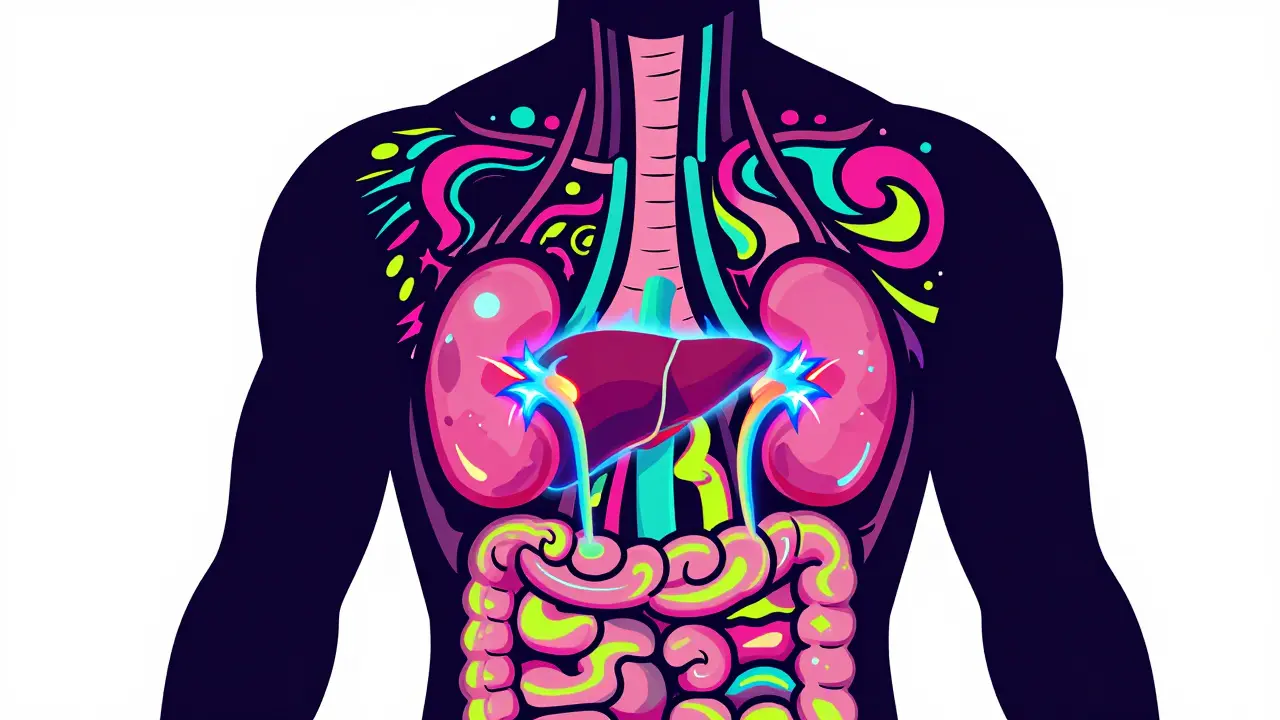
DRESS earns its "Systemic Symptoms" name because it attacks internal organs. In 90% of cases, at least one organ is involved. The liver is the most common target, affected in nearly 78% of patients. Liver enzymes (ALT/AST) can skyrocket above 300 IU/L, indicating acute hepatitis. Without treatment, this can progress to liver failure.
Kidneys are next, damaged in about 14% of cases, leading to elevated creatinine and potential renal impairment. Lungs (9%), heart (8%), and pancreas (5%) are also at risk. Heart involvement can manifest as myocarditis or pericarditis, which can be fatal. Pancreatic involvement causes severe abdominal pain and vomiting.
Here is the critical distinction from other severe drug reactions like Stevens-Johnson Syndrome (SJS): SJS destroys the skin surface, causing blistering and peeling. DRESS spares the skin surface mostly but devastates the organs underneath. Confusing the two leads to wrong treatments. SJS needs burn-unit care for skin loss; DRESS needs intensive care for organ support.
Culprit Drugs: Who Is to Blame?
Not all medications carry equal risk. Certain classes of drugs are notorious for triggering DRESS. Knowing these helps clinicians maintain suspicion when symptoms arise.
| Drug Class | Specific Examples | Approximate Share of Cases |
|---|---|---|
| Antigout Medications | Allopurinol | 28% |
| Anticonvulsants | Carbamazepine, Phenytoin, Lamotrigine | 24% |
| Antibiotics | Sulfonamides (Bactrim), Vancomycin, Minocycline | 20% |
| Others | Alkylating agents, Anti-TNF biologics | Remaining % |
Allopurinol is the single biggest offender globally. It is used widely for gout. However, in people carrying the HLA-B*58:01 genetic allele, allopurinol triggers DRESS with terrifying efficiency. This gene is common in Han Chinese, Korean, and Thai populations. In Taiwan, mandatory screening for this gene before prescribing allopurinol has reduced DRESS cases by 80%. In the US and Europe, such screening is not yet standard, leaving many at risk.
Carbamazepine, an anti-seizure and mood-stabilizing drug, is linked to the HLA-A*31:01 allele. Again, prevalence varies by ethnicity, being higher in Asian and European populations. Lamotrigine is another frequent trigger, especially if the dose is escalated too quickly. Patients starting lamotrigine must follow a strict titration schedule to allow the body to adjust, though even slow titration does not eliminate risk entirely.
Diagnosis: The RegiSCAR Score
Because DRESS mimics mononucleosis, lupus flares, or viral exanthems, misdiagnosis is rampant. Studies show 30-40% of initial diagnoses are wrong. To fix this, dermatologists use the RegiSCAR scoring system. Developed in 2007, it assigns points based on eight criteria: hospitalization, reaction severity, age, known culprit drug, latency period, associated diseases, blood count abnormalities, and organ involvement.
A score of 5 or higher indicates "definite" DRESS. A score of 3-4 suggests "probable" DRESS. This tool has 80% sensitivity and 97% specificity, meaning it rarely misses true cases and rarely falsely accuses innocent rashes. Clinicians should calculate this score immediately when a patient presents with fever, rash, and recent drug exposure.
Beyond the score, doctors look for viral reactivation. Testing for HHV-6 DNA in the blood is becoming standard. Finding high levels of HHV-6 supports the DRESS diagnosis and confirms the viral component of the illness.

Treatment and Management
Time is tissue. The moment DRESS is suspected, the suspect drug must be stopped. Ideally, within 24 hours. Continuing the drug increases mortality significantly.
For mild cases with no organ damage, stopping the drug and using antihistamines might suffice. However, most DRESS cases require systemic corticosteroids. Prednisone is the gold standard, typically started at 0.5 to 1 mg/kg/day. The key is not just starting steroids, but tapering them slowly. Rushing the taper causes relapse. Treatments often last 3 to 6 months, with weekly reductions of 5-10mg. Relapses are common if the steroid is withdrawn too fast.
If steroids fail or organs are critically damaged, doctors turn to second-line therapies. Intravenous Immunoglobulin (IVIG) and mycophenolate mofetil are emerging options. Recent trials suggest IVIG can help neutralize the inflammatory cytokines driving the damage. For liver failure, transplant evaluation may be necessary, though rare.
Hospitalization is mandatory for anyone with organ involvement. ICU-level monitoring is recommended if liver enzymes exceed 1,000 IU/L, creatinine rises above 2.0 mg/dL, or breathing becomes difficult. Multidisciplinary teams involving dermatology, hepatology, nephrology, and infectious disease specialists yield the best outcomes.
Prevention and Future Directions
We are moving toward personalized medicine to prevent DRESS. Genetic testing for HLA alleles is the most promising tool. The FDA has approved point-of-care tests for HLA-B*58:01, allowing same-day screening before prescribing allopurinol. While not yet universal in the West, this technology is changing practice in Asia and gaining traction globally.
Patients should keep a detailed list of all medications, including over-the-counter drugs and supplements. If you have had DRESS once, you are at higher risk for future reactions to related drugs. Carry a medical alert card listing your culprit medications. Never restart the offending drug-it can cause a faster, more severe reaction.
Research is also focusing on biomarkers to predict who will develop chronic autoimmune issues after DRESS. Some patients develop long-term thyroid problems, diabetes, or rheumatoid arthritis years after recovery. Long-term follow-up is essential.
How long does it take to recover from DRESS syndrome?
Recovery is slow. Skin symptoms usually resolve within 2-4 weeks after stopping the drug and starting steroids. However, systemic inflammation takes longer. Most patients require a steroid taper lasting 3 to 6 months. Full recovery, including normalization of liver and kidney function, can take 6 to 12 months. Some patients experience fatigue and mild organ dysfunction for years.
Can DRESS syndrome be fatal?
Yes. The mortality rate is approximately 10%. Death usually results from multi-organ failure, particularly liver failure, heart inflammation (myocarditis), or severe lung involvement. Early diagnosis and aggressive treatment with corticosteroids significantly reduce this risk.
Is DRESS syndrome contagious?
No. DRESS is an immune reaction to a drug, not an infection. However, because it often involves the reactivation of viruses like HHV-6 or EBV, there is a theoretical risk of transmitting those viruses to close contacts, but the DRESS condition itself is not contagious.
What is the difference between DRESS and Stevens-Johnson Syndrome (SJS)?
Both are severe drug reactions, but they differ clinically. SJS/TEN affects the skin surface, causing blistering, peeling, and severe mucosal (mouth/eye/genital) damage. It has a short latency (4-28 days). DRESS has a longer latency (2-8 weeks), features prominent facial swelling, eosinophilia, and internal organ damage (liver/kidney), but minimal skin peeling. SJS has a higher mortality rate (25-35%) compared to DRESS (10%).
Should I get genetic testing before taking allopurinol?
If you are of Han Chinese, Korean, or Thai descent, yes. Screening for the HLA-B*58:01 allele is strongly recommended and has proven effective in preventing DRESS. For other ethnic groups, the benefit is less clear, but discussion with your doctor about genetic risk factors is wise, especially if you have a family history of severe drug reactions.
Peter Sverla
July 8, 2026 AT 08:17the latency period thing is wild, like two to eight weeks? that seems so long for an allergic reaction usually you know within days
Paul Diamond
July 9, 2026 AT 01:21One must consider the ontological implications of a pharmaceutical agent inducing such a profound systemic betrayal. The body, in its infinite complexity, perceives the cure as the pathogen, creating a dialectic of destruction where the immune system turns inward upon itself. It is a tragic irony that the very mechanisms designed to preserve life become the architects of its potential demise when misdirected by chemical interference.
Sydney Jarrett
July 10, 2026 AT 03:53Let’s be real here, this isn’t just 'bad luck' it is a failure of pharmacovigilance and basic clinical competence. The RegiSCAR score is basically elementary school math if you actually read the literature on hypersensitivity syndromes. Doctors who miss DRESS are failing at their most basic diagnostic duties because they aren't looking at the eosinophil counts or checking for HHV-6 reactivation which is literally the hallmark of the disease process. It is not rocket science it is standard dermatology and hepatology protocol that these clowns ignore until the patient is coding in the ICU with fulminant hepatic necrosis. Stop blaming the patients for having complex immunologies and start blaming the prescribers for not knowing their drug interactions and genetic risk factors like HLA-B*58:01.
Lorena Suarez
July 11, 2026 AT 05:45hey i totally get why people get scared reading this but honestly it feels good to have info out there so we can watch out for ourselves right? like knowing about the facial swelling and fever helps a lot imo
Isis Fleming
July 12, 2026 AT 13:27It is imperative to note that while the mortality rate is cited as 10%, early intervention drastically alters this prognosis. The distinction between Stevens-Johnson Syndrome and DRESS is often misunderstood by laypersons and even some general practitioners, leading to inappropriate management strategies. Patients should be educated on the specific timeline of symptom onset, particularly the delayed presentation which differentiates it from immediate IgE-mediated allergies. Furthermore, the role of viral reactivation, specifically Human Herpesvirus-6, suggests that antiviral therapies might adjunctively benefit treatment protocols, although current guidelines primarily emphasize corticosteroid tapering. A multidisciplinary approach involving dermatology, nephrology, and hepatology is not merely recommended but essential for optimal outcomes in severe cases involving organ dysfunction.
Ben Murphy
July 13, 2026 AT 13:54The moral failing here is evident in the lack of mandatory genetic screening in Western nations compared to Asian countries. To allow allopurinol prescriptions without HLA-B*58:01 testing in high-risk populations is negligent and borders on malpractice given the established efficacy of prevention strategies elsewhere. We are essentially gambling with human lives due to bureaucratic inertia and cost-cutting measures rather than prioritizing patient safety. This is not just a medical issue; it is a societal failure to implement proven preventative measures that save lives and reduce suffering.
Fred Stone
July 13, 2026 AT 20:28i had a friend who got lamotrigine and started feeling sick after a few weeks but his doc just said it was flu or something till he ended up in hospital with liver issues so yeah the timing part is super important ppl need to listen to their bodies
Brett Aungst
July 14, 2026 AT 19:04Just wanted to add that if you ever suspect this, don't wait for the rash to spread all over. If you have a new med, fever, and feel like crap, push for blood work immediately. Mentioning DRESS to your doctor might help them take it seriously since many GPs aren't familiar with the specifics.