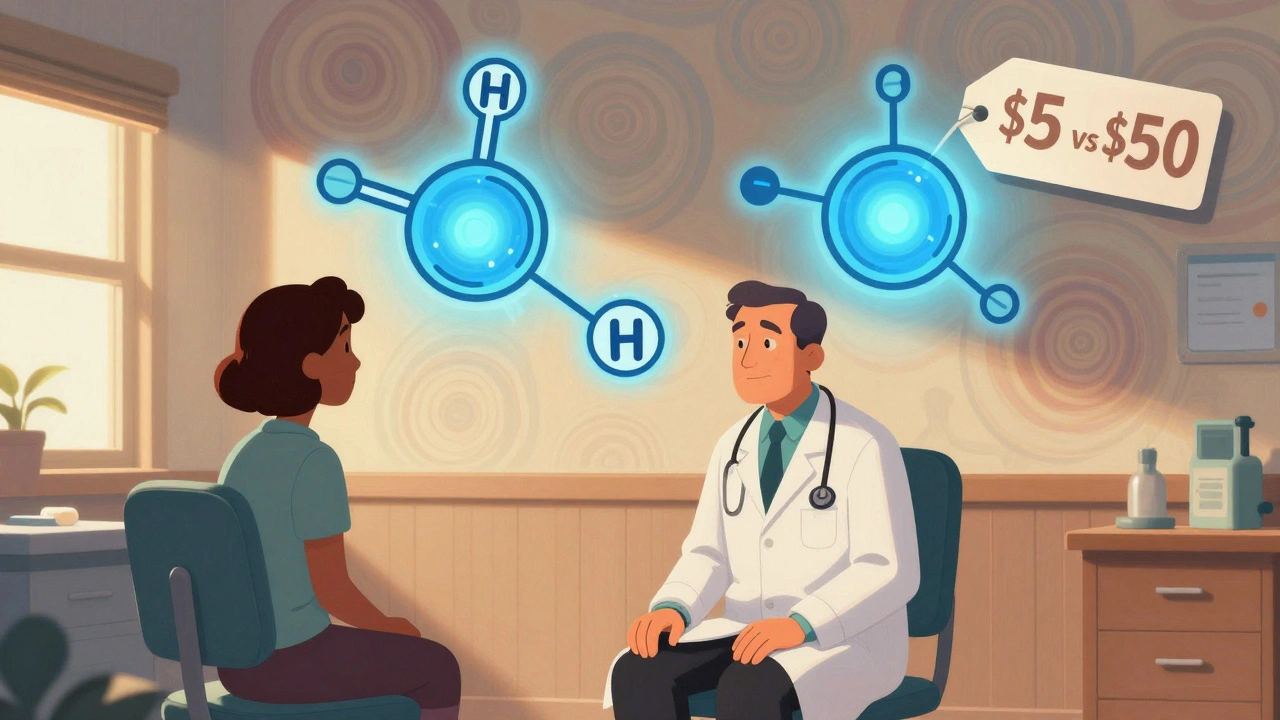
When your doctor hands you a prescription, you might not think twice about whether it’s a brand-name drug or a generic. But here’s the truth: generic medications aren’t cheaper because they’re weaker-they’re cheaper because they don’t carry the marketing and patent costs of the original. And yet, many people still worry: Is the generic going to work the same? The answer, more often than not, is yes.
What Exactly Is a Generic Drug?
A generic drug is a copy of a brand-name medication that contains the exact same active ingredient, in the same strength, and works the same way in your body. The U.S. Food and Drug Administration (FDA) requires generics to meet the same strict standards for safety, quality, purity, and effectiveness as the brand-name version. That means if you’re taking a generic version of lisinopril for high blood pressure, it’s chemically identical to the brand-name Zestril. The FDA doesn’t allow generics to hit the market unless they prove they deliver the same therapeutic result.Why Do Generics Look Different?
You might notice your generic pill is a different color, shape, or size than the brand-name version you used to take. That’s not a mistake-it’s the law. U.S. trademark rules prevent generic manufacturers from copying the exact appearance of brand-name drugs. So while the active ingredient is the same, the inactive ingredients (like dyes, fillers, or flavorings) can differ. These don’t affect how the drug works, but they can change how the pill looks or tastes.How Much Money Can You Save?
The cost difference isn’t small-it’s massive. On average, generic drugs cost 80% to 85% less than their brand-name equivalents. That’s not a guess. According to data from GoodRx, generics saved the U.S. healthcare system over $1.67 trillion between 2007 and 2016. For individual patients, that often means paying $5 instead of $50 for a monthly prescription. In 2023, the average out-of-pocket savings per generic prescription was around $45. For people managing chronic conditions like diabetes, asthma, or high cholesterol, that adds up to hundreds-or even thousands-of dollars a year.Are Generics Always Safe?
For the vast majority of medications, yes. The FDA requires generic manufacturers to prove bioequivalence-meaning the drug gets absorbed into your bloodstream at the same rate and to the same extent as the brand-name version. The acceptable range for this is 80% to 125% of the brand-name drug’s absorption. Studies show the average difference is only 3.5%, well within safe limits. There are rare exceptions. For drugs with a narrow therapeutic index-where even tiny changes in blood levels can cause serious side effects or treatment failure-some doctors may recommend sticking with the brand. Examples include warfarin (a blood thinner), levothyroxine (for thyroid disorders), and certain anti-seizure medications. But even here, the FDA maintains that approved generics are safe and effective. If you’ve had no issues switching, there’s no reason to assume the generic won’t work.
Why Do Some People Feel Like Generics Don’t Work?
If you’ve ever switched to a generic and thought, “This doesn’t feel right,” you’re not alone. But research suggests the issue isn’t the drug-it’s your brain. A phenomenon called the “nocebo effect” can make people feel worse simply because they believe the cheaper version is inferior. One Kaiser Permanente survey found that 17% of patients felt uneasy when their prescription switched to a generic. But after a pharmacist explained the science behind it, 92% reported being satisfied with the results. Consumer Reports found that 89% of patients saw no difference in effectiveness after switching. And on Reddit’s r/Pharmacy, medical students and pharmacists regularly point out that most perceived differences come from changing pill shapes or side effects from inactive ingredients-not the active drug itself.What Your Doctor Needs to Know
You don’t need to be a pharmacist to have a smart conversation about your meds. Here’s what to bring up:- “Is there a generic version available for this prescription?”
- “Will the generic work just as well for my condition?”
- “Are there any reasons I should avoid the generic version?”
- “I’m having trouble affording this-can we switch to something cheaper?”
What About State Laws?
In most states, pharmacists are legally required to substitute a generic drug unless your doctor writes “dispense as written” or “no substitution” on the prescription. That means even if you didn’t ask for a generic, you might get one anyway. That’s not a bad thing-it’s a cost-saving measure built into the system. But if you’re worried about switching, ask your doctor to write “dispense as written” on the prescription. Or, better yet, ask your pharmacist to call your doctor to confirm the switch before filling it.
When Should You Stick With the Brand?
There are only a few situations where sticking with the brand makes sense:- You’ve had a documented adverse reaction to a specific generic version.
- You’re on a narrow therapeutic index drug and your doctor has seen you struggle with switches in the past.
- You’re taking a biologic drug (like Humira or Enbrel), which can’t be copied exactly-only mimicked with biosimilars.
How to Make the Switch Confidently
If your doctor says it’s okay to switch:- Ask your pharmacist to explain any changes in pill appearance or dosing instructions.
- Keep your current medication bottle until you’ve taken the new one for at least a week.
- Monitor how you feel-energy levels, side effects, symptom control.
- If something feels off, call your doctor or pharmacist. Don’t assume it’s “all in your head.”
What’s Changing in the Generic Market?
The FDA has sped up generic approvals dramatically. Thanks to the Generic Drug User Fee Amendments (GDUFA), approval times dropped from 36 months to just 10 months since 2012. In 2022 alone, the FDA approved 745 new generics-a 12% increase from the year before. More competition means even lower prices. But challenges remain. Supply chain issues, especially during the pandemic, caused shortages of some generic drugs because too many were made in just one factory overseas. The FDA is now pushing for more diverse manufacturing sources to prevent future disruptions.Final Thought: Generics Aren’t Second-Best
They’re not a compromise. They’re a smart, science-backed choice. Nine out of every ten prescriptions filled in the U.S. are for generics. That’s not because people are settling. It’s because they’ve learned that the active ingredient is what matters-and the price tag doesn’t determine the power. Your doctor wants you to take your meds. If cost is keeping you from doing that, a generic might be the bridge you need. Don’t let confusion or stigma stop you from asking. The science is clear. The savings are real. And your health? It’s worth the conversation.Are generic medications as safe as brand-name drugs?
Yes. The FDA requires generic drugs to have the same active ingredient, strength, dosage form, and route of administration as the brand-name version. They must also prove they’re bioequivalent-meaning they work the same way in your body. Generics are held to the same manufacturing standards and are continuously monitored for safety and quality.
Why are generic drugs so much cheaper?
Brand-name drugs are expensive because their manufacturers pay for years of research, clinical trials, and marketing. Once the patent expires, other companies can make the same drug without repeating those costs. Generic manufacturers only need to prove their version works the same-no need for expensive trials. That’s why generics cost 80-85% less.
Can I switch from a brand-name drug to a generic safely?
For most medications, yes. The FDA approves generics only after proving they’re equivalent. If you’re on a common drug like metformin, atorvastatin, or sertraline, switching is routine and safe. For drugs with a narrow therapeutic index-like warfarin or levothyroxine-talk to your doctor first. Most patients switch without issue, but your doctor can help determine if it’s right for you.
What if I feel different after switching to a generic?
It’s worth paying attention. Sometimes, the difference isn’t the active ingredient-it’s the inactive ones. A new dye or filler might cause mild stomach upset or a rash. Or, you might be experiencing a nocebo effect-feeling worse because you believe the cheaper version is inferior. Either way, call your pharmacist or doctor. They can check if it’s a reaction, help you switch back, or try a different generic manufacturer.
Do pharmacists automatically switch to generics?
In most states, yes. Pharmacy laws require them to substitute a generic unless your doctor specifically writes “dispense as written” on the prescription. That doesn’t mean you can’t ask for the brand-it just means you need to be proactive. If you prefer the brand, tell your doctor before they write the script, or ask the pharmacist to call your doctor before filling.
michael booth
December 4, 2025 AT 01:29Generics are the unsung heroes of modern healthcare. I’ve been on generic metformin for years and my blood sugar is more stable than when I was on the brand. The only difference? My wallet doesn’t cry every month.
Doctors should push generics harder-not because they’re cheap, but because they’re just as effective.
Carolyn Ford
December 4, 2025 AT 22:45Wait-so you’re telling me I’ve been wasting hundreds of dollars a year because I was afraid of pills that look different? And now you want me to believe that a $5 tablet is chemically identical to a $50 one? Please. My cousin’s neighbor’s dog got sick after switching to a generic thyroid med. That’s not a nocebo effect-that’s a red flag.
Heidi Thomas
December 6, 2025 AT 13:55Stop being naive. The FDA’s bioequivalence range is 80-125%. That’s a 45% swing. If your drug has a 10mg dose and the generic delivers 14.5mg, you’re not getting the same thing-you’re getting a different drug. And don’t even get me started on the manufacturing quality control in India and China. You think your generic lisinopril is safe? Good luck.
Alex Piddington
December 7, 2025 AT 03:23Thank you for this clear, science-backed breakdown. I’ve worked in community pharmacy for 18 years and I can tell you: 9 out of 10 patients who panic about generics end up feeling better once they understand the facts.
It’s not about trust in Big Pharma-it’s about trust in the science. And the science is solid.
Always remind patients: the pill doesn’t care what it’s called. Your body does.
Libby Rees
December 7, 2025 AT 21:23I switched to generic sertraline last year. No change in mood. No side effects. Saved $40 a month. My doctor said it was fine. I trusted her. It worked. Simple.
Dematteo Lasonya
December 8, 2025 AT 16:24I used to be skeptical too. But after my dad’s cholesterol meds switched and his numbers improved while his out-of-pocket dropped from $80 to $6, I started asking about generics for everyone I know.
It’s not about being cheap. It’s about being smart. And if you’re worried, talk to your pharmacist. They’re the real experts here.
Rudy Van den Boogaert
December 10, 2025 AT 16:20My aunt switched from brand-name Lipitor to generic atorvastatin and had a rash. Turned out it was the dye. Switched to a different generic manufacturer-no more rash. Same drug. Different filler.
Point is: not all generics are made equal. But that doesn’t mean none of them work. It just means you might need to try a couple before you find the one that fits.
Gillian Watson
December 12, 2025 AT 05:09Back in the UK we’ve been using generics for decades. No drama. No panic. Just lower costs and better access. The fear around generics feels very American to me. Like we’re scared of saving money because we think it means sacrificing quality. It doesn’t.
Jordan Wall
December 12, 2025 AT 05:32Look, I get it. You think you’re being pragmatic. But let’s be real-generic manufacturers don’t have the R&D budget to replicate the exact crystalline structure of the original molecule. That’s why some patients report ‘subtle’ differences. It’s not placebo-it’s pharmacokinetic variance. And if you’re on a narrow therapeutic index drug? You’re playing Russian roulette with your life. #BioequivalenceIsABuzzword
Jessica Baydowicz
December 13, 2025 AT 00:14Y’all are overthinking this. I switched my kid’s ADHD med to generic and he’s still crushing his math tests. I saved $90 a month. I’m not a scientist, but I’m a mom-and I trust my kid’s results over fear-mongering any day. 💪
Shofner Lehto
December 13, 2025 AT 08:32For anyone still on the fence: ask your pharmacist to show you the FDA’s bioequivalence report for your specific generic. It’s public info. Read it. Understand it. Then decide. Don’t let marketing or anecdotes scare you. The data is on the side of generics.
val kendra
December 14, 2025 AT 17:22My brother’s on warfarin. His doctor refused to let him switch-because even though the FDA says generics are fine, his INR levels kept bouncing every time they changed manufacturers. So now he’s on the brand. Not because he’s rich-because his life depends on consistency.
That’s the exception. Not the rule. But it’s real. And it matters.
Isabelle Bujold
December 15, 2025 AT 09:51Let me tell you about my cousin who works in a compounding pharmacy in Montreal. She says that when the FDA approves a generic, they don’t test every single batch-they test a sample from each production run. And if the batch passes, it’s approved. That means one bad batch could slip through. Now imagine hundreds of thousands of pills made in a single factory in Punjab, shipped across the ocean, sitting in a warehouse for months, then distributed nationwide. That’s not a conspiracy theory-that’s supply chain reality.
That’s why I always ask for the manufacturer name. And if I’ve had a bad experience with one brand of generic, I refuse that one forever. I don’t care if it’s ‘the same drug.’ My body remembers. And I’m not risking it again.